The Cummins ISX and X15 platform is the most common heavy-duty engine in North American Class 8 trucking — 15 liters of displacement, 400 to 605 horsepower, and a production run stretching from the original ISX in 1998 through the current X15 2021+ platform still shipping today. That 25+ year lifespan created a maintenance schedule complexity that trips up fleets every day: the "Cummins ISX" a technician trained on in 2005 has almost nothing in common with the "Cummins X15 2021+" running down the highway now. Different oil specs (CJ-4 gave way to CK-4). Different filter part numbers (Fleetguard LF9070 gave way to LF14000NN). Different intervals (fuel filter went from 20,000 miles on early ISX to 60,000 miles on X15 2021+ thanks to combustion improvements). And most critically, entirely different aftertreatment systems — DPF appeared in 2007, DEF added in 2010, and the ECM 2350 in 2017+ actively derates trucks that skip DPF ash cleaning or DEF service. Meanwhile the underlying Cummins duty-cycle philosophy stayed constant: oil, fuel filter, and service intervals scale with actual engine load measured through fuel economy as a proxy. A truck averaging 4.5 MPG city routes needs oil twice as often as one running 6.5 MPG linehaul on the same OEM. Miss the distinction and you either burn money on unnecessary services or destroy the engine through undermaintenance. This guide breaks down Cummins X15 and ISX intervals by generation, duty cycle bands, complete component schedule with Fleetguard part numbers, aftertreatment discipline, and how Truck Inspection & Maintenance automates duty-cycle-aware PM alerts — free forever for up to 3 vehicles.
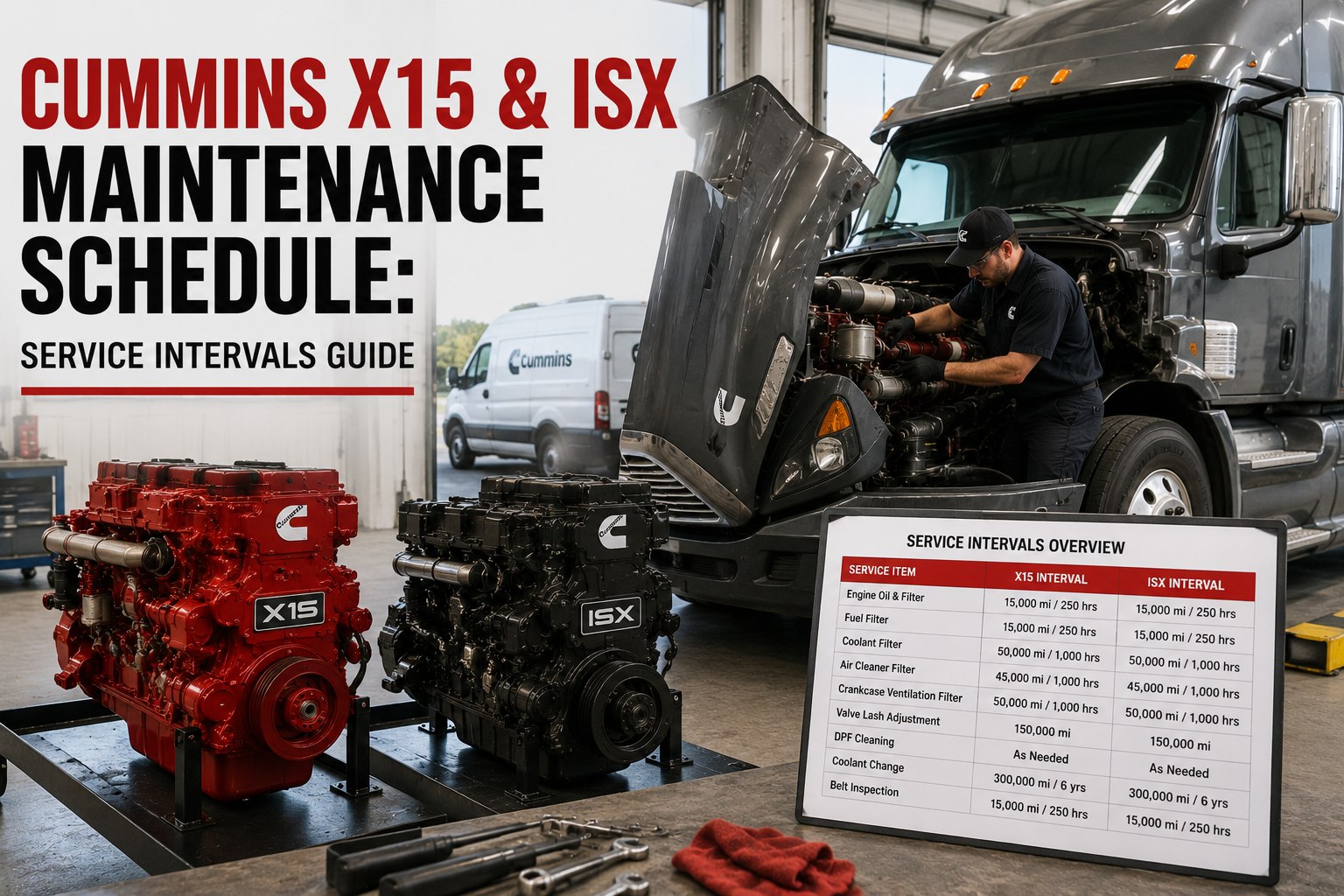
Cummins X15 & ISX Maintenance Schedule: Complete 2026 Service Intervals Guide
Duty-cycle-aware intervals by generation — with the Fleetguard part numbers and MPG bands Cummins actually publishes.
Identify Your Engine Generation First
Every service interval on a Cummins ISX/X15 depends on which generation you're servicing. The nameplate and ECM code tell you which schedule applies — and mixing them up is how fleets end up either over-servicing or under-servicing engines by 40–60%:
Original mechanical era. No DPF, no DEF, no active regeneration. CJ-4 oil spec. Simplest maintenance schedule — but also the shortest intervals.
DPF introduced. First-generation aftertreatment. LF9080 or LF14000NN oil filter. Fleetguard FF2200 fuel filter. Coolant testing every 25,000 miles.
DEF/SCR added. UF101/UF106 DEF dosing filter introduced. Coolant testing every 30,000 miles. Common in secondary market fleets today.
Modern X15 platform. CK-4 oil spec (10W-30 or 15W-40). Extended oil intervals possible. Active derate on missed aftertreatment service.
Latest generation. Fuel filter extended to 60,000 miles. Oil to 50,000 miles normal duty. No separate coolant filter. Highest OEM interval targets.
Duty Cycle — The MPG Proxy
Cummins publishes different intervals for each duty cycle band because fuel economy is a proxy for engine load and combustion cleanliness. Higher MPG = lighter load = cleaner combustion = longer intervals. Here are the three official duty cycle bands:
Highway Linehaul
Long-haul OTR, steady cruise speeds, minimal idling. Cleanest combustion, longest intervals possible. Use maximum published Cummins intervals.
Regional / Mixed
Regional runs, some urban work, moderate grade duty, mixed loads. Combustion less complete. Intervals shortened 40% from normal duty.
Urban / Vocational
City delivery, vocational work, heavy stop-and-go, high idle percentage, construction sites. Shortest intervals — service twice as often.
Complete Interval Table by Generation
The definitive Cummins reference. Intervals reflect whichever occurs first in months, miles, or hours. Adjust downward for severe or extreme duty per the multipliers above. This table matches the official Cummins Motorhome Maintenance and Operation guide plus X15 Maintenance Guidelines:
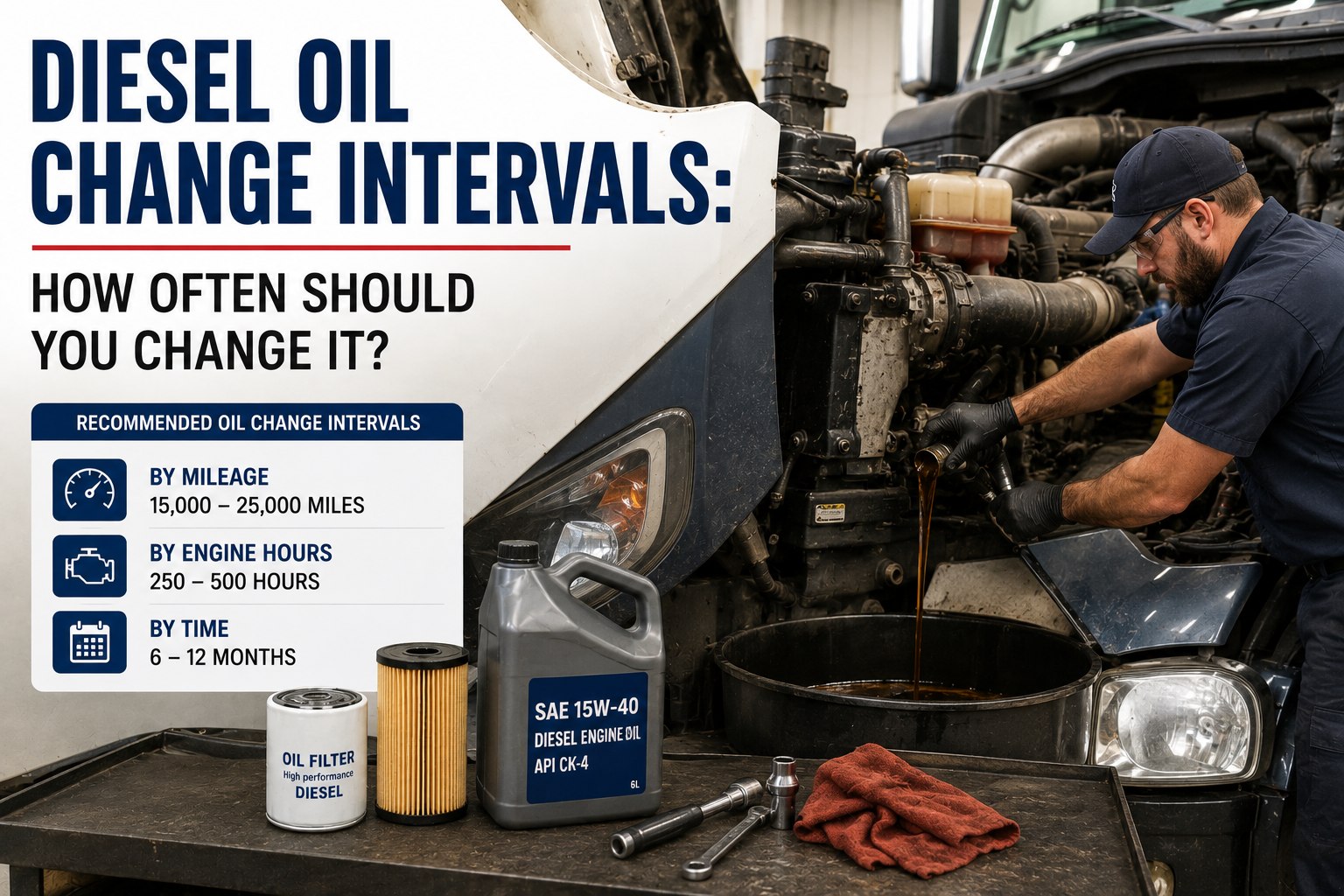
Oil Change — The Heart of the Schedule
The single most important maintenance action on any Cummins big-bore engine. Get this right and the rest of the schedule works. Get it wrong and no other maintenance saves you:
CK-4 15W-40 Standard
Post-2017 X15 requires CES 20081 CK-4 specification. 15W-40 for standard operation, 10W-30 for cold-weather fleets. CJ-4 or older = warranty void on modern engines.
Fleetguard LF14000NN Filter
Modern X15 requires Fleetguard LF14000NN oil filter. Use of non-approved filter voids warranty and can cause premature engine wear. Integrated cartridge type only.
Dual-Sump Drain Required
X15 stamped-steel oil pans have primary AND secondary sumps each with drain plug. Both MUST be drained during oil change to hit interval targets. Missing the secondary = oil dilution.
Oil Analysis Extends Intervals
Send oil sample at each change. Analysis reveals wear metals, coolant contamination, fuel dilution. Consistent clean reports enable extending intervals confidently.
Aftertreatment Discipline — Where Derates Come From
The 2017+ X15 with ECM 2350 actively monitors DPF ash load, DEF quality, and NOx conversion efficiency. Miss a service and the ECM starts a derate sequence that limits torque before dropping the truck to a 5 MPH crawl. Understanding aftertreatment is understanding how to keep trucks running:
Diesel Particulate Filter
Ash cleaning base interval: 200,000 miles or 4,500 engine hours. For 2016+ X15 running linehaul above 5.5 MPG, extended interval reaches 500,000 miles. Passive regeneration during highway operation cleans soot continuously; ash requires physical cleaning at intervals.
Diesel Exhaust Fluid System
DEF dosing filter (UF106 on modern X15) replaced per Cummins schedule. DEF quality monitored continuously — using non-API-certified DEF or contaminated fluid triggers dosing faults. In-tank filter (35 micron minimum) should be inspected every oil drain, replaced every other.
Selective Catalytic Reduction
Converts NOx to nitrogen and water using DEF. No scheduled maintenance beyond DEF supply and dosing filter — but SCR faults trigger derate. Common failure: NOx sensor contamination from DEF crystallization or exhaust deposits.
Exhaust Gas Recirculation
EGR cooler cleaning during major service (typically 250,000+ miles). Cooler failures introduce coolant into intake — usually catastrophic. Watch for coolant loss with no external leaks — often EGR cooler internal failure.
Duty-cycle-aware PM tracking for every Cummins engine in your fleet
Truck Inspection & Maintenance tracks mileage, engine hours, AND average MPG for each vehicle — automatically applying the correct Cummins interval based on actual duty cycle. Get alerted before every service comes due, with generation-specific templates for ISX, ISX15, and X15. Photo-verified service records support warranty claims. Sign up free for up to 3 vehicles.
Fleetguard Part Numbers Reference
Using wrong filters on a Cummins voids warranty and shortens engine life. Match your engine generation to the exact Fleetguard part number below. Non-Fleetguard aftermarket filters are permitted but must meet Cummins CES specification:
The 5 Common Cummins Maintenance Mistakes
Cummins publishes clear guidelines. Fleets that read them still make the same five mistakes because operational reality gets in the way. Each mistake has a specific dollar cost and each is preventable:
Ignoring Duty Cycle
Fleet spec sheet says 50,000-mile oil interval. Truck actually runs 4.2 MPG city routes. Real Cummins interval at that duty cycle is 25,000 miles. Result: premature engine wear.
Wrong Oil Specification
Using CJ-4 oil in a 2017+ X15 requiring CK-4. Voids warranty immediately. Reduces DPF life through incompatible additive chemistry. Fleet-wide impact when specced wrong.
Skipping Secondary Sump Drain
X15 stamped-steel oil pans have TWO sumps. Missing the secondary means half the old oil stays. Dilutes fresh oil immediately. Real interval halved.
Deferring DPF Cleaning
Base interval 200,000 miles. Skipped once = ECM starts logging ash accumulation. Skipped twice = derate. Skipped three times = 5 MPH crawl mode requiring shop visit.
Non-Fleetguard Filters
Aftermarket filter that "meets spec" but isn't Fleetguard or Cummins-approved equivalent. Warranty voided. Bypass valve may not integrate correctly. Debris passes through.
No Oil Analysis Program
Guessing at interval without oil analysis. Analysis reveals what the engine actually needs — enables extending safe intervals and catching problems 6+ months before failure.
Frequently Asked Questions
What's the oil change interval on a Cummins X15?
Depends on generation and duty cycle. X15 2021+ under normal duty (>6.0 MPG linehaul) is 50,000 miles or 12 months. X15 2017–2020 is 20,000 miles or 12 months. ISX15 2010–2016 is 20,000 miles or 6 months. All intervals shorten for severe duty (4.5–6.0 MPG regional) by 40% and extreme duty (under 4.5 MPG urban/vocational) by 60%. Always use CK-4 specification 15W-40 (or 10W-30 for cold climate) on 2017+ engines. Fleetguard LF14000NN oil filter is mandatory.
How do I know which Cummins generation I have?
Check the engine nameplate for ESN (Engine Serial Number) — Cummins customer service can identify the exact generation from that number. Broadly: ISX 1998–2006 (pre-DPF), ISX15 2007–2009 (CM871 early DPF), ISX15 2010–2016 (CM2250 with DEF), X15 2017–2020 (CM2350 EPA 2017), X15 2021+ (extended intervals). ECM code visible on ECU label also identifies generation. Getting the generation right is critical because oil, filter, and interval specs differ substantially across generations.
What's the difference between ISX and X15?
Same core 15L platform, different generations of aftertreatment and controls. "ISX" was the naming through 2016. Cummins rebranded to "X15" for the 2017+ EPA 2017 emissions platform (ECM CM2350). Displacement, bore, stroke, and basic architecture unchanged. The X15 2017+ added active derate on missed aftertreatment service, extended CK-4 oil intervals possible, dual-sump oil pans requiring drain from both plugs, and no separate coolant filter on the 2021+ generation.
How often does the DPF need cleaning?
Base Cummins interval is 200,000 miles or 4,500 engine hours — whichever comes first. For 2016+ X15 engines running linehaul above 5.5 MPG, the extended DPF ash cleaning interval can reach 500,000 miles thanks to cleaner combustion. Passive regeneration during highway driving cleans soot continuously; ash requires physical cleaning at the interval. Missing cleaning triggers ECM logging, then torque derate, then 5 MPH crawl mode requiring shop attention. Never defer DPF cleaning.
Can I use non-Fleetguard filters on my Cummins?
Non-Fleetguard filters are permitted only if they meet Cummins CES (Cummins Engineering Standard) specification exactly. In practice, using Fleetguard is safer for warranty purposes — Cummins-approved genuine parts avoid disputes if engine damage occurs. Specifically: X15 2017+ requires LF14000NN oil filter and FF5825NN fuel filter. Bypass valve integration matters — non-integrated cartridge filters may not seal correctly. When in doubt, use Fleetguard. Talk to our team about warranty-supporting service documentation.
How does Truck Inspection & Maintenance handle Cummins-specific PM?
Truck Inspection & Maintenance ships with pre-configured PM templates for every Cummins ISX and X15 generation — oil, fuel filter, coolant, DPF, DEF, EGR, and valve adjustment intervals per Cummins spec. Duty-cycle-aware scheduling adjusts triggers based on each truck's average MPG. Photo-verified service records support warranty claims. Fleetguard part numbers referenced automatically per engine generation. Free forever for up to 3 vehicles. Sign up in 10 minutes.
Duty-cycle-aware PM for Cummins ISX and X15 — every generation, every interval automated.
Truck Inspection & Maintenance tracks mileage, engine hours, and MPG per vehicle — automatically applying the correct Cummins interval by generation and duty cycle. Pre-configured templates cover oil, fuel filter, coolant, DPF ash cleaning, DEF service, and valve adjustment schedules. Photo-verified service records support warranty claims. Fully FMCSA-compliant. Free forever for up to 3 vehicles with no hardware and no contracts. Set it up in 10 minutes.