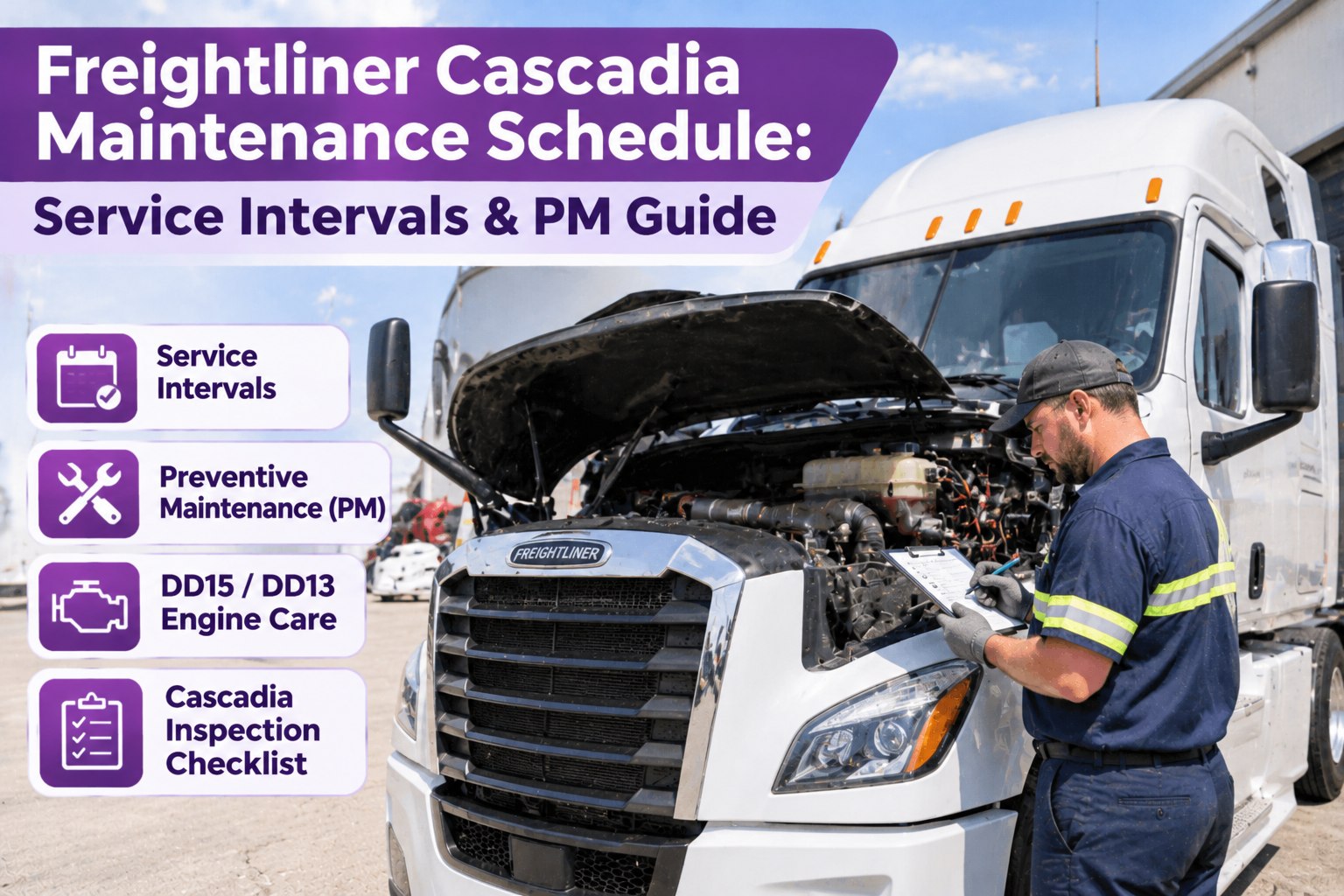
Ask ten Cascadia owners how often to change the oil and you'll hear ten numbers 25,000, 50,000, 75,000 and most of them are wrong for the next truck in line. Detroit doesn't set one interval for the Cascadia. It sets four, keyed to how each truck actually runs, and the same mistake (running a highway number on a hard-working truck) is what turns a routine oil service into a scored cylinder wall. This guide lays out the real Detroit schedule — oil, filters, aftertreatment, transmission and chassis — and how to keep it straight across a whole fleet. Start free and put every Cascadia on the right interval.
Freightliner Cascadia Maintenance Schedule: Service Intervals & PM Guide
Why There's No Single Cascadia Oil Number
Detroit indexes the DD-series intervals on the truck's duty cycle, measured two ways at once: how far it runs in a year and what fuel economy it averages. A truck grinding out under 5 MPG on heavy loads wears its oil far faster than one cruising at 7-plus on the interstate, so Detroit gives each profile its own interval instead of a one-size number. Settle the duty cycle first, then the engine decides the exact figure.
The Oil & Fuel-Filter Interval Matrix
This is the heart of the schedule. On Detroit's DD-series the oil and engine fuel filter change together, so one interval covers both. Find the truck's duty-cycle row, read across to its engine, and the mileage is your service point — whichever comes first against the hour limit for idle-heavy trucks.
Notice the DD16 doesn't earn the top efficient tier the way a DD15 does — its 15.6L displacement and heavy-haul duty keep it on tighter numbers. That single detail is why a mixed roster can't share one PM template, and why fleets lock a per-engine, per-duty-cycle interval to each truck. Book a demo to map intervals across your mixed Cascadia fleet.
Every mileage above is void the moment the wrong fluid goes in. Detroit's intervals only hold on approved oils and clean fuel — step outside that and you're not on an extended schedule, you're unprotected.
Beyond Oil: The Milestones on Their Own Clocks
Oil is the interval everyone plans around, but five more services fall due at points of their own — and they're the ones fleets forget until a warning lamp forces the issue. Here's where they land on a long-haul DD15, your mileage-marker reference for the life of the truck.
A, B and C Services: How Fleets Group the Work
Detroit publishes intervals, not service tiers — so most shops bundle the tasks into A, B and C visits and hang them off the oil cycle. The mileages below are a common fleet baseline, not an OEM-set number; adjust them to your duty cycle.
Aftertreatment: The Hidden Downtime Driver
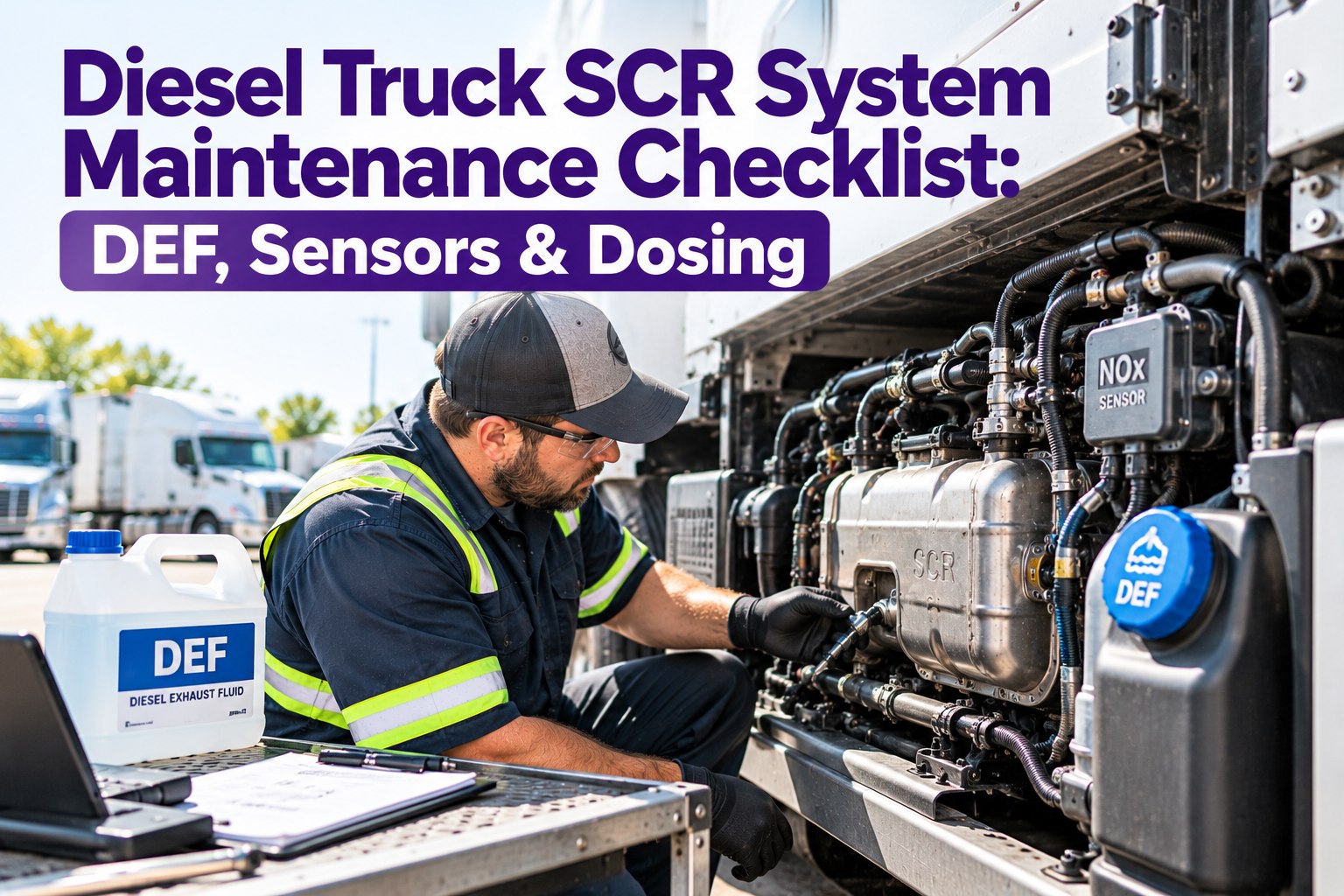
The DPF, DEF system, SCR catalyst and DOC are the four items the oil chart assumes you already track — and neglecting them is among the top causes of unplanned Cascadia downtime. An ignored warning can push the engine into derate within a day, and a contaminated filter turns a routine ash cleaning into a replacement. Watch regen frequency as your early signal.
The cleanest way to stay ahead of all four is to log every regen and defect against the truck's VIN, so a rising regen count flags a DPF before the lamp ever lights. Start free and track aftertreatment health per Cascadia.
One Record Per VIN, Not Twelve Numbers in a Notebook
Detroit publishes a dozen intervals across three engines and four duty cycles. A fleet that stores one number loses the other eleven. Put every interval, inspection and repair under the truck's VIN and the schedule runs itself.
Where the Published Numbers Disagree
Be honest with your schedule: the DEF pump filter shows up anywhere from 150,000 miles to a flat 3-year/500,000 figure depending on model year and calibration, and the DT12 interval shifts with the cooler type and whether the truck qualifies for the extended line-haul program. When sources conflict, the truck's own operator manual and current Detroit support page win — treat everything else as a planning estimate. Book a demo and we'll reconcile the figures to your exact specs.
Why Fleets Run Cascadia PM in Software
Frequently Asked Questions
It depends on the engine and duty cycle, not one fixed number. A DD15 runs 35,000 miles on severe duty, 45,000 short-haul, 60,000 long-haul and up to 75,000 on efficient highway work — all on Detroit-approved oil. A DD13 runs a little tighter and a DD16 a little tighter again. Book a demo to set your exact oil interval.
Same structure, different numbers. The DD15's larger displacement earns slightly longer oil intervals in each duty cycle — 75,000 efficient-long-haul versus the DD13's 65,000, for example — while fuel-filter, valve-lash and aftertreatment milestones follow the same pattern. The duty cycle still sets the tier first. Book a demo to compare engine schedules side by side.
Normally between 400,000 and 500,000 miles, signaled by a dash lamp when ash can no longer be cleared by regeneration. Severe duty compresses that toward 300,000 because the truck regenerates far more often. Tracking regen frequency is the best early warning. Book a demo to see DPF tracking in action.
A Detroit-approved CK-4 (DFS 93K222) or FA-4 (DFS 93K223) heavy-duty diesel oil, paired with ultra-low-sulfur fuel. Non-approved oil or supplemental bypass filters void the published interval and can affect warranty, so the spec is as important as the mileage. Book a demo to lock oil specs into your PM records.
Stop Guessing Your Cascadia's Service Intervals
Truck Inspection & Maintenance Management Software puts the right Detroit interval on every Cascadia you run, flags each PM before it's due, and keeps an audit-ready history under the truck's VIN.