Most fleet managers use "inspection" and "maintenance" interchangeably — and that's exactly where compliance problems start. They're two different functions, run by different people, governed by different regulations, and triggered at different times. Inspections generate intelligence. Maintenance acts on it. Without a unified platform connecting them, defects get lost between systems and FMCSA citations stack up. That's the gap Truck Inspection & Maintenance closes — one platform combining DVIR inspections, PM scheduling, work orders, and audit-ready records so the handoff from "defect found" to "defect repaired" takes hours, not days. Industry data from 2026 shows fleets running disconnected inspection and maintenance workflows take 3 days from defect identification to repair start. Fleets running Truck Inspection & Maintenance cut that to 4 hours. This guide explains exactly what makes inspection and maintenance different, where they overlap, and how our platform handles both as one continuous workflow. Talk to our team for a walkthrough on your fleet.
Fleet Inspection vs Fleet Maintenance
Two functions. One platform. The handoff is where Truck Inspection & Maintenance wins.
The Core Distinction — Side by Side
Inspection and maintenance differ on every dimension that matters operationally. Truck Inspection & Maintenance is built to handle both as one continuous workflow — but understanding the distinction is step one:
Find the Problem
Fix the Problem
The 3 Inspection Types Truck Inspection & Maintenance Runs
"Inspection" isn't one thing — it's three distinct activities, each with different requirements, frequencies, and outputs. Our platform handles all three with dedicated templates and workflows:
Daily DVIR (Driver Vehicle Inspection Report)
Pre-trip + post-trip. Quick safety check by the driver covering 11 FMCSA-required components (brakes, lights, tires, mirrors, etc.). Drivers complete it in our mobile app in 5-10 minutes with photo evidence attached. Federal floor under 49 CFR 396.11.
PM Inspection (Tiered: A/B/C/D)
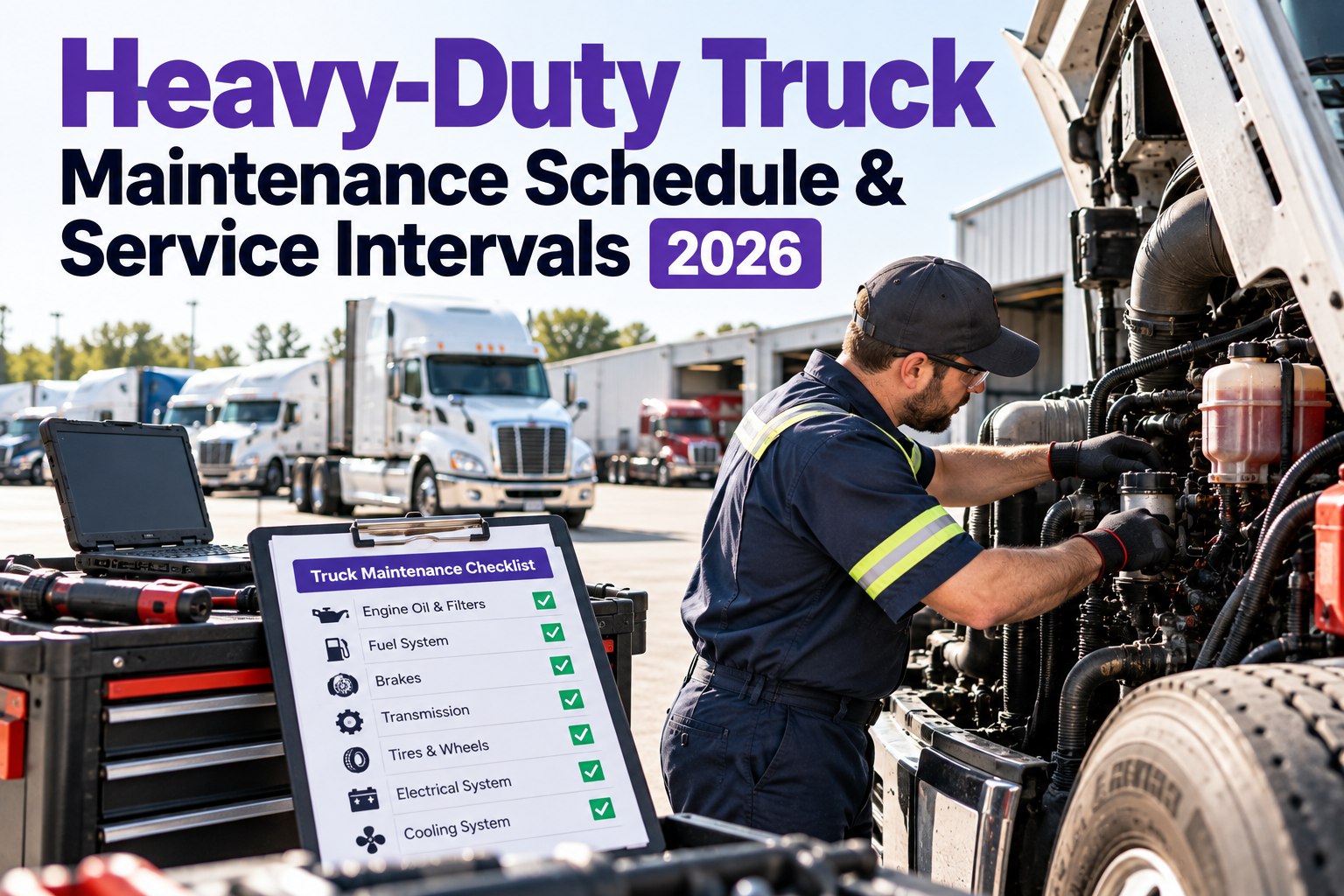
Scheduled by mileage, hours, or calendar. Technician walks our built-in comprehensive PM checklists with measurements, fluid samples, and internal component checks. Truck Inspection & Maintenance auto-triggers the right tier when thresholds hit.
Annual DOT Inspection (49 CFR 396.17)
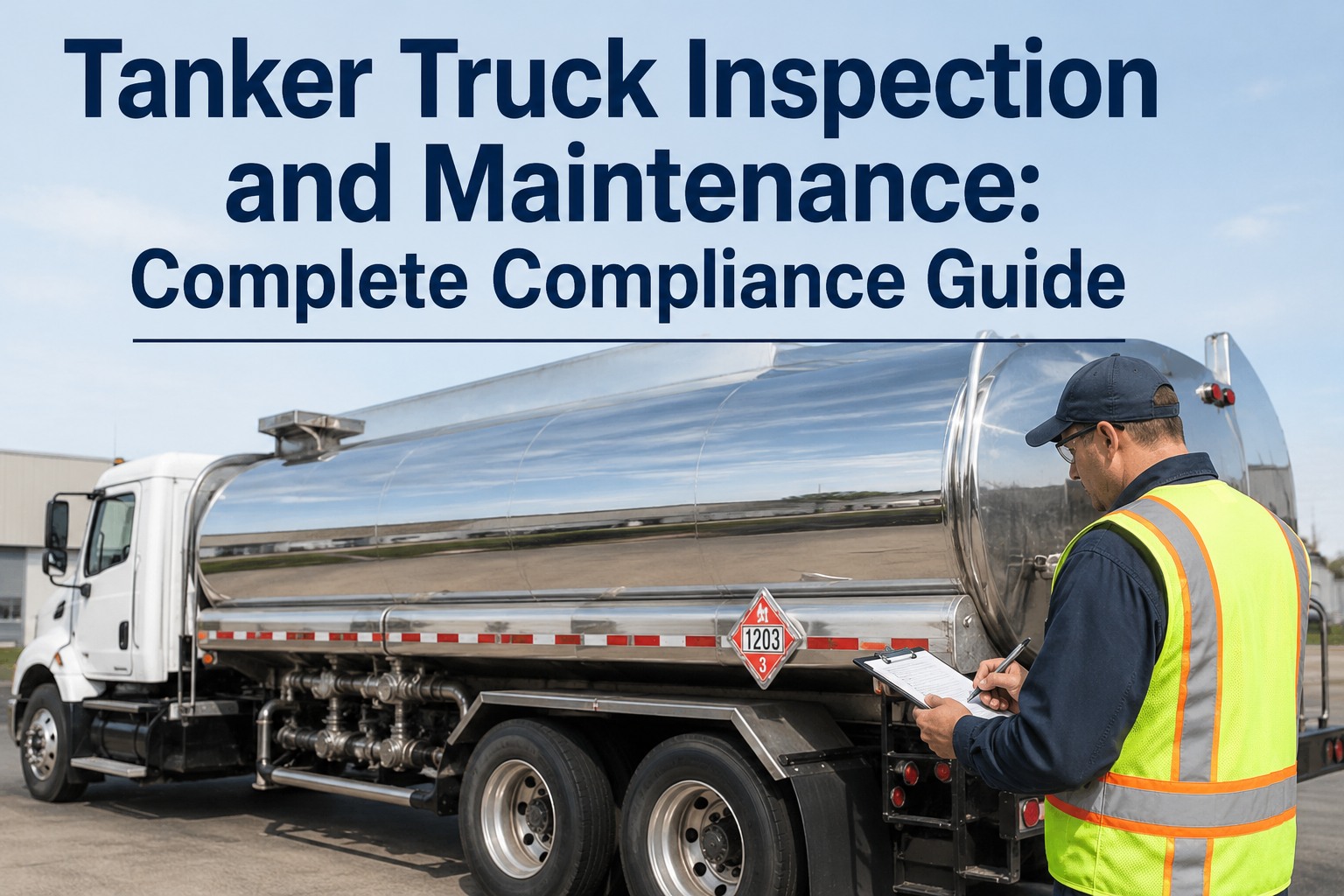
Required once every 12 months minimum. Performed by qualified inspector. Pass = sticker valid 14 months. Our platform tracks every annual due date, stores inspection certificates, and alerts before lapse — keeping you 14 months audit-ready by default.
The 4 Maintenance Types We Handle
Maintenance is the response layer. Truck Inspection & Maintenance supports all four types in a single workflow — letting you balance reactive, preventive, predictive, and corrective work without juggling tools:
Fix it when it breaks. Roadside breakdowns, emergency repairs. Costs 3-9x more than planned work. Our platform helps top fleets keep this under 20% of total maintenance load.
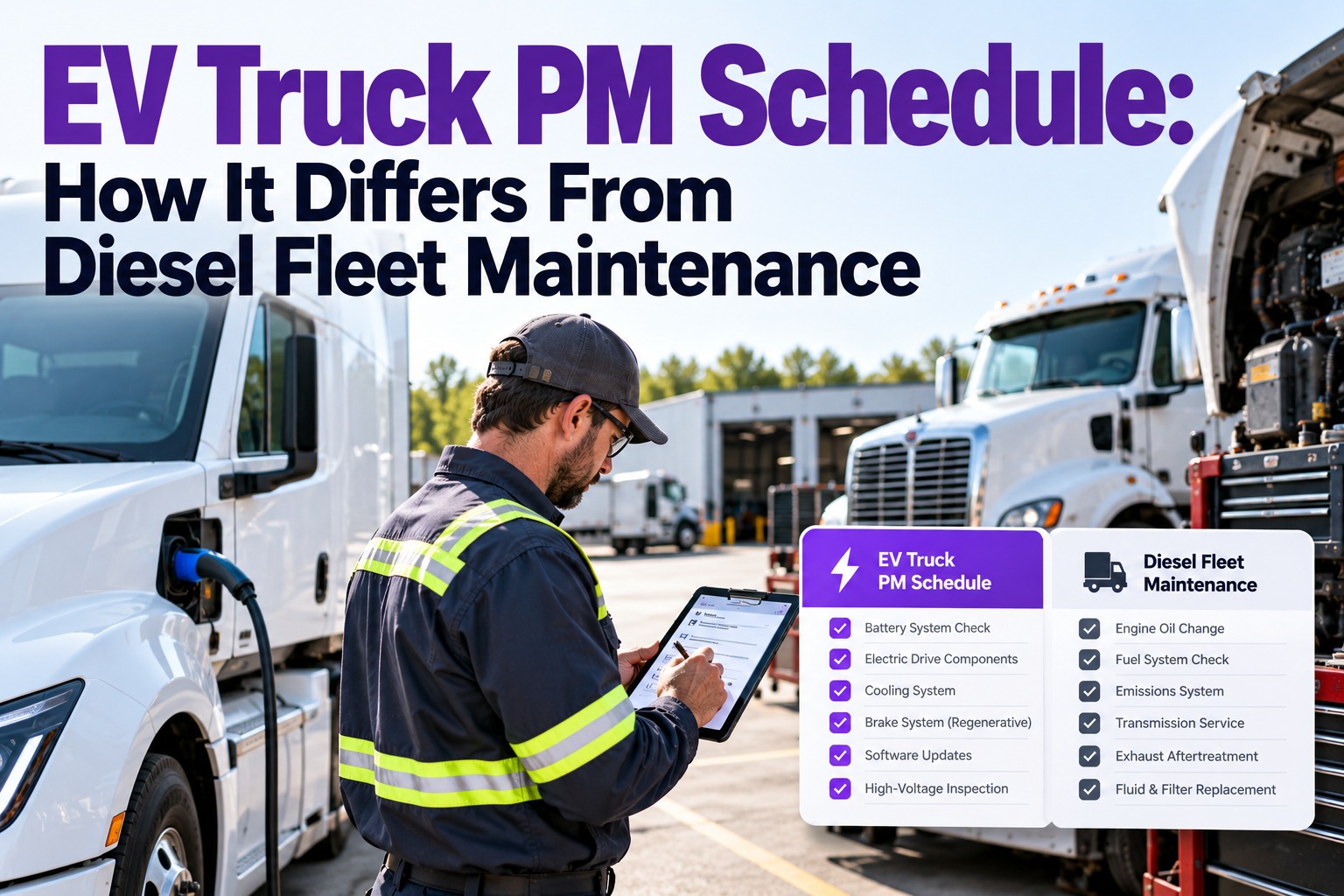
Scheduled service before failure. PM-A/B/C/D tiers built into Truck Inspection & Maintenance. Mileage/hours/calendar triggers fire automatically. ATA data: every $1 in PM saves $4-8 in unplanned repairs.
AI/sensor-driven failure prediction. Our telematics integrations feed ML models that flag components 2-4 weeks before failure. Modern AI hits 85-95% accuracy on major component predictions.
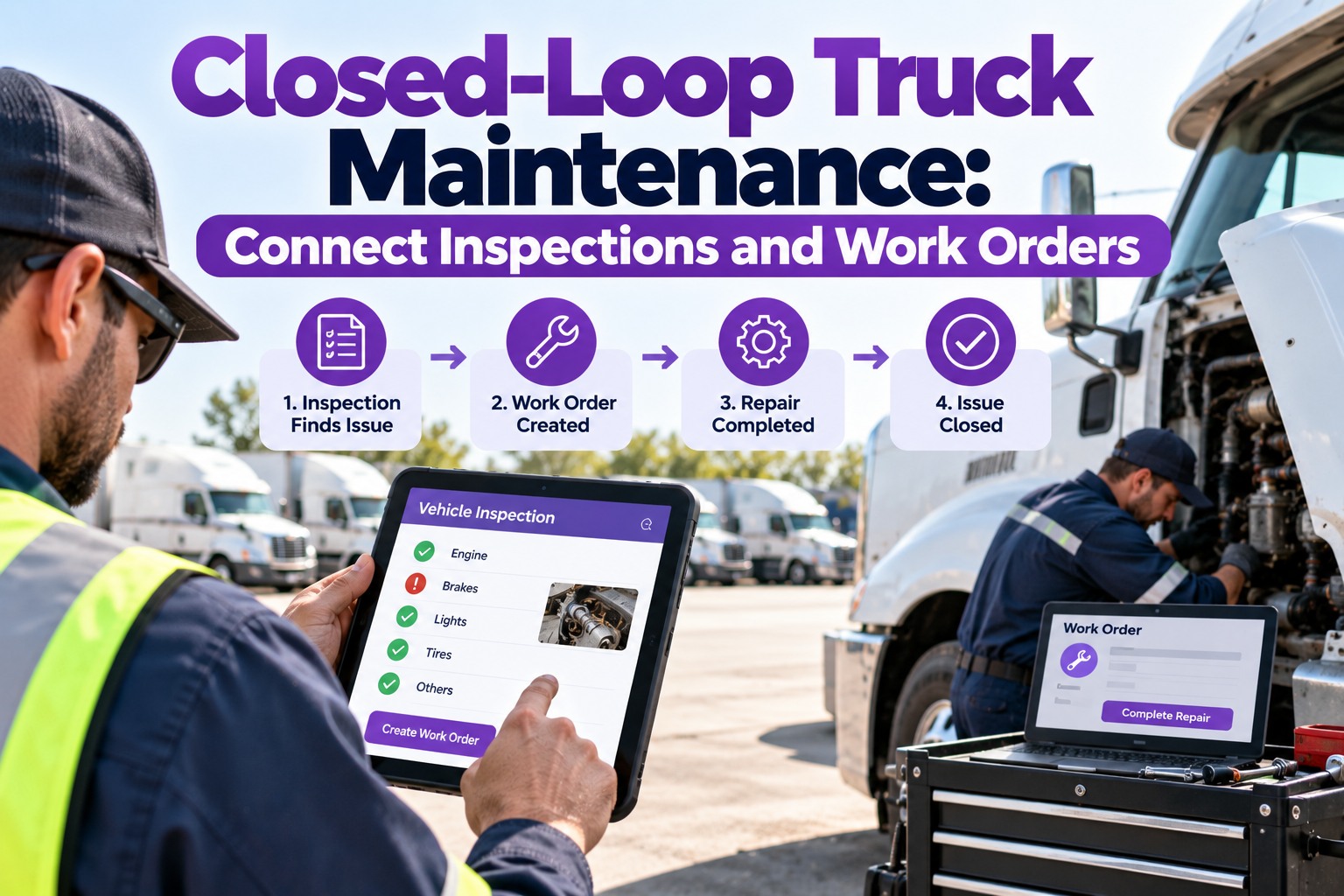
Repair a specific defect. Triggered by DVIR findings or roadside citations. Truck Inspection & Maintenance auto-creates the work order from the inspection — every defect traces to a repair record.
The Handoff — How Truck Inspection & Maintenance Bridges It
The single most important workflow in fleet operations is the handoff from inspection to maintenance. This is where 73% of paper-based fleets lose defects. Here's how our platform routes every defect from finding to fix:
Where Inspection & Maintenance Actually Share
While they're distinct functions, inspection and maintenance overlap on three critical operational dimensions. Truck Inspection & Maintenance treats them as one connected dataset to keep these shared elements aligned:
Close the gap between finding a defect and fixing it
Truck Inspection & Maintenance combines DVIR inspections, PM scheduling, and work orders into one platform. Defects auto-route to maintenance. Sign up free to deploy on 3 vehicles in under 10 minutes.
What Fails Without an Integrated Platform
Fleets that treat inspection and maintenance as separate systems with disconnected tools suffer the same predictable failure patterns — exactly the patterns Truck Inspection & Maintenance eliminates:
How Truck Inspection & Maintenance Brings It All Together
Modern fleet platforms treat inspection and maintenance as one continuous workflow, not two products. Truck Inspection & Maintenance delivers exactly that integration:
Frequently Asked Questions
Technically both. A DVIR is an inspection record at the point of completion — it documents vehicle condition and identifies defects. But under 49 CFR 396.11(a)(3), a DVIR also requires repair certification, which makes it the legal bridge into the maintenance record. Truck Inspection & Maintenance handles this dual-purpose workflow automatically. Contact our specialists to see it in action.
No. Daily DVIRs cover safety-critical items a driver can check in 5-10 minutes (the 11 FMCSA-required components). PM checklists are technician-driven and go deeper — internal components, fluid samples, measurements, calibrations. Truck Inspection & Maintenance provides distinct templates for each, all in one platform.
Corrective maintenance fixes a specific known defect — typically triggered by a DVIR finding in our system. Preventive maintenance is scheduled before failure occurs (PM-A every 10-15K miles, PM-B every 25-30K, etc.). Truck Inspection & Maintenance handles both: corrective work orders from inspections, preventive from automated mileage/hour/calendar triggers.
Industry benchmark: 4 hours or less for safety-critical defects, 24-48 hours for moderate defects. Manual workflows typically run 3 days. The gap is automation: Truck Inspection & Maintenance routes defects to work orders instantly, while paper-based fleets lose them in dispatcher inboxes. Sign up free to test 4-hour cycles on your fleet.
Yes — together. A DOT compliance review checks DVIRs (3-month retention), annual periodic inspections (14 months), and maintenance records (1 year + 6 months) as one connected dataset. Auditors specifically trace each DVIR defect forward to its repair record. Truck Inspection & Maintenance unifies all three retention schedules and exports them in one audit-ready PDF.
Yes — through structural workflow changes built into the platform. The 3-day cycle is mostly waiting time — paper DVIR sitting in an inbox, manual data entry, work order assignment, parts lookup. Our software collapses all four delays: auto-routing, embedded parts lookup, instant technician notification, photo evidence attached. Talk to our team for a cycle-time analysis.
Inspection finds it. Maintenance fixes it. Truck Inspection & Maintenance closes the loop.
DVIRs, PM scheduling, work orders, parts, photos, and audit-ready records — all in one platform. Auto-routed defects. 4-hour cycle times. Free for up to 3 vehicles.