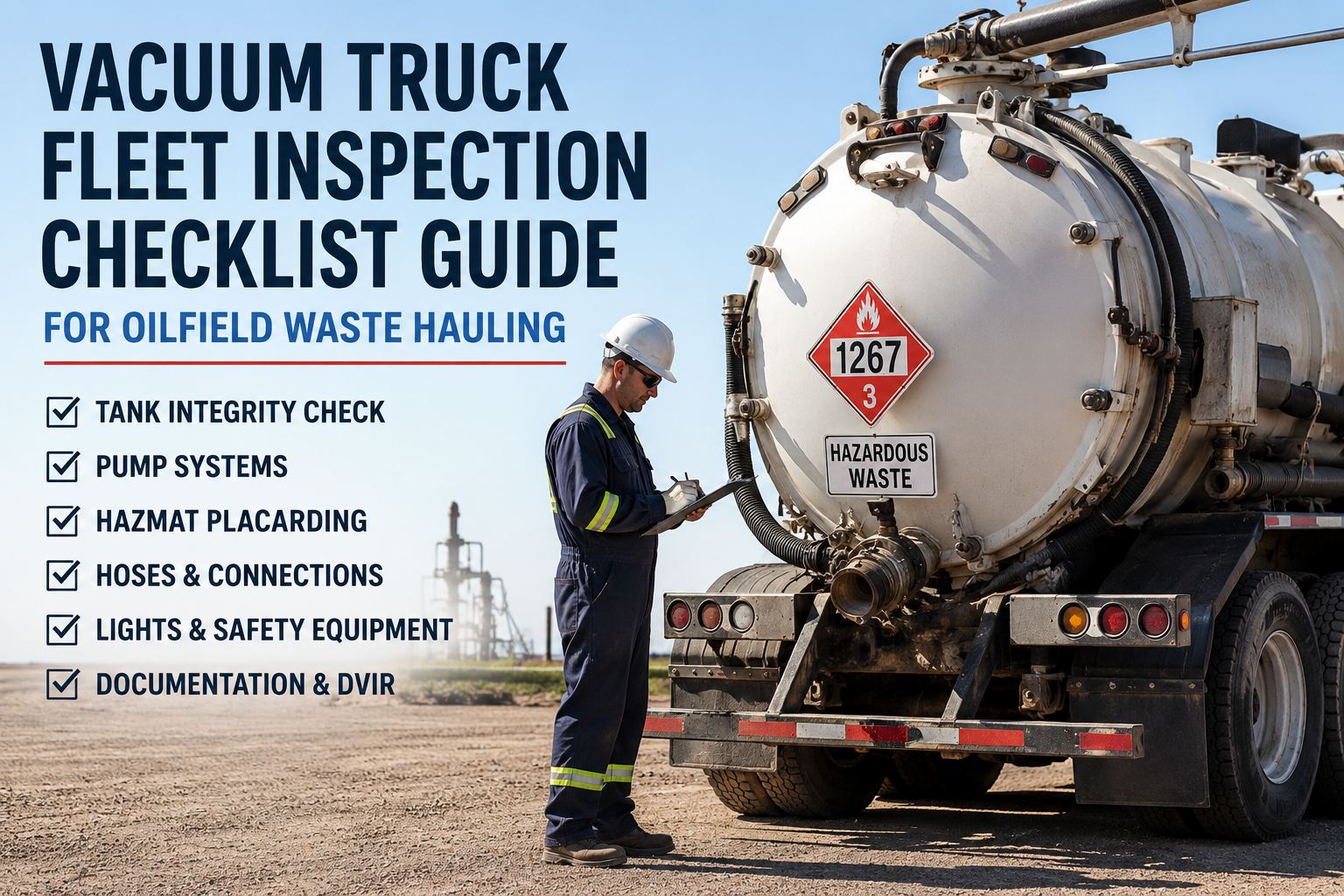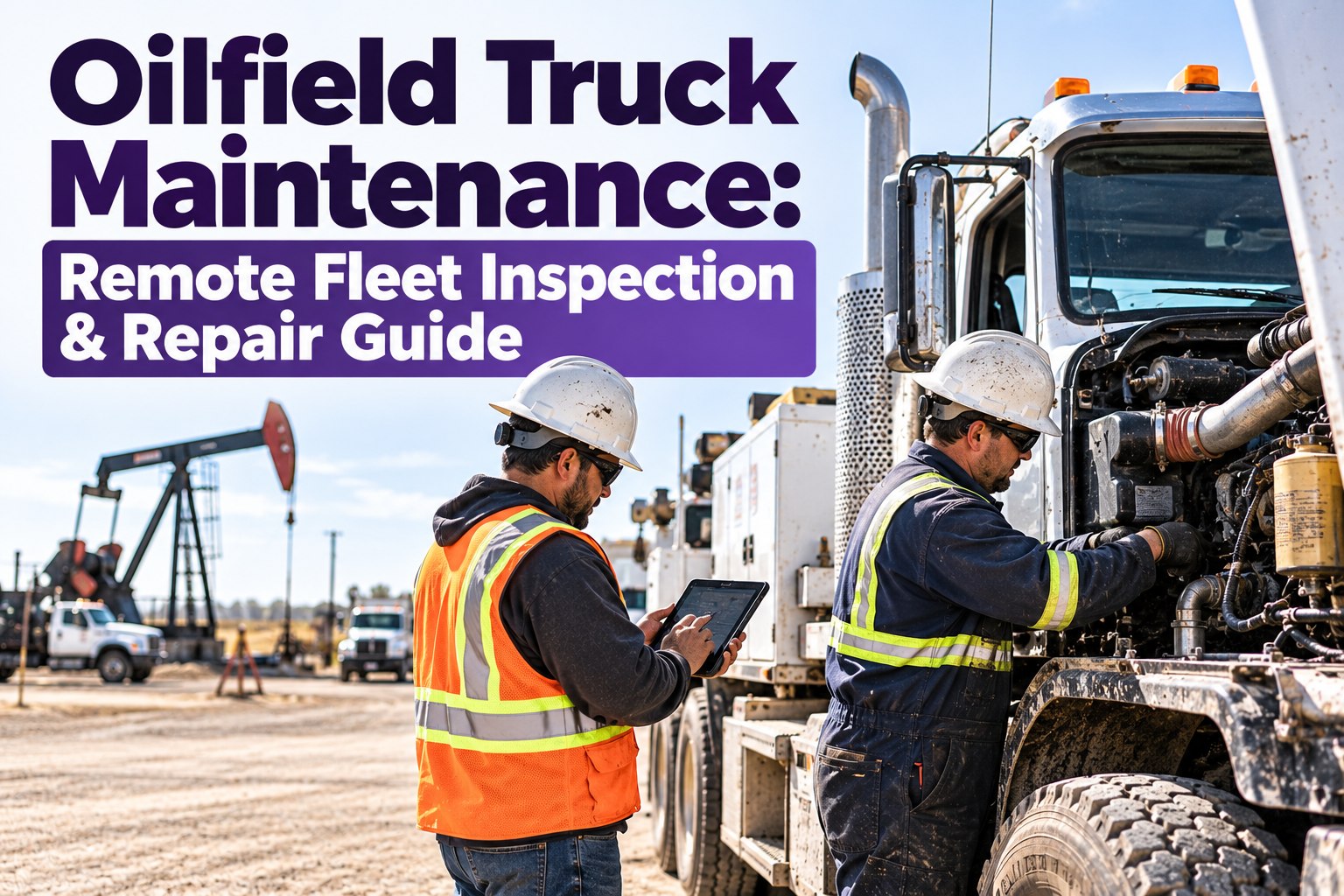
An oilfield truck breaks every assumption a highway fleet runs on. It logs ten engine hours in a day while moving a few miles, so the odometer lies about its wear. It works fifty miles from the nearest paved road, so a breakdown isn't a tow — it's a heavy wrecker, a mobile mechanic on a callout minimum, and a well pad standing idle. The same alternator that's a $300 shop job becomes a $3,000 lease-road emergency. On the oilfield, maintenance isn't about fixing trucks faster — it's about never letting them fail where fixing them is four times the cost. Start free and catch oilfield defects before the truck leaves the yard.
Oilfield Truck Maintenance: Remote Fleet Inspection & Repair Guide
Distance changes the math. A defect caught in the yard is a planned repair; the same defect found on a lease road is a four-figure callout and a shut-in well. This guide covers engine-hour PM, pre-dispatch inspection, harsh-environment wear, and spare-parts planning for remote sites. Truck Inspection & Maintenance Management Software schedules each truck by the hours it actually runs and turns a pre-trip defect into a work order before the truck ever reaches the field.
Why the Odometer Lies on the Oilfield
A wellsite truck's wear comes from idling and running equipment, not from distance. A unit that covers a few miles but logs ten engine hours — pumping, powering a PTO, waiting at the pad — is wearing like a truck that drove all day. Schedule it on miles and you'll service it far too late. The fix is to run PM on whichever clock comes first: engine hours, miles, or calendar.
Engine-Hour PM Tiers for Field Trucks
Classify each truck by its duty cycle first, then set the intervals — never one fleet-wide number. These are a starting point; tighten them to the manufacturer's spec and the conditions.
Oil and filter change, fluid-level checks, visual brake and belt inspection — the frequent light service.
Filter replacement, full brake-system inspection, tire and suspension check — the deeper periodic service.
Transmission and hydraulic service, full annual DOT inspection, major component review.
On unpaved wellsite roads, extreme heat or cold, and heavy dust, tighten every interval by 20–30%. Book a demo to schedule each truck by its real engine hours.
This is the whole game on the oilfield. A digital pre-dispatch inspection — one the truck can't skip before it moves — catches the leaking hose, the soft brake, the failing compressor while a mechanic and a parts shelf are twenty feet away. Miss it, and that same defect surfaces fifty miles out, where the repair costs four times as much and a crew is standing idle waiting on the truck. The inspection that takes two minutes in the yard is the cheapest maintenance in the whole operation.
What Wears Faster on the Oilfield
Rough lease roads, dust, extreme temperatures, and constant load punish the components that a highway truck barely stresses. These get the hardest look and the tightest intervals.
Schedule by the Hours It Runs, Catch the Defect Before It Rolls
Oilfield maintenance is won in two places: servicing each truck on the clock it actually wears by, and catching the defect before the truck leaves the yard. Truck Inspection & Maintenance Management Software tracks every unit's engine hours and miles, fires each PM tier on whichever comes first, and runs the pre-dispatch inspection on a phone — offline when there's no signal, syncing when there is. A flagged defect becomes a dated work order before dispatch, every safety item acknowledged, graded, and assigned within 4 hours, so the breakdown never happens fifty miles out where it costs four times as much.
Spare Parts Planning for Remote Sites
Fifty miles from the nearest parts counter, the part you didn't stock is the part that grounds the truck for a day. Remote operations flip the inventory math — carrying a critical spare is cheaper than the downtime of waiting for one.
Maintenance in a Hazardous Environment
Oilfield work happens where hazardous gases, including H2S, may be present — so field maintenance is never just a mechanical task. Safety governs the work before a wrench is turned.
This is general awareness, not a safety procedure — always follow your site's HSE program, qualified personnel, and gas-detection requirements for any work in a potential H2S environment.
Frequently Asked Questions
Keep Field Trucks Running Where a Breakdown Costs the Most
Truck Inspection & Maintenance Management Software schedules each oilfield truck by engine hours and miles, runs the pre-dispatch inspection offline in the field, and turns any defect into a work order before the truck rolls. Every safety defect acknowledged, graded, and assigned within 4 hours — so the failure never happens fifty miles out where it costs four times as much.