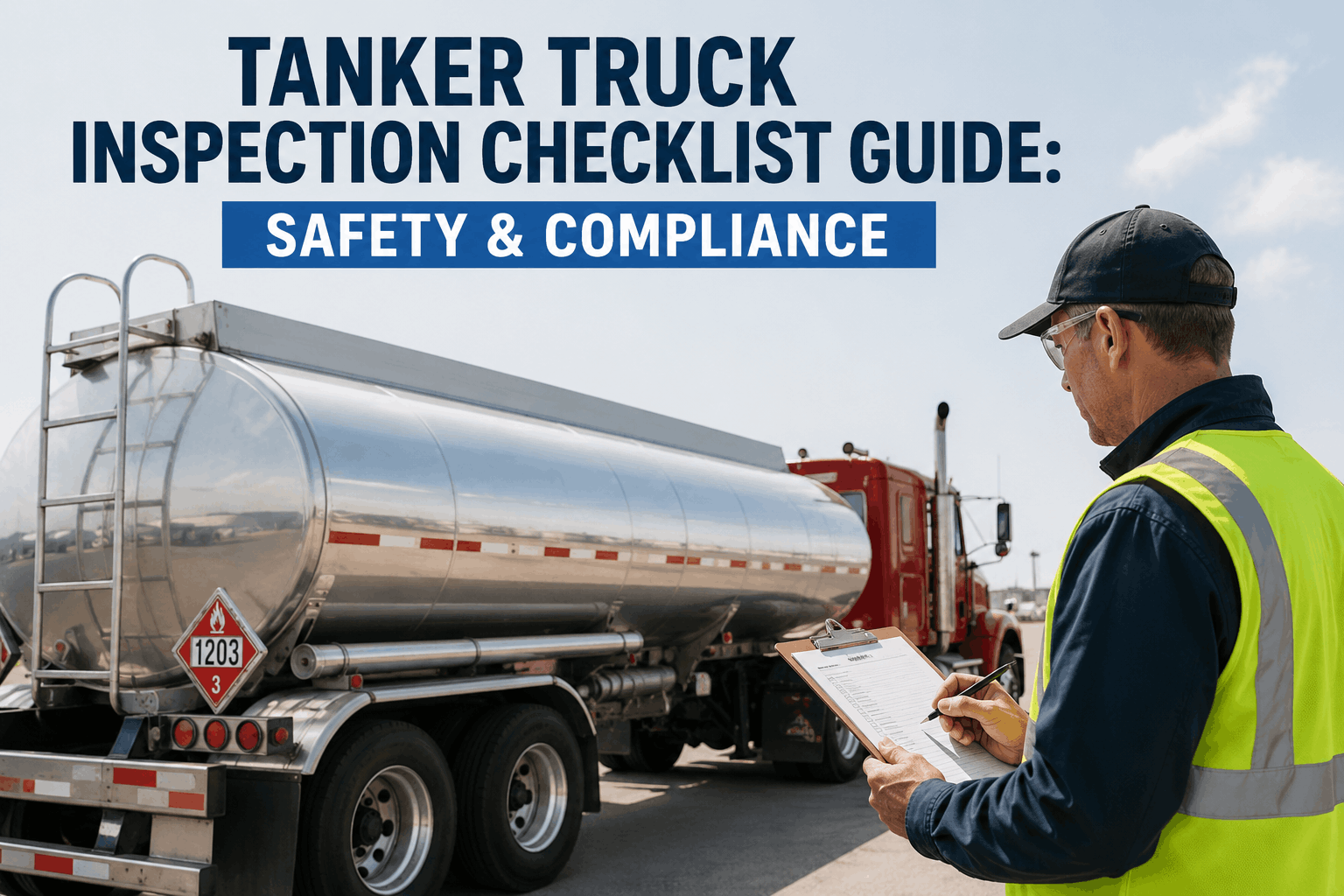
A tanker isn't a trailer with a barrel bolted to it — it's a pressure vessel that carries fuel, chemicals, or food-grade product under federal specifications no other trailer type has to meet. Standard DVIRs don't cover cargo tank testing. Standard PM schedules don't cover pressure retests. Miss one of the six DOT-mandated tests under 49 CFR 180.407 and the tank is legally banned from carrying hazmat freight until it's re-certified. This blog breaks down the tanker-specific inspection and PM program 2026 fleets actually need — the six tests, the intervals per tank spec, and the workflow that keeps every tank current. Start a free trial to run a tanker-ready compliance calendar today.
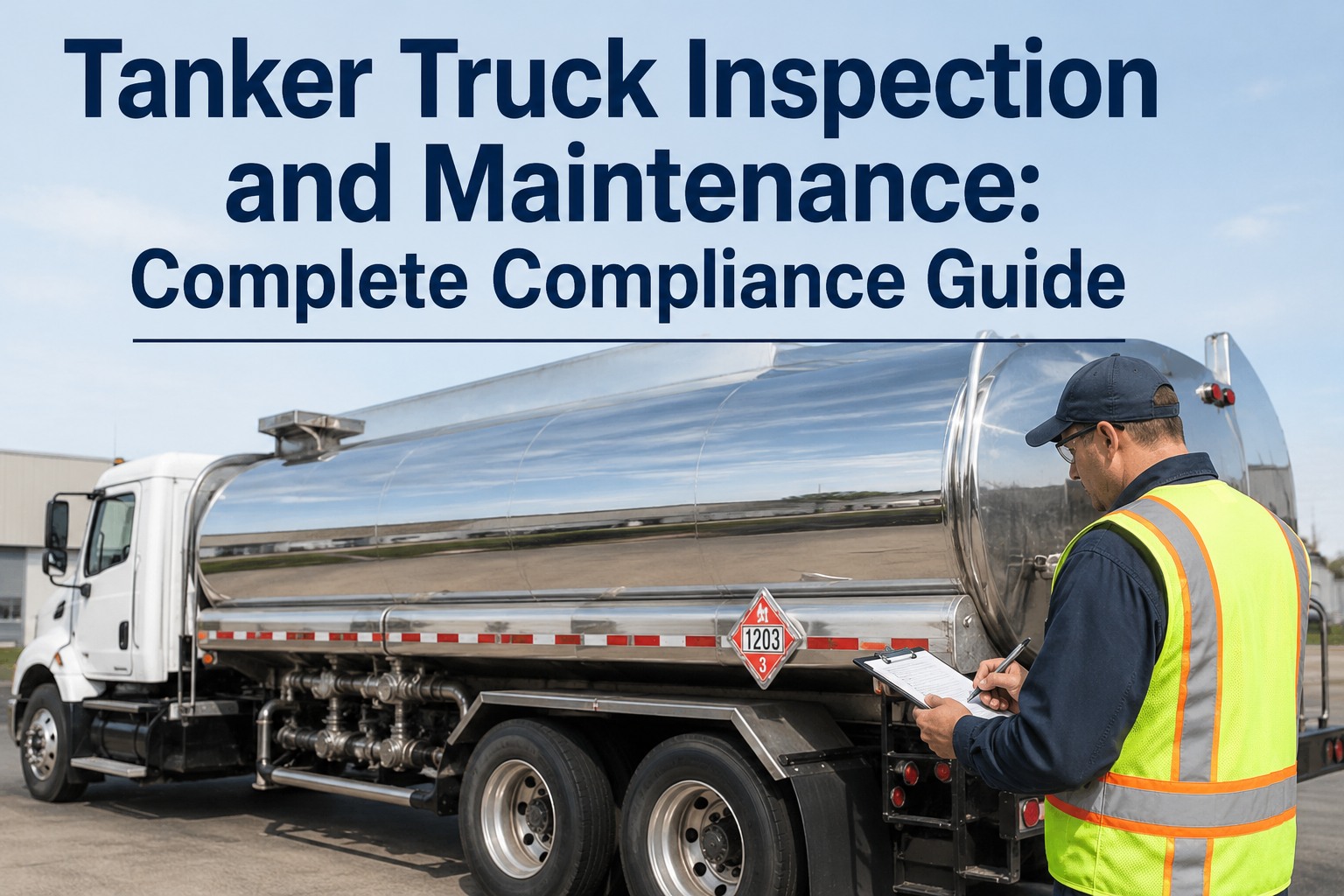
Tanker Truck Inspection and Maintenance: Complete Compliance Guide
Tanker fleets carry two parallel compliance obligations — the standard FMCSA DVIR and the DOT cargo tank test cycle under 49 CFR 180.407. Six tests, five intervals, one platform to keep every tank in-service and every DOT record audit-ready.
Why Tanker Compliance Is a Different Game
Standard trailer maintenance is a mechanical discipline. Tanker maintenance is that plus a federal pressure-vessel certification program that inspects the vessel itself against the specification it was built to. Break either half and the tank can't roll.
Every specification cargo tank (MC 306, MC 307, MC 312, MC 330, MC 331, DOT 406, DOT 407, DOT 412) is built and certified to a federal spec. Ongoing tests verify the vessel still meets that spec.
A cracked shell or failed relief valve isn't a downtime event — it's a potential explosion, toxic release, or environmental disaster. PHMSA treats the compliance program accordingly.
Most tests require an inspector qualified under § 180.409 — not just any qualified mechanic. In-house options exist for pressure and leakage tests only.
Each specification cargo tank carries permanent markings for the last completed test of each type. Miss one interval and the certification lapses — visible to any inspector who walks up to the tank.
The Six DOT Cargo Tank Tests Under 49 CFR 180.407
The regulation defines six distinct tests. Each has its own interval, its own inspector qualification requirement, and its own marking on the tank. This is the framework every tanker fleet must live inside.
Full inspection of shell, heads, attachments, piping, valves, and markings. Verifies structural integrity of the vessel from the outside.
Tank held at specified test pressure for minimum 5 minutes with all valves and accessories in place and operative. Detects seal and gasket failures.
Manways opened, interior baffles, bulkheads, welds, and shell examined for corrosion, cracks, dents, or defects. The most thorough of the periodic tests.
Hydrostatic or pneumatic pressure test per § 178.346-3, including all appurtenances. Verifies vessel can safely hold specified pressure.
Ultrasonic thickness measurement of tank walls. Required only for unlined tanks carrying liquids corrosive to the tank material.
Interior lining examined for degradation, cracks, or coating failure. Required annually on lined tanks carrying corrosive products.
The Test Interval Matrix by Tank Specification
Intervals vary by tank specification. A mid-cycle mistake reading the wrong spec's schedule is one of the most common — and most expensive — compliance failures in the industry.
The Tanker DVIR: Beyond Standard Trailer Items
The standard trailer DVIR misses about a dozen tanker-specific items that can ground the truck at roadside or cause a hazmat incident. A tanker-ready DVIR template covers both worlds.
Both Compliance Clocks. One Platform.
Truck Inspection & Maintenance connects drivers, mechanics, and managers with mobile DVIRs, PM reminders, digital work orders, and audit-ready reports — with tanker-specific DVIR templates and cargo tank test tracking on the same platform. Every DVIR filed, every cargo tank test scheduled, every DOT record ready for audit.
Product-Specific Considerations
Cargo type dictates significant program additions beyond the base 180.407 tests. Three product categories cover most tanker fleets.
Key adds: Vapor recovery system testing, emergency valve certification, product-specific loading procedures, EPA Stage II compliance where applicable, static bonding checks at loading racks.
Key adds: Thickness testing on unlined tanks (every 2 years), lining inspection where applicable (annual), product compatibility verification per load, more rigorous internal visual criteria.
Key adds: Post-wash sanitation certification, FDA sanitary standards compliance, tank interior swab records, wash certificates retained with each load documentation.
The Three Compliance Traps That Ground Tanker Fleets
Three misreadings of the 180.407 framework show up in almost every enforcement action. Recognize them and you avoid all three.
The 180.407 tests are calendar-driven, not condition-driven. A tank that hasn't leaked in 5 years still requires the internal visual and pressure test on schedule. "Looks fine" is not a legal exemption from the interval.
External visual, internal visual, thickness, and lining tests must be performed by a Registered Inspector qualified under § 180.409. A qualified mechanic without that designation cannot legally certify the test.
Under § 180.407(c)(3), any cargo tank out of hazmat service for 12+ months requires a fresh pressure test before returning to service. Storage time triggers a test obligation regardless of interval status.
Frequently Asked Questions
The tank cannot legally be filled or offered for transportation until the test is completed and the certification is restored. A tanker with an expired 180.407 test found at roadside is placed out of service immediately. Beyond the direct downtime, missed intervals often trigger PHMSA enforcement action and civil penalties. Automated interval tracking with 90/60/30-day alerts is not a nice-to-have for tanker fleets — it's the difference between operating and being grounded. Start free and set alerts by tank.
Yes — pressure test and leakage test can be performed in-house by a qualified employee under conditions defined in § 180.407(g)(1)(viii-ix). The employee must be qualified per specific procedural and equipment requirements, but does not need to be a Registered Inspector. External visual, internal visual, thickness testing, and lining inspection all require a Registered Inspector under § 180.409 — there's no in-house shortcut for those four.
Spreadsheet tracking works up to about 10 tanks; beyond that, interval slippage becomes near-certain. Digital platforms track each tank's five test cycles independently with pre-loaded intervals per DOT specification, alerts at 90/60/30 days before each cycle deadline, and audit-ready records tied to the specific tank identifier. Cross-referencing test history against tank markings takes seconds instead of hours. Fleet size where this becomes urgent is smaller than most managers assume.
Food-grade tanker fleets carry an entire second compliance layer beyond 180.407 — FDA sanitary standards, post-wash sanitation certification, interior swab testing per product, and wash certificate retention with each load. The base cargo tank tests still apply. A tanker-ready maintenance platform should support wash certificate uploads, sanitation records, and product-specific loading protocols alongside the DOT 180.407 cycle. Ask about food-grade tanker configurations.
Tanker Compliance in One Purpose-Built Platform
Truck Inspection & Maintenance is purpose-built for trucking — connecting drivers, mechanics, and managers with mobile DVIRs, PM reminders, digital work orders, and audit-ready reports. Tanker fleets get tanker-specific DVIR templates and cargo tank test tracking on the same platform, turning maintenance from a cost center into an uptime engine.