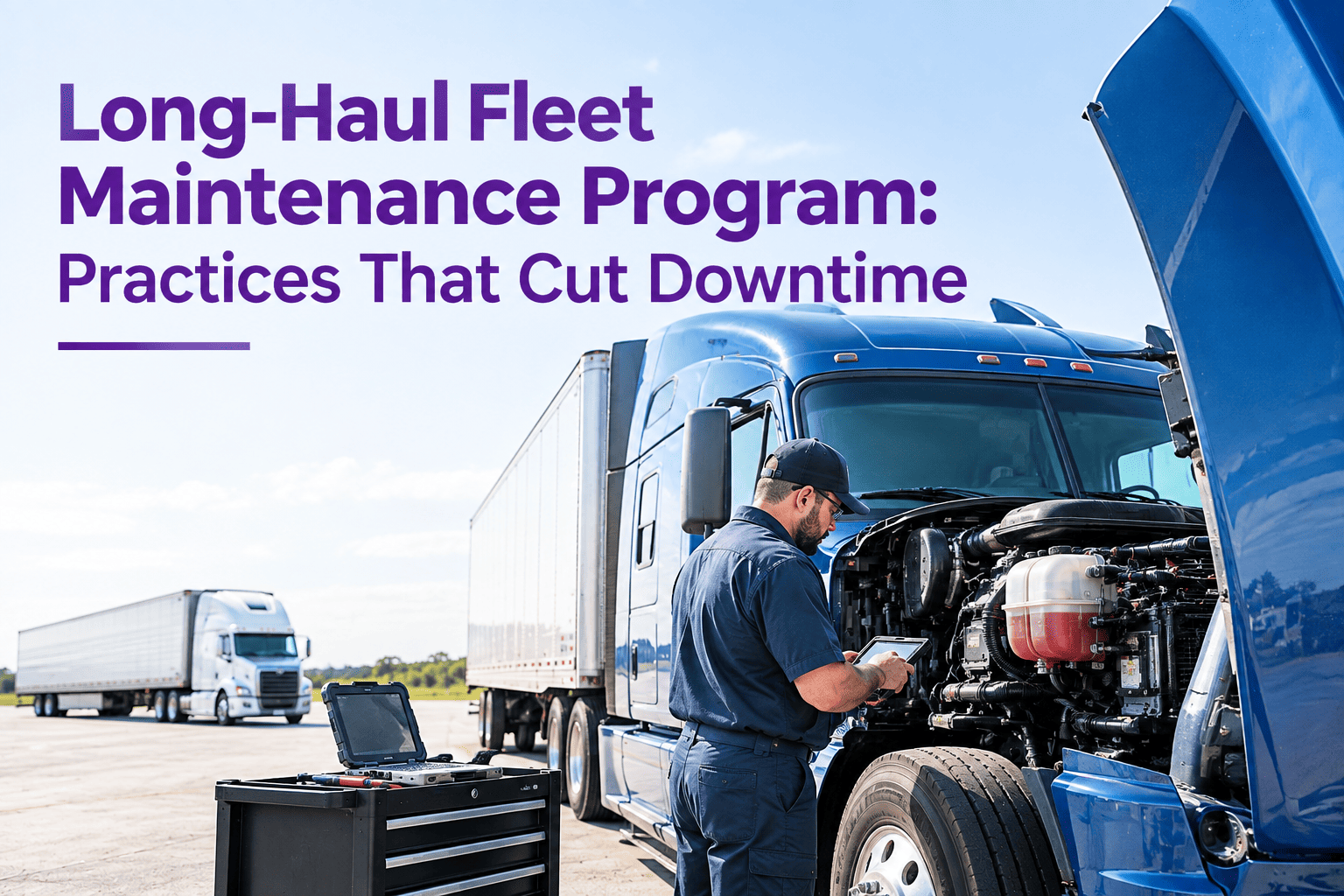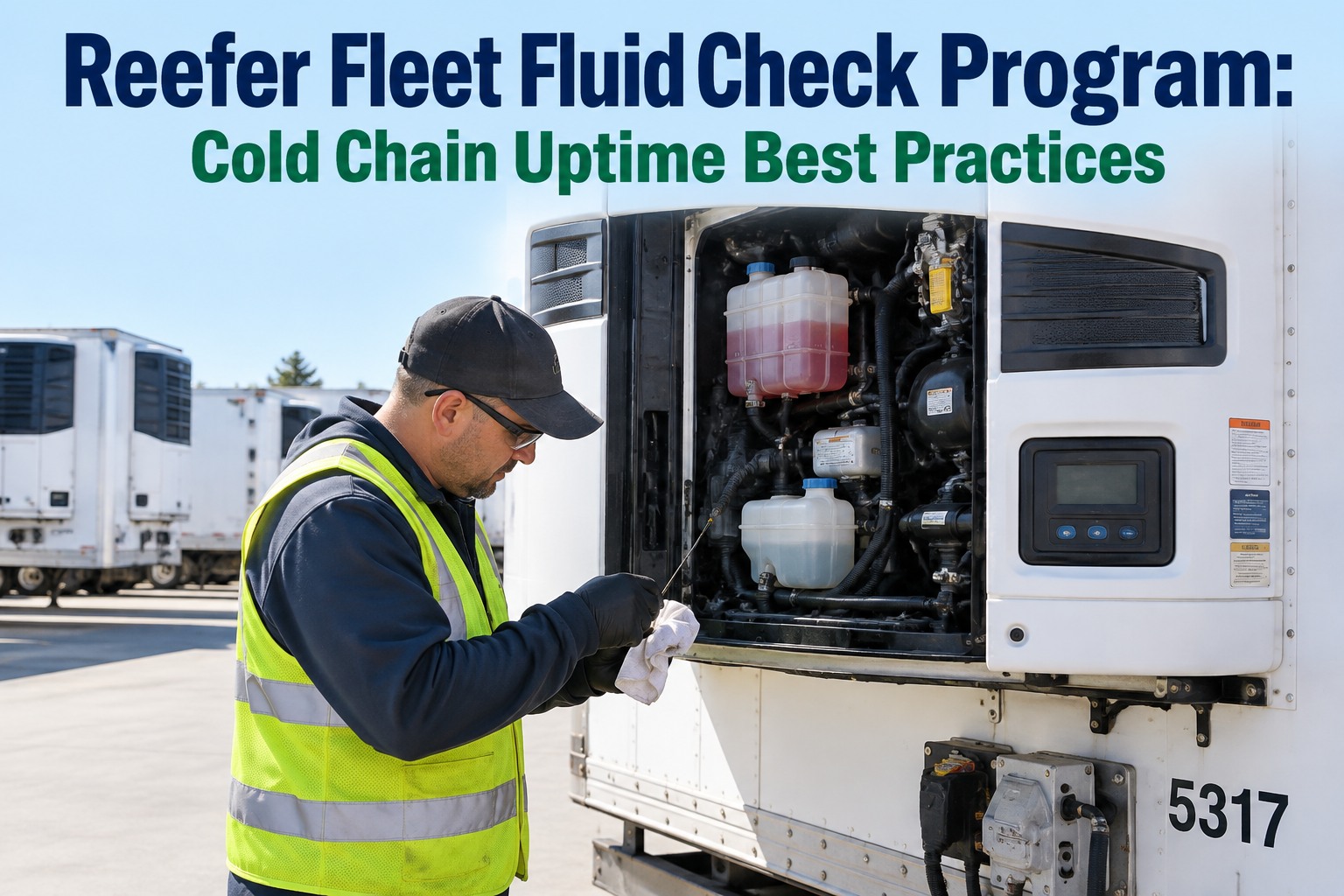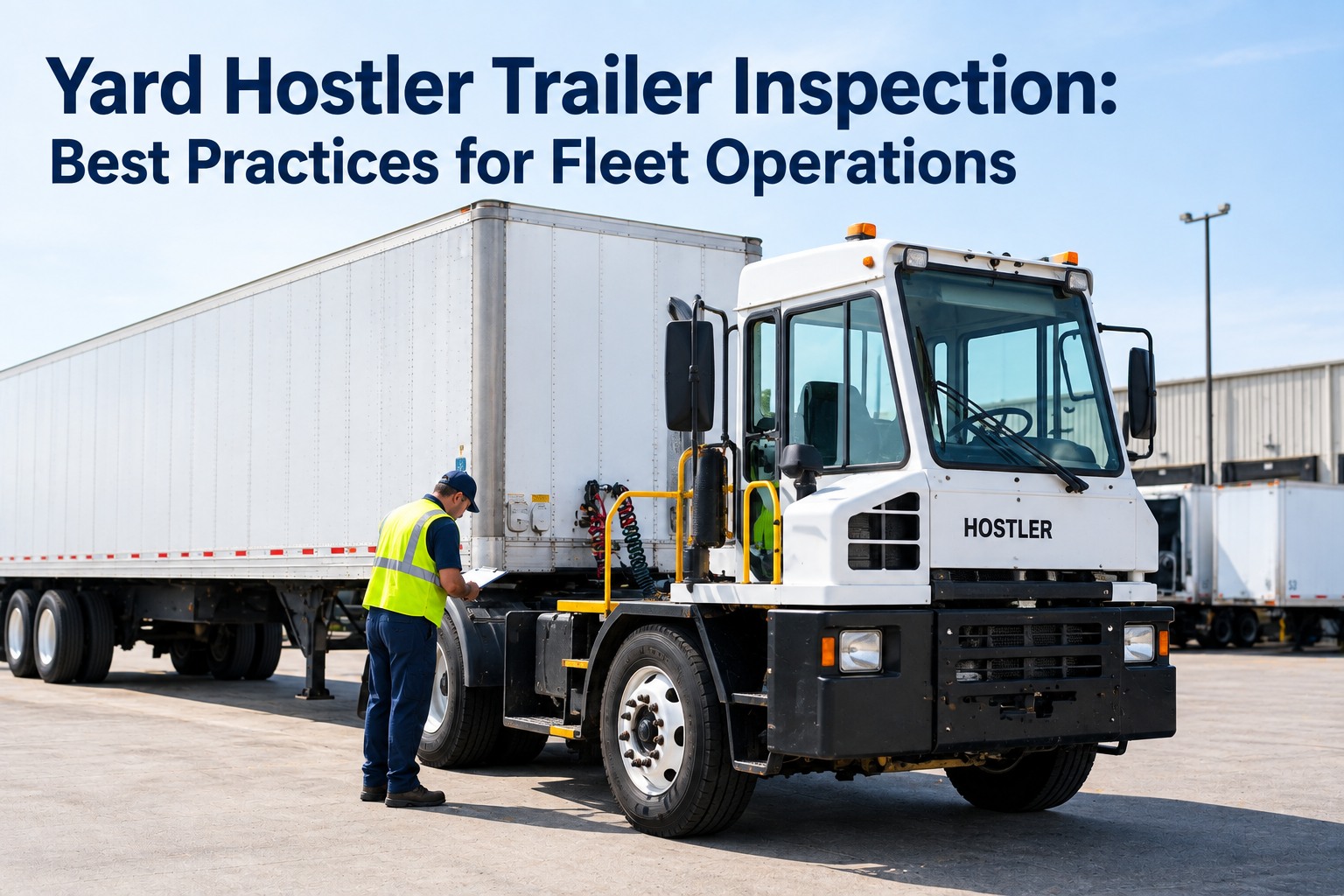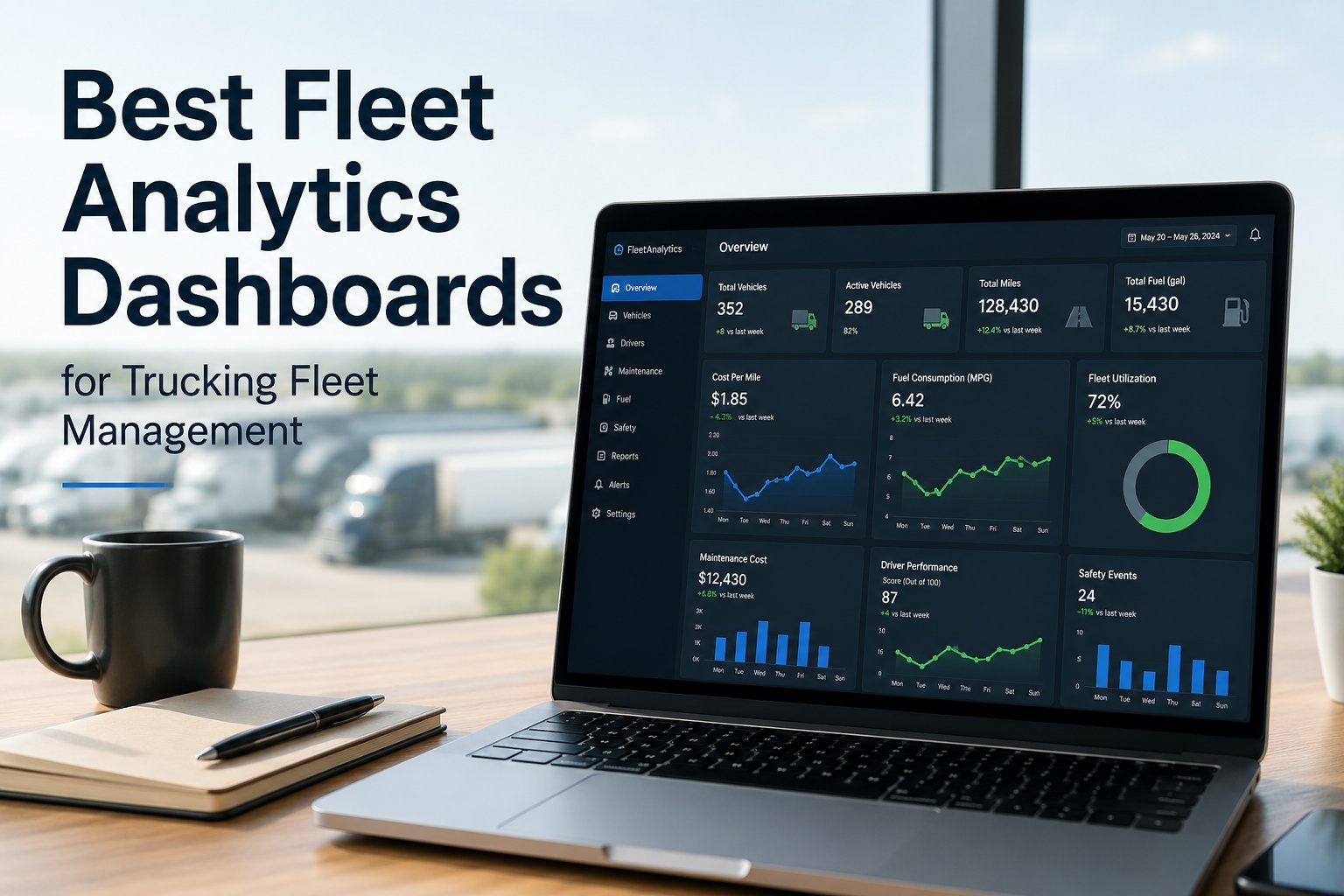
Two identical tractors, same engine, same spec sheet — one runs 120,000 interstate miles a year with the cruise control doing most of the work, the other runs 55,000 regional miles with fifteen stops a day, a loading dock every few hours, and the engine never getting hot enough to burn off the DPF. Put them on the same mileage-based PM schedule and one gets over-serviced while the other quietly wears out early. The odometer reads differently than the engine ages. Start free and run duty-cycle-aware PM scheduling across your mixed fleet.
Regional and Local Trucking Fleet Maintenance Playbook
Fifteen stops a day, a loading dock every couple of hours, and a DPF that never gets hot enough to regenerate passively — a regional or local truck wears out its starter, brakes, and aftertreatment system on a completely different curve than a long-haul tractor, even at lower mileage. Truck Inspection & Maintenance Management Software runs a separate PM interval set for regional and local duty, built around hours and idle time, not just the odometer.
One Flat PM Schedule Fails Half the Fleet
Manufacturers publish PM intervals by duty cycle for exactly this reason — a 60,000-mile oil interval that's conservative for a long-haul highway tractor can be meaningfully too long for the same engine running regional stop-and-go, where every start-stop cycle stresses the starter, alternator, mounts, and brakes in ways steady highway driving never does.
- 100K+ miles a year, mostly highway
- Minimal idle time, steady engine load
- Mileage-to-wear ratio stable & predictable
- Longer PM intervals generally appropriate
- 40K–80K miles a year, mixed highway & stop-start
- Higher idle %, frequent loading dock time
- Every stop-start cycle wears starter & brakes
- Shorter, hour-based intervals needed
What Wears Differently on a Regional or Local Truck
Why "Whichever Comes First" Beats a Single Trigger
A regional truck can hit its hour-based wear threshold weeks before it reaches the mileage interval printed in the manual — or the reverse, on a longer regional lane. Running two or three triggers in parallel and acting on whichever fires first catches wear across every duty cycle a mixed fleet actually runs, instead of forcing every truck onto the trigger that happens to be easiest to track.
| PM Trigger | Long-Haul | Regional / Local |
|---|---|---|
| Mileage | Primary | Secondary |
| Engine Hours | Secondary | Primary |
| Idle % | Monitored | Reclassifies duty cycle if exceeded |
| Calendar Time | Backstop | Backstop |
PM Schedules Built for How the Truck Actually Runs
Our Truck Inspection & Maintenance Management Software reads engine hours, idle percentage, and mileage per truck, classifies each one by real duty cycle, and applies the right interval set automatically — so a regional truck isn't serviced on a long-haul schedule, and a long-haul truck isn't serviced too often just to keep one template simple.
Frequently Asked Questions
Stop Running One PM Schedule Across a Fleet That Doesn't Work One Way
Our Truck Inspection & Maintenance Management Software classifies every truck by real duty cycle — hours, idle percentage, and mileage — and applies the PM interval set that actually matches how it's used, so regional trucks stop wearing out early and long-haul trucks stop getting serviced more than they need.