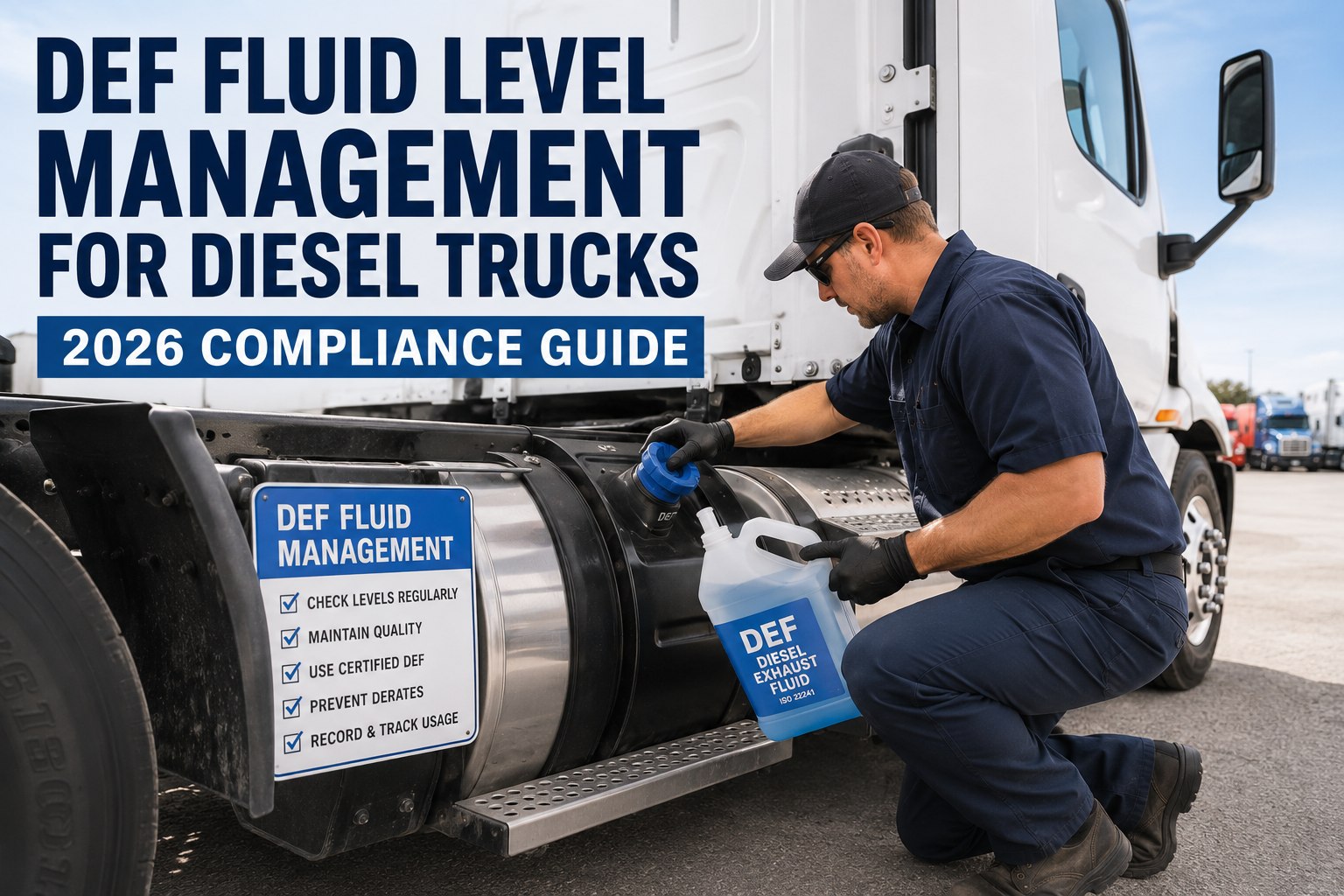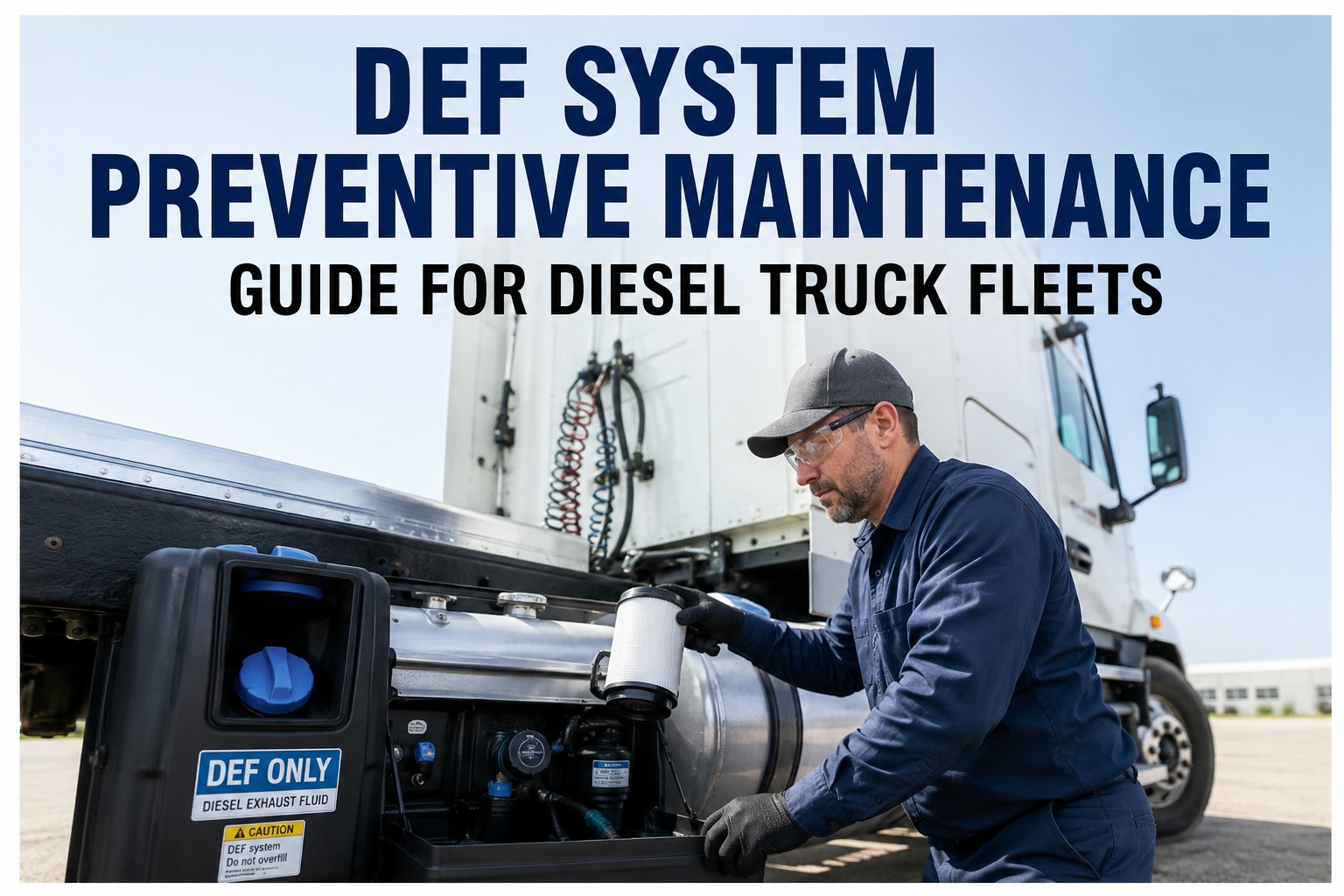
The DEF system is one of the most PM-sensitive assemblies on any 2010+ diesel truck six components, four failure modes, and a maintenance window that gets tighter the colder and shorter your routes get. Skip the wrong PM interval and the engine derates to 5 mph on the shoulder of I-80. This blog breaks down every DEF system component that needs scheduled maintenance, the exact intervals OEMs specify, and the workflow that keeps DEF filters, dosers, and pumps ahead of failure — not chasing it. Start a free trial to run a DEF PM schedule today.
DEF System Preventive Maintenance Guide for Diesel Truck Fleets
The DEF system's six components each carry their own PM interval, and the cost of missing one is a $6,500 doser replacement or a derated truck on the shoulder. Here's the complete OEM cadence, component by component, plus the workflow that catches drift before failure.
The DEF System at a Glance
Before the PM schedule, know what you're maintaining. Six components form the modern DEF system, and each interacts with the others — a failure in one cascades into stress on the rest.
Reservoir for the urea-water solution. Vulnerable to contamination (fuel, coolant, wash fluid) and freezing in cold climates.
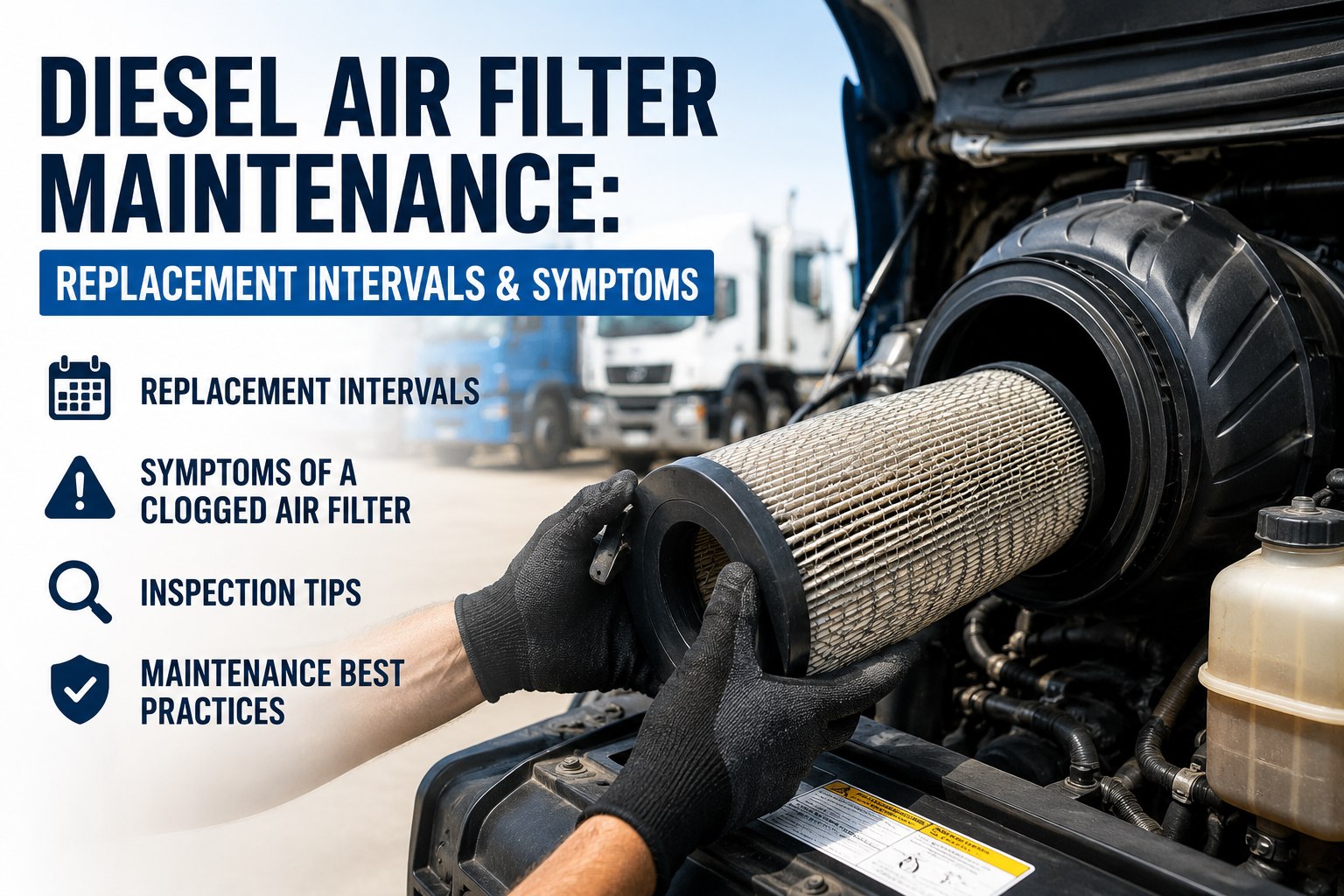
Inline filter that keeps contaminants out of the pump and injector. The single most schedule-critical component.
Pressurizes and moves DEF from tank to injector. Has its own internal filter on most OEMs.
Heated lines carrying DEF from pump to injector. Heaters prevent freezing; failure causes cold-start faults.
Meters DEF into the exhaust stream. Prone to crystallization from heat + urea deposits.
Tank-mounted assembly with level, quality, and temperature sensors. Feeds ECM the data that keeps the system in spec.
The Complete PM Cadence by OEM
OEM intervals vary — significantly — and running your fleet on a generic schedule instead of the correct one is one of the fastest ways to over-service some trucks and under-service others. Here's the current OEM guidance for the components that matter most.
The Four Failure Modes to Catch Before They Cascade
Every DEF failure traces back to one of four root causes. Recognizing the signs early is what separates a shop PM from a roadside tow.
DEF PM That Runs Itself
Truck Inspection & Maintenance schedules DEF filter, pump, doser, and quality checks per OEM interval per unit — with automatic work order generation, mobile shop routing, and defect capture. One platform for DVIRs, PM scheduling, work orders, and DOT records — no defect, PM, or DOT record ever slips.
The DVIR & Shop Checklist for Every DEF PM
Two lists work together — what the driver checks every day, and what the shop covers at each PM interval. Getting both right is what keeps the system out of derate territory.
The Three Mistakes That Kill DEF Systems Early
These are the mistakes that turn a $200 filter into a $6,500 doser. Every one is preventable at zero cost.
Frequently Asked Questions
A restricted filter causes progressive dosing faults, eventually triggering a check-engine light, then a countdown warning, then a 5-mph derate. Beyond the immediate downtime, the pump and injector work harder against the restriction — accelerating wear and setting up more expensive failures downstream. A $200 filter change avoids a $2,000-$6,000 cascade. There's no upside to skipping the interval. Start free and set OEM-specific triggers per unit.
Any API-certified DEF meeting ISO 22241 specification is safe to use — the specification exists precisely so fleets aren't locked into one brand. What matters is the API diamond certification on the container. Non-certified "DEF" (or DEF stored past its shelf life, or DEF that's been temperature-cycled through summer heat) can contain concentrations or contaminants outside spec that damage the system. Certified brand at proper storage temp = safe. Anything else = expensive risk.
DEF freezes at 12°F (-11°C), but frozen DEF is not damaged — it thaws back to spec fluid. The risk is heater failure: if the tank/line heaters don't function, DEF stays frozen and the system reports faults. Winter PM should include a heater continuity check on the tank heater, supply line heater, and header heater. Keep tanks above 25% for cold storage — a nearly-empty tank has less thermal mass and thaws slower. Never add anti-freeze or any additive to DEF; that's what the heaters exist for.
Yes — significantly. Urban delivery trucks with frequent stops, high idle, and short-cycle operation stress the DEF system harder than long-haul equivalents. Passive regeneration happens less often, doser crystallization risk is higher, and filter loading accelerates. Urban routes typically warrant 50-70% of the published OEM mileage interval, with doser cleaning bumped from annual to semi-annual. Long-haul trucks running steady interstate mileage can generally run to the published interval with confidence. Ask about duty-cycle-adjusted PM scheduling.
DEF PM That Never Misses a Filter, Never Chases a Derate
Truck Inspection & Maintenance gives dispatch, drivers, and the shop a single system for inspections, preventive maintenance, and repair tracking — so no DEF filter, doser cleaning, or DOT record ever slips. OEM-specific intervals per unit, mobile DVIR capture, defect-to-work-order routing, audit-ready compliance records. One platform. One record per truck.