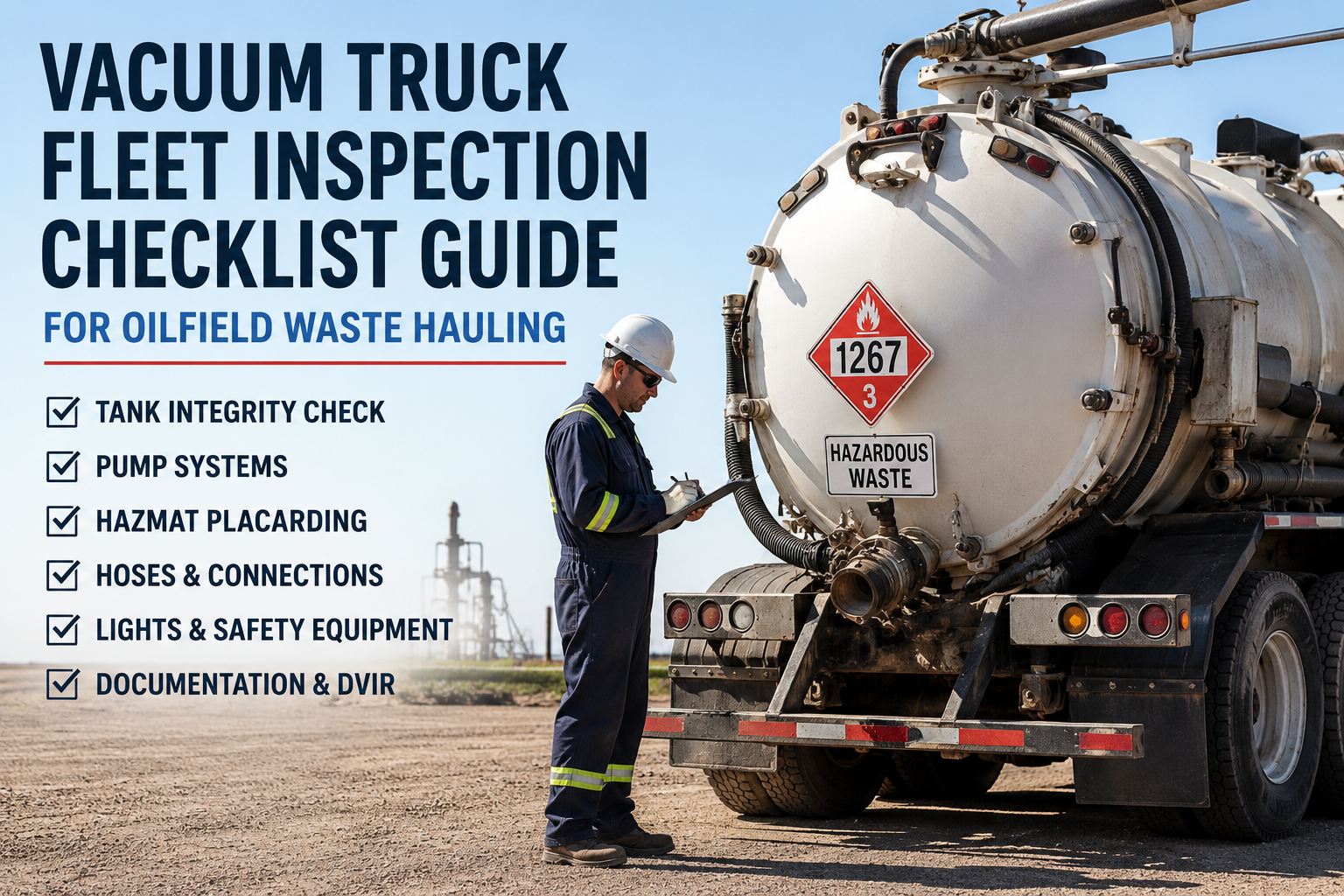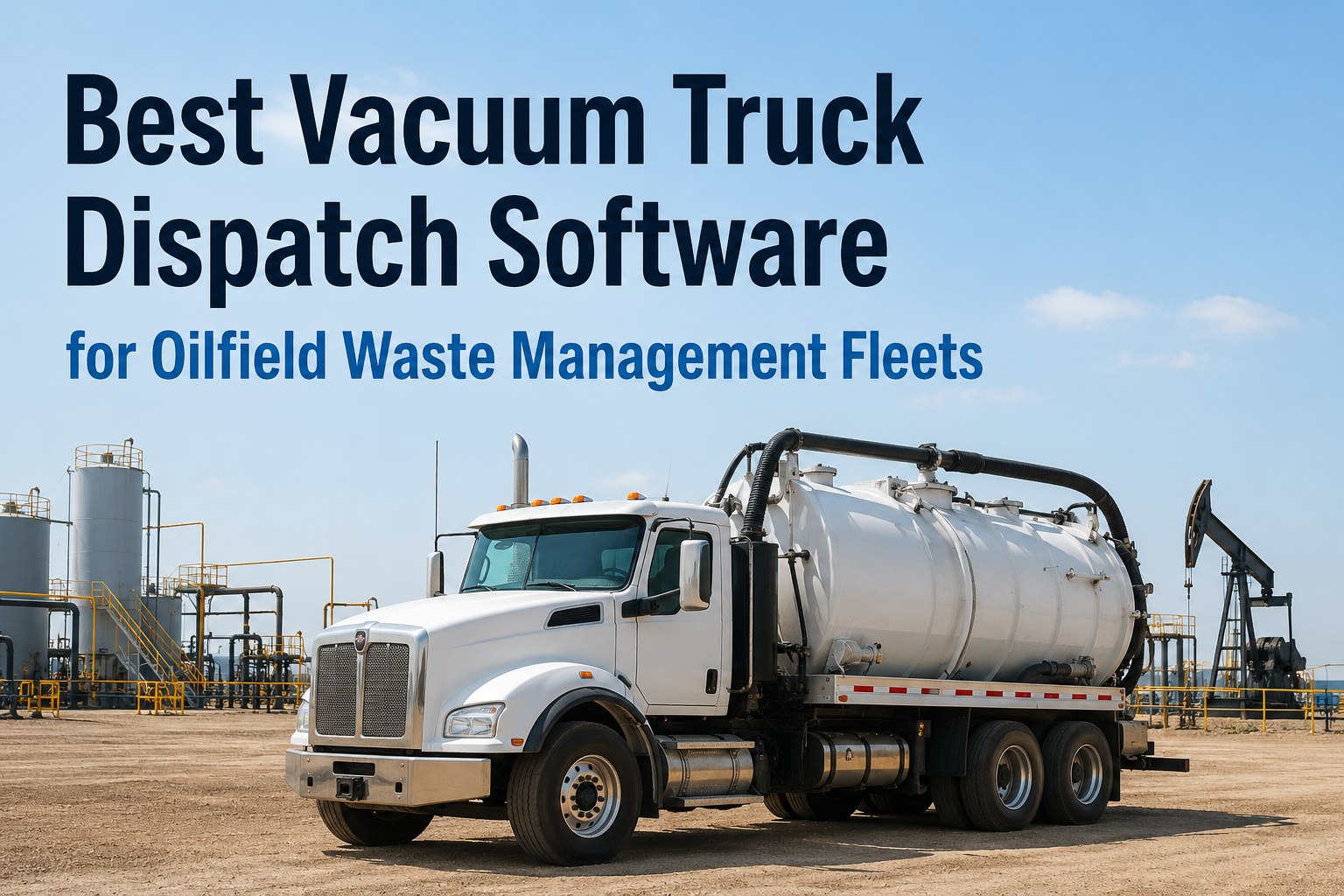
Vacuum truck dispatch in the oilfield isn't dispatch — it's a five-layer compliance puzzle wrapped around a logistics problem. Every produced-water load that leaves a wellsite is governed simultaneously by HAZMAT, EPA, FMCSA, state oilfield regulators, and the operator's own HSE standards. Tank levels need monitoring so trucks aren't sent to half-full sites or, worse, miss a full one and force an overflow. Routes need to match available truck capacity to SWD facility hours. Disposal manifests need to chain wellsite to truck to dump point with signatures at every handoff. Most fleets run all of this on whiteboards, spreadsheets, and radio calls — and pay for it in missed loads, compliance gaps, and audits that find what nobody had time to document. Truck Inspection & Maintenance brings dispatch, tank monitoring, route optimization, manifests, and inspection records into one operational view — so the load goes from wellsite to disposal without a paper trail gap. Start your free trial and turn the dispatch whiteboard into a live operational map.
Best Vacuum Truck Dispatch Software
For oilfield waste fleets juggling tank levels, manifests, SWD windows, and five regulatory layers.
Why Vacuum Truck Dispatch Is Not Like Other Trucking
General freight dispatch is logistics. Vacuum truck dispatch is logistics layered on top of regulatory compliance, tank physics, and disposal-window scheduling. Software built for general trucking misses these structural differences — Truck Inspection & Maintenance is built for them:
HAZMAT Regulations
49 CFR placarding, driver endorsements, shipping papers, emergency contact docs — required on every load that meets HM definitions.
EPA & RCRA
Generator obligations, waste characterization, manifest chain-of-custody. Audit-prone and increasingly common in upstream operations.
FMCSA / DOT
Standard commercial trucking compliance — HOS, DVIRs, CSA, IFTA. Layered on top of the HAZMAT and EPA stack.
State Oilfield Regulators
Texas RRC, North Dakota Industrial Commission, New Mexico EMNRD — each with their own produced-water and waste hauling rules.
Operator HSE Standards
Every major producer (XOM, COP, OXY) runs their own HSE requirements for contractors. Failure = removal from approved list.
Real-Time Capacity Math
Production rates × time × current level = when to dispatch. Software has to do this math live, per wellsite, across the field.
The 8 Must-Have Features for Vacuum Truck Dispatch Software
"Dispatch software" covers a wide spectrum. For vacuum truck operations, eight features separate platforms that actually work in the field from platforms that look good in a demo. Use this as your evaluation checklist:
Live Dispatch Board
Single screen shows every truck, every job, every tank — dispatchers stop alt-tabbing between spreadsheets and phone calls.
Tank Level Prediction
Math based on tank size + production rate + previous load — predicts when each wellsite needs a truck before it does.
Route Optimization
Multi-stop routes that match wellsite pickups to disposal facility hours — fewer deadhead miles, more loads per shift.
HAZMAT Manifests
Auto-generated manifests with shipper, hauler, disposal facility, waste characterization, signatures at every handoff.
Driver Certification Tracking
CDLs, HAZMAT endorsements, operator-specific orientations — expirations alerted before they become out-of-service issues.
SWD Facility Coordination
Tracks SWD hours, capacity, accepted waste streams — dispatcher routes loads to facilities that are actually open and accepting.
Per-Load Field Tickets
Digital tickets with wellsite, volume, waste type, signatures — feed straight into billing. No paper, no transcription, no errors.
Truck Inspection & PM
DVIRs, scheduled PMs, parts tracking on every asset — because a vacuum truck breakdown strands a wellsite, not just a load.
Tank Level Monitoring — The Overflow Prevention System
The single most expensive failure in vacuum truck operations isn't a missed load — it's a tank overflow. Spilled produced water triggers state regulator reporting, operator HSE incidents, and remediation costs. Truck Inspection & Maintenance shows tank levels live across every wellsite, color-coded so the next dispatch is obvious:
Healthy
Wellsite #A12. Production rate normal. Next dispatch projected 48 hours out. No action needed.
Monitor
Wellsite #B07. Climbing faster than baseline. Dispatch queued for tomorrow. Visible on dispatch board.
Schedule Now
Wellsite #C03. Inside 24-hour overflow window. Dispatch auto-prioritized to next available truck.
Immediate
Wellsite #D11. Overflow risk in hours. Operations director alerted. Truck rerouted from lower-priority job.
Turn the dispatch whiteboard into a live map.
Truck Inspection & Maintenance handles tank monitoring, route optimization, manifests, driver certs, and inspection records on every asset — for vacuum truck fleets operating in upstream and midstream. Free for up to 3 vehicles. Contact support to plan your rollout.
The Disposal Documentation Chain — Wellsite to SWD in 5 Steps
Every produced-water load creates a documented chain of custody from generator to disposal. A break anywhere in the chain is a regulatory finding waiting to happen. Truck Inspection & Maintenance enforces every step:
Wellsite Pickup
Driver scans wellsite, captures starting tank level, waste characterization (if required), pickup signature from operator rep.
Load Verification
Volume confirmed (sight glass or meter), HAZMAT placards verified, shipping papers generated and printed if required for transport.
In-Transit Tracking
GPS log records route, stops, dwell time. Required for state regulator audits and operator chain-of-custody records.
SWD Delivery
Facility scan captures delivery time, volume received, ticket number from SWD scale, attendant signature.
Manifest Close-Out
Complete chain-of-custody PDF auto-generated. Filed against wellsite, truck, driver, disposal facility. Accessible for audit in seconds.
Route Optimization — The Old Way vs The Right Way
Old-school vacuum truck dispatch optimizes for "which truck is closest." That misses tank levels, SWD hours, and driver HOS. Modern route optimization handles all three. Here's the difference on a typical day:
Whiteboard Dispatch
Optimized Dispatch
The Vacuum Truck ROI Stack — Where Software Pays for Itself
Vacuum truck operations have unusually fast software ROI because every operational lever — loads per shift, deadhead miles, missed dispatches, overflow incidents — has a direct dollar value. Year 1 numbers for a 15-truck vacuum fleet:
Frequently Asked Questions
What features should I look for in vacuum truck dispatch software?
The eight non-negotiables: live dispatch board, tank level prediction, multi-stop route optimization, HAZMAT manifest generation, driver certification tracking, SWD facility coordination, digital field tickets, and integrated inspection & PM. Anything missing from this list creates a gap that operations will eventually fall through.
How does Truck Inspection & Maintenance handle tank level monitoring?
Each wellsite is configured with tank size and historical production rate. The platform calculates fill level live based on time since last pickup and tracks against the production baseline. Color-coded status (green/amber/red) makes the next dispatch obvious from the board, with auto-priority adjustments as wellsites approach overflow risk. Sign up free to configure your first 3 wellsites.
How long does implementation take for an oilfield vacuum fleet?
Most operations are running live in 5-7 working days. Setup includes loading trucks, drivers, wellsites, SWD facilities, and configuring the inspection templates. The biggest variable is field training — drivers typically need 15-20 minutes to learn the mobile workflow, and dispatchers run in parallel with their existing whiteboard for the first week.
Can it handle compliance for HAZMAT and produced water?
Yes — manifests, shipping papers, chain-of-custody, waste characterization, and disposal documentation are all built in. Each load creates a complete record from wellsite pickup to SWD delivery with signatures at every handoff. The full chain is auditable in PDF format in seconds, which is exactly what state regulators and operator HSE reviews want to see.
How is this different from general trucking software?
General trucking software handles freight A to B. Vacuum truck operations layer five regulatory frameworks (HAZMAT, EPA, FMCSA, state oilfield, operator HSE) on top of logistics that depend on real-time tank levels and SWD facility hours. Software built for box trucks can't do tank prediction or manifest chains. Our platform is built for the upstream / midstream waste-haul reality.
What's the typical ROI for vacuum truck dispatch software?
Faster than almost any other fleet software category. Most operations recover the cost in the first quarter through extra loads per shift alone — usually +1 to +2 per truck per day. Add deadhead reduction, overflow prevention, and dispatcher productivity and the Year 1 impact for a 15-truck fleet routinely lands above $400K. Talk to our team for a vacuum-specific ROI walkthrough.
Run your vacuum fleet from a live operational map.
Truck Inspection & Maintenance handles tank monitoring, route optimization, HAZMAT manifests, driver certs, SWD coordination, and PM tracking — built for upstream and midstream vacuum fleet operations. Free for up to 3 vehicles. No hardware. No contracts.