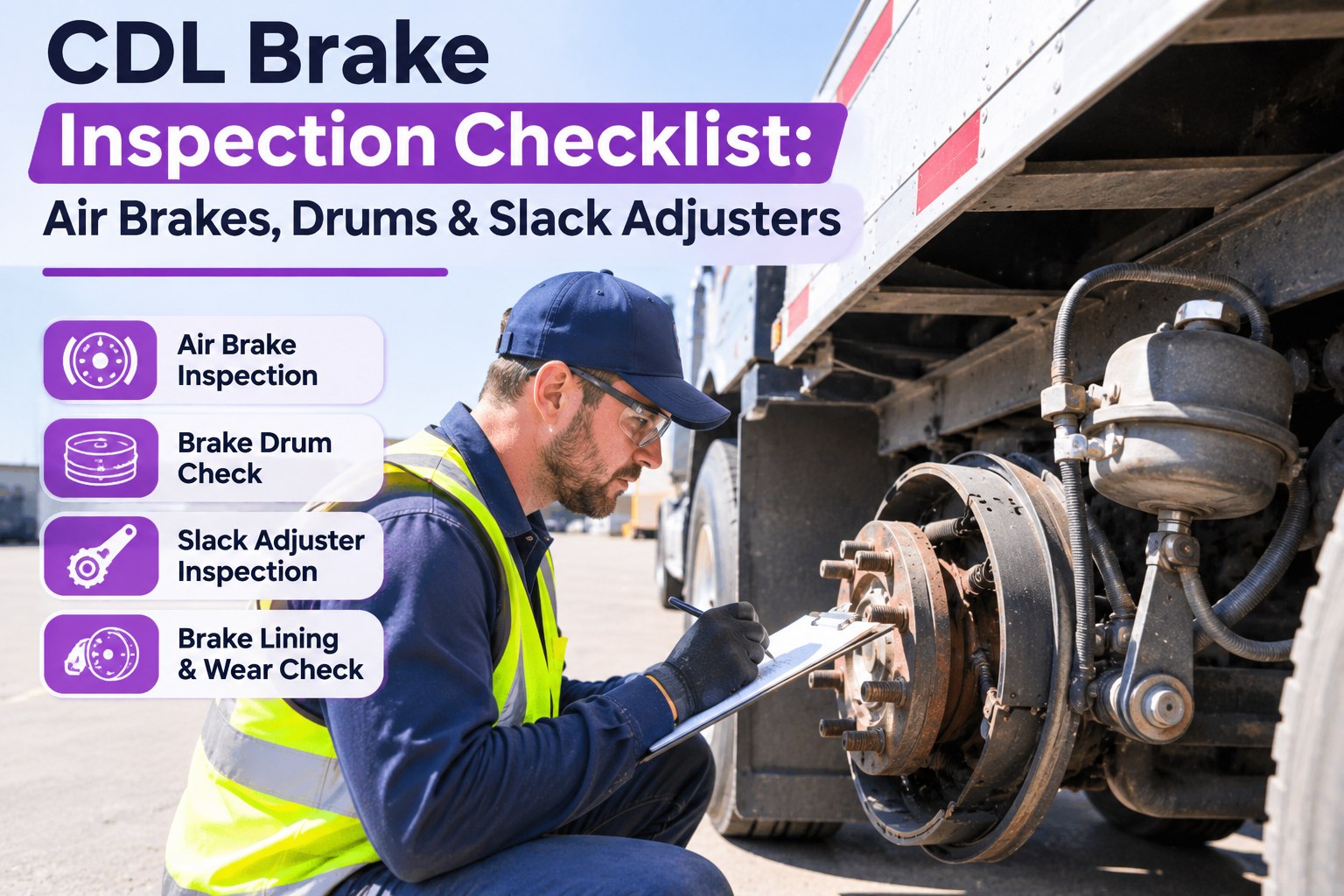
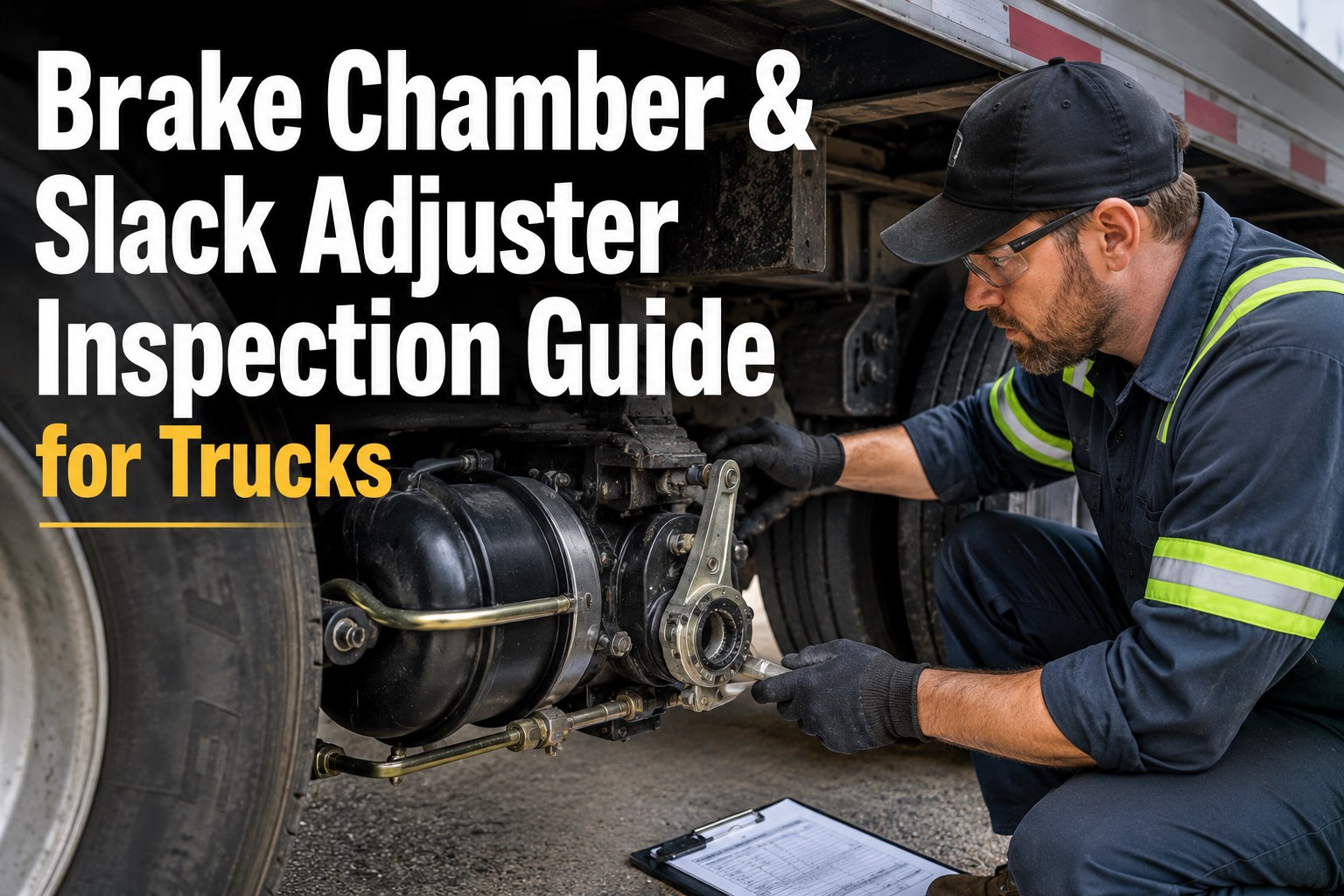
CDL Brake Inspection Checklist: Air Brakes, Drums & Slack Adjusters
By William Jerry on November 18, 2026
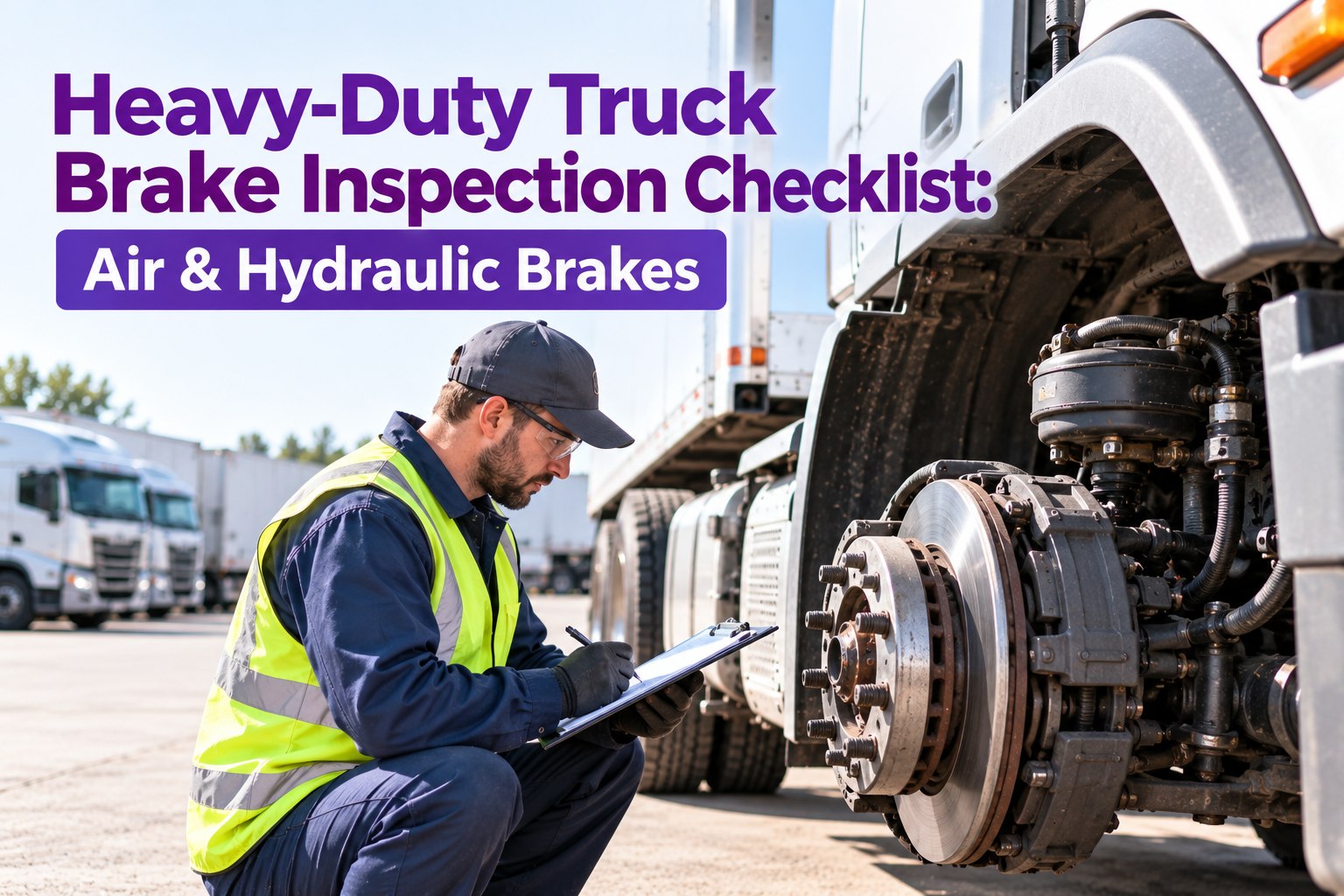
The brake check is the part of a pre-trip inspection that drivers rush most and roadside inspectors read most closely. A slack adjuster that pulls too far, a drum with a crack, or a low-air warning that never fires can park a truck on the spot, and a missed one can do worse. This tick-box checklist gives CDL drivers and fleet shops one clear sequence: the wheel-end walk-around, the air brake test with its target numbers, and a sign-off, plus what makes a truck out of service. It also shows how Truck Inspection & Maintenance Management Software (TIM) responds when a driver reports a brake defect. Start free and put your brake checklist on every DVIR.
CDL Brake Inspection Checklist: Air Brakes, Drums & Slack Adjusters
A brake defect written on a DVIR is only useful if someone acts on it quickly.
With TIM, a reported brake defect gets a guaranteed first response within 4 hours: acknowledged, graded and assigned. Then it becomes a work order and closes on the truck's record.
1. InspectDriver runs the brake checklist on a digital DVIR.
2. Log the defectFailed item recorded against the truck.
3. Work orderAcknowledged, graded and assigned within 4 hours.
4. Repeat as PMRecurring brake inspections on schedule.
4 hoursFirst response on a reported defect: acknowledged, graded, assigned
3 partsWalk-around, air brake test and sign-off, in tick-box order
1 recordInspection, defect, repair and PM kept in the truck's history
How to Use This Checklist
Work top to bottom and tap or click each box as an item passes. Any box you cannot tick is a defect to report on your DVIR before the truck moves. Part A is the walk-around, Part B is the air brake test, and Part C is the sign-off.
✓
Tick the boxThe item passes. Move to the next one.
✕
Left untickedThe item failed. Record it on the DVIR with the axle and side.
!
Out of serviceDo not dispatch. See the triage grid below.
Part A: Wheel-End Walk-Around
Part A · Wheel-end walk-aroundEvery axle, both sides
Slack adjusters & pushrods (brakes released)
Brake chambers
Brake drums
Linings & pads
Hoses & air lines
S-cam & hardware
Part B: The Air Brake Test, in Order
Part B · Air brake testEngine off, key on for steps 2 to 5
*Federal rules require the warning before pressure falls below 55 psi, and many state CDL manuals teach 60 psi. Use your state manual and the truck maker's specification.
Keep these ranges handy while you run Part B. They are the pressure ranges to know, as commonly taught for the CDL skills test.
Air pressure ladder, 0 to 140 psi (illustrative scale)
020406080100120140
20 to 45 psiSpring brakes apply and the parking and trailer supply valves pop out
About 55 to 60 psiLow-air warning must already be on. Federal rules require it before 55 psi, and many CDL manuals teach 60
About 100 to 135 psiNormal working range, with the governor cutting in and out. Exact values vary by truck
State CDL manuals and your fleet's policy may state thresholds slightly differently, so check yours and the truck's manufacturer specification.
Pass, Fix Soon or Out of Service
Using three outcomes keeps driver and shop decisions consistent. A truck is placed out of service when brake defects reach a threshold, including when about one-fifth of its brakes are defective, even if each defect looks minor.
Pass Log
Leakage within limits
Slack adjusters within travel
Linings, drums and hoses sound
TIM: record the inspection on the truck
Fix soon Work order
Adjuster travel near the limit
Lining wearing thin or uneven
Minor chafed hose or weeping fitting
TIM: work order, scheduled before it worsens
Out of service Do not dispatch
Leakage over limit, or warning not working
Spring brakes do not apply
Cracked drum or brake out of adjustment
TIM: top-priority work order, 4-hour first response
When unsure, treat it as a failed inspection and have a qualified technician assess the truck before it moves.
What Happens After the Driver Reports It
A defect that sits in a binder is a roadside violation waiting to happen. TIM closes that gap by making the first response automatic.
4 hrFirst response
AcknowledgedThe report is confirmed received, so the driver knows it is not lost.
GradedSeverity is set and the defect placed in a priority lane, so brake and safety items rise first.
AssignedA work order is created and assigned to a technician or shop bay.
Truck 118 · DVIR brake sectionIllustrative
Static air leakage testPASS
Low-air warningPASS
Right steer slack adjuster: excess travelDEFECTAcknowledged · Graded · Assigned
Drums and linings, all axlesPASS
How TIM Runs the Brake Inspection Loop
Inspect, log, repair, repeat. Each step leaves a record that supports your next audit or roadside conversation.
1Defect loggedThe driver records the failed step on a digital DVIR.
2Severity gradedBrake defects are graded into a priority lane within the 4-hour response.
3Work order createdParts are checked so the shop knows if the repair can start.
4Closed on recordThe repair closes against the truck's history and the next brake PM is set.
Make Every Brake Report Count
TIM connects DVIRs, defects, work orders and PM schedules, so brake problems are acknowledged, graded and assigned within 4 hours instead of waiting for the next shift.
What should a CDL brake inspection checklist include?
The seven-step air brake test (build-up, leakage, low-air warning, spring brake pop-out, build-up rate and brake holding tests) plus a walk-around of slack adjusters, chambers, drums, linings, hoses and S-cam parts on every axle. Start free and use it as a digital DVIR.
How much slack adjuster movement is too much?
As a driver's check, if an adjuster moves more than about one inch at the pushrod when pulled by hand with the brakes released, it likely needs adjustment. Mechanics measure stroke against the limit for the specific chamber type.
What air pressure should the spring brakes pop out at?
The parking and trailer supply valves should pop out as pressure falls to between 20 and 45 psi. If they do not, the truck should not be dispatched until it is repaired.
When is a truck out of service for brakes?
Examples include brake defects reaching about 20% of the vehicle's brakes, cracked drums, failed leakage or warning tests and brakes out of adjustment. Check the current CVSA out-of-service criteria for specifics.
How does TIM help with brake inspections?
It captures brake defects on digital inspections, gives each reported defect a first response within 4 hours (acknowledged, graded, assigned), creates the work order and keeps the repair on the truck's history. Book a demo to see it in action.
Inspect · Log · Repair · Repeat
Turn Every Brake Check Into a Fast Response
Start a free trial and put your brake checklist on every DVIR, or book a demo and we'll walk through how a reported defect is acknowledged, graded and assigned in 4 hours.