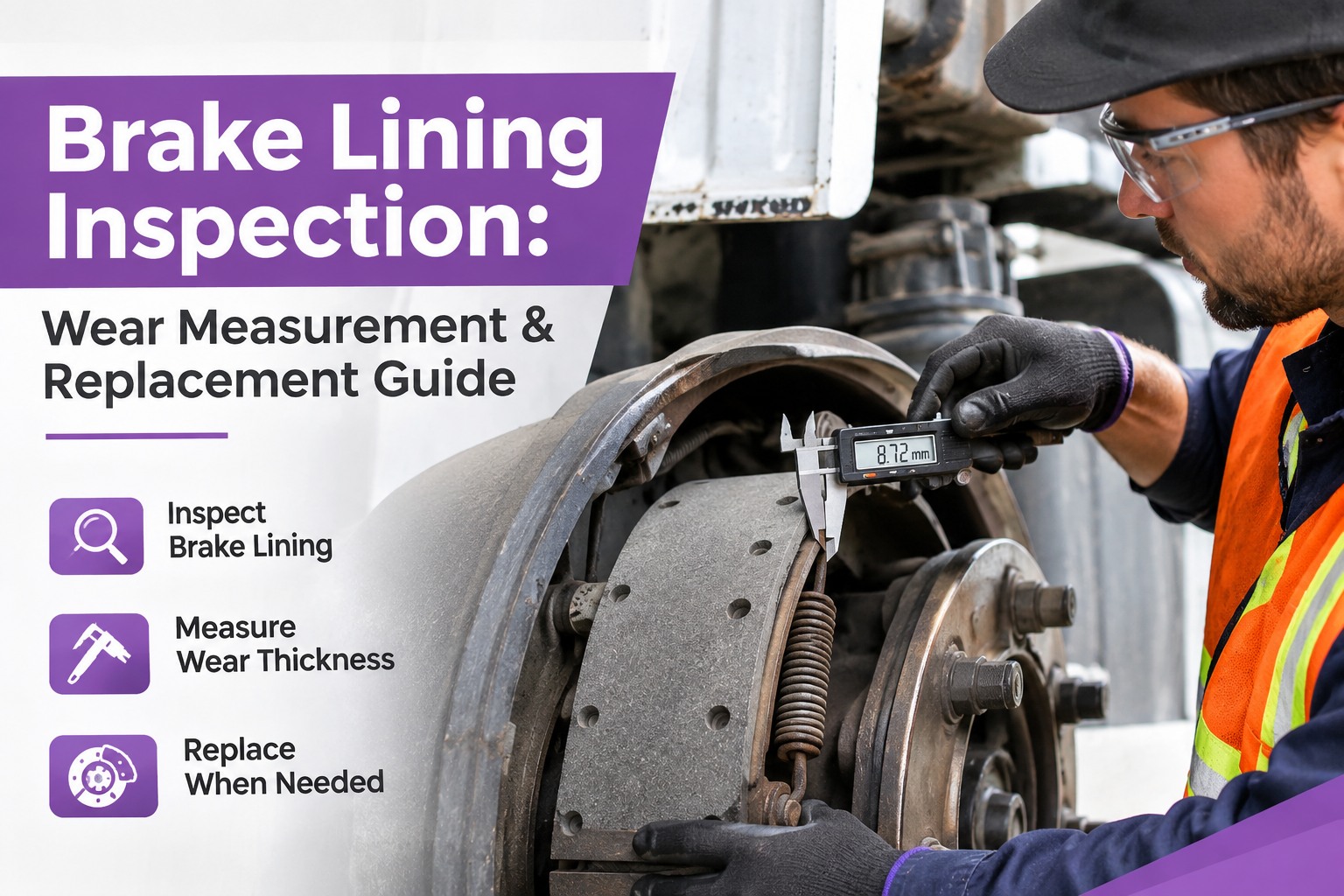
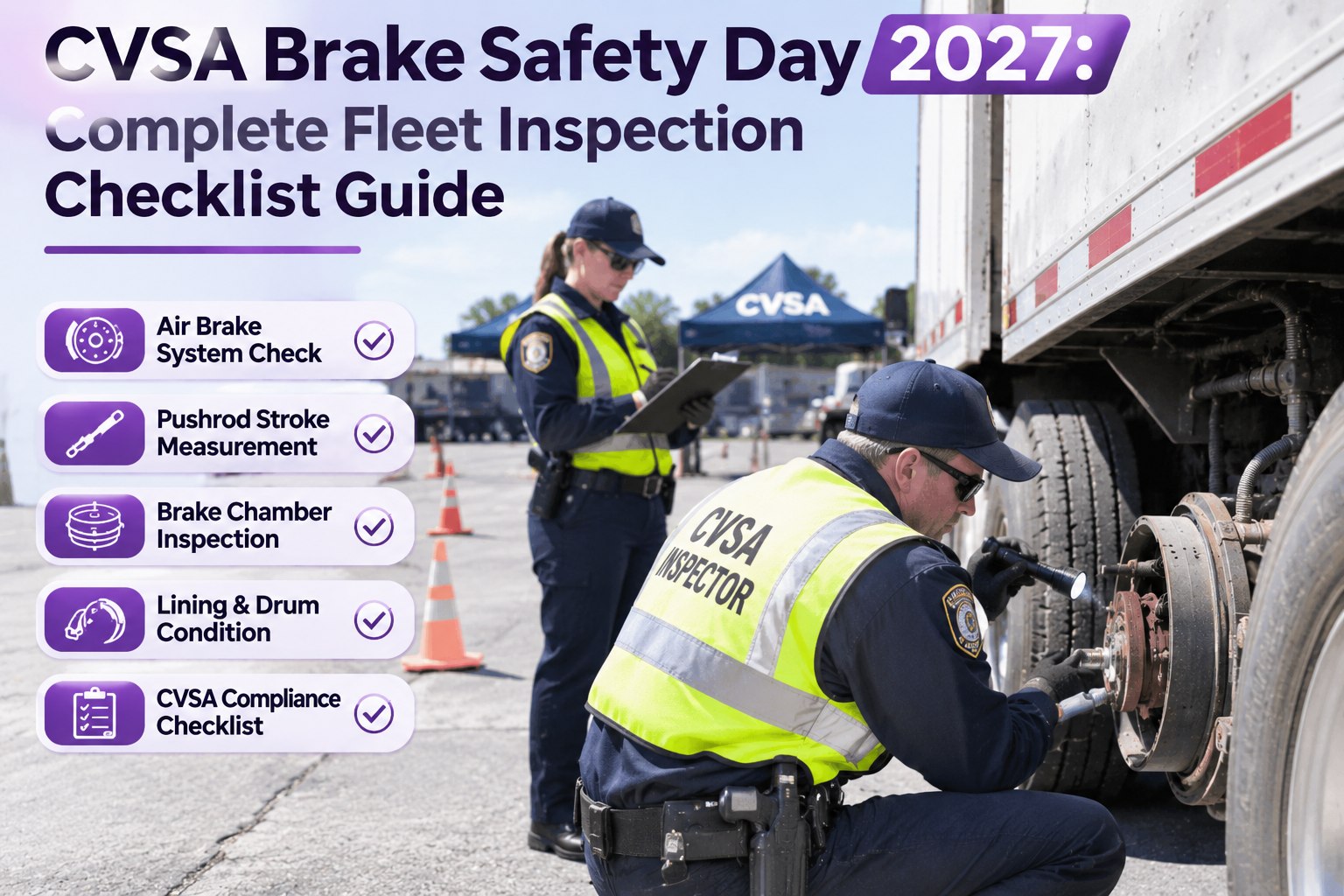
Brakes are the number-one out-of-service item on the road, and lining thickness is the measurement that decides it. The catch: there is no single magic number — the limit changes with the axle, the brake type and the lining build. A lining measured against the right limit is a replacement you plan; a lining guessed at is a truck parked at the scale. This guide covers the limits, how to measure them, and how Truck Inspection & Maintenance Management Software logs each reading per wheel-end to forecast the replacement. Start free and record lining thickness on every wheel-end.
A lining worn past its minimum is a defective brake — and the walk-around guess is what gets caught. Our software runs the measurement as a guided check: the tech logs the thickness and a photo at each wheel position, the reading trends over time, and a work order is raised before the lining reaches the limit. You replace on a plan read from the wear rate, not on the shoulder.
NewFull friction materialMonitorWatch the wear rateAt limitReplace nowBelowDefective · out of service
There's No Single Minimum
Ask ten drivers and most say "an eighth of an inch." That's one real limit — for certain disc brakes. Apply it to an air drum brake and you'll pass a lining that's already below its line. The right minimum depends on four things.
◉AxleSteering vs non-steering carry different limits.
◆Brake typeAir drum, air disc, hydraulic or electric.
▦Lining buildContinuous strip, two pads, riveted or bonded.
⚖Which ruleOperating minimum vs roadside reject limit.
Minimum Lining Thickness by Axle & Brake Type
These are the federal operating limits under 49 CFR §393.47(d), measured at the shoe center. Fall below any one and the vehicle is out of service.
AxleBrake typeOperating minimumWatch for
SteeringAir drum · continuous strip4.8 mm (3/16")Annual rejects at 1/4"
SteeringAir drum · two pads6.4 mm (1/4")At shoe center
SteeringAir disc3.2 mm (1/8")—
SteeringHydraulic / electric1.6 mm (1/16")Or less
Non-steeringAir drum6.4 mm (1/4")Or wear indicator
Non-steeringAir disc3.2 mm (1/8")—
Non-steeringHydraulic / electric drum1.6 mm (1/16")Or less
The wear indicator overrides the ruler: if a lining is marked and worn into the indicator, it's out of service whatever the measurement reads. A single thin steer-axle lining is out on its own — other axles fall under the 20% rule. Book a demo to log limits per brake type.
How to Measure It Right
A reading is only as good as where you take it. Measure the wrong spot and a good number hides a worn edge. Four rules keep it honest.
1Friction material onlyMeasure the lining itself, not the lining plus the steel shoe behind it.
2The thinnest pointRead heel, toe and center — a tapered lining can be fine at center and gone at the edge.
3Riveted vs bondedBonded, measure to the shoe; riveted, worn to the rivet head means replace.
4Record per positionTag each reading to its wheel-end — steer left, drive right — so you can trend it.
Log thickness and a photo at each wheel position, watch the wear rate climb toward the limit, and raise the work order before the lining — not the officer — calls it.
Thickness tells you when; the pattern tells you why. Uneven wear fails the lining and points to a deeper fault — fix the cause or the new lining wears the same way.
Tapered side-to-sideMore wear inboard or outboard — worn anchor pins, bushings or an outer S-cam bushing.
Toe or heel wearHeavy at the top or bottom — anchor-pin position, an out-of-round drum, or a sticking shoe.
Radial taperA weak return spring or an out-of-arc shoe the brake can't adjust around.
ContaminationOil, grease or brake fluid on the material — replace regardless of thickness, and find the source.
Cracks or loose liningA crack over about 1/16" wide or 1-1/2" long, or a loose segment, replaces the lining on the spot.
Heavy glazingA hard, shiny surface from overheating — replace and chase the caliper or drum behind it.
Uneven wear across an axle also shows up as vehicle pull and brake noise — a flag worth two trucks caught before a balance fault was paid for twice. Book a demo to flag uneven-wear patterns.
Plan the Replacement, Don't React
Lining wear is predictable once you're tracking it. Measure on a cadence and the replacement becomes a scheduled job, not a surprise.
Replace by axle setNever a single shoe — always both ends of the axle together.
Build in marginPlan the swap near twice the wear limit, not at the line itself.
Match drums & rotorsInspect and service them with the lining; don't mix light and heavy drums.
Track the wear rateThickness lost per service forecasts the mile the limit arrives.
From Measurement to Scheduled Work Order
A reading written on a clipboard is a number that dies in a binder. A reading logged against the wheel is a forecast.
1MeasureThickness at each wheel-end, heel to toe.
2Log + photoThe reading and an image tag the position.
3TrendWear rate plots toward the §393.47 limit.
4Work orderThe replacement is booked before the line.
There's no single number. Air drum non-steering is 1/4" (6.4 mm) at the shoe center; air disc is 1/8" (3.2 mm); hydraulic and electric are 1/16" (1.6 mm). Always measure against the limit for that axle and brake type. Book a demo to log limits by brake type.
2When is a brake out of service?
When a lining is below its §393.47 limit, worn into a marked wear indicator, contaminated or cracked — or when 20% or more of the combination's brakes are defective. A thin steer lining is out on its own. Book a demo to see out-of-service holds.
3How do I measure lining wear?
Measure the friction material only — not the steel shoe — at the thinnest point, reading heel, toe and center. Use a stepped lining gauge or a caliper, and record each number against its wheel position. Book a demo to see per-wheel readings.
4How often should I measure brake lining?
A visual check at every pre-trip, and a full thickness measurement at the 90-day foundation service alongside the drum and S-cam inspection. Tracking the readings is what turns them into a forecast. Book a demo to set the cadence.
Measure · Record · Trend · Replace
Measure the Lining Before the Roadside Does
Truck Inspection & Maintenance Management Software logs lining thickness per wheel-end, trends the wear, and books the replacement before the limit — so brakes come off the truck on your schedule, not the scale's.