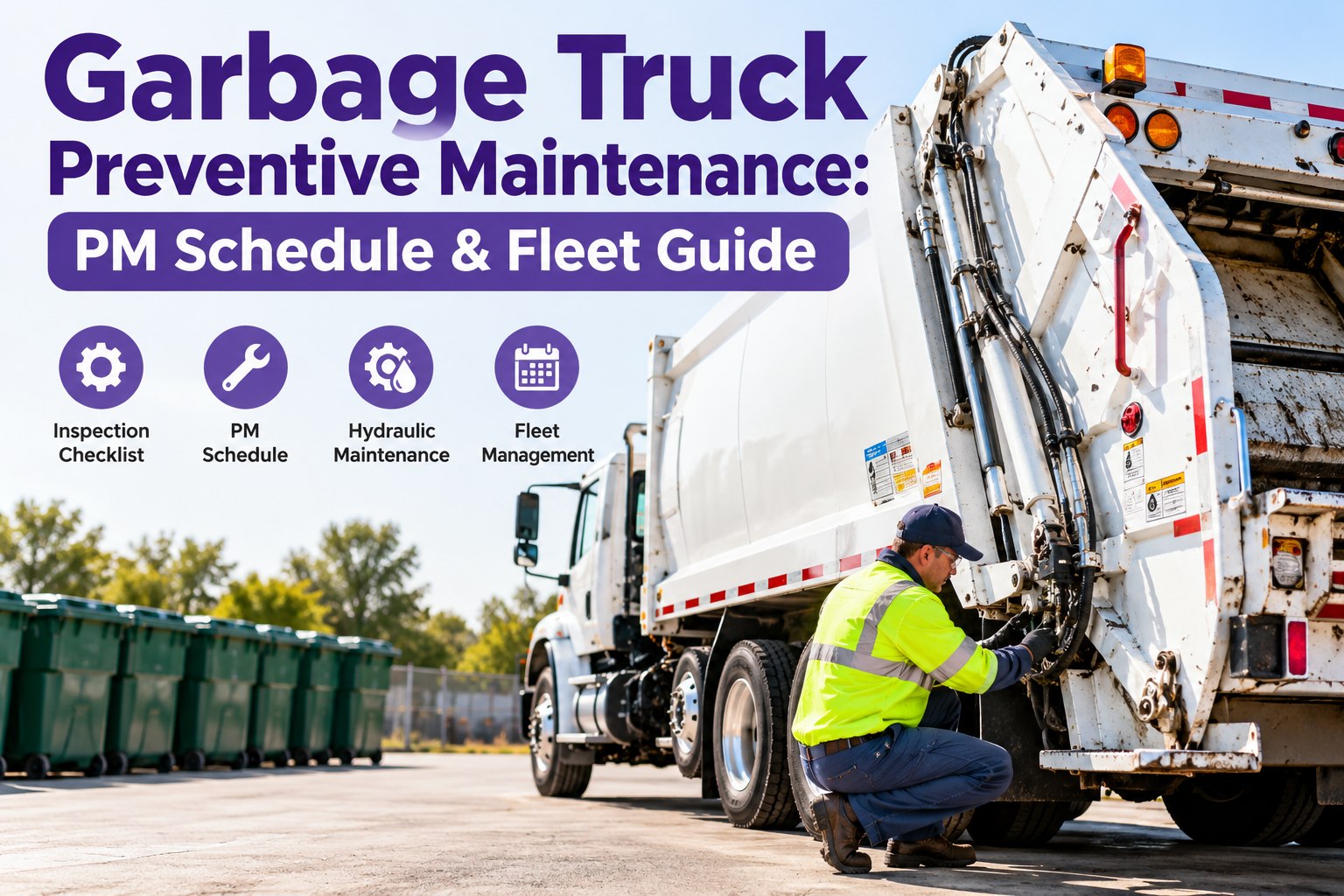
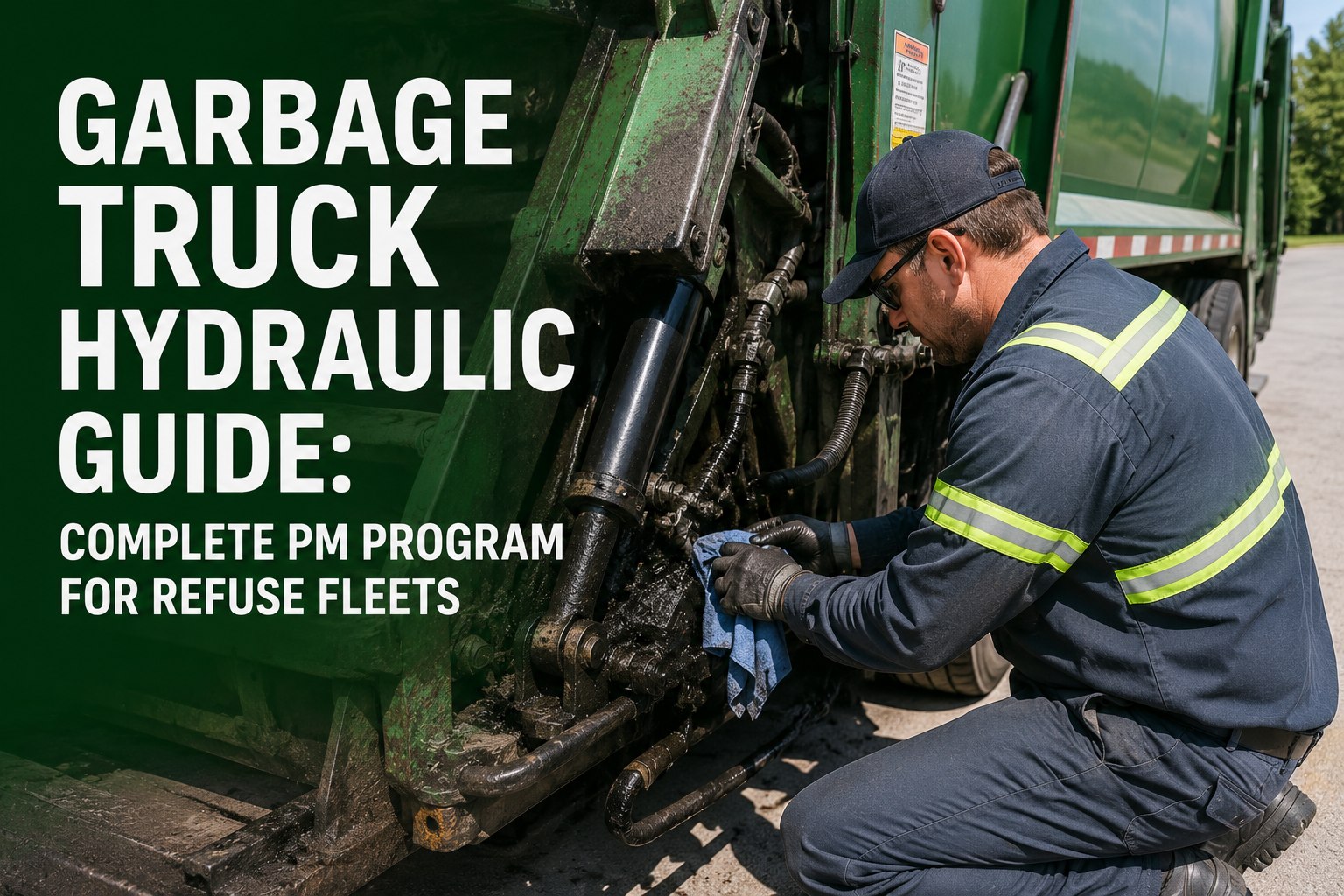
The tailgate is the business end of a rear-loader — it swallows the load, seals it in, and swings up so the ejector can push the body empty. It's also the part most likely to hurt someone: a raised tailgate is held up by hydraulics, and hydraulics fail. A worn seal leaks leachate down the street; a tired lift cylinder lets the gate creep down on whoever's underneath. This checklist walks the tailgate and ejector by subsystem — seals, hinges, cylinders, ejector, props, and locks — so a defect is found at the yard, not on the route. Start free and run every tailgate check on TIM.
TIM · Refuse Tailgate & Ejector Inspection
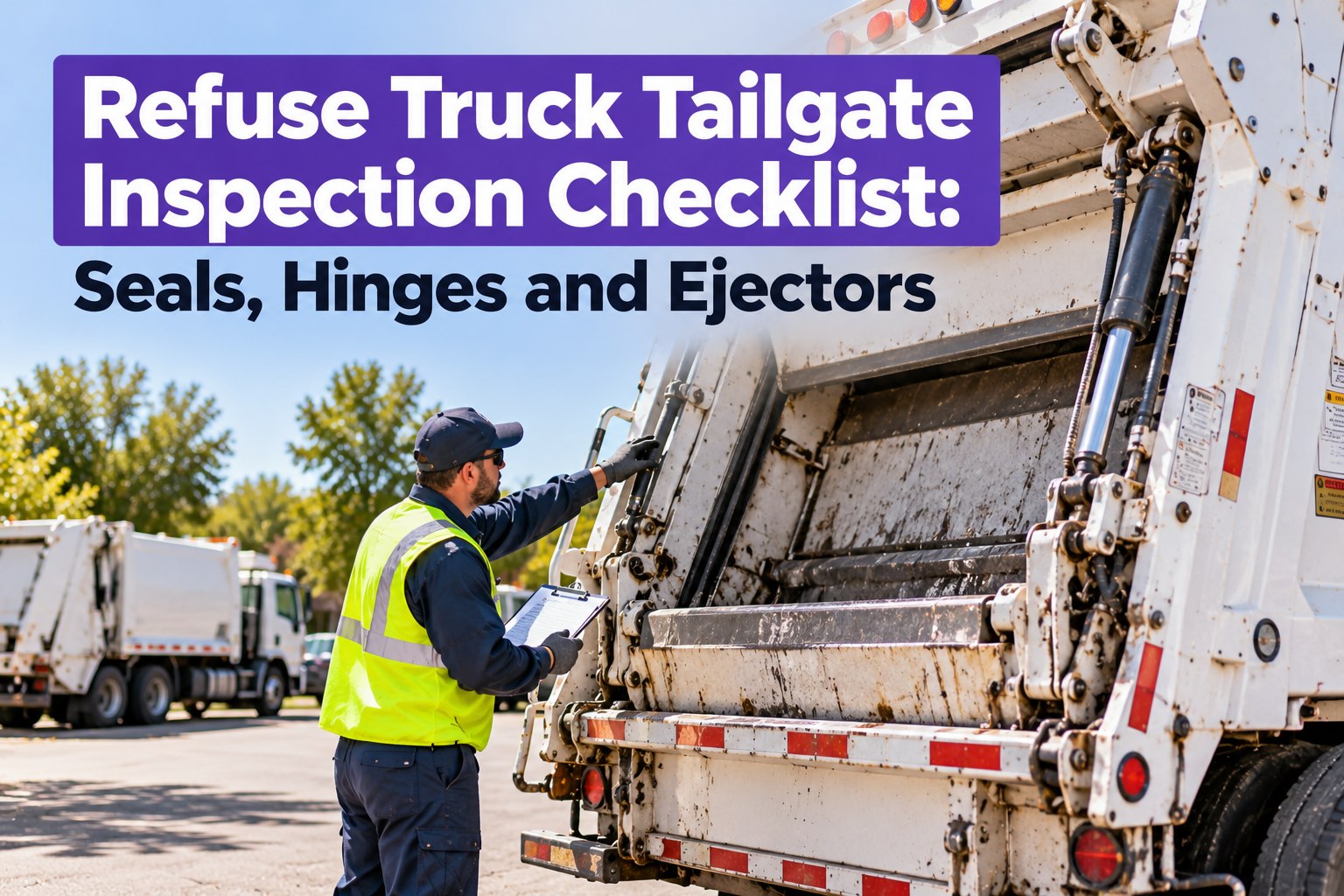
Refuse Truck Tailgate Inspection Checklist: Seals, Hinges and Ejectors
Waste collection is one of the most dangerous jobs there is, and the refuse body is where much of the mechanical risk lives. A tailgate that drifts down, a seal that bleeds leachate, an ejector that binds mid-stroke — each is a defect that a two-minute inspection catches cold. What you want is every tailgate cleared before the route, with the safety prop checked first. That's the loop Truck Inspection & Maintenance Management Software (TIM) runs for you: a flagged defect becomes a graded work order, the repair is tracked to a verified close, and the body stays on a cycle-based PM schedule.
Prop first, then inspectEvery tailgate check starts with the safety prop and ends on one record — so nothing is inspected, or worked under, with the gate unsupported.
The One RuleNobody under a raised tailgate without the prop engaged
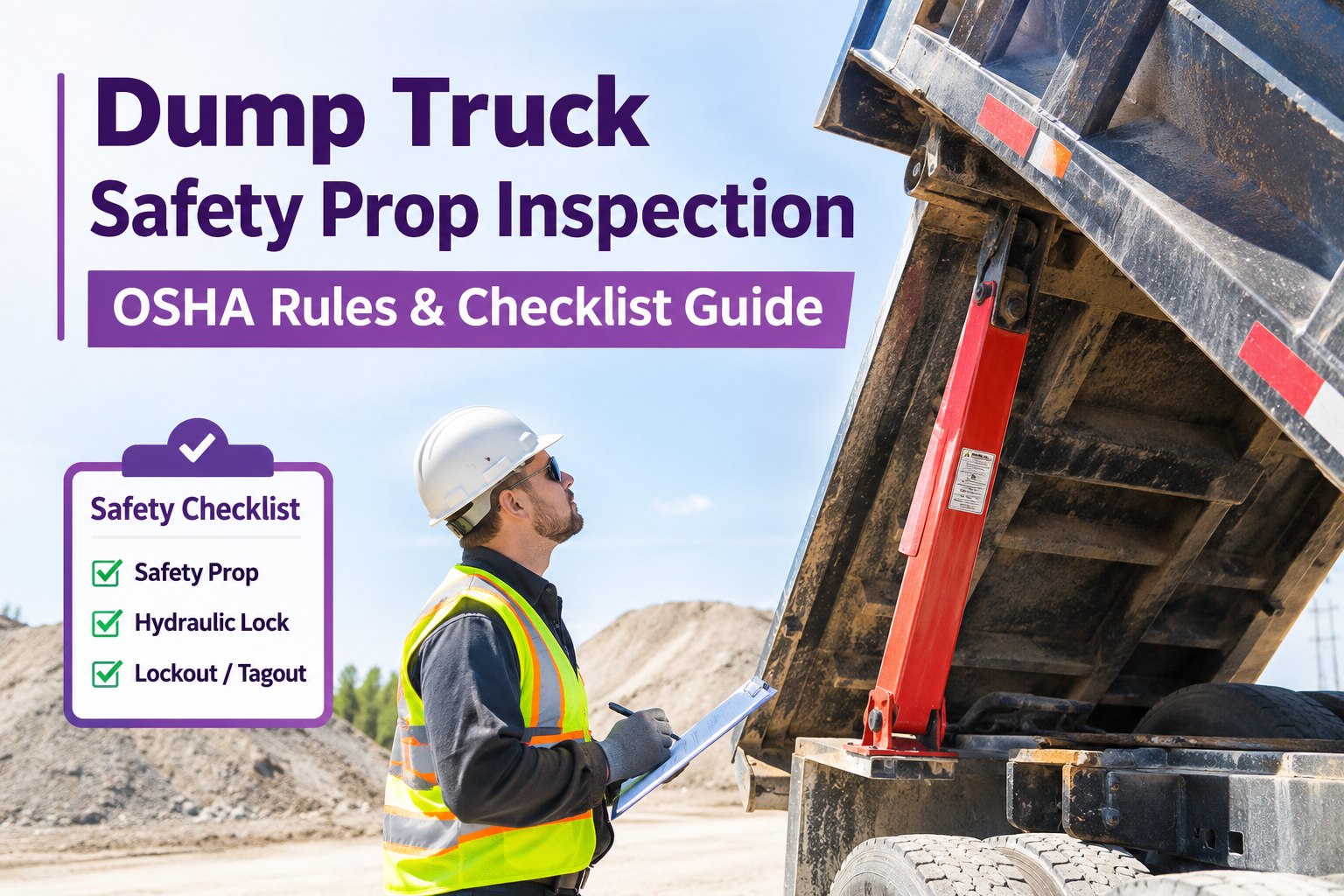
A raised tailgate held only by its lift cylinders can come down if a hose bursts, a control is bumped, or a seal lets go. The body prop — the mechanical stay built for exactly this — is what holds it. Before anyone reaches in or climbs under, the prop goes in and the controls are locked out.
⊘Never rely on hydraulic pressure alone to hold a raised tailgate
⊘Engage the body prop or safety stay before any reach-in or under-gate work
⊘Lock out the controls so the gate can't be lowered while someone's inside
⊘A missing, bent, or seized prop takes the body out of service until fixed
Everything below assumes the prop is in and the controls are locked. The refuse-body standard, ANSI Z245.1, and your body OEM's manual both treat that as non-negotiable. Contact our team to build the prop rule into your inspection.
How a Rear-Loader Tailgate Works
Knowing the cycle tells you what each subsystem is doing — and where it wears. The tailgate and ejector run the same four moves on every dump.
1
Collect & pack
The tailgate is down and latched; the packer blade compresses refuse into the body.
→
2
Raise the gate
Lift cylinders swing the tailgate up on its top hinges, opening the body for discharge.
→
3
Eject the load
The ejector panel rams the full load out the open back at the tip site.
→
4
Lower & latch
The gate comes back down, the seal seats, and the locks re-engage for the next route.
Every raise is a load on the hinges and cylinders; every lower is a test of the seal and latch. That's why the tailgate wears by cycles, not miles. Start free and track tailgate cycles with TIM.
The Tailgate & Ejector Inspection Checklist
Work the subsystems in order, starting with the safety gear. Tap each box as you clear it. Anything you can't clear is a defect — tag it, and keep the body out of service if it's one of the stop-use items.
25 Checks — and the Prop Comes First Every Time
A tailgate inspection is only as safe as the step before it: the prop in, the controls locked. TIM makes the safety gear the first item on the check, turns any failed item into a work order, and keeps the body — tailgate, cylinders, ejector — on a cycle-based PM schedule so wear is caught before it becomes a leak or a gate that falls.
Warning Signs Between Inspections
A tailgate rarely fails without telling you first. These are the signs a driver or loader should report the moment they show — each one is a defect forming.
◷Gate creeps downA raised tailgate that slowly settles means a cylinder or valve is bypassing — a fall risk.
◆Leachate trailA wet line down the body or on the road is a seal or drain-valve defect leaking liquid.
◎Groan on the raiseGrinding or squeal when the gate lifts points to dry or worn hinges and pins.
▦Ejector hang-upA panel that chatters or binds mid-stroke signals slide wear or a scored ram.
Reported early, each is a scheduled repair; ignored, each is a roadside leak or a body down at the tip site. Start free and turn driver reports into work orders with TIM.
How TIM Delivers It
Keep the Body on the Same Record as the Truck
On a refuse truck, the body does as much work as the chassis — but it's the part a generic truck inspection skips. TIM keeps the tailgate, cylinders, and ejector on the same record as the rest of the truck, inspected and maintained to their own cycle.
Safety-first checklistThe prop and lockout lead the inspection, so no body is checked with the gate unsupported.
Defect becomes a work orderA torn seal or drifting cylinder turns into a tracked repair with a photo attached.
Body on a cycle PMTailgate, hinges, and ejector scheduled by cycles and hours, not just mileage.
Stop-use enforcedA missing prop or failing latch flags the unit until it's fixed and verified.
Driver reports capturedA creeping gate or leachate trail logged from the cab becomes a job, not a rumor.
Full body historyEvery seal, cylinder, and ejector repair kept per unit for warranty and audit.
Frequently Asked Questions
Why is a raised refuse tailgate so dangerous?
Because it's a heavy steel gate held up by hydraulic cylinders, and hydraulics can fail suddenly — a burst hose, a bumped control, or a bypassing valve can let the gate come down fast. Anyone reaching into the hopper or working under the gate is in the crush path. That's why the body prop or safety stay exists: it mechanically holds the gate up independent of the hydraulics. The rule is absolute — the prop goes in and the controls are locked out before anyone is under or inside a raised tailgate, every time, no exceptions.
What is the most common tailgate defect?
A worn or torn tailgate seal is the one you'll see most, and it's the primary source of leachate leaks — the liquid that drains out of compacted refuse. When the rubber tears or a section goes missing, that liquid escapes down the body and onto the road, which is both an environmental problem and a sign the gate isn't sealing. Close behind are hydraulic issues: rod-seal leaks, chafed hoses, and lift cylinders that let a raised gate drift down. All of them are catchable on a routine look before they become a roadside mess or a safety risk.
How often should the tailgate and ejector be inspected?
The safety-critical parts — prop, controls, latches, visible leaks — belong on the daily pre-trip, like any other walk-around item. The deeper body checks (hinge wear, cylinder drift, ejector stroke, seal condition) should ride on a cycle- or hours-based PM schedule, because the tailgate wears by how many times it's raised and the ejector by how many loads it pushes, not by road miles. A refuse body cycles constantly, so these intervals come up far faster than a mileage schedule would suggest. Pair the daily safety check with a scheduled body PM and nothing slips.
What does it mean when a tailgate "creeps" down?
Creep or drift — a raised gate slowly settling on its own — means a lift cylinder or a hydraulic valve is bypassing, letting fluid leak past internally so the gate can't hold position. It's one of the most important warning signs on the body, because it's a direct crush hazard: a gate that creeps in the yard can come down on the route. A creeping gate should be reported immediately and the body kept out of service until the cylinder or valve is repaired. Never substitute the prop for a fix — the prop makes inspection safe, but a creeping cylinder still has to be repaired.
Does refuse body maintenance belong in truck inspection software?
It should, and it's often the gap. A generic truck inspection covers the chassis — brakes, tires, lights — but skips the body, even though on a refuse truck the tailgate, cylinders, and ejector do enormous work and carry real safety risk. Keeping the body on the same record as the chassis means the seal, the lift cylinder, and the ejector get inspected and maintained to their own cycle-based schedule, defects become tracked work orders, and the full history is there for warranty and audit. The body is half the machine; it deserves half the attention.
Start free and inspect the body with the truck on TIM.
Props · Seals · Hinges · Cylinders · Ejector · Latches
Check the Tailgate Before It Leaks — or Drops
The tailgate seals the load, swings on its hinges, and relies on hydraulics that can fail — so it earns its own inspection, with the safety prop first every time. Run the 25 checks, report the warning signs early, and let TIM turn each defect into a tracked repair and keep the body on a cycle-based PM. It's free to start on your first three trucks.
No credit card required · Free for up to 3 trucks · Safety-first body checks, defect-to-work-order, and cycle PM built in