A dry van has one job — deliver the cargo dry and undamaged and a single failed door seal or a soft roof seam can turn a clean load into a rain-soaked claim worth ten times the repair. The defects that cost the most aren't the dramatic ones; they're the small leaks and soft spots that spread quietly between inspections. This checklist walks the trailer by component — doors, roof, floor, walls, seals — so the cargo-integrity points get real eyes before the next load, not after the claim. Start free and log every trailer check against the unit.
Doors · Roof · Floor · Seals
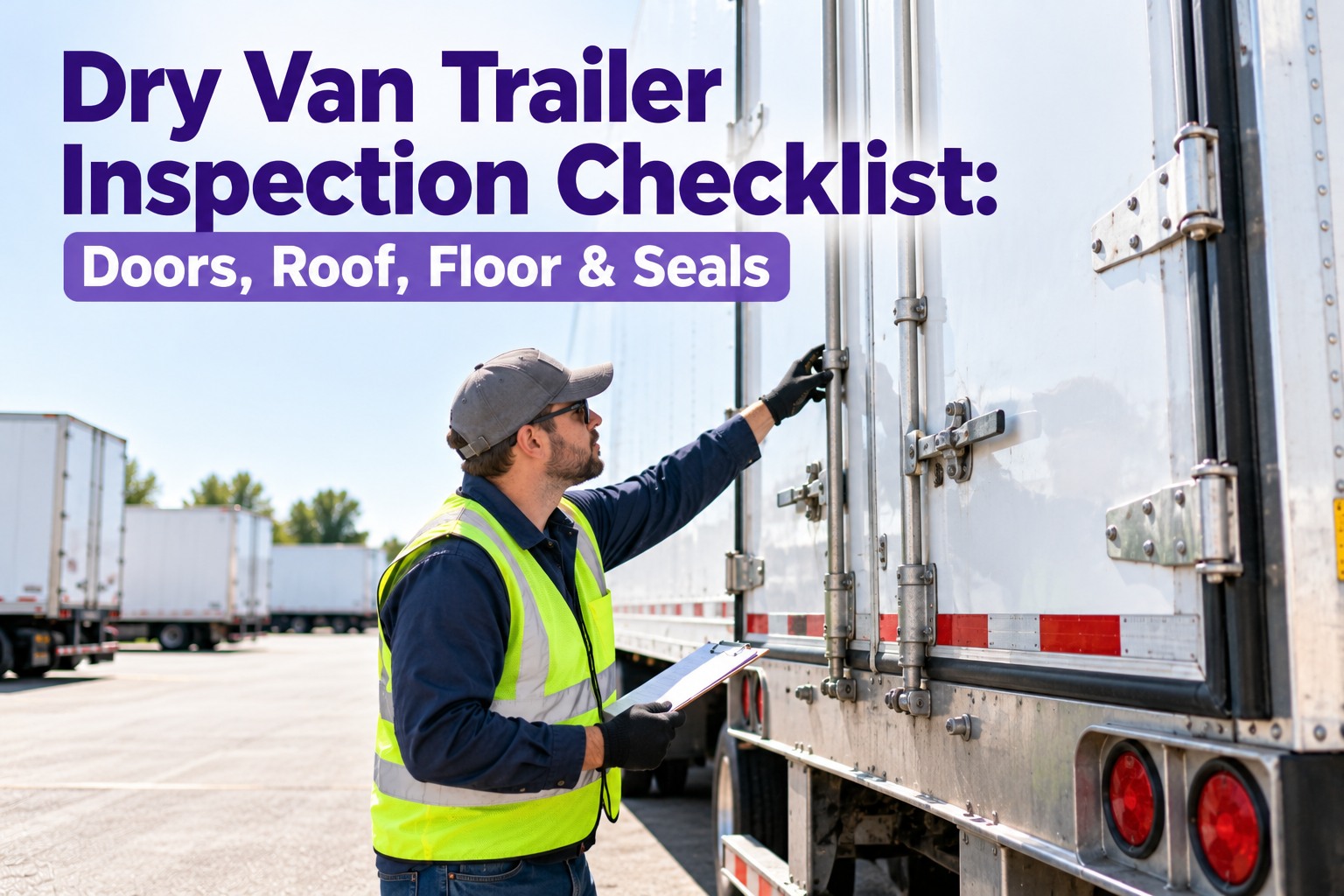
Dry Van Trailer Inspection Checklist: Doors, Roof, Floor & Seals
Keeping cargo dry and secure comes down to a handful of structural points that fail small and spread fast. Truck Inspection & Maintenance Management Software puts this trailer walk on the driver's phone, lets them flag a leak seam or a soft board with a photo, and turns it into a dated work order before a small defect becomes a full-section repair.
10×a $150–400 seal can cost in a rain-soaked claim
1 weeka small soft spot can spread to a full section
2/32"minimum trailer tread, §393.75
Why the Small Defects Cost the Most
Dry van damage compounds. A pinhole seam lets water in, the floor beneath it softens, the soft spot spreads, and a $400 seal becomes an $8,000 floor. Catch it at the seam and it's a quick fix; miss it and the claim finds it for you.
Failed seal / seamWater gets in past a worn gasket or a cracked roof seam
→
Floor softensMoisture rots the laminate; a soft spot forms underfoot
→
It spreadsA small pocket becomes a full-section replacement in a week
→
Cargo claimA rain-soaked load costs many times the original repair
Checklist 1 — Doors & Hardware
The doors are the most-worked part of the trailer and the first place a seal fails. Work both doors, top to bottom.
Checklist 2 — Roof & Water Intrusion
The roof is where leaks start and the hardest spot to see. Look for water's signature inside as much as damage outside.
Checklist 3 — Floor & Tie-Downs
The floor tells you what the roof and seals let in. Walk it, tap it, and listen — soft and drum-like both mean trouble.
Checklist 4 — Walls & Structure
Walls and posts carry the load and take the forklift hits. Check inside and out for the cracks that let a trailer rack out of square.
Checklist 5 — Running Gear & DOT Items
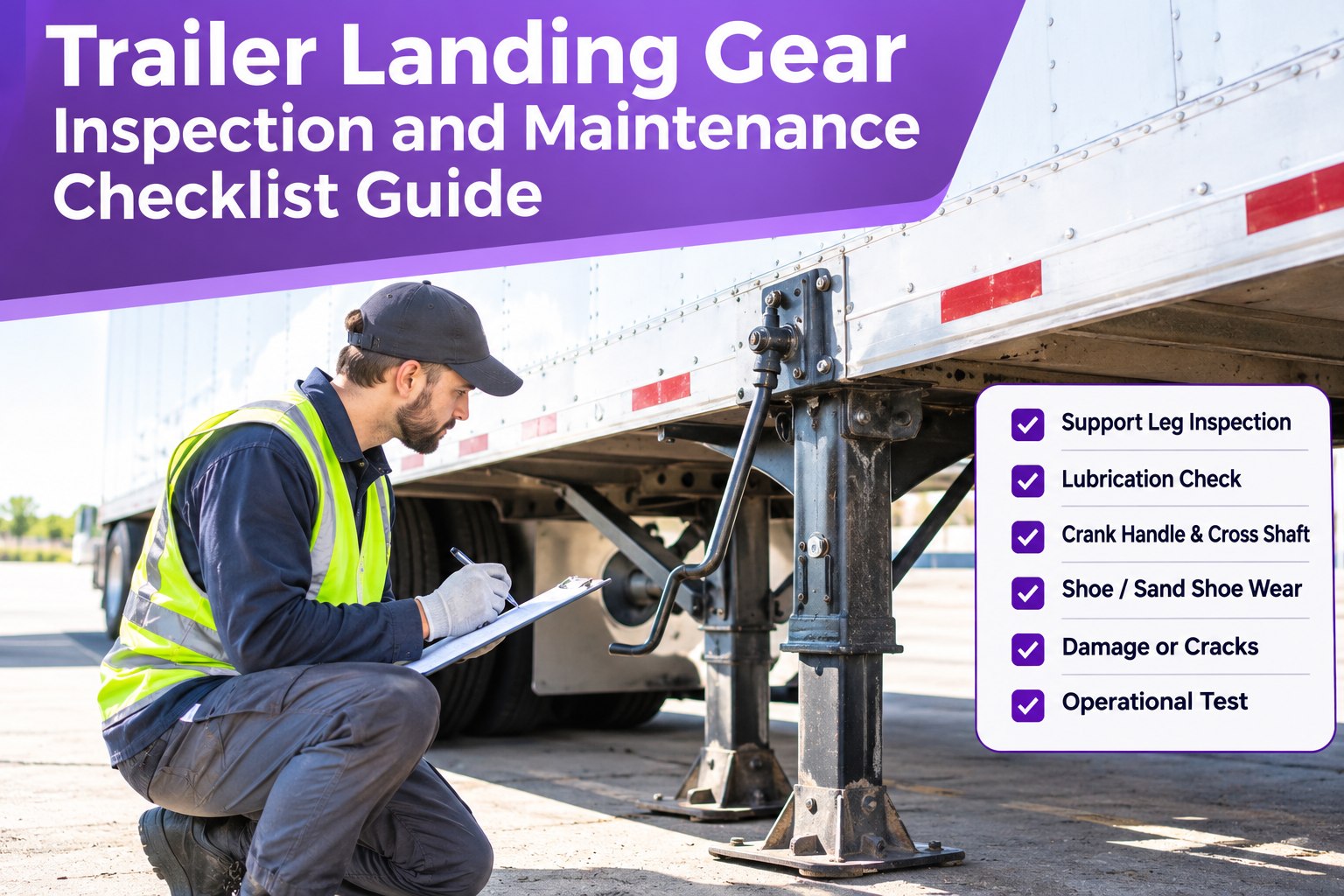
Finish with the regulated structure and running gear — the kingpin, landing gear, brakes, tyres, and lights an inspector checks too.
Software That Catches the Leak Before the Claim
Helping with exactly this is the job. Truck Inspection & Maintenance Management Software puts this component walk on the driver's phone in order, with a photo field at every point — a worn door gasket, a seeping roof seam, a soft floor board, a cracked post. A defect flags the trailer and opens a dated work order routed to the shop, so a $400 seal gets replaced before it becomes an $8,000 floor and a cargo claim. Every finding stays tied to the trailer, so a roof that keeps needing patches shows up as a pattern — the "patch city" that signals it's time to stop patching and fix it.
The Defects That Signal a Bigger Problem
A few findings mean more than the single repair in front of you — they're a warning the trailer has a spreading issue worth catching now.
⊘"Patch city" roofMultiple roof patches signal recurring leaks and ongoing cargo-claim risk — not a trailer to keep patching.
⊘A spreading soft spotFloor softness grows fast once moisture is in — a small pocket can take a full section within a week.
⊘Fresh paint over weldsNew paint on crossmembers or the frame can hide an old repair — look under it before you trust it.
Frequently Asked Questions
What are the most important things to check on a dry van trailer?
The cargo-integrity points — doors, roof, floor, and seals — because that's where a small defect turns into an expensive cargo claim. A worn door gasket or a cracked roof seam lets water in, the floor beneath softens and rots, and what started as a $150–$400 seal can end as a floor replacement running into the thousands. The structural and running-gear items (kingpin, brakes, tyres, lights, reflective tape) matter for the DOT inspection, but the leaks and soft spots are what quietly cost fleets the most between inspections.
How do I know if a dry van floor is going bad?
Walk it and tap it. A healthy laminated-hardwood floor is firm underfoot with no give; the warning signs are soft pockets, a drum-like hollow sound when tapped, visible board separation, and any spring when the trailer is unloaded. Board separation specifically points to moisture getting in and early rot, and any hole larger than about 2 inches is an immediate concern. The reason to catch it early is speed — once moisture is in, a small soft spot can spread to a full section within a week, so a soft board found today is far cheaper than the one found next week.
How often should a dry van trailer be inspected?
A pre-trip inspection is required before operation under §396.13, a DVIR is required at the end of the duty day when a defect is found under §396.11, and a full periodic inspection is required annually under §396.17. Beyond the federal minimums, many fleets add a monthly detailed structural inspection for high-mileage trailers, because the cargo-integrity defects — seals, roof seams, floor — develop slowly and don't always show on a quick pre-trip. Keeping the inspection records is part of it too: digital DVIR records are generally retained for three years.
What does "patch city" mean on a trailer roof?
It's the term for a roof that's accumulated multiple patches over time, and it's a warning sign rather than a badge of good maintenance. Each patch fixes one leak, but a roof covered in them usually means water keeps finding new ways in — which signals recurring cargo-claim risk and often that the panel itself is due for replacement rather than another patch. During inspection, existing patches should be checked for seepage at their edges, and a trailer that's becoming "patch city" is one to flag for a proper repair decision before the next wet load.
Contact us to track trailer repairs and spot the patterns.
Dry · Sealed · Sound
Catch the Leak in the Yard, Not in the Claim
Truck Inspection & Maintenance Management Software puts the full dry van walk on every driver's phone, captures each defect with a photo, and opens a work order the moment a seal, seam, or floor board needs it. Fleets run it to stop a small leak from becoming a soaked load — and to keep every trailer delivering cargo dry and intact.
No credit card required. Free for up to 3 trucks. Built for FMCSA-compliant fleets.