It is 5:30 PM at the depot. Twelve electric trucks roll in, and they all need to be full by 5 AM. Then one charger starts charging slowly, a second shows a fault, and a third is blocked by a damaged connector nobody reported. The routes the next morning are only as reliable as those chargers. Charging equipment is now part of your fleet's maintenance plan, and it needs the same inspections, work orders and records as the trucks. This guide covers EVSE inspection routines for Level 2 and DC fast chargers, connector and cable care, fault triage and a practical PM calendar, plus how Truck Inspection & Maintenance Management Software keeps it all scheduled. Start free and schedule your charger PM.
Inspect · Log Faults · Work Orders · Recurring PM
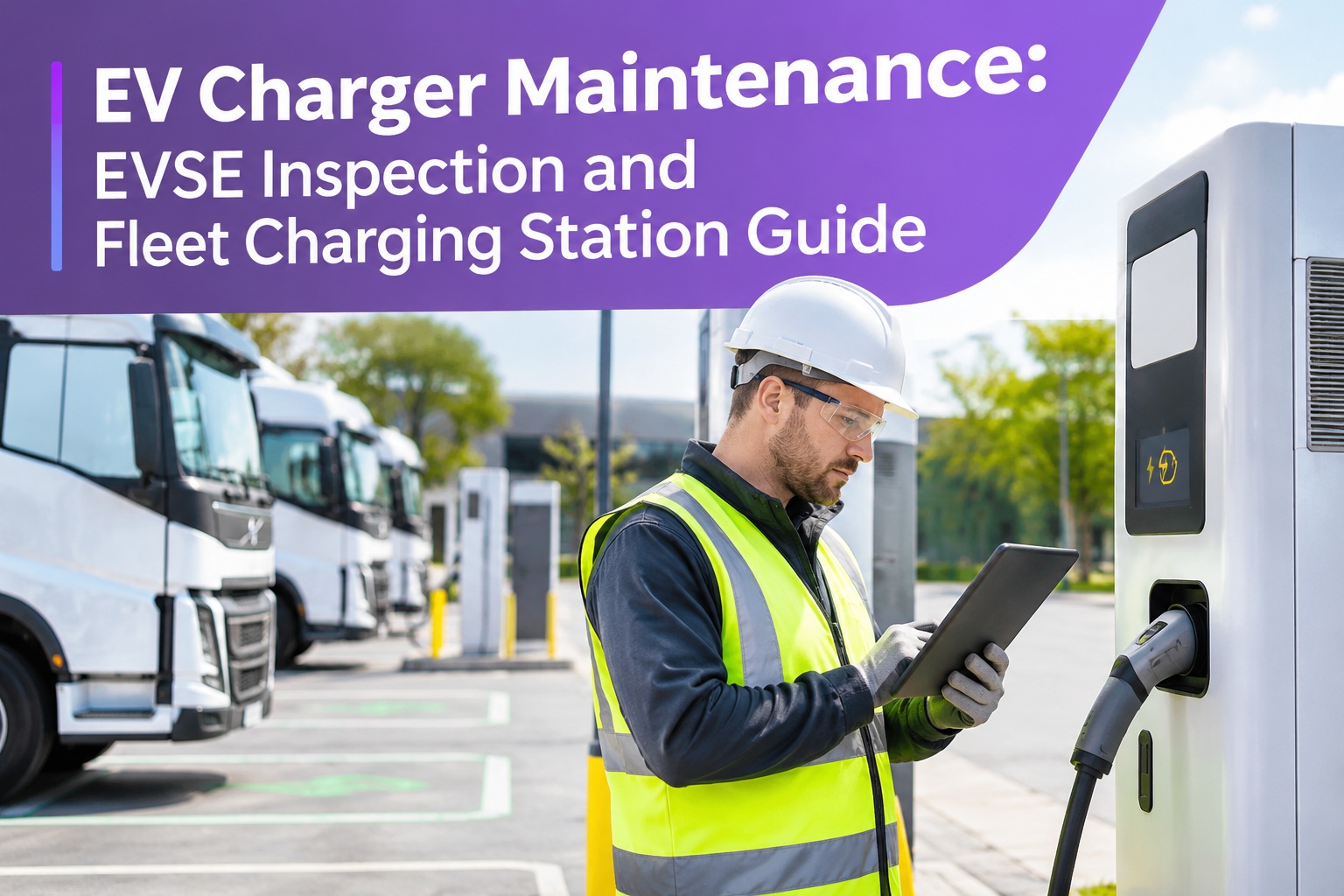
EV Charger Maintenance: EVSE Inspection and Fleet Charging Station Guide
A dead charger is a late truck. Truck Inspection & Maintenance Management Software puts your inspection routines, charger faults, work orders and recurring PM in one place, so the weekly check never gets skipped and every repair is recorded.
No credit card required. Free for up to 3 trucks.
1InspectRoutine checks of cables, connectors and enclosures.
2Fault loggedDamage or faults are recorded with photos.
3Work orderRepairs are assigned, tracked and closed.
4PM recursWeekly, monthly, quarterly and annual tasks come due on time.
Why Charger Uptime Is Route Uptime
At a depot, one broken charger does not stay a charger problem. It cascades.
Charger failsA fault, damaged cable or comms loss.
Truck underchargedThe assigned vehicle misses its full charge.
Route at riskDispatch must swap trucks or shorten the route.
Cost and delayOvertime, missed windows and unhappy customers.
A useful benchmark: 97% uptimeFederal NEVI rules require publicly funded charging ports to average more than 97% uptime per year. Depot chargers are not covered by that rule, but it is a sensible target to measure yourself against.
Level 2 vs. DC Fast: What Changes in Maintenance
Level 2 (AC)DC fast charger
Typical useOvernight depot chargingQuick turnarounds and high-power charging
ComplexitySimpler, fewer partsPower electronics, contactors and cooling
Main wear pointConnector and cableConnector, cable and thermal system
Extra checksFilters if fitted, enclosure sealsFans, filters and coolant level where liquid-cooled
Who services itSite staff plus a technicianTrained technician and licensed electrician
The Charger PM Calendar
Four rhythms cover most charger care. These are common industry intervals, so your manufacturer's manual and local electrical code come first.
Weekly
Site staff- Look over cables, connectors and screens
- Check the holster and cable management
- Clear debris and keep the bay free
- Report any damage
Monthly
Technician- Connector pin inspection and cleaning
- Full-length cable check
- Firmware and software status
- Review the fault log
Quarterly
Technician- Ground-fault protection function test
- Air filter service
- DC: fans and coolant level
- Enclosure seals and cabinet condition
Annual
Licensed electrician- Terminations and connection checks
- Thermal and insulation inspection
- Full manufacturer service
- Update records and warranty file
Connector and Cable: The Wear Hotspot
Every plug and unplug stresses the contacts, and cables get dropped, driven over and baked in the sun. The connector is widely cited as the highest-wear part of a fast charger, so inspect it closely.
ChargerVehicle
12345
1 · HolsterCracked, loose or not seating the connector
2 · Strain reliefKinks, splits or pulling at the entry
3 · Cable jacketCuts, flattened sections, exposed conductor
4 · Latch and housingCracks, sticky latch, damaged seal
5 · Contact pinsCorrosion, burn marks or debris
Take the charger out of service if you see:Cracked jacket or exposed wireBurn marksCorroded pinsLoose or wobbling connections
Charger Fault Triage
SymptomPossible causesFirst action
Charging slower than usualWorn connector, heat limiting, clogged filter or vehicle-side limitsInspect connector, check filter and cooling, compare other chargers
Session will not startNetwork fault, authorization issue or connector latchCheck network status, then inspect the connector
Repeated GFCI or breaker tripsDamaged insulation or moisture in the connectorTag out and call a qualified electrician
Hot connector or burning smellLoose termination or damaged pinsStop use at once, report and escalate
Charger offlinePower loss, communications or internal faultCheck upstream power and network, then log a work order
⚠️High voltage: qualified people onlyChargers can carry hazardous voltage, and DC units can reach very high levels. Drivers and site staff do visual checks only. Opening enclosures, torque checks and repairs belong to trained technicians or licensed electricians following lockout procedures and local code.
Keep Chargers and Trucks on One Maintenance Plan
Recurring PM, faults logged with photos, and repairs on the record. Start with up to 3 trucks free.
How the Software Keeps Charger PM on Schedule
Recurring PMSet weekly, monthly, quarterly and annual tasks that come due automatically.
Faults with photosLog damaged connectors or error screens with a picture for the technician.
Work ordersAssign the repair, record parts and labor, and close it with proof.
Service historySpot the charger that keeps failing before it becomes a pattern.
Frequently Asked Questions
How often should EV chargers be inspected?
A common pattern is weekly visual checks, monthly connector and cable inspection, quarterly function tests and filter service, and an annual electrician visit. Follow your manufacturer's manual.
Start free and build the schedule.
What is the most common EV charger failure point?
The connector and cable take the most physical wear, followed by cooling and communications faults on DC fast chargers.
Can drivers clean connector pins?
Drivers should only look and report. Pin cleaning and inspection should be done by a trained technician following the manufacturer's procedure with the charger de-energized.
How does software help with charger maintenance?
Inspect · Repair · Schedule · Charge
Keep Every Truck Charged and Every Route Running
Put charger inspections on a schedule, log faults with photos and keep a clean repair record for each unit.
No credit card required. Free for up to 3 trucks.