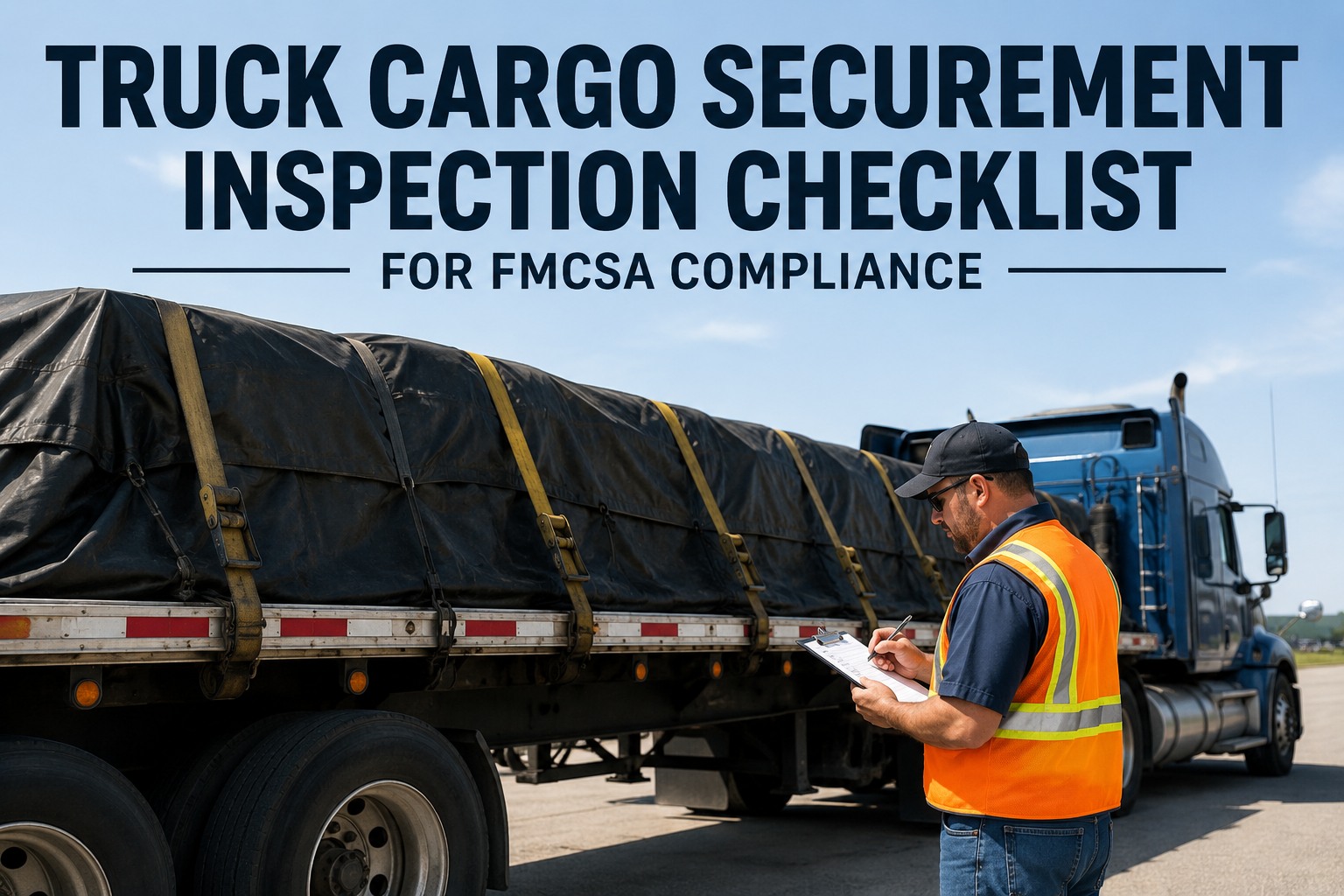
Flatbed securement trips up good drivers because it has two tests, not one and you have to pass both at the same time. Enough tiedowns for the length of the load, and enough aggregate working load limit for its weight. A load can have the right number of chains and still be illegal if the WLL comes up short, which is the mistake roadside inspectors catch most. This guide covers both tests under FMCSA 393, plus the edge protection and rechecks that keep a legal load legal. Start free and log every securement check on the record.
Tiedowns · WLL · Blocking · Edge Protection
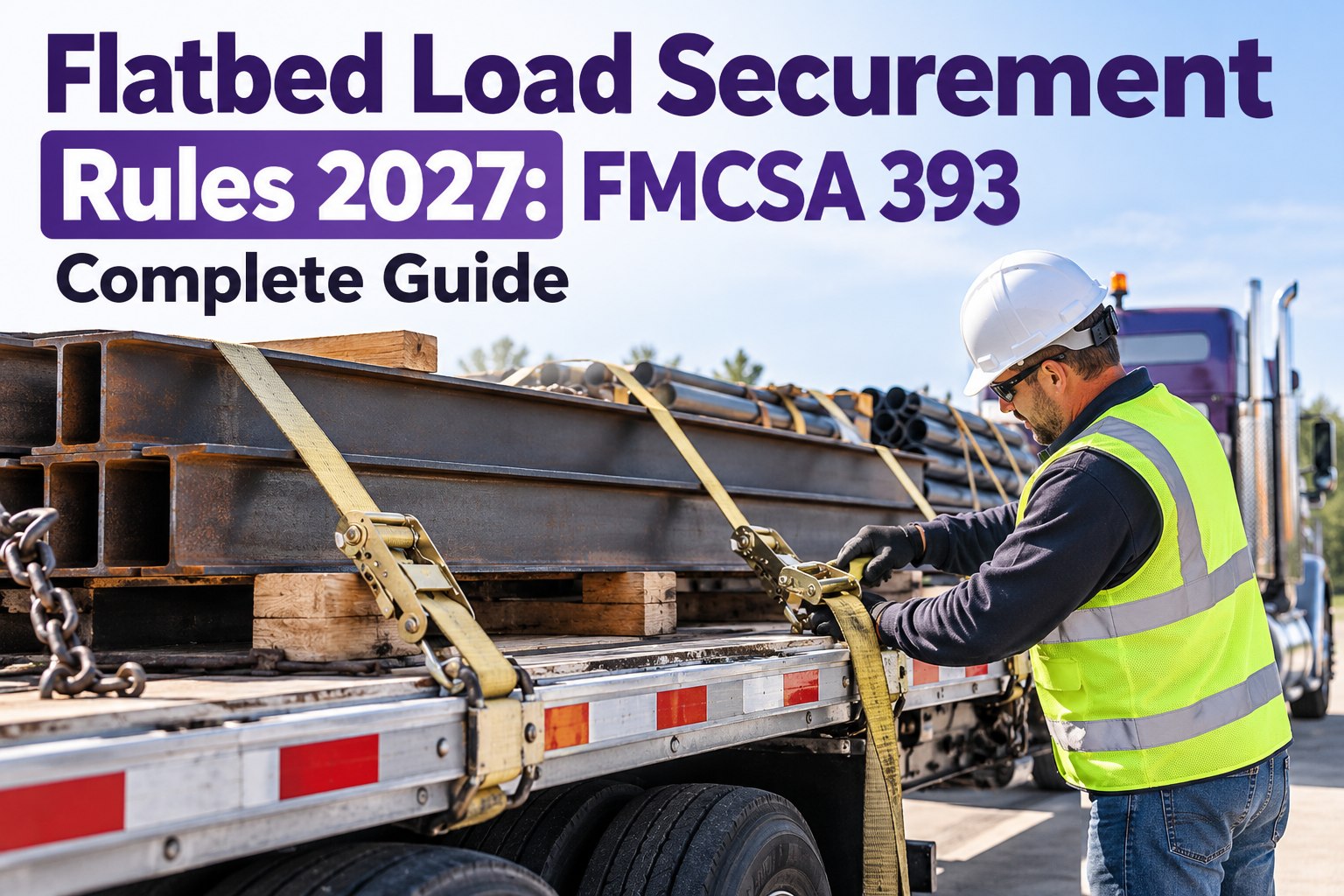
Flatbed Load Securement Rules 2027: FMCSA 393 Complete Guide
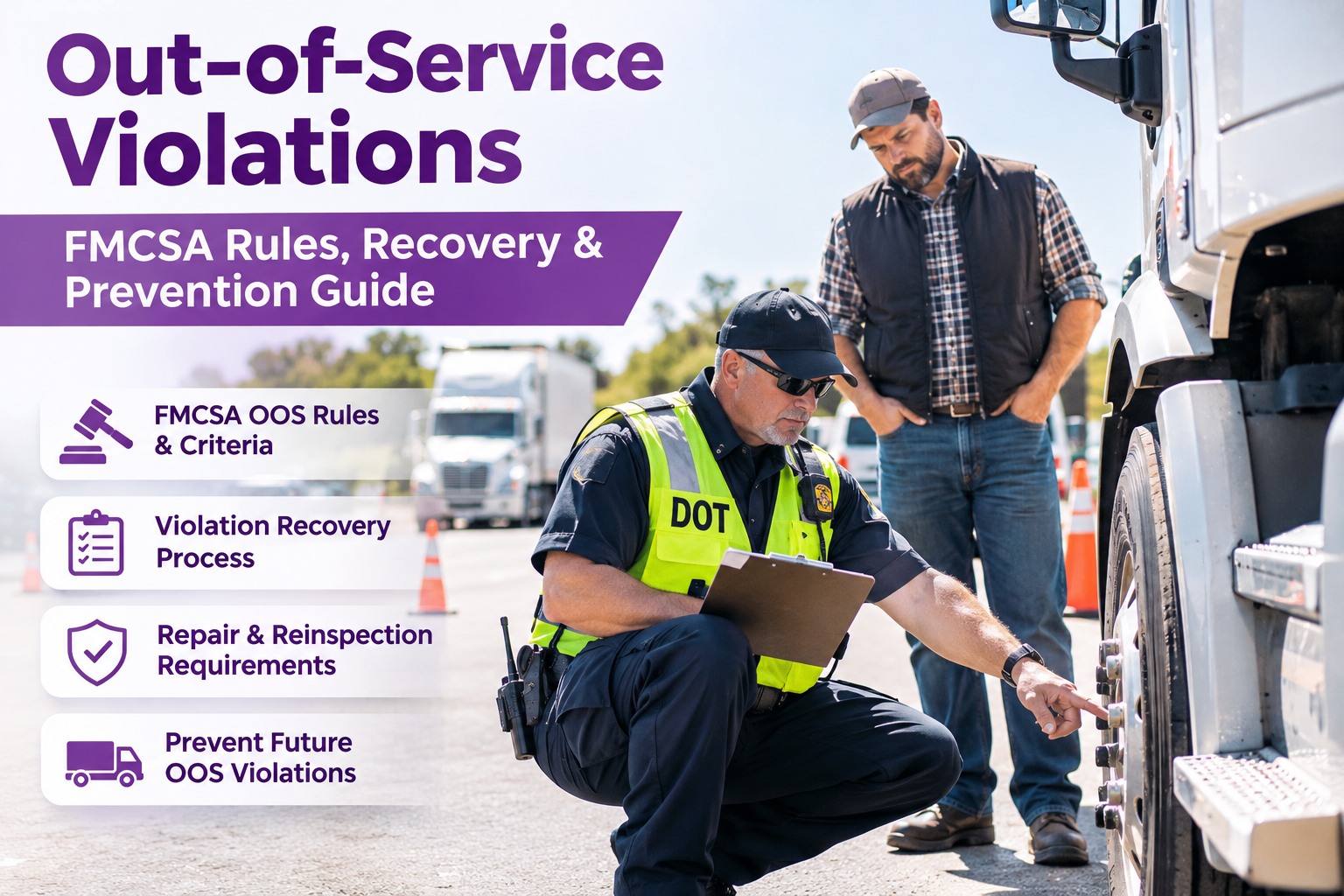
A securement violation parks the truck out of service and lands on your CSA score — you want every load proven compliant before it leaves the yard. Truck Inspection & Maintenance Management Software runs that loop: the driver works a guided securement check on the DVIR, a short tiedown count or missing edge guard opens a graded work order, and the signed check with a photo lands on the truck's record for the scale and the audit.
Test 1: Tiedown Count by Load Length
The first rule is about how long the cargo is, not how heavy. Count the tiedowns against the length and round up — this is the easy test, and the one most drivers get right.
Placement matters too: the first tiedown within about 5 ft of the front, the last within 5 ft of the rear, and the rest spaced no more than about 10 ft apart. Long loads over 40 ft need intermediate tiedowns.
Test 2: Aggregate Working Load Limit
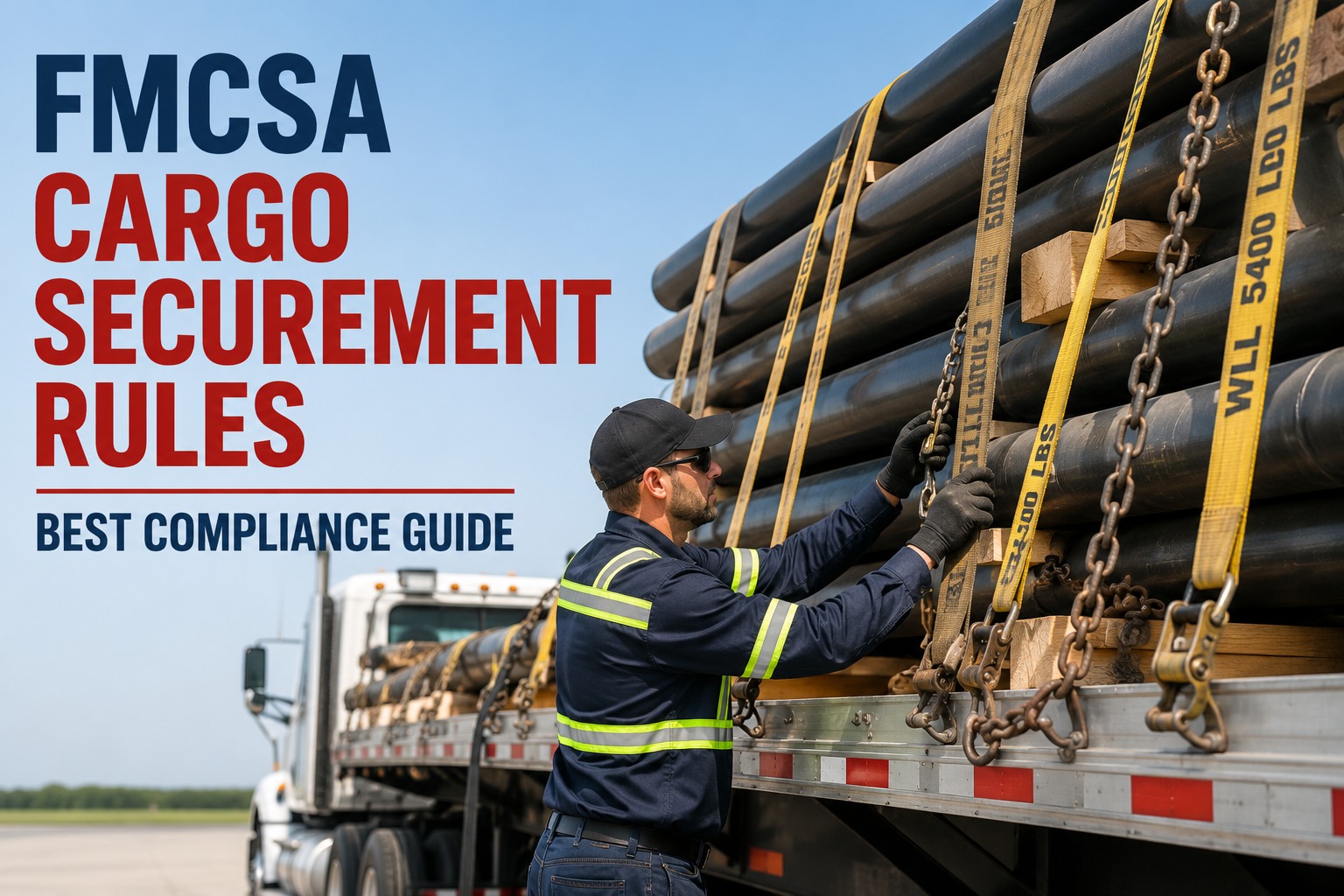
This is the one that fails loads. Every tiedown has a working load limit — its manufacturer-rated safe force, not its breaking strength. Add them up, and the total has to be at least half the weight of the cargo.
Worked example — a 40,000 lb load
Cargo weight40,000 lb
Aggregate WLL needed (50%)20,000 lb
4 chains at 4,700 lb each18,800 lb ✕ short
5 chains at 4,700 lb each23,500 lb ✓ compliant
The count can say "enough" while the WLL says "not enough" — four chains satisfy the length rule on many loads but still fall short on weight. That's exactly the gap inspectors look for.
Know Your Tiedown WLL Ratings
You can't run the WLL math without knowing what each tiedown is rated for. These are typical ranges — always use the stamped rating on your actual hardware.
Transport chain
~3,000 – 6,600 lb
Grade 43 to Grade 70, by link size. The workhorse for steel, machinery and heavy loads.
Synthetic web strap
~1,000 – 5,000 lb
Rated by width. Lighter and kinder to finished surfaces, but needs edge protection.
WLL is the safe rated force, not the breaking strength — never calculate off the break rating. A cut, frayed or knotted tiedown loses its rating entirely and must be replaced.
Direct vs. Indirect Tiedowns
How a tiedown is attached changes what it's doing, and the two are often combined on one load.
Direct
Runs over or through the cargo and attaches to the trailer at both ends. It resists movement directly — aggregate WLL should reach 50% of cargo weight.
Indirect
Presses the load down against the deck via headboards, stakes or standards. Must be paired with blocking, bracing or other restraint.
The Rule That Keeps It LegalEdge protection, and re-check within 50 miles
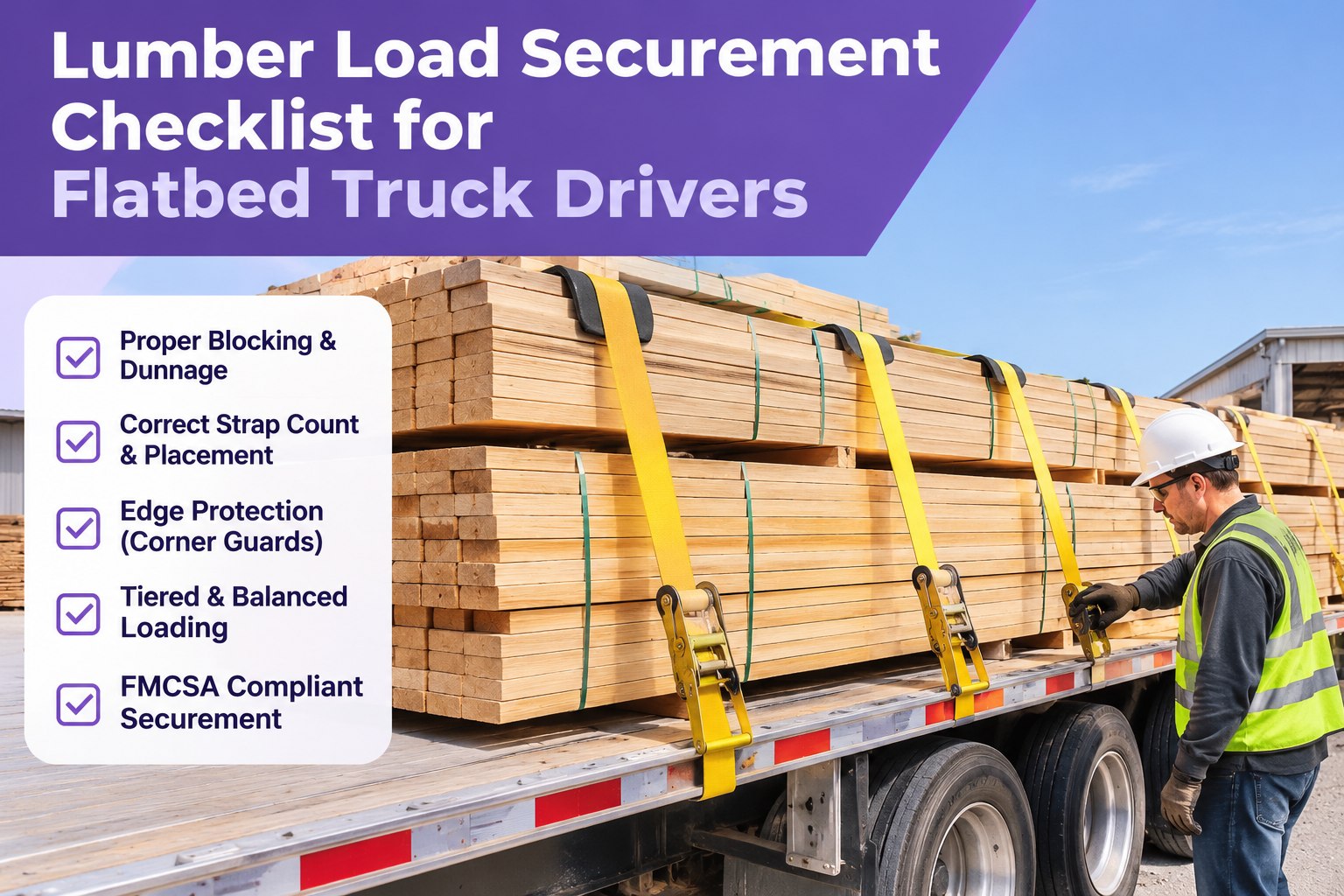
Wherever a strap or chain bends over a cargo edge sharper than a half-inch radius, edge protection is required — and cardboard or old fire hose doesn't count. Then re-check the load within the first 50 miles, and again every 150 miles or 3 hours after that. Cargo settles and tiedowns loosen; the load that was legal at the dock won't stay that way on its own.
Every Securement Check, On the Record
Truck Inspection & Maintenance Management Software turns the flatbed securement check into a guided DVIR item — tiedown count, WLL, edge protection and the 50-mile re-check logged with a photo, so a securement finding becomes a work order and a signed record instead of a roadside surprise.
Commodity-Specific Rules to Remember
Some loads carry their own securement rules on top of the general ones. These are the common ones a flatbed driver meets.
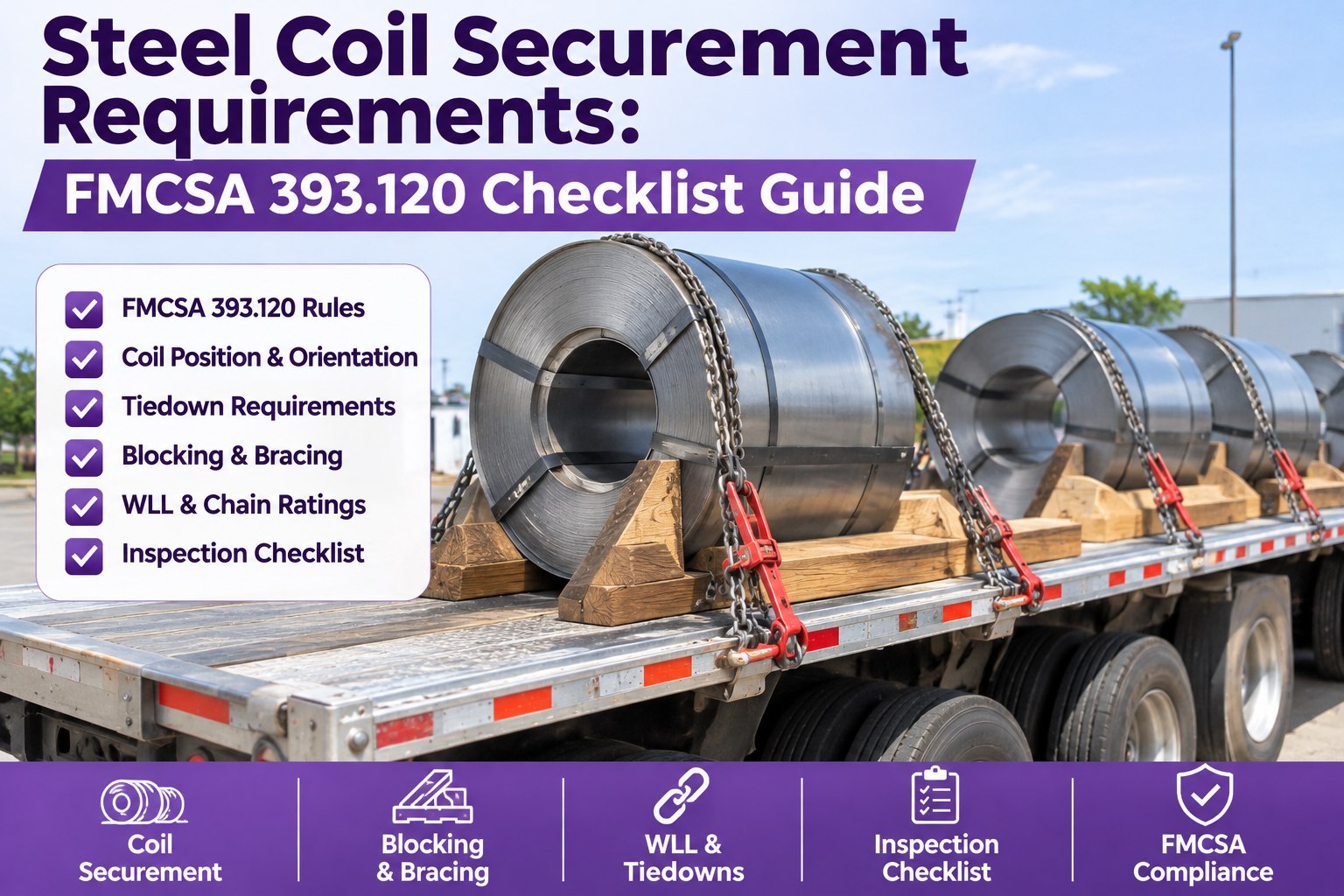
◉Steel coilsEye-to-the-rear or eye-to-the-side coils need at least four tiedowns, plus timbers or a coil rack.
◉LogsAggregate WLL of at least one-sixth of the stack weight, with stakes and wrappers.
◉Lumber & bundlesBlocking against forward movement and tiedowns sized to the full bundle weight.
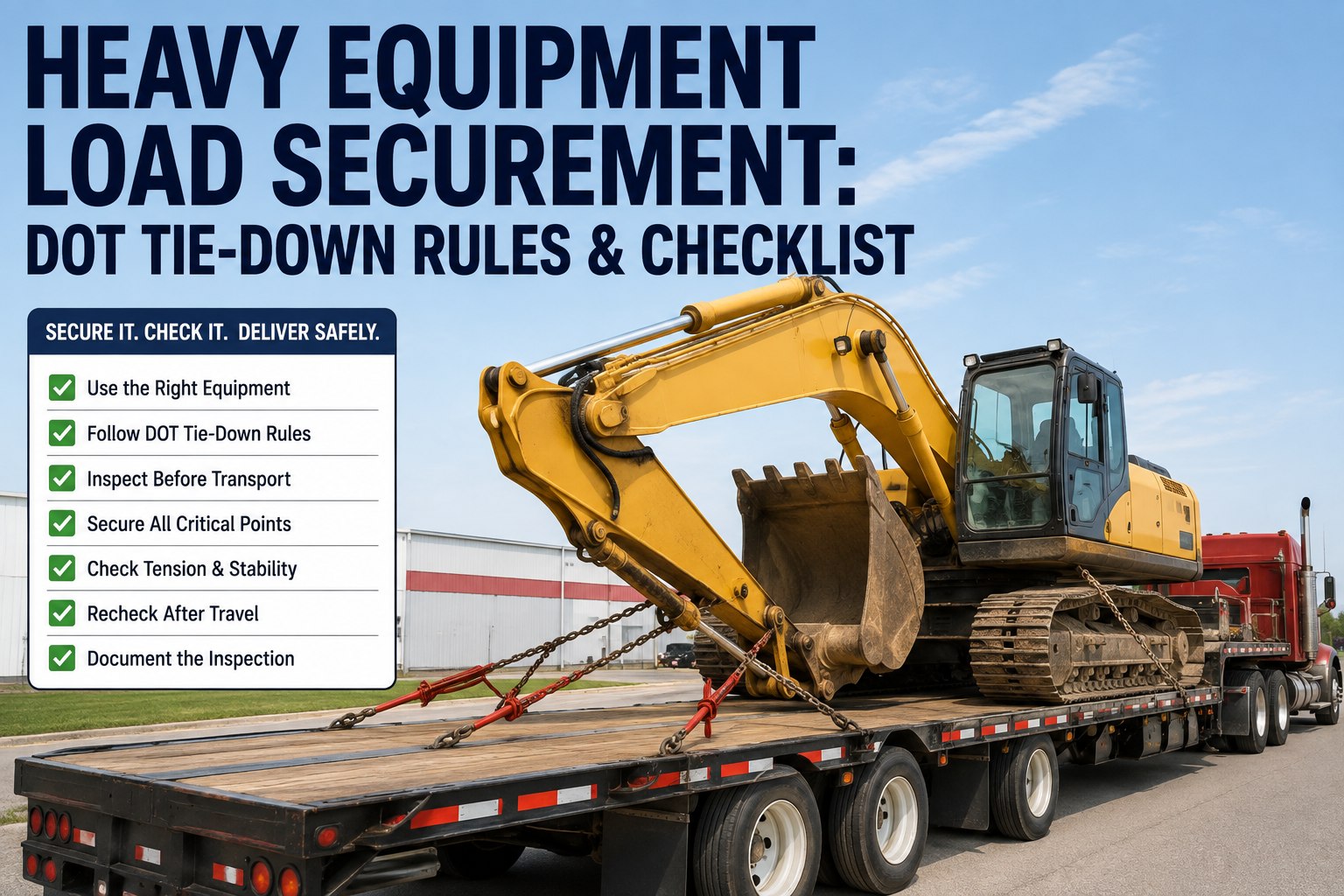
◉Machinery & vehiclesSecured at manufacturer points, four-point direct tiedowns on heavy equipment.
Pass Both Tests, Prove You Did
A securement violation isn't just a fine — it can put the truck out of service and follow the carrier into its CSA score. Truck Inspection & Maintenance Management Software keeps the securement check on every flatbed trip, so the count, the WLL and the re-check are on record if anyone asks.
Why Flatbed Fleets Track Securement in Software
A securement rule followed but not recorded is a rule you can't prove you followed. A logged check with a photo of the tiedowns is the difference in an audit or a dispute. Start free and make every flatbed check provable.
◳Guided securement checkCount, WLL and edge protection walked in order.
▣Photo of the tiedownsVisual proof the load was secured, dated and tagged.
◷Re-check remindersThe 50-mile and 150-mile re-checks flagged on route.
⚑Defect to work orderA worn strap or missing edge guard opens a repair.
◉Hardware on recordTiedown ratings and condition tracked per trailer.
⌕Audit-ready historyEvery securement check searchable after a stop.
Frequently Asked Questions
01
How many tiedowns does a flatbed load need?
One tiedown for cargo 5 feet or shorter, two for over 5 up to 10 feet, and one more for each additional 10 feet or fraction. That's the length test — but you also have to meet the aggregate WLL test, so the final number is whichever is higher.
Book a demo to track tiedown counts per load.
02
What is the aggregate working load limit rule?
The combined WLL of all your tiedowns must be at least 50% of the cargo weight. A 40,000 lb load needs 20,000 lb of aggregate WLL, so four 4,700 lb chains (18,800 lb) fall short and a fifth is required. WLL is the rated safe force, not the breaking strength.
Book a demo to run the WLL math fast.
03
When is edge protection required?
Anywhere a strap, chain or wire rope passes over a cargo edge with a radius sharper than half an inch. It stops the tiedown being cut or abraded at the corner. Cardboard and old fire hose are not acceptable edge protection under 393.
Book a demo to log edge-protection checks.
04
How often do I re-check a flatbed load?
Within the first 50 miles after loading, then again every 150 miles or 3 hours, whichever comes first. Cargo settles and tiedowns loosen on the road, so the re-check is what keeps a load that was legal at the dock legal at the scale.
Book a demo to schedule re-check reminders.
Count · WLL · Edge protection · Re-check
Pass Both Securement Tests, Every Load
Count the tiedowns by length, meet the 50% aggregate WLL by weight, protect the edges and re-check on the road — then log it all, so a flatbed load is compliant at the dock and provable at the scale.
No credit card required. Free for up to 3 trucks. Built for FMCSA-compliant fleets.