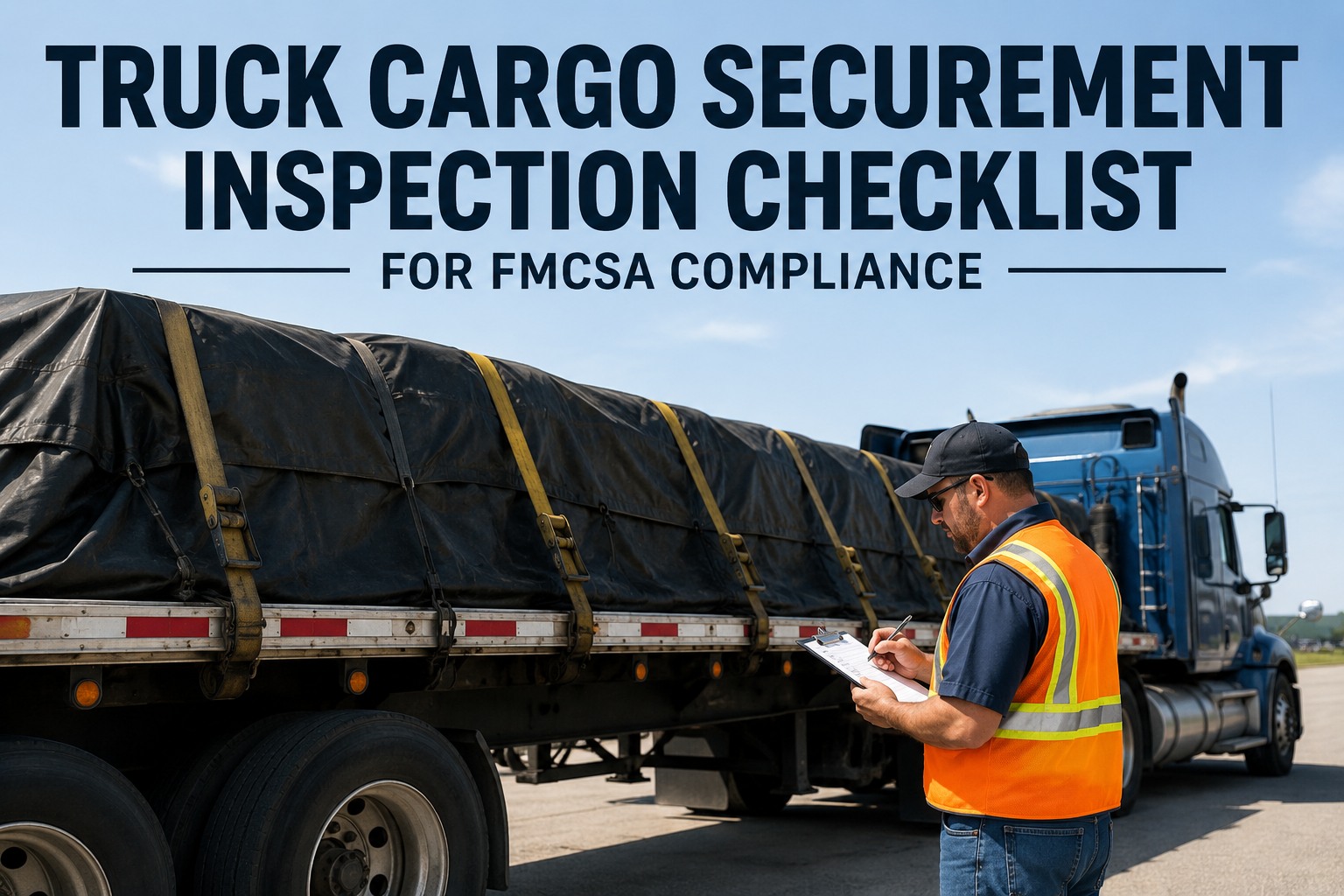
Lumber is forgiving right up until it isn't. A bundle rides fine for forty miles, then a strap you never edge-protected saws halfway through on a sharp board corner, the load breathes loose on a downgrade, and now you are the flatbed an inspector pulls to the scale. Building materials are the most-hauled flatbed freight and among the most-cited, because drivers apply the general tiedown count and forget lumber has its own rule. This checklist walks a bundled-lumber load from deck prep to the 50-mile recheck — the way §393.118 and a Level III inspector read it. Start free and run this checklist on every load.
Flatbed Checklist · Bundled Building Materials
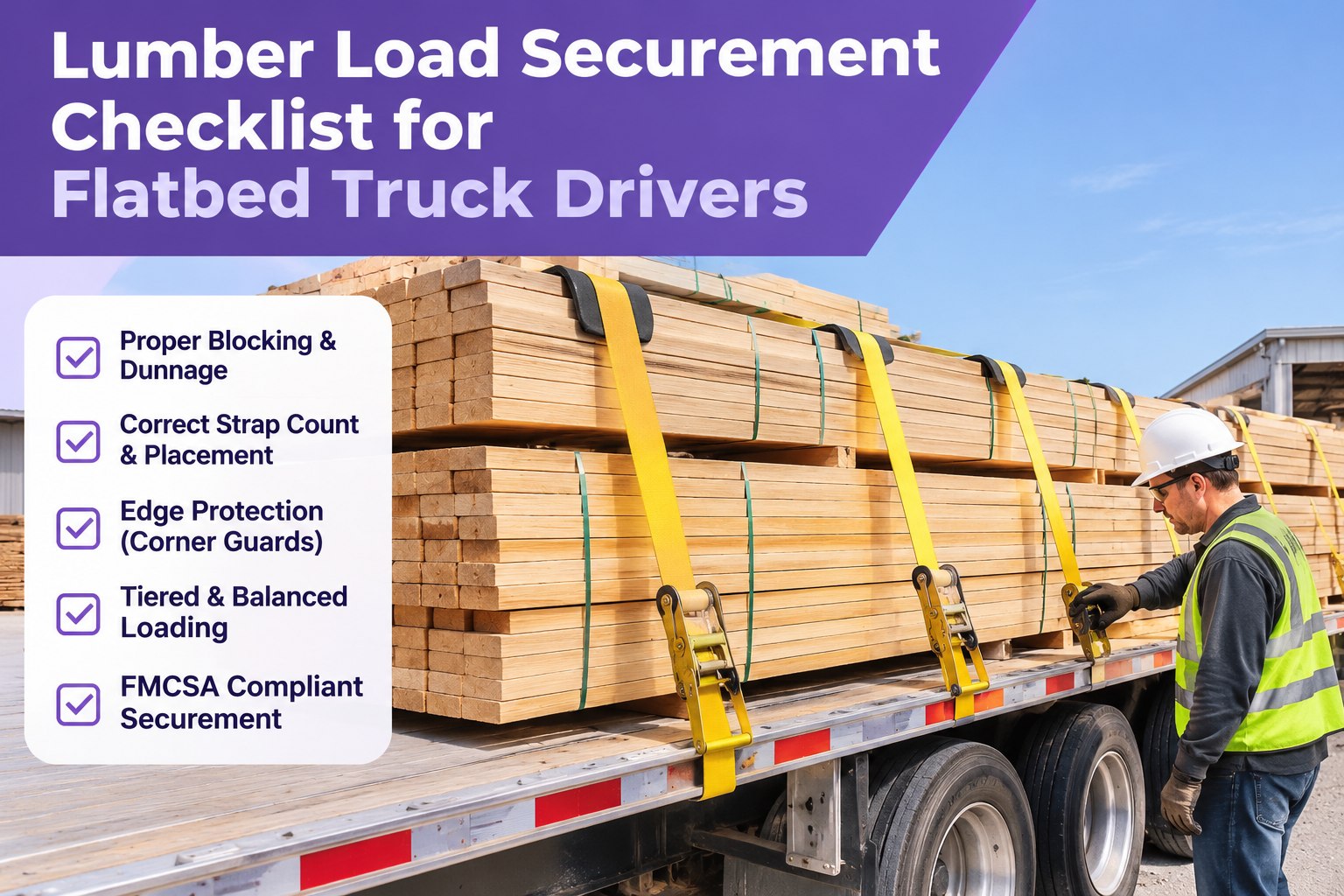
Lumber Load Securement Checklist for Flatbed Truck Drivers
A cut strap or a shifted bundle does not wait for your next planned stop — it shows up as an out-of-service order at a roadside scale. Truck Inspection & Maintenance Management Software runs the loop that keeps it off your record: a securement walkaround on every digital pre-trip, each failed item logged to the load's DVIR, any defect turned into an assigned work order, and the re-tension and recheck scheduled — so every lumber load leaves squared, strapped, and provable before the wheels turn.
§393.118the commodity rule for bundled lumber & building products
≥50%aggregate tiedown WLL must meet at least half the cargo weight
<0.5"edge protection required on any corner under a half-inch radius
50 mifirst re-tension and recheck, then at each duty change
First, Know Which Rule You Are Under
Lumber splits into two securement worlds, and the whole checklist depends on which one you are in.
Bundled / packaged
Unitized as a single article — strapped or banded packages of dimensional lumber, plywood, OSB, drywall. Follows the dressed-lumber commodity rule, §393.118, on top of the general rules.
Loose / unbundled
Not unitized — individual boards or pieces. Treated as loose cargo under the general rules, §393.100–393.114, with no commodity shortcut.
If your load is banded into bundles, you are under §393.118 — and that means blocking, dunnage, and a tiedown count that climbs with every tier. Book a demo to route the right checklist by commodity.
The Lumber Securement Checklist
Work it top to bottom before every departure. Each box is a point an inspector can check too.
A Finished Checklist Is a Defensible Record
Ticking boxes on paper proves nothing an hour later at the scale. In Truck Inspection & Maintenance Management Software every item is checked on the driver's phone, a failed item opens a work order, and the dated, photo-backed record travels with the load — so "we secured it right" is something you can show, not just say.
The Three Mistakes That Put Lumber Out of Service
Counting, but not weighingThe tiedown count looks right, but aggregate WLL comes up short of 50% of the cargo weight. WLL governs — and it often needs more straps than the count alone.
Skipping edge protectionLumber corners saw through webbing fast. No edge guard means an inspector can rule the strap isn't at its rated WLL — a violation even if your numbers added up.
Bundles touching, not blockedTied down but relying on direct contact between bundles is not acceptable. Dunnage and blocking have to stop them shifting toward each other.
Each one is catchable in the yard and expensive on the shoulder. Book a demo to flag these before the load rolls.
Frequently Asked Questions
1Which FMCSA rule covers lumber securement?
Bundled or packaged dressed lumber and building products — plywood, OSB, drywall and similar — fall under §393.118, the dressed-lumber commodity rule, which applies on top of the general cargo rules. Loose, unbundled lumber has no commodity shortcut and is secured under the general rules, §393.100 through 393.114. Knowing which one your load is under decides the whole securement plan.
Book a demo to route the right rule per load.
2How many tiedowns does a lumber load need?
Start with the general count — 1 tiedown up to 5 feet, 2 up to 10 feet, then one more per additional 10 feet — then check the aggregate working load limit, which must be at least half the cargo weight. Stacked bundles add tiedowns as tiers build. Whichever rule demands more straps is the one you follow, so always run both before you decide.
Book a demo to calculate count and WLL together.
3Is edge protection really required on lumber?
Yes — wherever a strap or chain crosses a corner with less than a half-inch radius, which covers almost every lumber bundle. Without it, the webbing cuts and an inspector can rule the tiedown isn't performing at its rated WLL, citing you even if your count and WLL math are correct. Use purpose-built guards, never cardboard or old fire hose.
Book a demo to make edge checks part of the routine.
4Why does lumber need dunnage between tiers?
Because straps over a tall, multi-tier load only compress the top unless the tension is carried down through the stack — dunnage between tiers spreads that force and keeps lower bundles from going loose. It also stops bundles shifting toward each other, which the rule requires. On loads over about ten feet it is effectively mandatory to secure properly.
Book a demo to standardize tiered-load securement.
Squared · Strapped · Edge-protected · On record
Make Every Lumber Load Inspection-Proof
Truck Inspection & Maintenance Management Software turns this checklist into a phone-run securement check, opens a work order on any failed item, and keeps the dated, photo-backed record that stands up at the scale — load after load.
No credit card required. Free for up to 3 trucks. Built for flatbed and open-deck fleets.