Most flatbed securement problems are training problems in disguise. A new driver learns on the job from whoever happens to be in the yard, picks up another driver's shortcuts, and never gets told why a rule exists. Then a load shifts, a roadside inspection finds a weak tie-down, or a chain gets reused long after it should have been retired. Cargo securement training for flatbed drivers works best as a simple program: teach the rules, practice the skills with real equipment, sign drivers off against a scorecard, and keep refreshing. This guide gives fleet owners, safety managers, and dispatchers a practical framework built around FMCSA cargo securement rules (49 CFR Part 393), plus ideas for keeping the training alive after the classroom. Start free and turn your securement training into a daily driver checklist.
Flatbed Load Securement · Driver Training
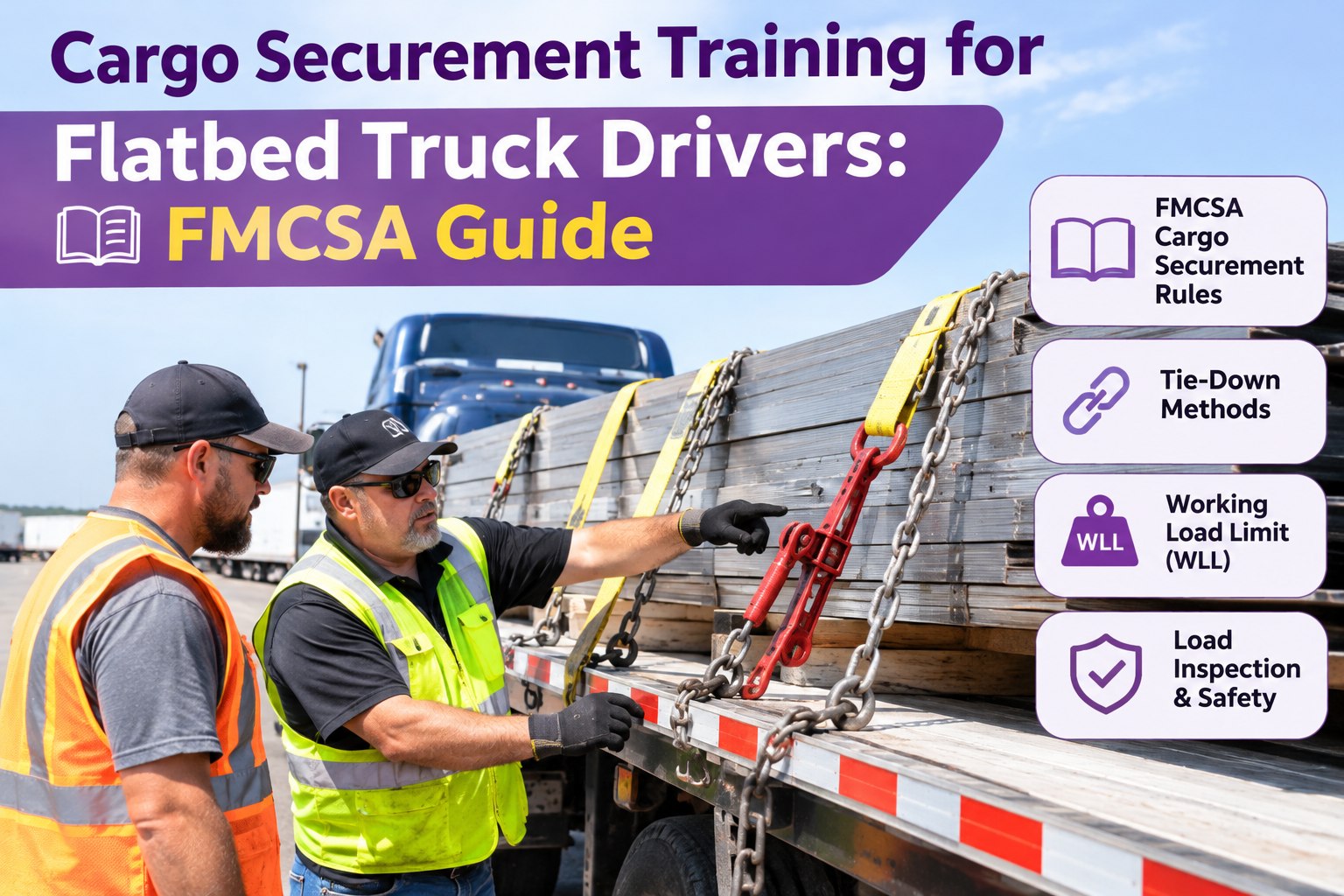
Cargo Securement Training for Flatbed Truck Drivers: FMCSA Guide
Training fades if nothing reinforces it. Truck Inspection & Maintenance Management Software puts your securement standard into each driver's inspection checklist, collects photos of finished loads for coaching, and turns damaged chains, straps, or binders into work orders so bad gear leaves service.
1
TeachRules, gear, and why they matter
2
PracticeHands-on loads with a coach
3
VerifyChecklist and photos on every load
Know the basics Under federal rules, drivers must make sure cargo is properly secured, and carriers share responsibility for equipment and procedures. Rules, definitions, and section numbers change over time and differ by state, so confirm the current text of 49 CFR Part 393, Subpart I, and Part 392 with your safety department, and use the North American Cargo Securement Standard as your reference.
Who Needs What: Training by Role
Securement is a team job. Training should reach everyone who touches the load decision, not just the person holding the binder.
Drivers
Do the work and own the load
- Tie-down selection and placement
- WLL reading and calculation
- Pre-trip and en-route load checks
- When to refuse or re-secure a load
Dispatchers
Set the load up for success
- Matching the load to the right trailer and gear
- Understanding weight, dimensions, and permits
- Allowing time for proper securement
- Never pressuring a driver to cut corners
Safety managers
Run the program
- Written securement standard
- Gear inspection and retirement rules
- Coaching, sign-offs, and refreshers
- Reviewing near misses and inspection results
The Four-Stage Training Path
A good program moves a driver from understanding the rules to proving the skill, and then keeps proving it.
1
Classroom: learn the rules and the gearCover the core principles, the rules for different cargo, how to read WLL tags, and how to spot damaged equipment. Keep it short and use photos of real loads.
2
Yard: hands-on with real equipmentLet each driver choose, place, and tighten tie-downs on a real load, and explain why. A coach watches and corrects.
3
Supervised loads: practice with feedbackNew drivers haul real loads with a review of photos and checklists. Fix habits early, before they become routine.
4
Sign-off and refreshers: prove it, then repeat itUse a scorecard for the initial sign-off, then refresh on a schedule and after any incident or new cargo type.
Six Core Modules
01General principlesWhy cargo must be prevented from shifting, falling, or tipping, and what forces act on a load.
02Tie-down gearChains, straps, binders, hooks, and edge protection, and how to read their markings.
03WLL and tie-down countAdd up the working load limits, apply the rule for the combined total, and count tie-downs by length and weight.
04Cargo-specific rulesSpecial requirements for items such as lumber, coils, pipe, and machinery.
05Inspection and re-checksCheck before leaving, early in the trip, at regular intervals, and after anything that could shift the load.
06Gear retirement and recordsKnow when to pull a chain or strap, and how to report it so it is repaired or replaced.
Learn the Cargo-Specific Rules
General tie-down rules cover many loads, but some cargo has its own section of the regulations. Teach drivers to look these up and to ask before hauling something new.
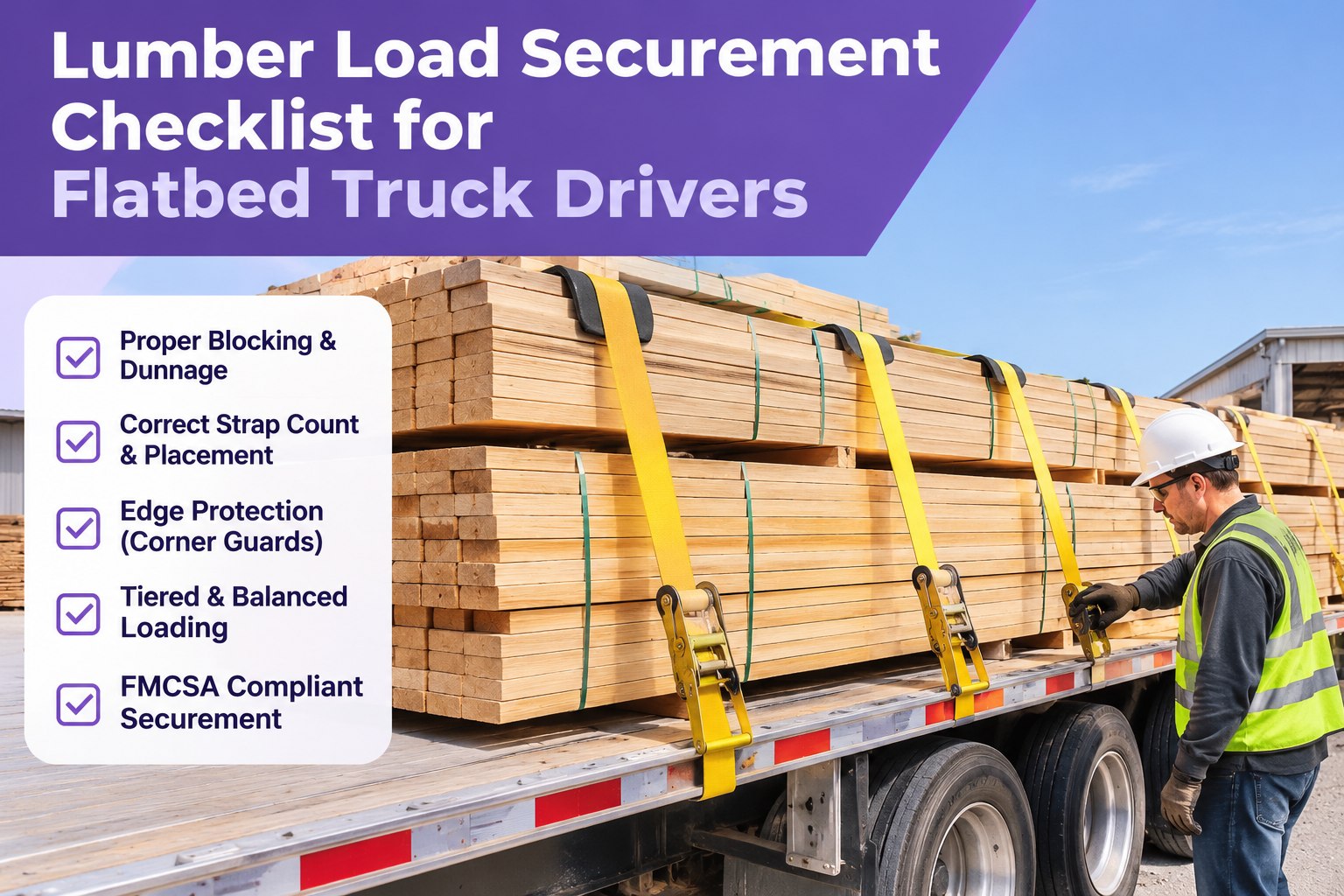
Dressed lumber · §393.118
Metal coils · §393.120
Paper rolls · §393.122
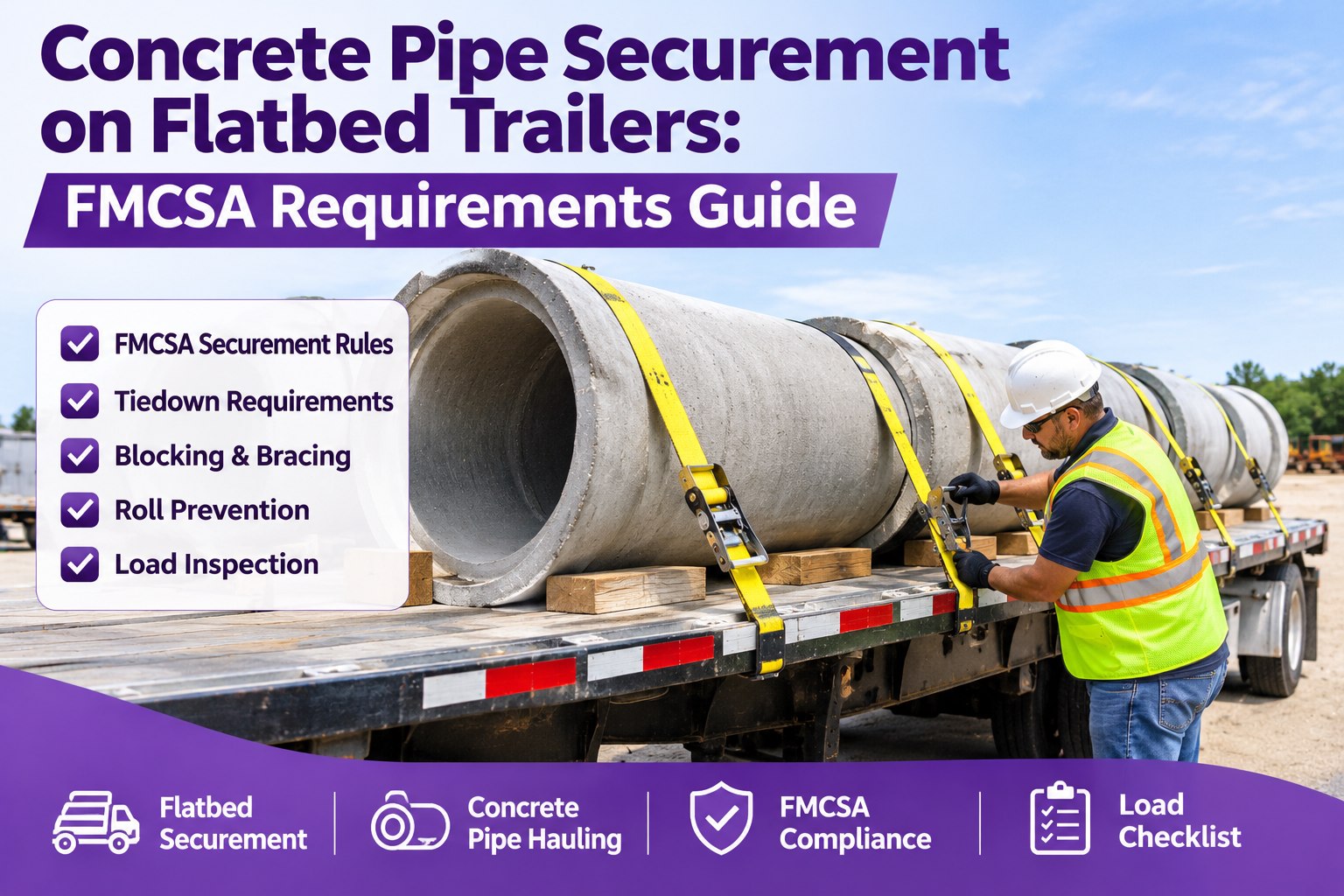
Concrete pipe · §393.124
Intermodal containers · §393.126
Vehicles and light trucks · §393.128
Heavy equipment and machinery · §393.130
Verify section numbers and requirements against the current regulation before you publish them in training materials.
Turn Coaching Into Real Examples
Drivers attach photos of the finished load to their inspection, and trainers use them to praise good work and correct weak ones. Start free or book a demo.
Driver Sign-Off Scorecard
Use a simple scorecard during the yard and supervised stages. The driver passes when every line is met, and anything missed becomes a coaching item.
Skill the coach observes
Met
Coach
Reads WLL markings on chain, binder, and hook
☐
☐
Calculates combined WLL for the load
☐
☐
Chooses the correct number and placement of tie-downs
☐
☐
Protects straps and chains at sharp edges
☐
☐
Identifies and rejects damaged gear
☐
☐
Performs and records re-checks on schedule
☐
☐
Keep It Fresh: Refresher Triggers
Do not wait for an annual class. Retrain when something changes.
New cargo typeBefore the first haul of coils, pipe, or machinery
New equipmentDifferent trailer, tarps, or tie-down gear
Inspection findingA roadside violation or an internal audit result
Near miss or incidentA shifted load, even if nobody was hurt
Frequently Asked Questions
Is cargo securement training required by FMCSA?
Federal rules put the duty to secure cargo on drivers and set the performance standards, and carriers must not allow unsafe loads. A written, documented training program is not a substitute for those rules, but it is a strong way to meet them. Confirm current requirements with your safety department.
Start free and make the standard part of every inspection.
How often should flatbed drivers be retrained?
What should a securement training program include?
The rules, hands-on practice, WLL calculation, cargo-specific methods, load inspections, gear retirement, and a sign-off scorecard. Add refreshers and keep records of what each driver has completed.
Should dispatchers be trained too?
Yes. Dispatchers decide what loads go on which trailers and how much time drivers have. When they understand securement, they plan better and are less likely to push a rushed load.
Trained · Checked · Documented
Make Securement Training Stick With a Daily Workflow
Guided inspections, photo defects, traffic-light grading, and work orders in one system built for trucking fleets. Start free to turn your standard into a checklist, or book a demo and we will walk through it with your fleet in mind.
No credit card required. Free for up to 3 trucks.