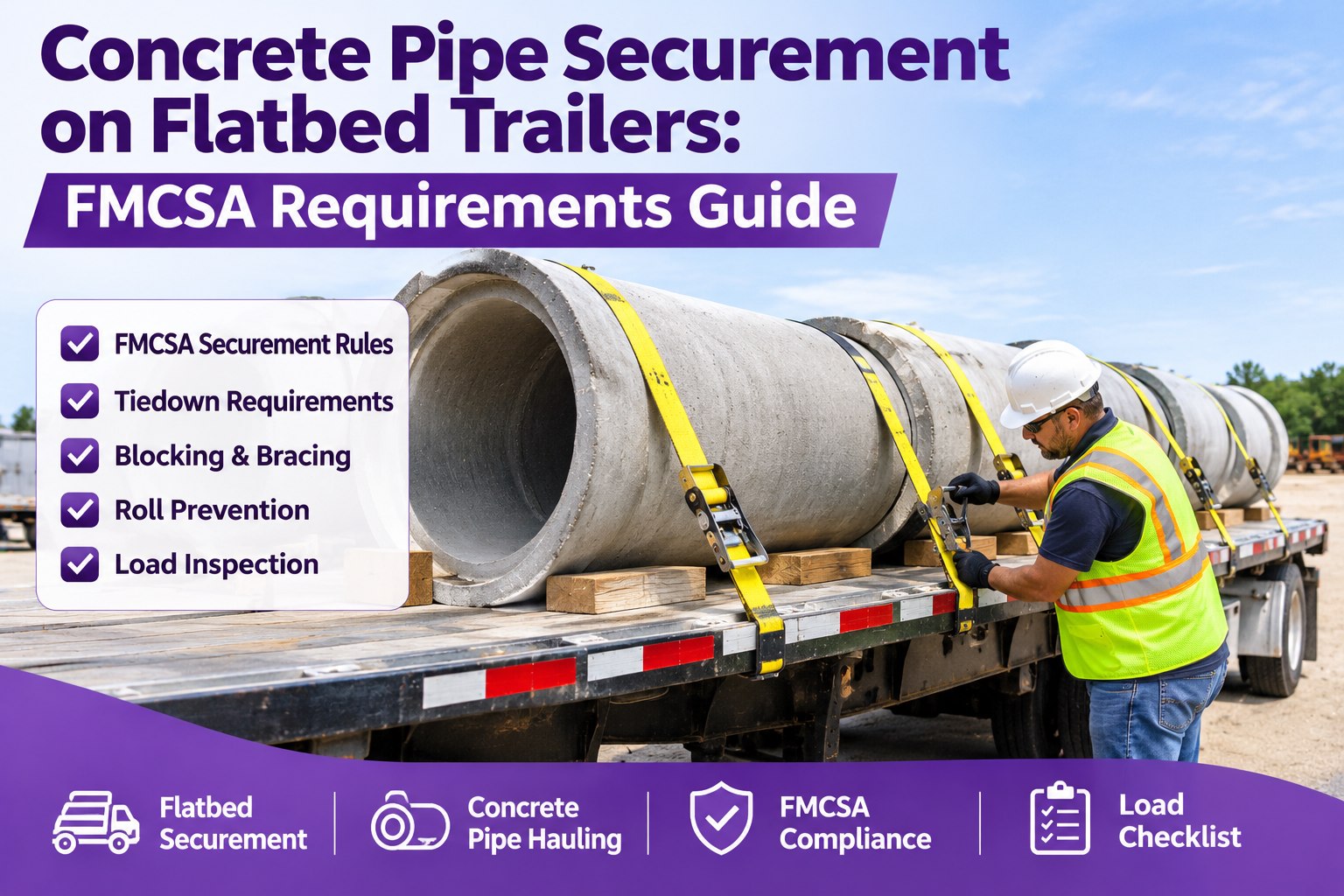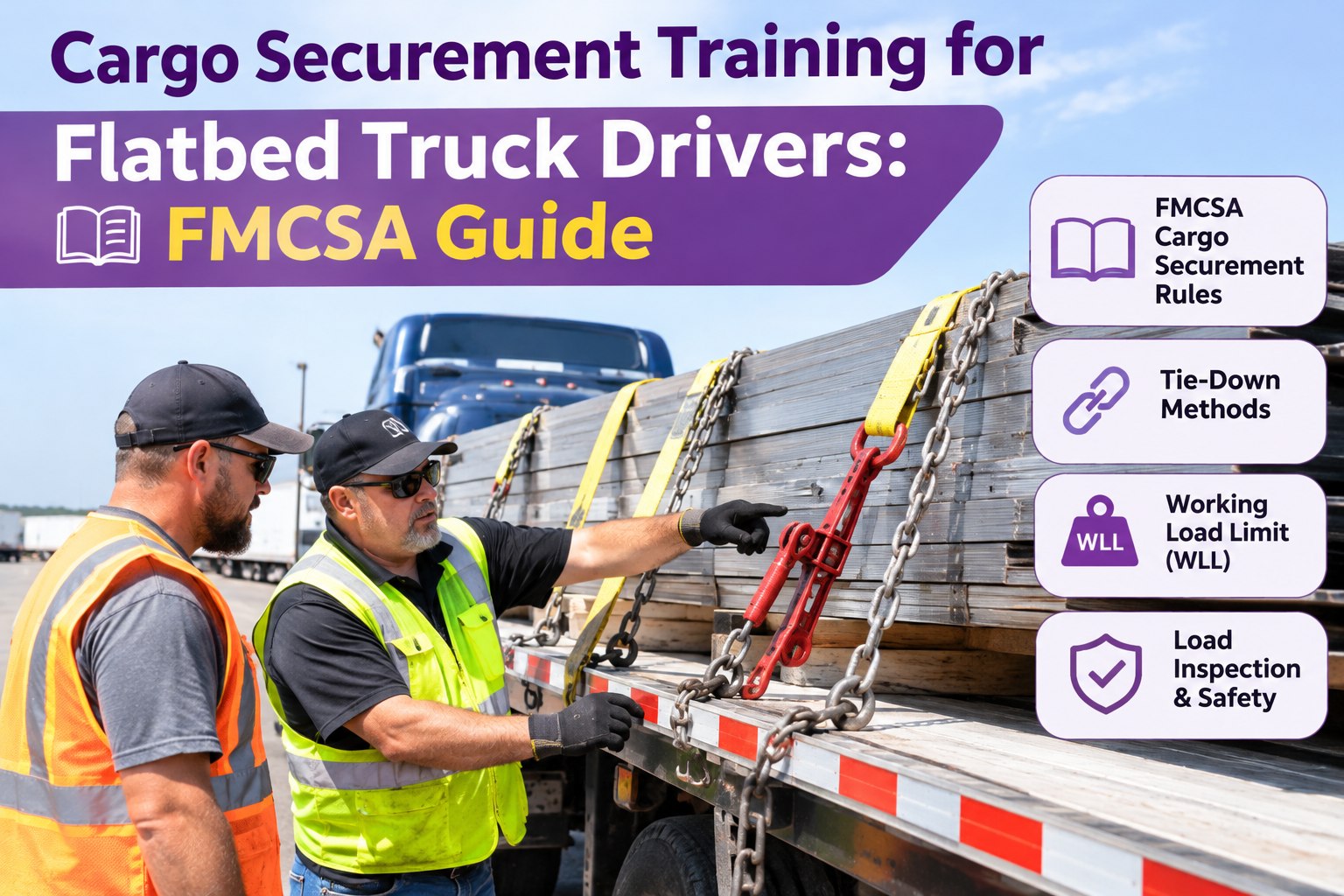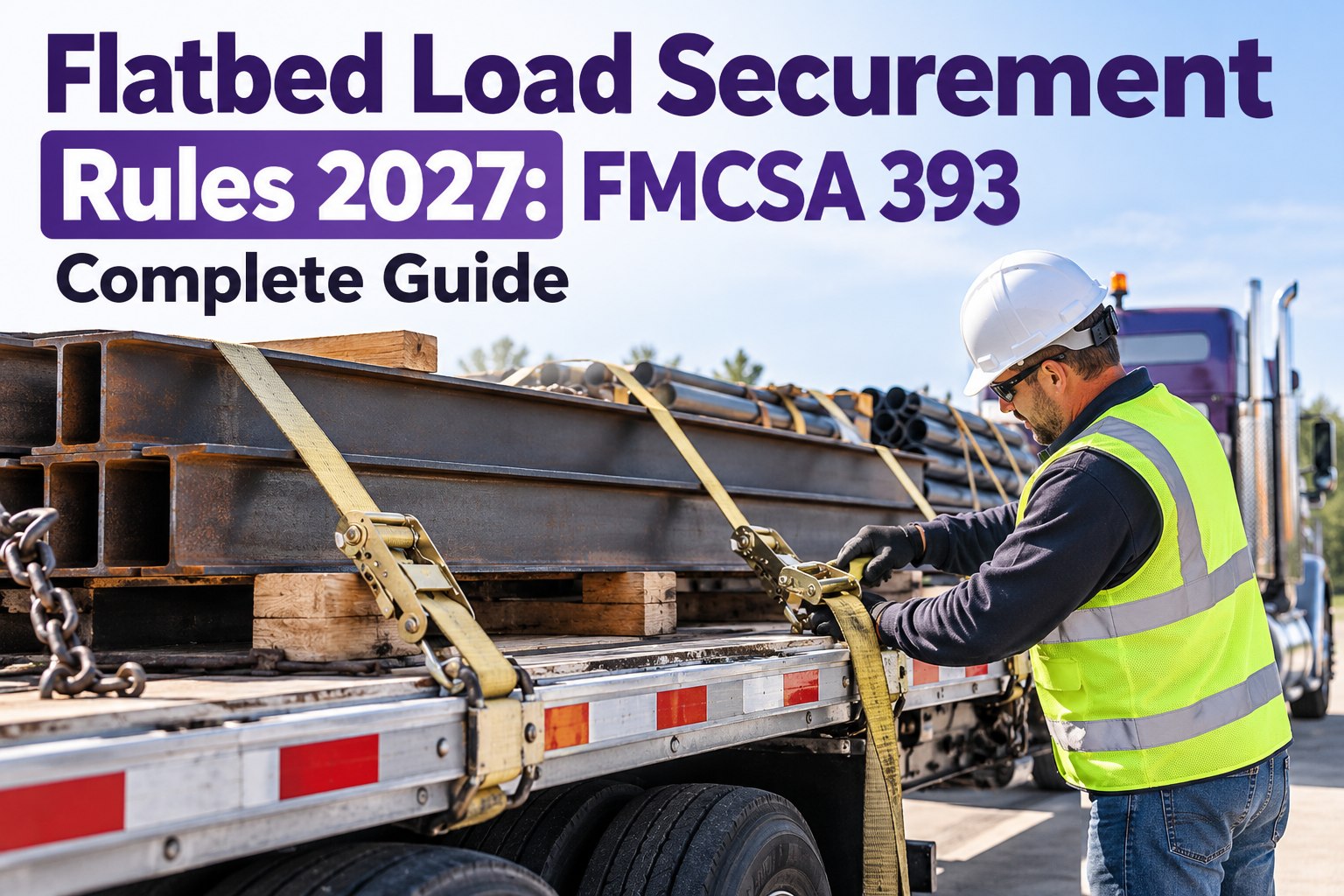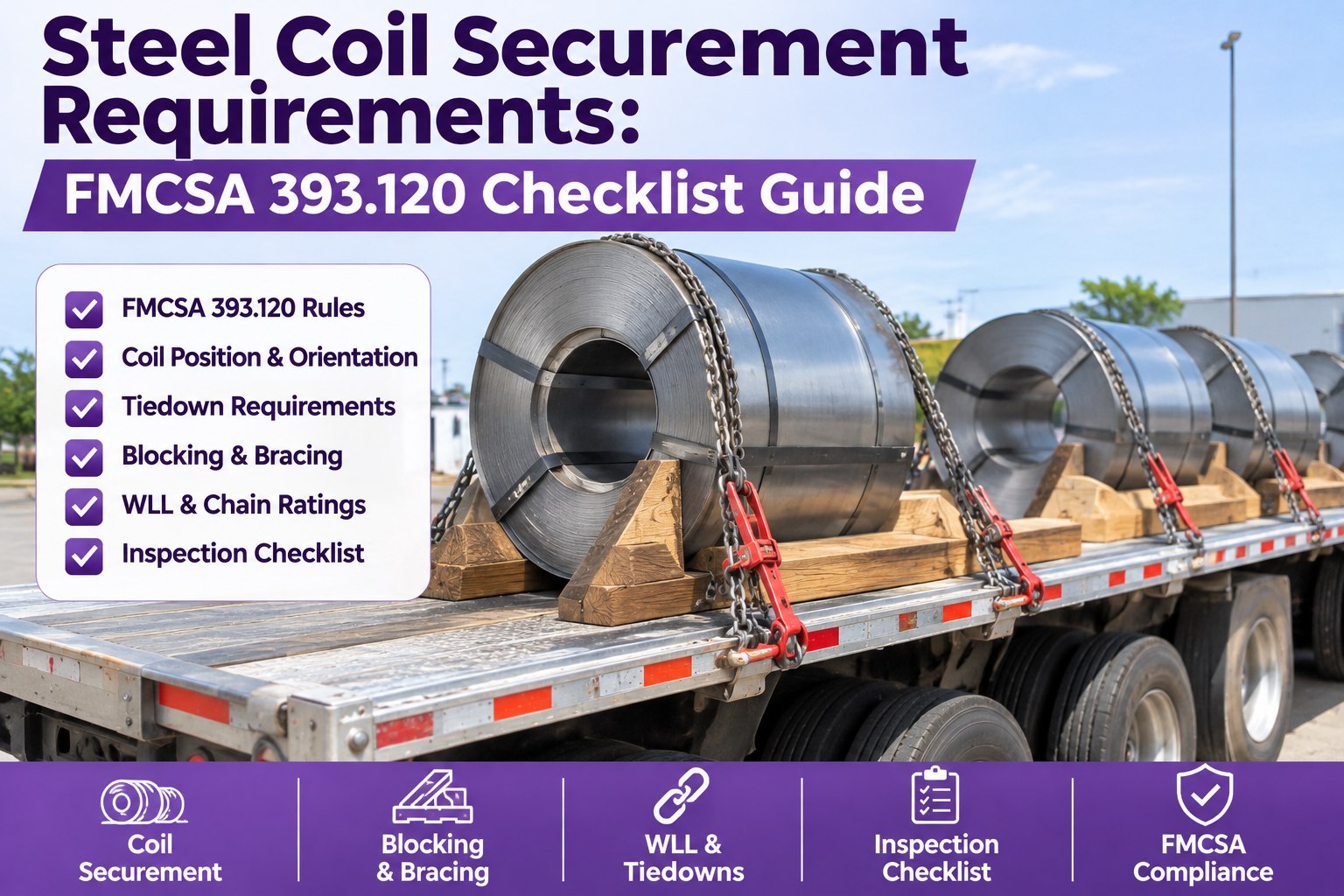
A steel coil is the most unforgiving load on a flatbed — dense, round, and always looking for a way to roll. A coil that breaks loose doesn't shift, it launches, and it can spear the headache rack or leave the deck entirely. That's why FMCSA gave coils their own rule: the general tiedown count isn't enough, and how you secure one depends entirely on which way the eye points. This checklist walks 49 CFR 393.120 by orientation — eye vertical, crosswise and lengthwise — plus the rules that apply to every coil. Start free and put coil securement on every load check.
Steel Coil Securement Requirements: FMCSA 393.120 Checklist Guide
First, Does 393.120 Apply?
The specific coil rules kick in at a weight threshold. Below it, or for the wrong product, you're back to the general cargo rules — so confirm this before anything else.
Know the Eye: Three Orientations
Every coil is secured by how its eye faces. Identify it first, then run the matching section below.
The Steel Coil Securement Checklist
Start with the common rules that apply to every coil, then work the section that matches the eye. Tap each item as you clear it.
Prove the Coil Was Right Before It Left
A coil securement finding at the roadside is an out-of-service, and a coil that comes loose is far worse. Run the orientation checklist as a digital record, tie any failed item to a fix, and every load carries proof it was secured to 393.120.
Why Coils Earn Extra Scrutiny
A steel coil packs enormous weight into a small, round shape, so the forces on each tiedown are high and the load is always trying to roll or tip. On top of that, a coil's steel banding can fail and let it unspool — a hazard the tiedown count alone doesn't address. That combination is why cargo securement, and coils in particular, sits among the violations roadside inspectors pull trucks out of service for most. The defense is simple to say and easy to skip: match the securement to the orientation, hit the WLL, and stop the roll with a cradle or chocks. Start free and track coil loads by orientation and WLL.
Why Flatbed Fleets Run This in Software
Frequently Asked Questions
When one or more coils of rolled sheet metal weigh 5,000 lbs or more, individually or grouped, on a flatbed, sided vehicle or container with anchor points. Lighter coils and coiled wire fall under the general cargo securement rules instead. Book a demo to route each load to the right checklist.
It depends on orientation, and the count must also meet the aggregate WLL of at least 50% of the coil's weight. A crosswise coil needs direct tiedowns through the eye restraining forward and rearward plus an over-top tiedown; a vertical coil is tied through the eye both ways with an over-top. Orientation sets the pattern; WLL sets the total. Book a demo to check WLL against coil weight.
For a coil carried eye-crosswise, you may not cross direct tiedowns diagonally through the eye to form an X when viewed from above. The tiedowns through the eye must restrain forward and rearward without crossing. Book a demo to flag prohibited patterns on review.
Use a coil rack, cradle, timbers or chocks sized to the coil, matched to its orientation — fore-and-aft for a crosswise coil, side-to-side for a lengthwise one — in addition to the tiedowns. The rolling restraint and the tiedowns work together; neither replaces the other. Book a demo to log cradle and blocking per load.
Secure Every Coil to the Letter of 393.120
Truck Inspection & Maintenance Management Software puts the orientation-specific coil checklist on every load, captures the WLL against the coil weight, and keeps photo-proof securement on record — so a steel coil leaves the yard right and stays that way.