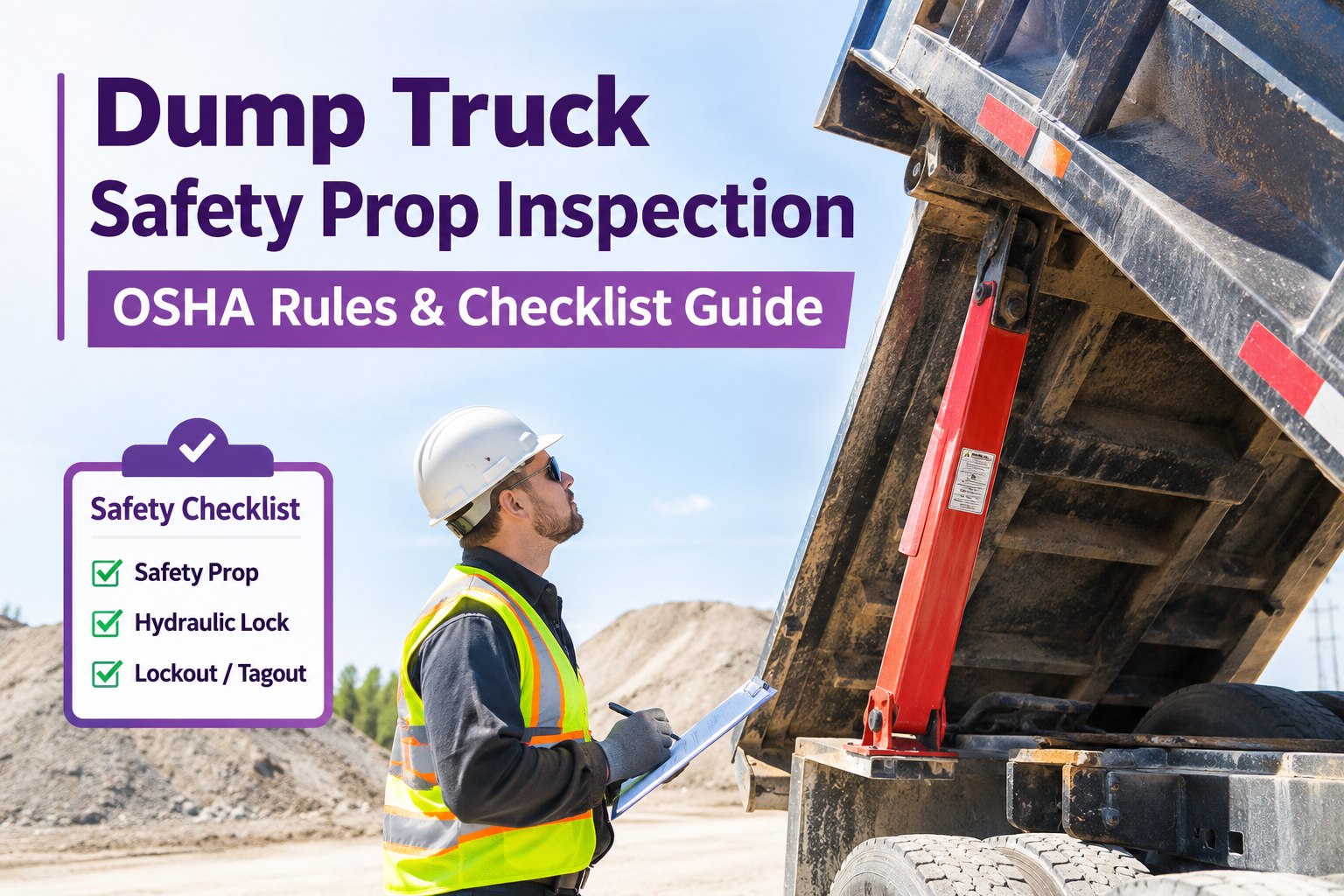
A raised dump body looks stable, but hydraulic pressure is not a safety device. Seals leak, hoses fail, and a valve can be bumped, and a body that slowly sinks or suddenly drops can crush anyone beneath it. That is why OSHA's construction standard, 29 CFR 1926.601(b)(10), requires dump bodies to have a positive means of support that is permanently attached and can be locked in position to prevent accidental lowering during maintenance or inspection. This page is a working dump truck safety prop inspection checklist: what to check, in what order, and when a truck must be tagged out. Start free and run this checklist on every dump truck from your phone.
Use this four-phase checklist before, during, and after any work under a raised dump body. Truck Inspection & Maintenance Management Software turns it into a guided digital form with photos, sign-off, and automatic work orders for any failed item.
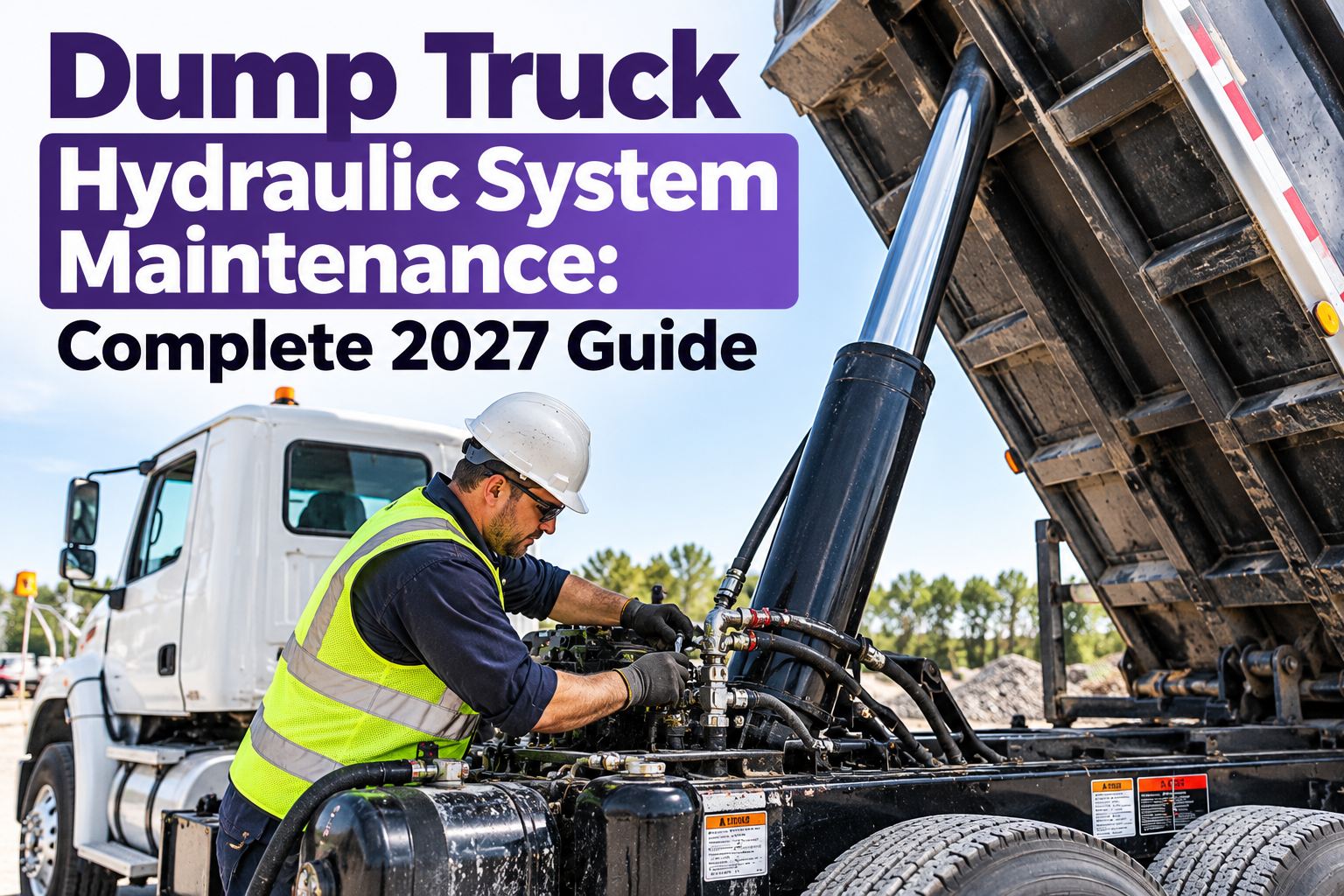
A healthy hydraulic system reduces the chance the body moves unexpectedly. Look for leaks and wear every time, and fix small problems early.
Hoist and hydraulic componentsPass / Fail / Note
Replace Paper Checklists With Proof
Digital forms record who inspected, when, and what they found, with photos. If an item fails, a work order is created right away. Start free or book a demo.
When someone must work under or near a raised body, follow the same steps in the same order every time. Your written company procedure and manufacturer manual come first. This sequence shows the typical flow.
1
Park on level, stable groundSet the parking brake and chock the wheels. Keep clear of overhead power lines.
2
Raise the body fully, then engage the propLock it in position per the manufacturer's instructions, and check that it is seated.
3
Control hazardous energyShut down, remove keys, and isolate the hydraulic and PTO controls. Tag and lock per your lockout program.
4
Verify before enteringConfirm the prop holds the body and that no one can start or move the truck.
5
Work, then clear and restoreRemove tools and people, take off locks, release the prop, and lower the body only after a clear-area check.
Lockout/tagout rules in 29 CFR 1910.147 cover general industry. Construction and other settings may fall under different standards, so follow your employer's procedure and consult the applicable OSHA or MSHA requirements.
Phase 4: Warnings, Alarms and Visibility
The prop protects maintenance workers. These items protect drivers, spotters, and everyone nearby while the truck is working.
Body drifts down while supported only by hydraulics
Active hydraulic leak at the hoist or lock valve
Repair soon, then recheck
Minor weeping at a fitting with no drift
Faded or missing warning decals
Stiff prop pivot needing lubrication
Body-up light intermittent
Worn but intact hoses nearing replacement
Frequently Asked Questions
Does OSHA require a dump truck safety prop?
For construction work, 29 CFR 1926.601(b)(10) requires trucks with dump bodies to have a positive means of support, permanently attached and capable of being locked in position, to prevent accidental lowering during maintenance or inspection. Other industries and mining have their own related rules. Start free and document every inspection.
Can I rely on the hydraulic cylinder to hold the body up?
No. Hydraulic systems can leak, fail, or be moved by accident. Use the manufacturer's mechanical prop and lock it before anyone works under or near a raised body. Book a demo to see how defects trigger work orders.
How often should the safety prop be inspected?
Check it at the start of any maintenance task that involves a raised body, and include it in regular pre-trip and preventive maintenance inspections. Many fleets also add a periodic detailed inspection of welds, pins, and brackets.
Is a homemade or improvised support acceptable?
The standard calls for a positive means of support that is permanently attached to the truck. Improvised blocks or cribbing should not replace the manufacturer's prop. Follow your safety program and the equipment manual.
Prop It · Lock It · Verify It
Make Every Raised-Bed Job Safer
Guided safety checklists, photo evidence, tagged-out defects, and automatic work orders, built for trucking and construction fleets. Start free or book a demo with our team.