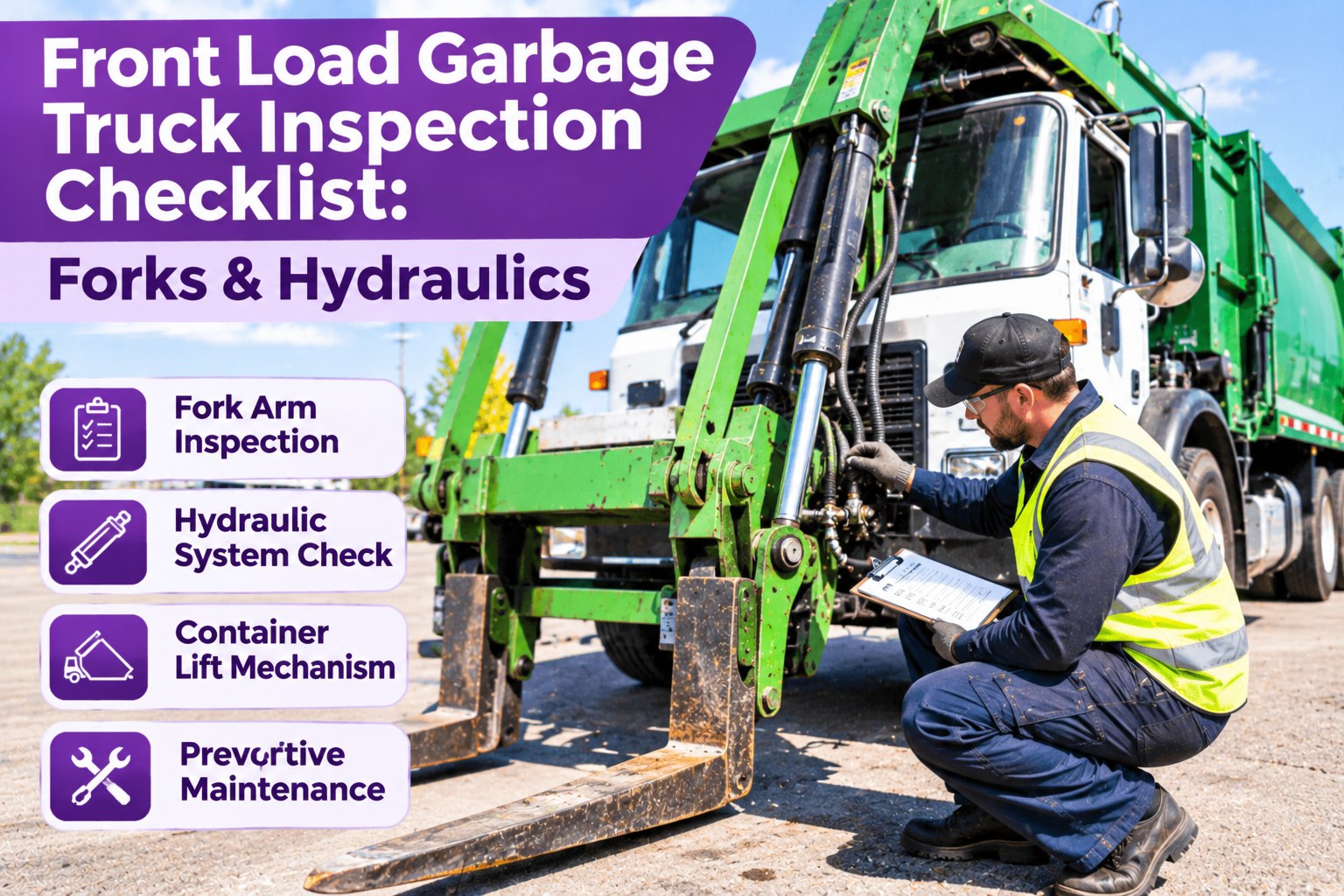
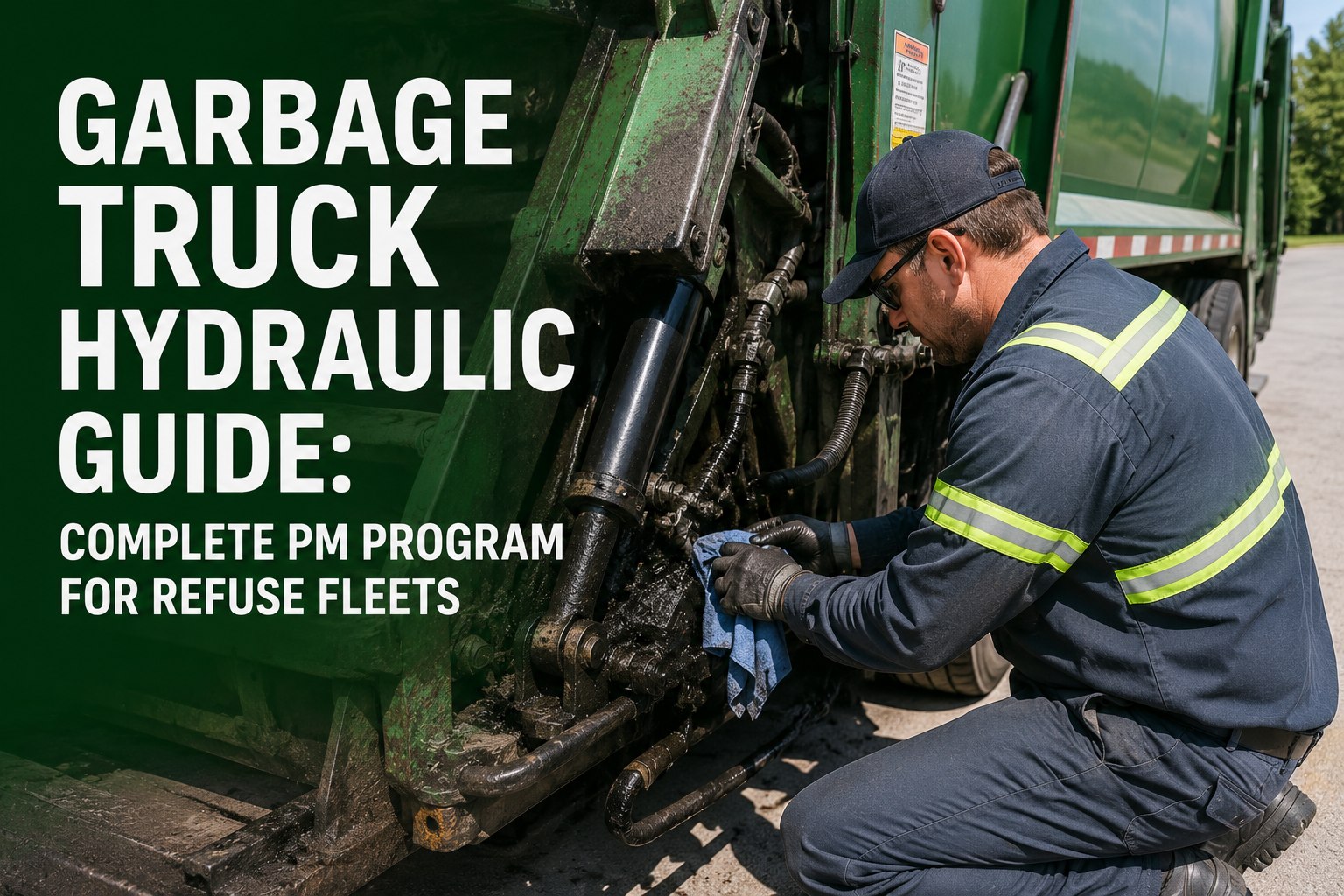
Front Load Garbage Truck Inspection Checklist: Forks & Hydraulics
By William Jerry on November 16, 2026
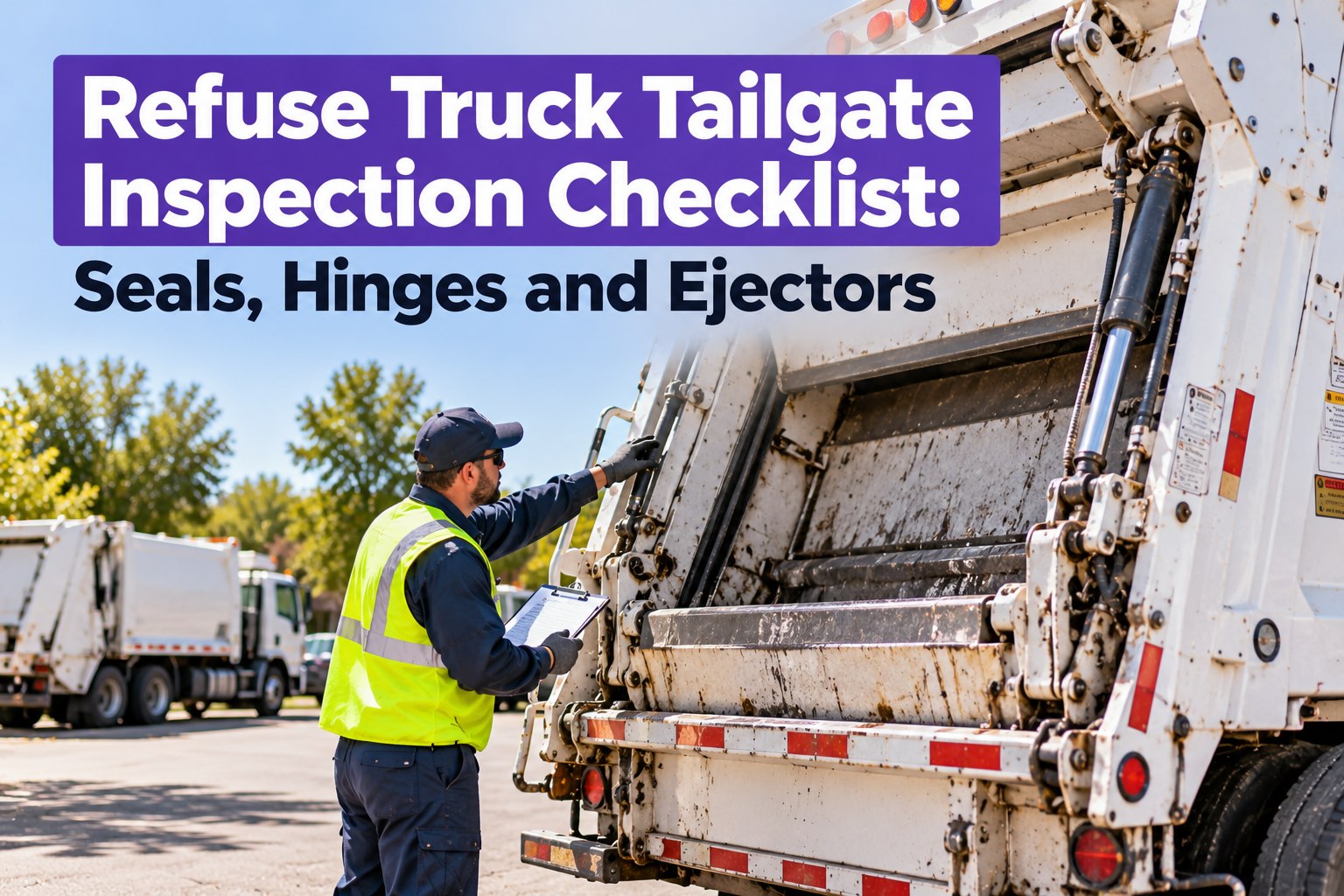
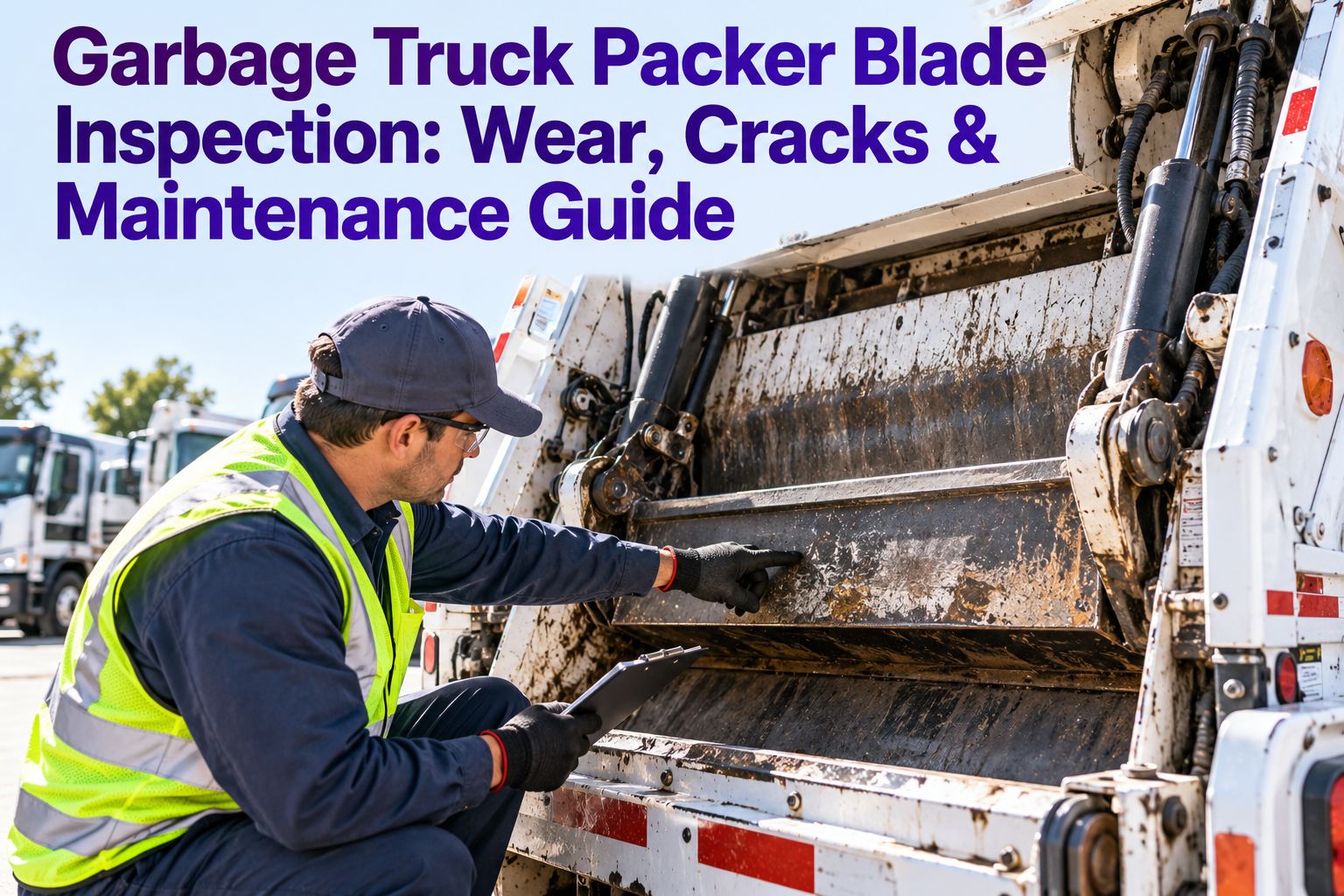
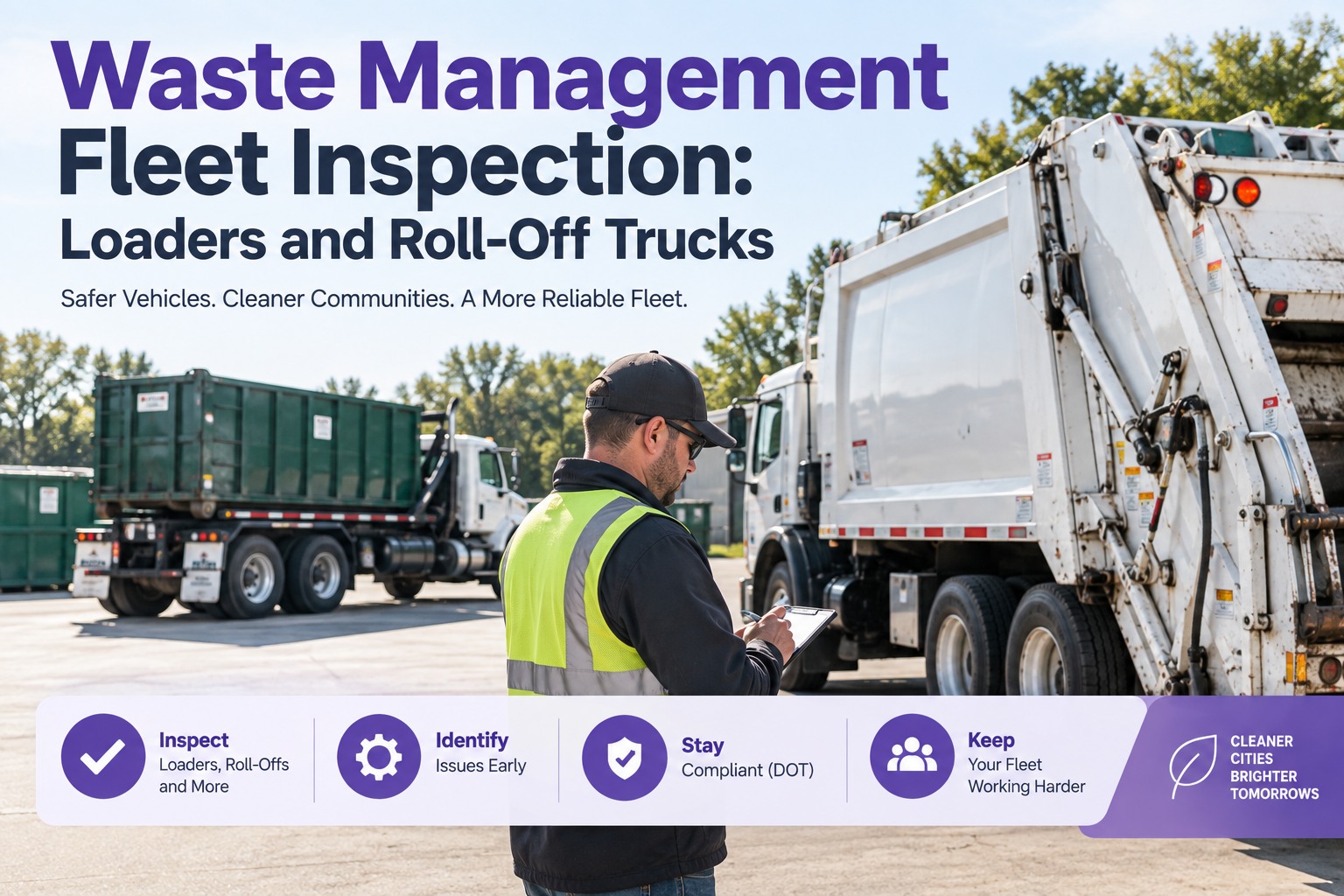
A front loader hoists container after container up over the cab — around a hundred a day on a busy route — and every lift runs through the pump, the arm and fork cylinders, and the grab that holds the bin. The wear lands on the forks and the hydraulics, and when something lets go it lets go with a loaded container over the operator. This checklist walks the inspection zone by zone, with the forks and the hydraulic system front and center, so you catch the slop, the leak and the glazed grip pad before they become a mid-route failure. Start free and run a front-loader checklist built for refuse.
Garbage Truck & Hydraulic · Front Loader
Front Load Garbage Truck Inspection Checklist: Forks & Hydraulics
The load goes up over the operator, held by the forks, the lift cylinders and the grip pads. Our software turns the daily pre-trip into a guided fork-and-hydraulic inspection, flags a weeping seal or worn pad with a photo, and schedules PM on compaction hours — so a developing fault becomes a work order, not a container coming down on a route.
A front loader lifts over the operator — the forks, cylinders and grip pads are what hold the load up there.
A Front Loader Is a Hydraulic Machine
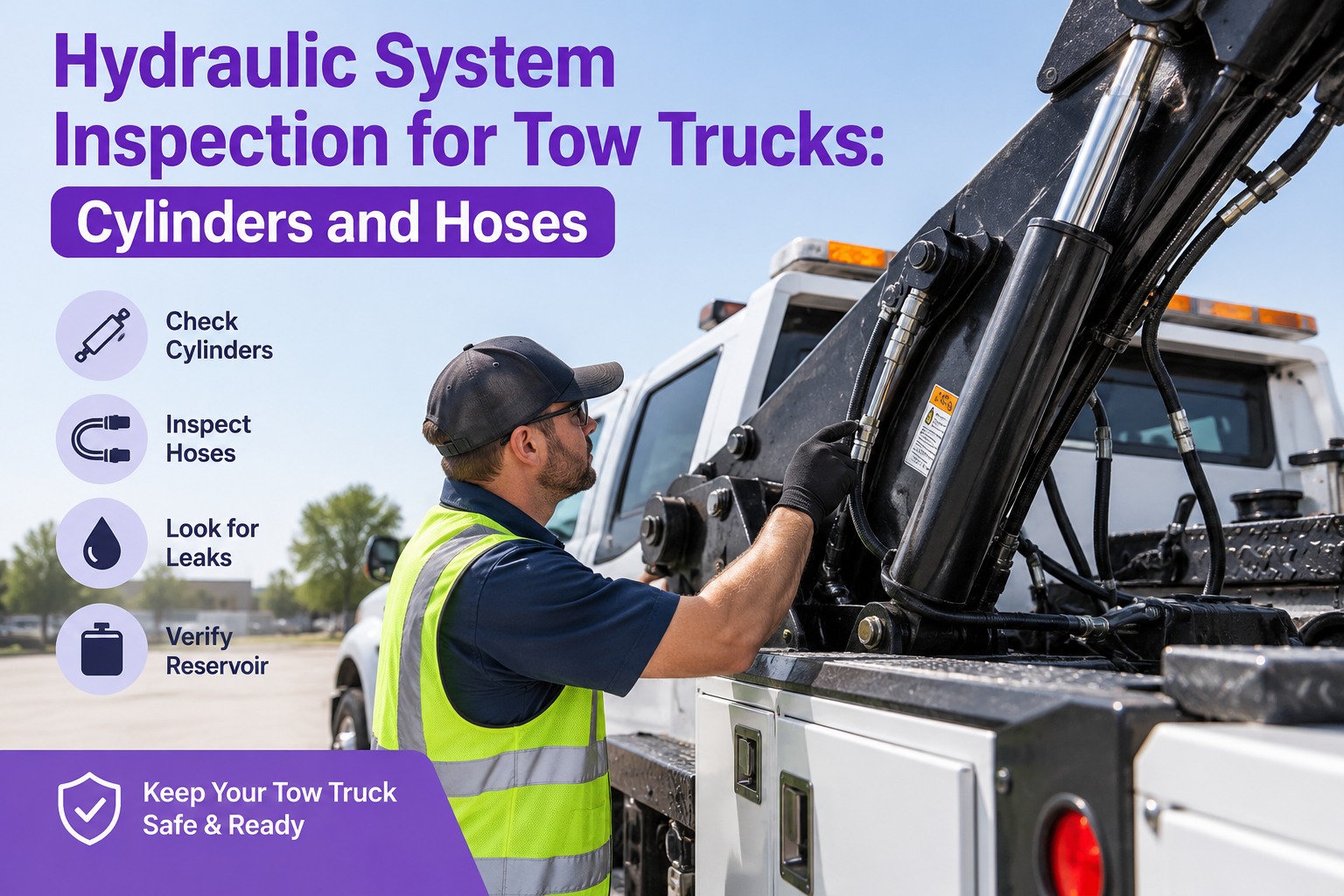
The packer, the lift arms and the grab all run on hydraulics that cycle hundreds of times a route under heavy, abrasive, contaminated loads. That's where the wear is.
Cyclic loadAbout a hundred lifts a day and hundreds of hydraulic cycles a route — the forks and cylinders never rest.
Abrasive refuseGrit packs into door tracks and contaminates the oil; dirty, hot fluid slows the arms and starts the seals weeping.
Overhead gripRubber grip pads hold tons over the cab — a glazed or worn pad can let a bin fall, which is a liability event, not a note.
Hoses & heatOverhead lines chafe where they flex; a pinhole leak under pressure is a safety hazard long before it strands the truck.
!Block It Before You Go Under It
OSHA has no refuse-specific rule — enforcement runs through the General Duty Clause and the ANSI Z245.1 safety standard for mobile refuse and compaction equipment. Two rules carry the risk:
Never under a raised loadBlock or prop a raised body, arm or tailgate and isolate hydraulic and air pressure before anyone works beneath it.
Treat every leak as injectionA pinhole leak injects fluid through skin — check lines with cardboard, never a hand, and red-tag any leak at once.
The Front Loader Inspection Checklist
Work it top to bottom each shift. The forks and hydraulics get the most items because that's where a front loader fails.
6 checks01 · Fork Arms & Carriage · Daily
5 checks02 · Lift & Packer Cylinders · Daily
5 checks03 · Hydraulic Lines & Fluid · Daily
4 checks04 · Container Engagement · Daily
5 checks05 · Pump, Valves & Controls · Weekly
6 checks06 · Body, Guard & Safety Gear · Daily
Every Flagged Item to the Shop
A weeping seal, a glazed grip pad or a soft cylinder flagged with a photo and routed to a work order — scheduled on compaction hours, the wear that actually loads the body.
A front loader can sit at low mileage while the hydraulics work all day. Schedule the body on compaction hours and cycles — the triggers that actually wear it.
SystemDailyWeeklyBy hours
Fork arms & pinsVisualSlop checkTorque + bushings
Lift & packer cylindersLeak / driftRod checkSeal service
Hoses & fluidLeak checkLevel + tempFilter + flush
Grip pads & engagementConditionWearReplace at limit
Pump & interlocksListenTestPressure check
Read the Hydraulics
The symptom usually names the cause. A front loader tells you it's failing before it quits mid-route.
Slow or weak lift
Low or hot fluid, a tired pump, or a relief valve set wrong.
Arm drifts down
An internal cylinder leak past a worn seal.
Jerky or chattering motion
Air in the system or low fluid at the pump.
Wet rod, fluid on the arm
A failing rod seal or a scored cylinder rod.
Container won't hold square
Worn grip pads, loose engagement, or a control fault.
Hot oil, foaming
Low level, a clogged filter, or a return-line restriction.
The fork arms and carriage, the lift and packer cylinders, the hydraulic lines and fluid, container engagement and grip pads, the pump and controls, and the body, guard and safety gear — the parts a generic truck form has no place for. Book a demo to see the refuse-specific checklist.
2How often should the hydraulics be checked?
Every shift — fluid level, hoses, cylinders and leaks on the daily pre-trip, with a weekly deeper look at pressure and the pump. The system cycles hundreds of times a route, so daily is the right cadence. Book a demo to build the daily hydraulic check.
3Why schedule by cycles or hours, not miles?
A front loader works the hydraulics all day on a short local route, so mileage understates the wear. Compaction hours and pack cycles are what actually load the arms, cylinders and packer. Book a demo to schedule PM by hours.
4What are the safety rules for a raised body?
Block or prop any raised body, arm or tailgate and isolate hydraulic and air pressure before working beneath it — under the ANSI Z245.1 standard and OSHA's General Duty Clause. Never check a leak with your hand. Book a demo to track safety-gear checks.
Forks · Cylinders · Grip Pads · Safety
Keep Every Loader on Route
Truck Inspection & Maintenance Management Software turns the daily pre-trip into a guided fork-and-hydraulic inspection, flags a weeping seal or worn pad with a photo, schedules PM on compaction hours, and keeps the safety gear on the record — so a front loader fails on your schedule, in the shop, not on the street.