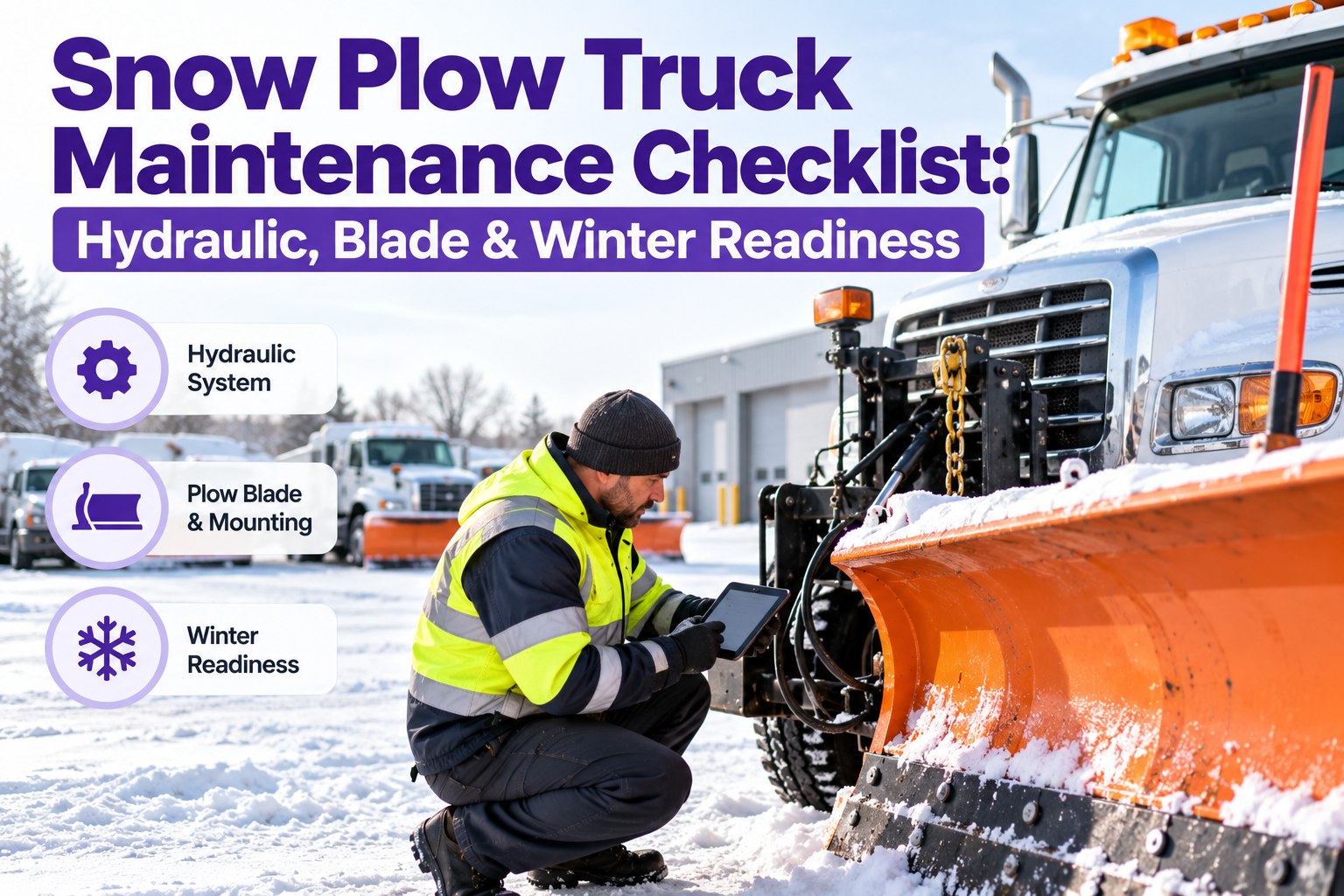
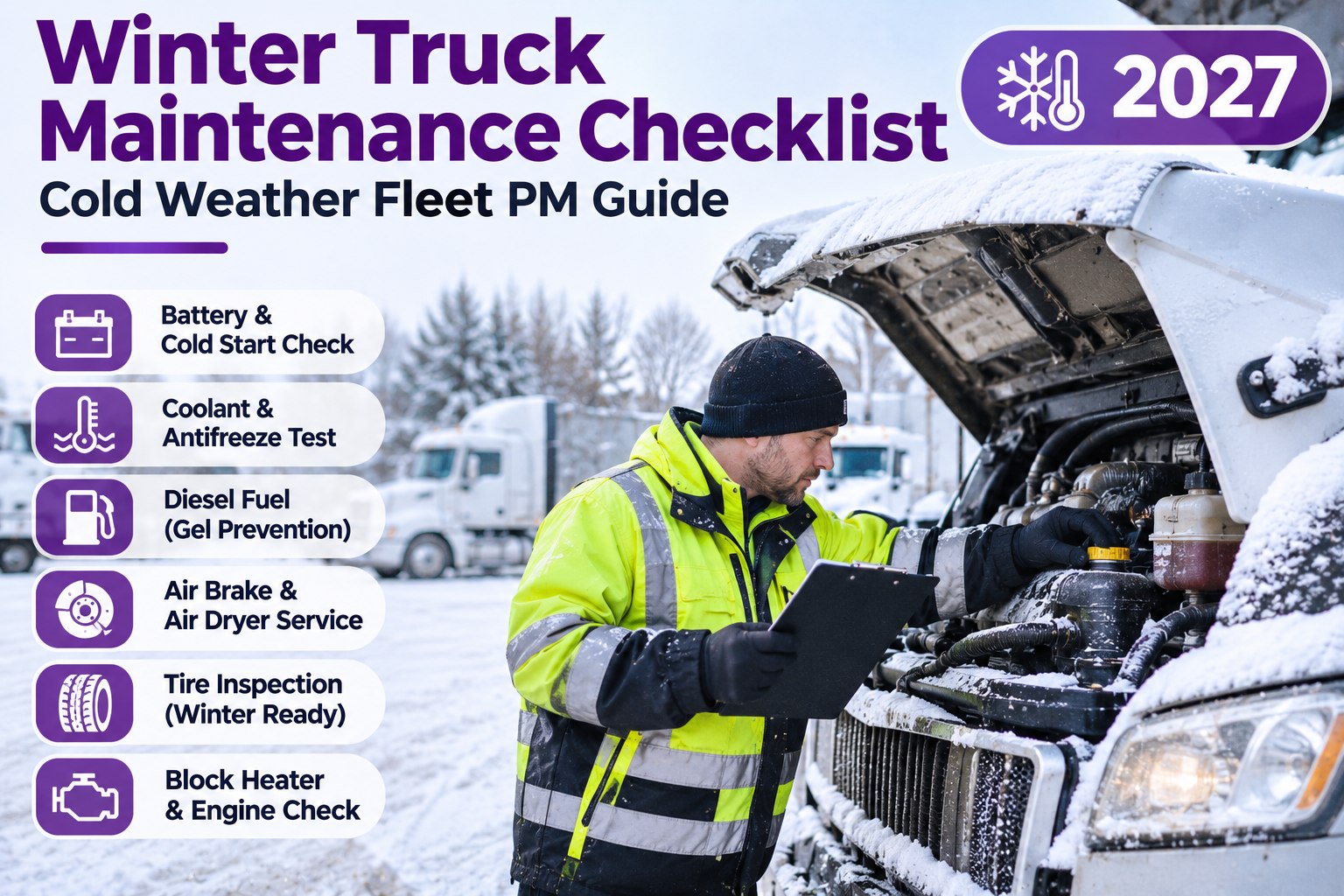
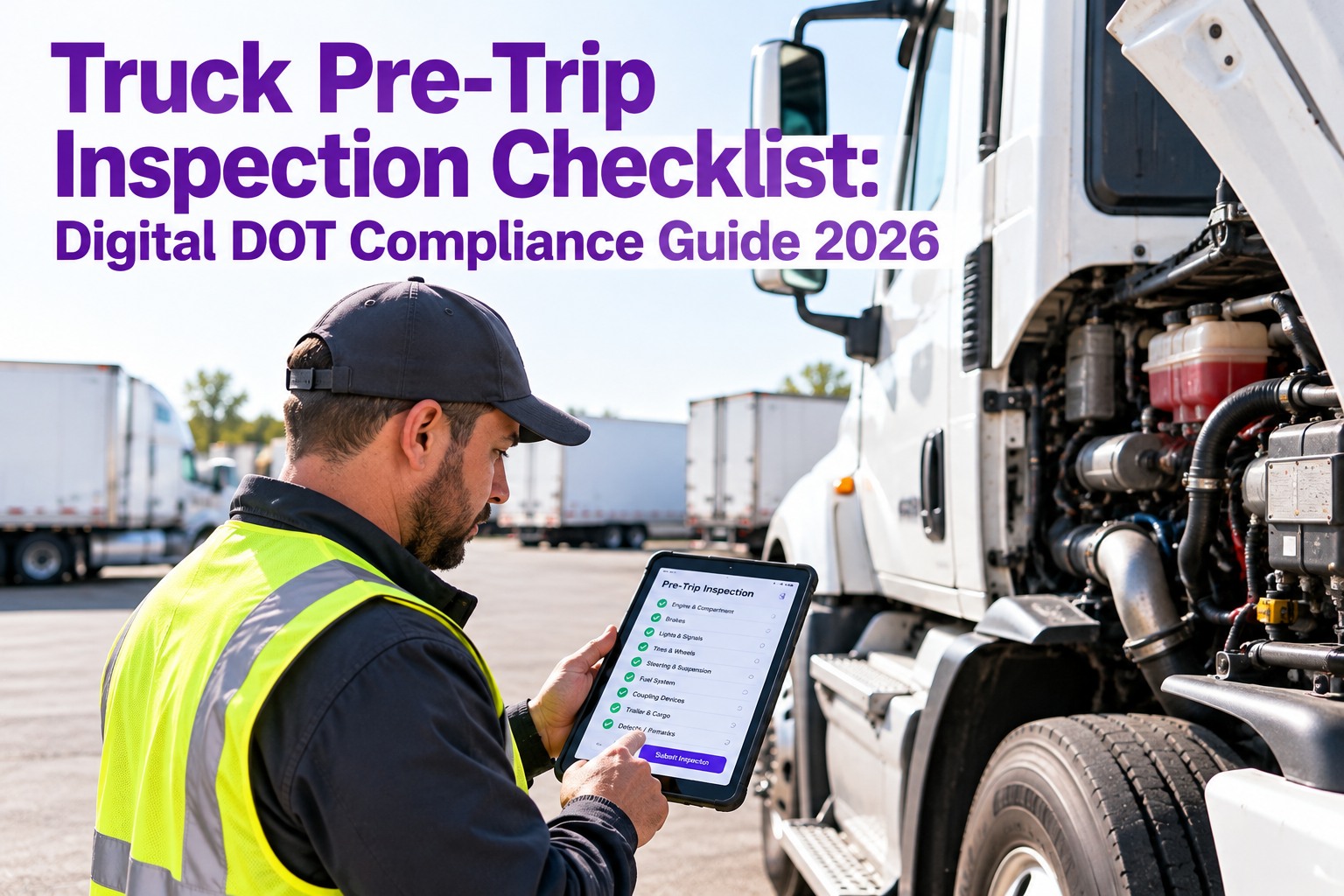
A snow plow sits idle for three seasons, then gets asked to run flat-out the first night the temperature drops — and that's exactly when a cracked A-frame weld, a frozen cylinder, or a dead battery strands it. The failures almost never happen because the part was worn in service; they happen because nobody looked before the season. A pre-season walkthrough of the hydraulics, the blade, and the truck itself is the whole difference between a plow on the route and a plow in the yard. Start free and get every plow inspected before the first storm.
A plow truck is two machines in one — a road truck and a hydraulic plow — and both have to be storm-ready before the first flake falls. This checklist walks every system: hydraulics and cylinders, cutting edge and trip springs, controls and lights, the spreader, and the truck base. Truck Inspection & Maintenance Management Software runs each unit through it, tracks every plow as Ready or Not Ready, and turns a flagged defect into a work order with time to fix it — not a 2 a.m. breakdown.
Readiness isn't a day, it's a runway. Long-lead parts and a full inspection cycle mean the work starts weeks out — so a failed trip spring or a worn cutting edge gets caught while there's still time to order and fit the part.
8–10 weeksOrder long-lead partsCutting edges, blades, spreader chains, hydraulic cylinders — before suppliers are backlogged.
6–8 weeksStart full inspectionsRun every unit through the system checklist and open work orders for what's found.
3–4 weeksClose & verifyClear open work orders, confirm installed parts, and run functional tests on each plow.
1 weekReadiness reviewEvery unit Ready, or a documented exception with a spare assigned. No surprises on storm night.
The Cutting Edge & Trip Spring — the Two That Fail Hard
These are the wear items that take the rest of the plow down with them if they're missed. A worn edge drags the moldboard on the pavement; a dead trip spring lets the blade catch a manhole at speed and bends the frame. Judge them by the rule, not by eye.
◎Cutting edgeMeasure the thickness — replace at 50% of original or less. A thin edge means the moldboard starts taking the wear.
◎Trip springsHand-test each one — it must resist compression and snap back to full extension. A soft spring won't trip, and the frame pays for it.
◎Mounting boltsCheck for shearing, cross-threading, and corrosion; use anti-seize on reinstall so next season's swap isn't a fight.
The Full Readiness Checklist — by System
Work it system by system so nothing's skipped. Tick each item as it's verified — or let the software hold the record and fire a work order on anything that fails.
HYDRAULICSPump, Cylinders & Lines
BLADECutting Edge & Trip Springs
CONTROLSElectrical & Lighting
SPREADERSalter & Pre-Wet
TRUCK BASEChassis & Cold-Start
Every Plow Tracked as Ready or Not Ready — Fleet-Wide
This is what Truck Inspection & Maintenance Management Software is built for. Each plow runs the system checklist on a phone or handheld, every flagged defect becomes a dated work order, and the whole fleet rolls up to a single readiness board — Ready, In Progress, or Not Ready — so your pre-season review is a glance, not a scramble. Long-lead parts get ordered against open findings, and every safety defect is acknowledged, graded, and assigned within 4 hours. You walk into storm season knowing exactly which units are good to go.
The whole case for the checklist is in the price gap. A part caught on the bench costs a fraction of the same failure at 2 a.m. on a route — before you count the overtime, the tow, and the unplowed road.
When should snow plow pre-season maintenance start?
Earlier than most fleets think — it's a runway, not a day. Order long-lead parts (cutting edges, blades, spreader chains, hydraulic cylinders) 8 to 10 weeks before the season, because those are exactly the items that go on backorder once the weather turns. Begin full unit inspections 6 to 8 weeks out, close and verify open work orders 3 to 4 weeks out with functional tests, and hold a fleet readiness review one week before season. By then every unit should be marked Ready or have a documented exception with a spare assigned. Starting late is how a worn part becomes a storm-night breakdown with no time to order a replacement.
When should I replace a plow cutting edge?
Measure it — don't judge by eye. Replace the cutting edge when it's worn to 50% of its original thickness or less. Past that point the edge stops protecting the moldboard, so the blade itself starts taking the pavement wear, which is a far more expensive repair. While you're there, check the mounting bolts for shearing, cross-threading, and corrosion, and use anti-seize when you reinstall so next season's change isn't a seized-bolt fight. The cutting edge and the trip springs are the two blade items that take the rest of the plow down with them if they're missed.
How do I check snow plow hydraulics before winter?
Run the system and watch it work. Check the fluid level and condition first — replace it if it's dark or milky, and refill with a winter-grade fluid rated for your region's cold, because thick fluid is slow fluid when it's below zero. Then cycle every cylinder through lift, angle left, and angle right, and hold each at full extension for 60 seconds: any drift means an internal leak. Inspect hoses for cracking, abrasion, and bulging and replace any with external damage, and look hard at the frame, A-frame, and push beam for cracks — a cracked A-frame weld is a critical failure you don't want to discover mid-route. Finish by greasing all the pivot and clevis pins.
How does software help manage a snow plow fleet's readiness?
It turns "are we ready?" from a guess into a board you can read. Each plow runs the system checklist digitally, every flagged item becomes a dated work order, and the fleet rolls up to a single status view — Ready, In Progress, or Not Ready — so the pre-season review takes a glance instead of a clipboard tour. Long-lead parts get ordered against real findings weeks ahead, repair verification is recorded on the unit, and every safety defect is acknowledged, graded, and assigned within 4 hours. For a municipal fleet, it's also the audit trail that shows each unit was inspected and certified before deployment. Start free and put your plow fleet on one readiness board.
Hydraulics · Blade · Ready
Walk Into Storm Season With Every Plow Ready
Truck Inspection & Maintenance Management Software runs each plow through the hydraulics, blade, controls, spreader, and truck-base checklist, tracks the whole fleet as Ready or Not Ready, orders long-lead parts against real findings, and turns every defect into a work order with time to fix it. Every safety defect acknowledged, graded, and assigned within 4 hours. No 2 a.m. surprises.