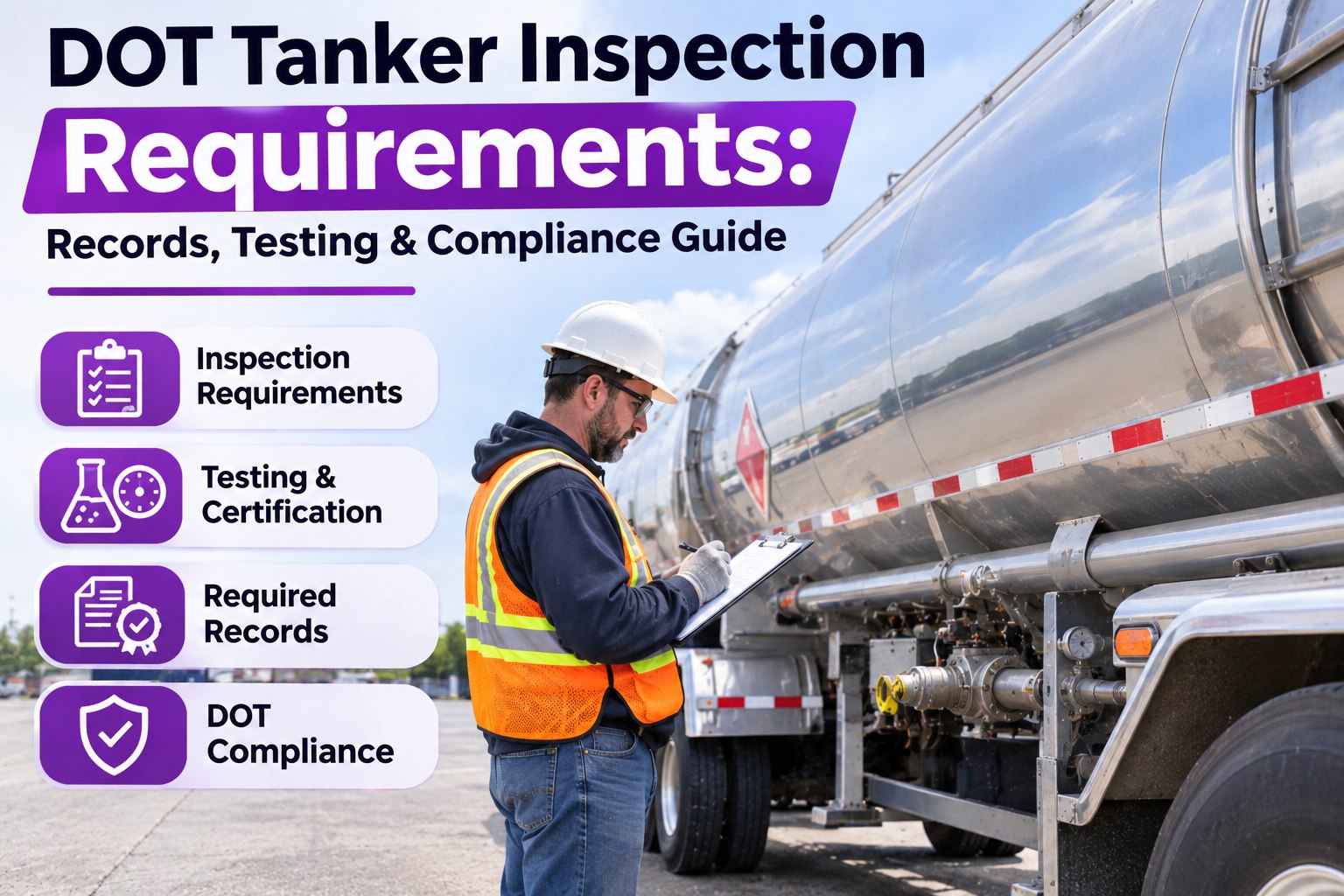
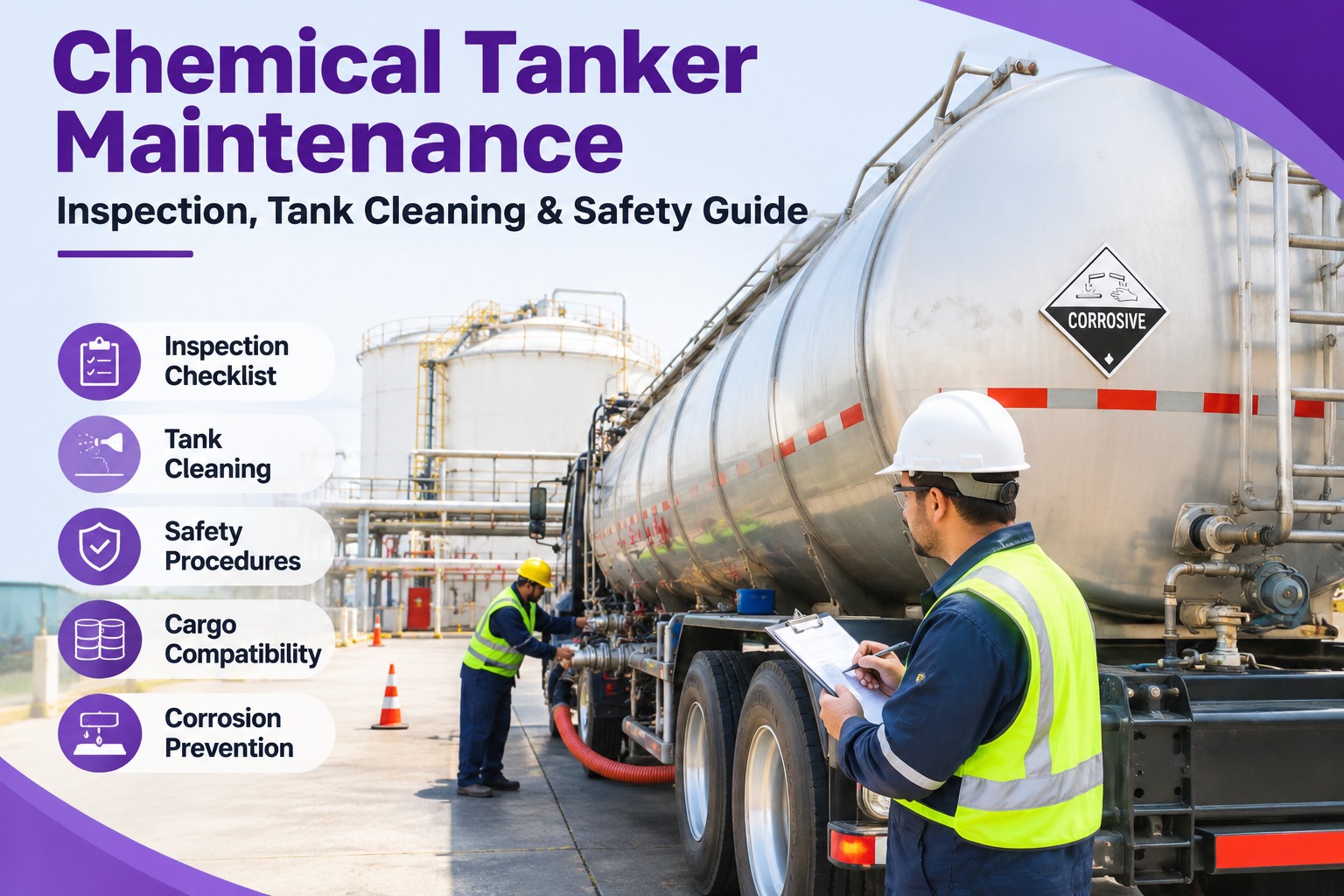
A cargo tank almost never fails at a bracket or a weld first — it fails when the shell gets thin. Corrosion eats the wall from the road side and the product side, often where no one can see it, and the only way to know how much steel is left is to measure it. Ultrasonic thickness testing is that measurement: it reads the remaining wall and compares it to the tank's minimum. This guide walks why the shell thins, what a thickness test actually tells you, and how Truck Inspection & Maintenance Management Software keeps every reading on the tank's record so you catch thinning before it crosses the line. Start free and track shell thickness by the tank.
The wall thins from both sides, and you can't see it from outside. Our software logs ultrasonic readings on a shell grid per tank, trends the corrosion rate by location, and schedules the §180.407 test cycle — so a thin spot becomes a planned repair, not a tank pulled from service at the next test.
Ultrasonic testing reads the steel left in the wall and compares it to the tank's minimum — the number you can't see from outside. Reading shown is illustrative.
Why the Shell Thins
A tank wall loses metal from both faces at once, and the worst of it hides where a visual check can't reach.
From the road sideSalt, moisture and road spray attack the exterior and the undercarriage, thinning the shell from outside in.
From the product sideResidue and corrosive lading pit the interior — small craters from chemical attack that eat the wall beneath the surface.
In the hidden zonesAir cavities under ring stiffeners, the upper coupler and subframe mounts trap moisture where no visual inspection reaches.
Under the liningA blister in the internal coating opens a path for underfilm corrosion that migrates into the shell before it shows.
What Ultrasonic Testing Measures
Ultrasonic testing (UT) is how you turn "it looks fine" into a number. It's non-destructive and reads from the outside, where access to the wall is limited to the exterior.
01How it worksThe gauge sends sound through the wall and times the echo, reporting the remaining steel — to within about two-thousandths of an inch.
02Where you measureReadings are taken across a grid of the shell and heads — at least ten-plus locations, plus any area that's corroded, gouged or abraded.
03What you compare toEach reading is checked against the in-service minimum thickness for the tank's spec — defined by §180.407, not just the dataplate.
Minimum thickness is an often-misunderstood number — it comes from the regulation's in-service values for the tank's specification, and for some tanks from the build documents minus a corrosion allowance. When in doubt, test. Book a demo to hold thickness readings per tank.
See the Wall Thinning Before the Test Does
Every ultrasonic reading logged on a shell grid per tank, with the trend by location — so you know which spot is heading for minimum long before a periodic test flags it.
A single reading tells you the thickness today. Two readings over time tell you something more useful — how fast the wall is going, and when it will reach minimum.
One reading: where it standsThe steel remaining at that spot, right now, against the minimum for the spec.
Two readings: the rateThe loss between tests, over the time between them, is the corrosion rate at that location.
The trend: when to actProject the rate forward and the thin spot has a date — repair it on your schedule, not the tank's.
Trend lines also show which routes, products or practices thin a tank fastest — the kind of pattern a single pass/fail reading never reveals. Book a demo to trend corrosion by location.
Repair, Re-Rate, or Retire
When a reading falls at or below the minimum, the tank can't stay in that service as-is. Three paths follow, and a registered cargo tank facility decides with you.
RepairCorroded or abraded shell areas are repaired or replaced, then re-tested and recorded.
Re-rateThe tank is downrated to a lower service limit it still meets, or taken out of corrosive service.
RetireBeyond repair — replacing more than half the shell and head is rebarrelling, and often the end of the line.
The §180.407 Test Cycle
Thickness testing isn't a standalone — it sits inside the periodic test cycle every DOT specification cargo tank runs on.
The periodic testsExternal and internal visual, thickness, leakage, pressure and lining inspection — each on its own interval.
Thickness every 2 yearsRequired for unlined tanks hauling material corrosive to the tank — and after a year out of service, or on any visible thinning.
By a registered facilityPerformed and recorded by a registered cargo tank facility, with the minimum-thickness readings kept on file.
Why Tanker Fleets Run It in Software
Thickness readings on paper tell you today's number. A live record tells you the trend, the next due date, and which tank needs attention first.
Readings on a shell gridEvery UT location held per tank, test after test.
Corrosion-rate trendLoss over time projected per location.
Approaching-minimum alertsA spot nearing the limit flagged before the test.
§180.407 schedulingThickness, leakage and pressure test dates tracked.
Thin spot to work orderA reading near minimum routes to the shop.
One record per tankReadings, tests and repairs on a single file.
An ultrasonic measurement of the steel remaining in the tank wall, read non-destructively from the outside and compared to the minimum thickness required for the tank's specification. It's how corrosion is caught before it becomes a leak. Book a demo to log thickness readings per tank.
2How often must a cargo tank be thickness tested?
Under §180.407, every two years for unlined tanks hauling material corrosive to the tank — plus after a tank has been out of hazmat service a year or more, or whenever there are visible signs of thinning. Book a demo to schedule the test cycle.
3What's the minimum shell thickness?
It depends on the tank's specification — the in-service minimum values in §180.407 for most cargo tanks, and for others the build documents minus a corrosion allowance. It's not simply the dataplate number. Book a demo to track readings against minimum.
4When does a tanker need repair vs retirement?
A reading at or below minimum means repair the area, re-rate the tank to a service it still meets, or retire it. Replacing more than half the combined shell and head is rebarrelling — usually the end of the tank's life. Book a demo to track repair-or-retire decisions.
Measure · Trend · Repair in Time
Catch the Thin Spot Before It Catches You
Truck Inspection & Maintenance Management Software logs every ultrasonic reading on a shell grid per tank, trends the corrosion rate by location, schedules the §180.407 cycle, and routes an approaching-minimum spot to repair — so a thinning wall is a planned fix, not a tank pulled at the next test.