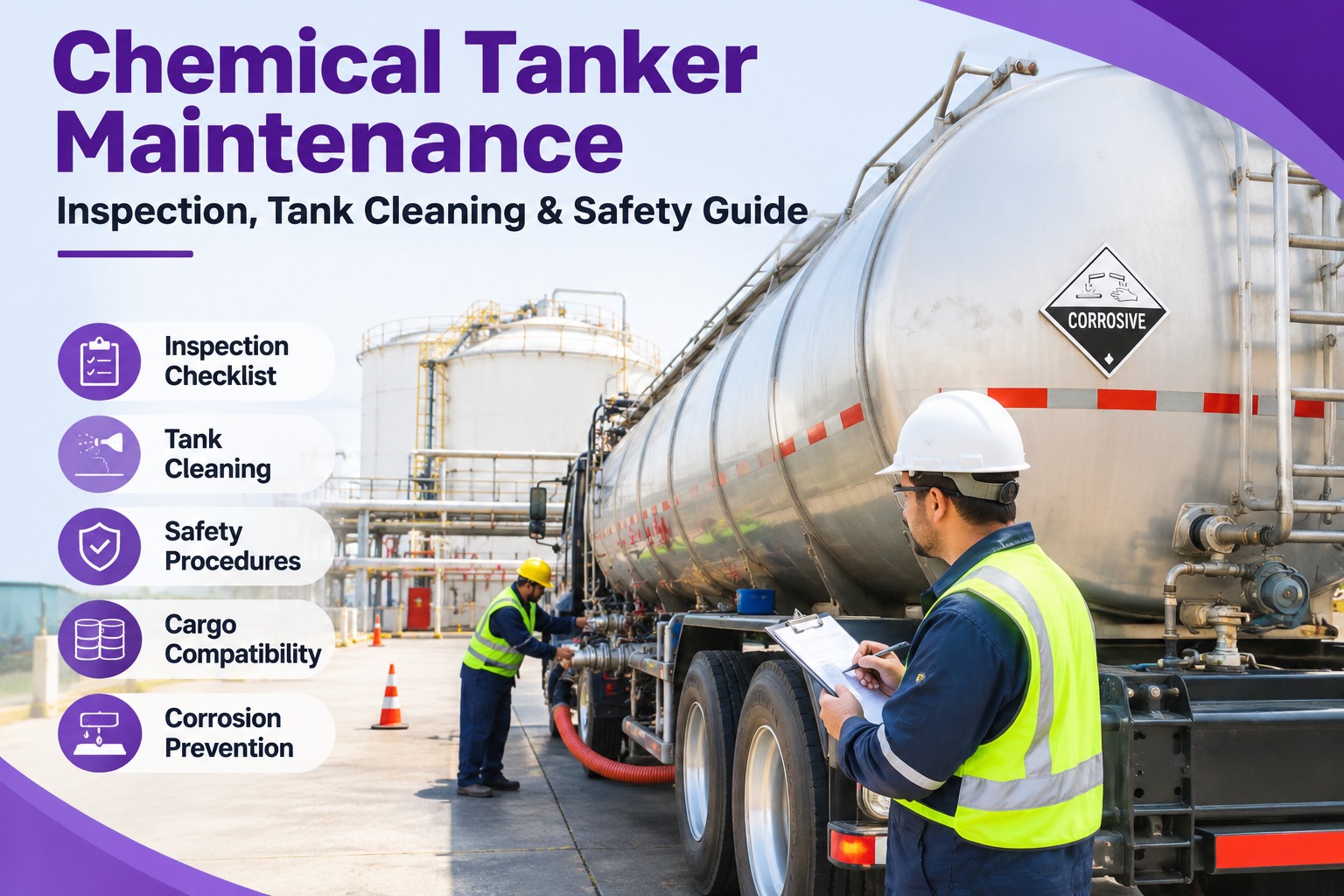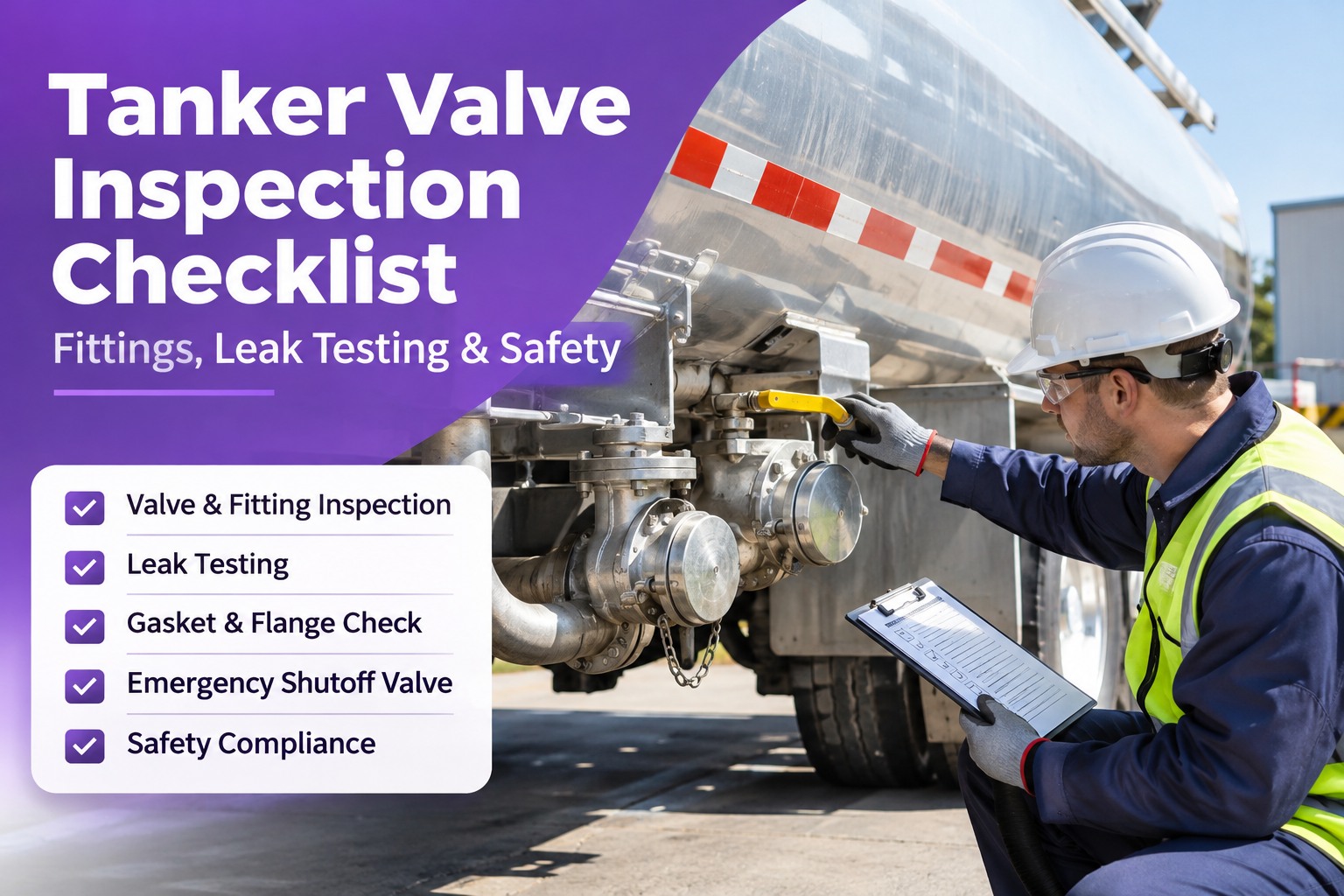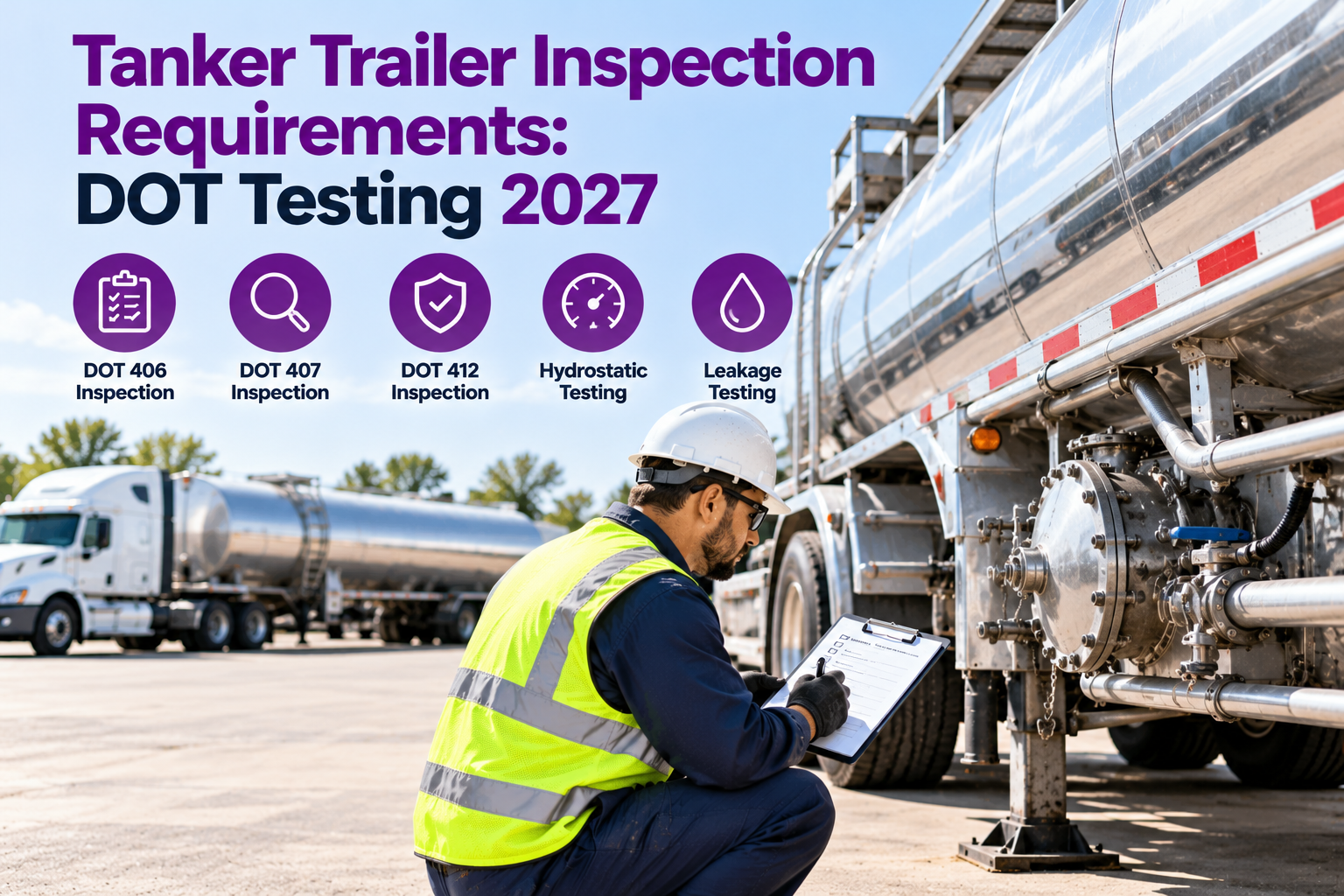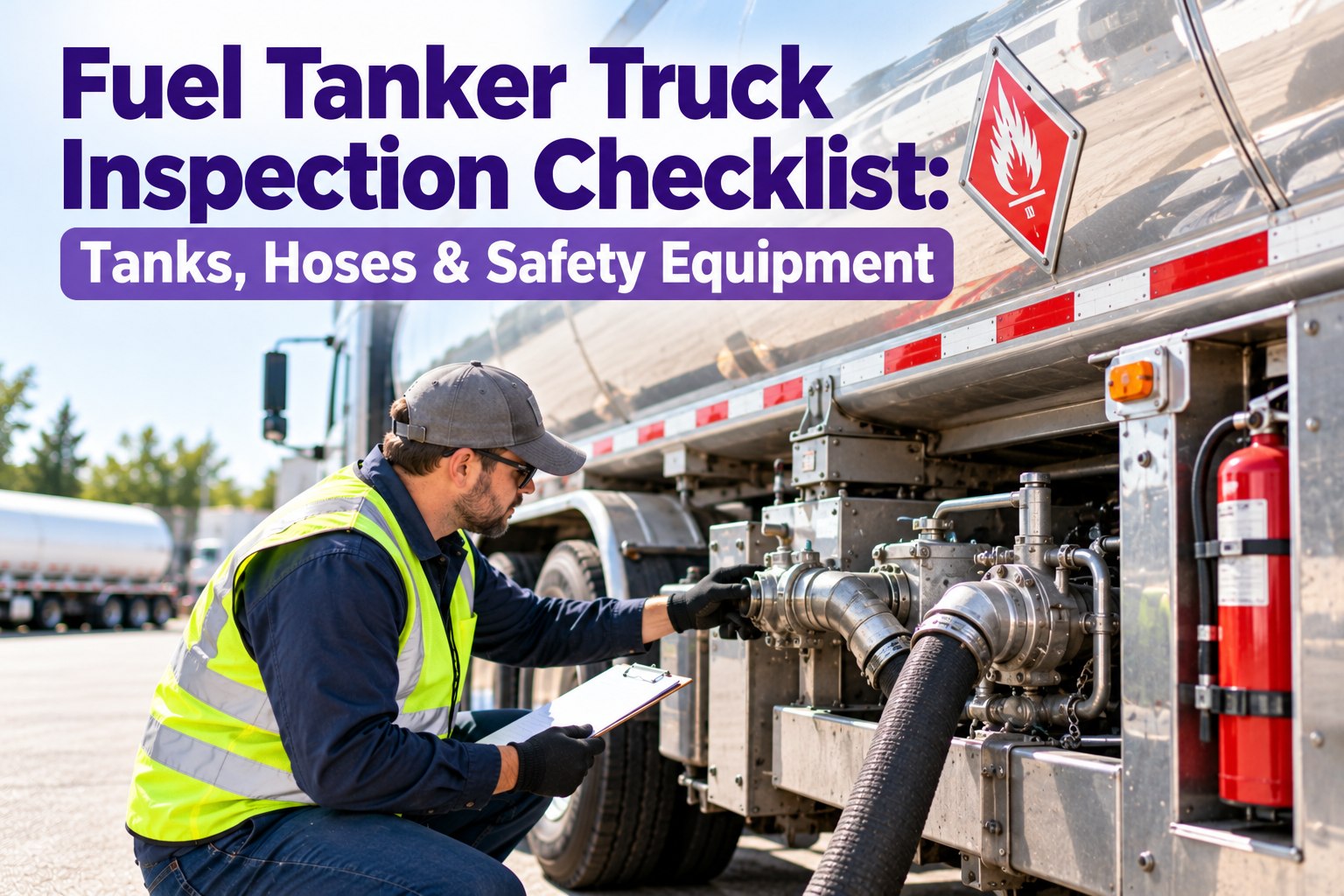
A tanker isn't just a trailer that holds liquid — it's a pressure-rated cargo tank with a federal test schedule stamped on its front head, a set of valves that have to seal every time, and hoses that fail wet. Miss a lapsed test marking or a weeping emergency valve and the truck isn't just down — it's out of service and out of compliance the moment it rolls. The pre-trip walk and the periodic test cycle are two different clocks, and both have to be current. Start free and track every tank's test cycle and daily check in one place.
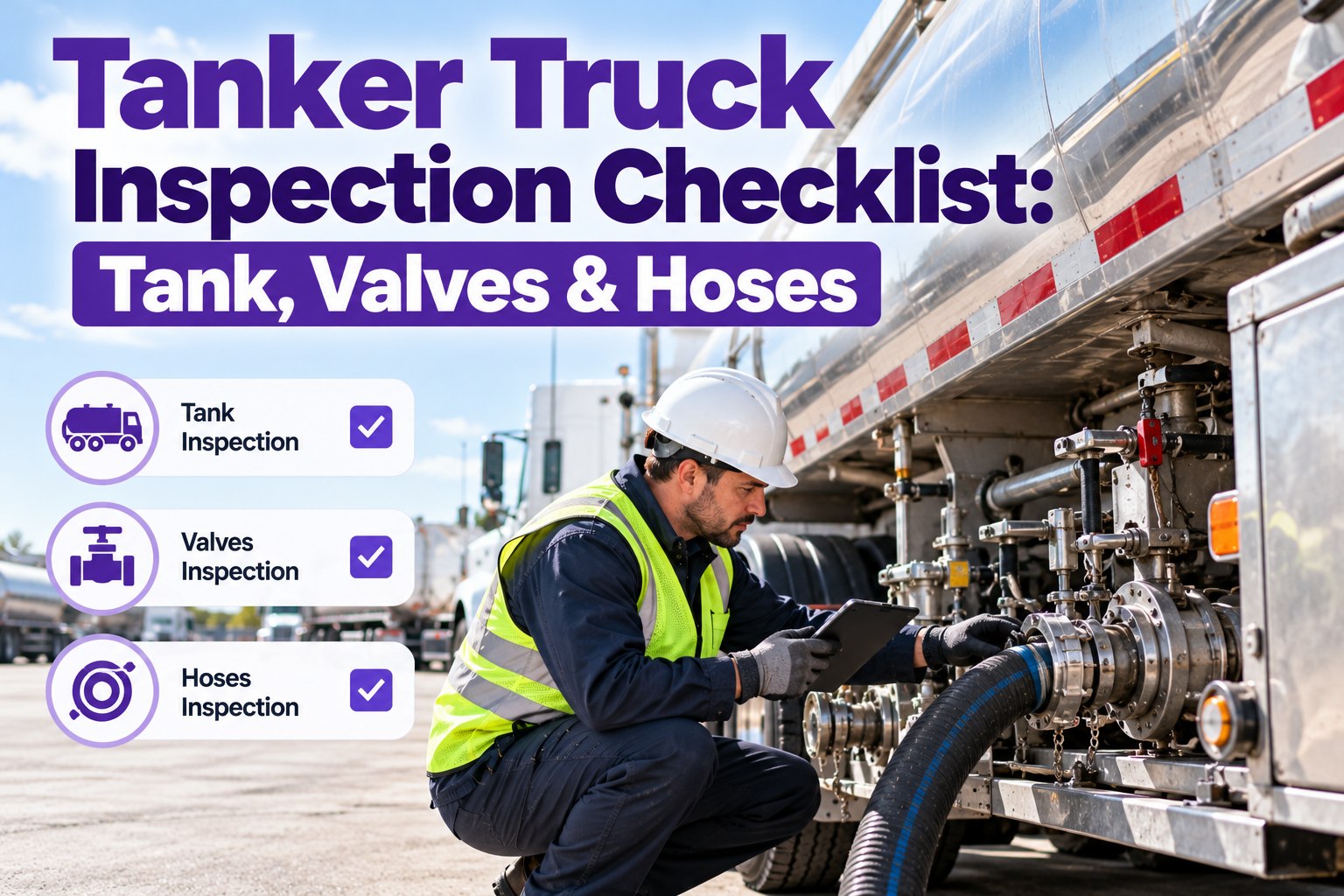
Tanker Truck Inspection Checklist: Tank, Valves & Hoses
A cargo tank runs on two clocks: the driver's daily pre-trip, and the DOT periodic test cycle (V·I·P·K·T) stamped on the shell. This checklist covers the walk; the matrix below covers the intervals. Truck Inspection & Maintenance Management Software tracks both, flags a lapsing test before the deadline, and turns a failed valve or weeping fitting into a work order — every safety defect assigned within 4 hours.
First, Know Your Tank — Spec Sets the Schedule
Every cargo tank's test cycle depends on what it is. The specification plate on the front head gives the spec, serial number, and max working pressure — and that spec decides which tests are due and how often. Identify it before anything else.
Non-pressure, usually aluminum, compartmented. Gasoline, diesel, fuel oil, most petroleum.
Low-pressure (~25–40 psi), steel or stainless, often insulated. Chemicals, mild acids, food-grade.
Stainless or lined, with reinforcing rings. Corrosives — sulfuric or hydrochloric acid, caustic.
ASME pressure vessel (~100–500+ psi). LPG, propane, anhydrous ammonia, butane.
Vacuum-insulated, double-wall, stainless inner vessel. LN2, LNG, LOX — cryogenic liquids.
Spec, serial, MAWP, and design temp — the first thing to read on any tank.
The DOT Periodic Test Cycle — the Clock You Can't Let Lapse
These six tests run on fixed intervals under 49 CFR Part 180, each one permanently marked on the tank with its month and year. Let any interval lapse and the tank can't return to service in that class until it's redone — so the dates matter as much as the condition.
Markings sit near the spec plate, at least 1.25 in high. External, internal, and thickness tests need a registered inspector; leakage and pressure tests can be done by a qualified employee. Book a demo to see test dates tracked and flagged before they lapse.
The Pre-Trip Checklist — by Component
The periodic tests are the deep cycle; this is the walk every load. Work it by component so nothing's skipped — and flag anything wet, worn, or missing before you pull out.
Some findings don't wait for the shop — they take the tank out of service until corrected and, where required, re-tested. Know them cold.
Two Clocks, One System — Never Miss a Test or a Defect
A tanker fails on the calendar as often as on the walkaround, and most fleets track the two separately. Truck Inspection & Maintenance Management Software holds both — the V·I·P·K·T test dates with a lapse alert, and the pre-trip checklist on a phone so a weeping valve becomes a dated work order on the spot. Every safety defect assigned within 4 hours, with the full compliance trail ready when an inspector asks.
Frequently Asked Questions
Keep Every Tank Current — on the Calendar and the Walkaround
Truck Inspection & Maintenance Management Software tracks each cargo tank's V·I·P·K·T test cycle with a lapse alert, runs the pre-trip checklist on tank, valves, hoses, and safety gear from a phone, and turns any defect into a work order — safety items acknowledged, graded, and assigned within 4 hours. One system for both clocks, and an audit trail that's always ready.