A tanker rolls over differently from a dry van. The load keeps moving after the truck has stopped turning. A half-empty tank, a worn baffle or a curve taken a little too fast can be enough. This guide explains how load stability works, what to inspect and what drivers should do on every run. It also shows how Truck Inspection & Maintenance Management Software turns tank and suspension findings into graded work orders. Start free and track every tanker inspection in one place.
Tanker Inspection → Defect → Work Order → PM
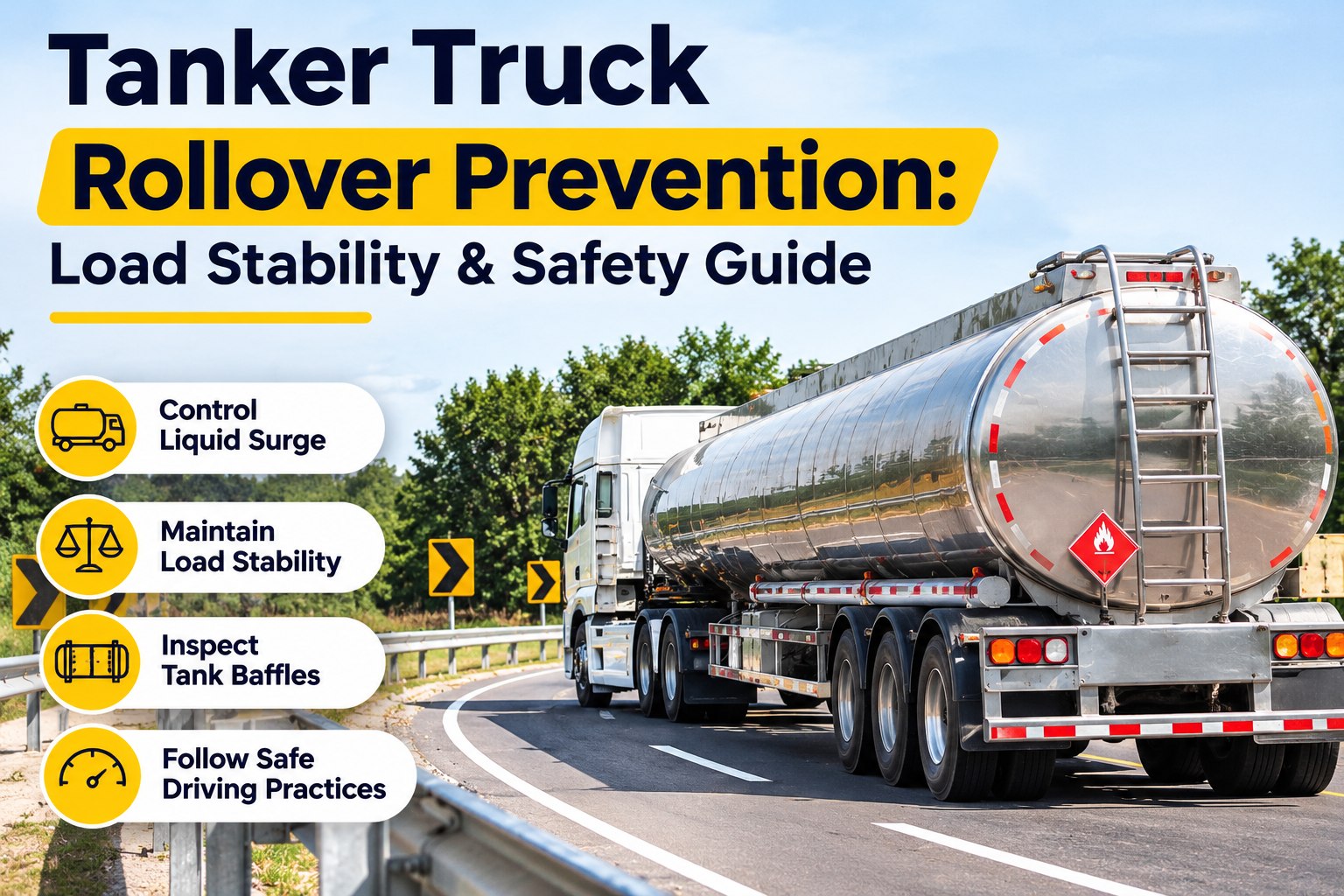
Tanker Truck Rollover Prevention: Load Stability & Safety Guide
Liquid cargo shifts, surges and pushes the truck beyond what the driver expects. Truck Inspection & Maintenance Management Software makes sure the baffle, tire, brake and suspension defects behind rollover risk are logged, graded and assigned before the next load.
Our promise on this page: every tanker defect found on inspection gets an owner, a priority and a due date.
Why Tankers Roll: Three Forces in Play
Rollover is rarely one mistake. Three forces combine, and a tanker driver controls all three.
1High center of gravityA tank holds heavy cargo high off the road. The higher the weight sits, the less sideways force it takes to tip.
2Liquid surgeLiquid keeps moving when the truck changes speed or direction. The sloshing force can hit mid-turn or under braking.
3Speed in curvesLateral force rises quickly with speed. A small increase in speed can be a big increase in tipping force.
Load Distribution: What the Fill Level Does
The same truck behaves differently depending on how the tank is loaded. Know the load before you drive.
Full or nearly fullLittle room to surge, but weight sits high. Take curves and ramps slowly.
Partial, no bafflesMost surge risk. Liquid builds momentum from end to end and side to side.
Baffled or compartmentedBaffles and compartments limit how far the liquid travels. They only work if they are intact.
Illustrative diagram. Stability depends on cargo density, tank design, compartment layout and road conditions.
What Happens in a Surge
Brake or turnTruck changes speed or direction
Liquid keeps goingCargo pushes forward or sideways
ReboundIt slams back, adding force to the truck
RiskLost control or rollover
The Driver Playbook: Slow In, Steady Through
Before the curve
- Slow down before entering, not in the middle
- Treat posted curve speeds as a ceiling, not a target
- Look ahead on ramps and downgrades
Through the curve
- Keep steering and speed smooth
- Avoid braking hard while turning
- Do not make sudden lane changes
After a stop
- Expect surge when pulling away
- Start gently on partial loads
- Report unusual sway on the DVIR
How the software helps: Drivers can flag handling issues such as unusual sway, brake pull or tire wear on a digital inspection. That finding becomes a defect on that specific tanker instead of a conversation that gets lost.
Inspection Checklist: Equipment That Supports Stability
Many rollovers start with equipment that was not working as designed. Check these on every inspection.
Baffles & compartmentsDamage, loose parts or corrosion reduce surge control. Follow your tank inspection program.
TiresUneven wear, low pressure and sidewall damage change how the truck handles a turn.
Suspension & springsWorn or broken parts increase body roll and reduce stability.
BrakesUneven braking can make the truck pull and increases load shift under stops.
Valves, domes & hatchesLeaks or loose closures are a safety and compliance problem on any tanker.
Tie-downs & mountingCheck frame, mounting and any attachments for cracks or movement.
From Finding to Fix: How the Loop Works
1InspectDriver or tech logs a tanker DVIR
2GradeDefect is rated by safety impact
3AssignWork order goes to the right tech
4PreventRecurring PM tasks catch the next one
Rollover Risk Lives in the Small Defects
A loose baffle, a bald tire or a worn spring can wait for months on paper. Truck Inspection & Maintenance Management Software keeps them visible, ranked and assigned, with a full history for each tanker.
Frequently Asked Questions
Are partial loads more dangerous than full loads?
Often, yes, because the liquid has room to surge. Full loads have a different risk, a higher center of gravity. Both need smooth driving and lower curve speeds.
Do baffles stop rollover?
No. They reduce how far the liquid can move, but speed, driver technique and equipment condition still decide the outcome. Intact baffles matter, so they belong in your inspection program.
What should drivers report on a tanker pre-trip?
How does the software help prevent rollovers?
It doesn’t drive the truck. It makes sure inspection findings are logged, graded, assigned and closed, and that recurring tank and suspension checks happen on time.
Book a demo to see the workflow.
Inspect · Grade · Fix · Prevent
Fix the Defect Before It Becomes the Cause
Keep every tanker inspection, defect and PM in one workflow, so equipment that supports stability is checked and repaired on schedule.
No credit card required. Free for up to 3 trucks.