Six fluids keep a truck alive, and the two minutes it takes to check them before you roll is the cheapest insurance in trucking. A low coolant level caught in the yard is a top-up; the same level caught on a grade is a blown engine and a tow. The trick isn't knowing the fluids exist — it's knowing which ones to check cold, which running, where the right level sits, and what a bad reading is telling you. This is the daily walk-through, fluid by fluid. Start free and log your daily fluid check in under two minutes.
Before Every Trip · Six Fluids
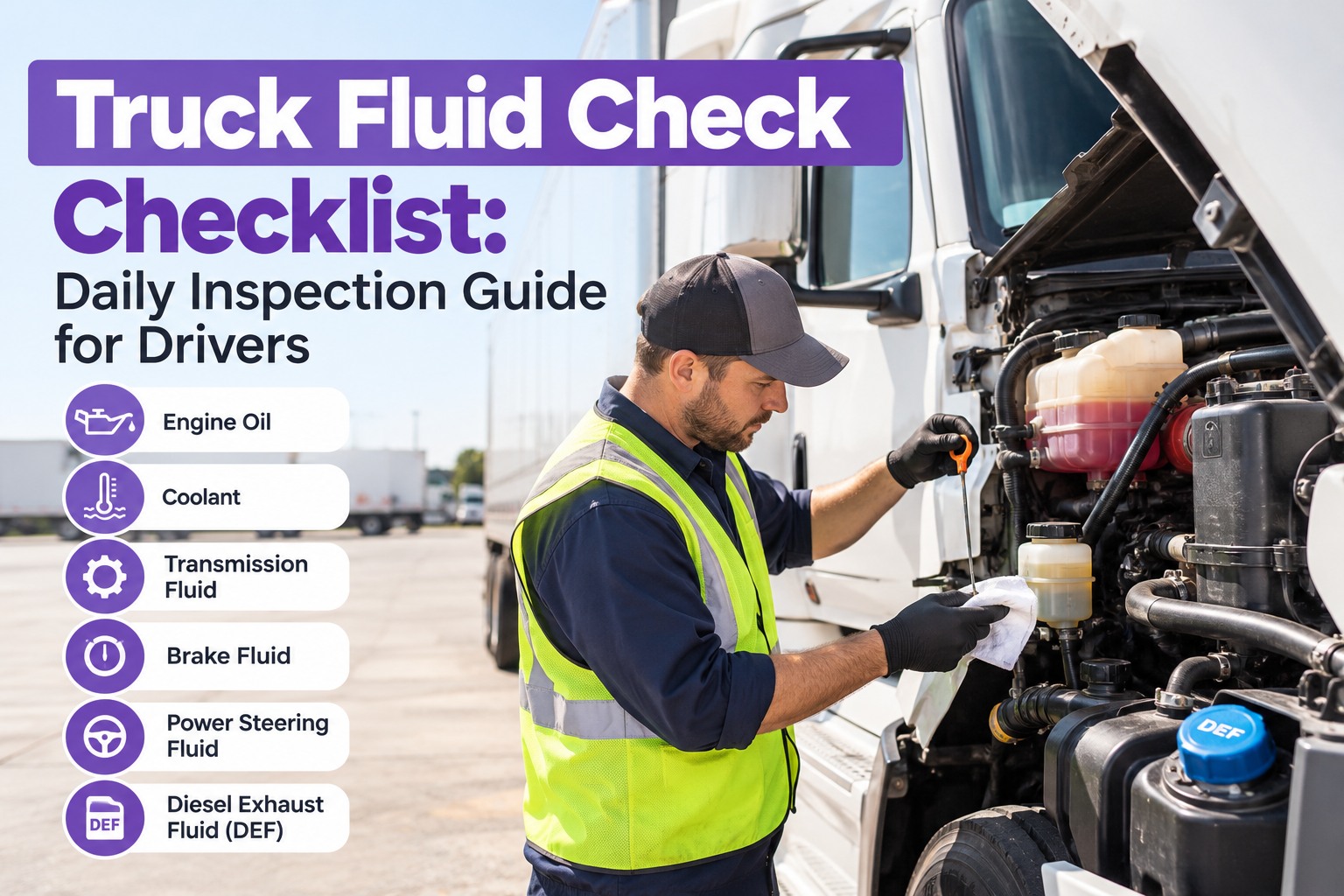
Truck Fluid Check Checklist: Daily Inspection Guide for Drivers
Every fluid has a right time, a right level, and a warning sign — get those three right and you catch trouble in the yard instead of on the road. Truck Inspection & Maintenance Management Software puts the daily fluid check on the driver's phone, flags a low or dirty reading, and turns it into a work order the shop sees before the truck leaves.
6fluids to check before every trip
2 mina full fluid walk-through on a level, cold truck
Coldcheck oil and coolant before the engine warms
Two Rules Before You Lift a Dipstick
Every fluid reading depends on two things being right first, and getting them wrong is how good trucks throw false readings — or scald a driver. Settle these before you check anything.
01
Park level, engine coldA truck on a slope reads a fluid high on one side and low on the other. Check oil and coolant cold — a hot engine gives a false-low oil reading and a pressurized cooling system that can burn you.
02
Know which ones run warmTransmission fluid is often checked with the engine running at temperature — the opposite of oil and coolant. Check your spec; the wrong state gives the wrong level.
The Six-Fluid Daily Walk-Through
Work them in this order and the cold-engine checks come first, while the truck is still cool from overnight. Each card tells you when to check, where the level should sit, and the warning sign that turns a top-up into a work order.
1Engine OilCHECK COLD
LevelBetween the MIN and MAX marks on the dipstick — wipe it, slide it back in, read
ConditionAmber-to-brown and smooth; not gritty, milky, or smelling burnt
WarningMilky oil = coolant intrusion; a sudden loss = a leak or burn-off — don't just top up
2CoolantCHECK COLD
LevelAt the cold-fill line on the recovery/overflow tank — never open a hot pressure cap
ConditionClean coloured coolant, not rusty, oily, or sludgy; hoses firm, no seepage
WarningA tank that keeps falling points to a leak; oil in the coolant is a serious engine flag
3Transmission FluidOFTEN WARM
LevelPer spec — many are read warm with the engine running; confirm your unit's method
ConditionRed/pink and clear; not brown, dark, or smelling burnt
WarningDark or burnt-smelling fluid, or shifting problems, means service — not just a top-up
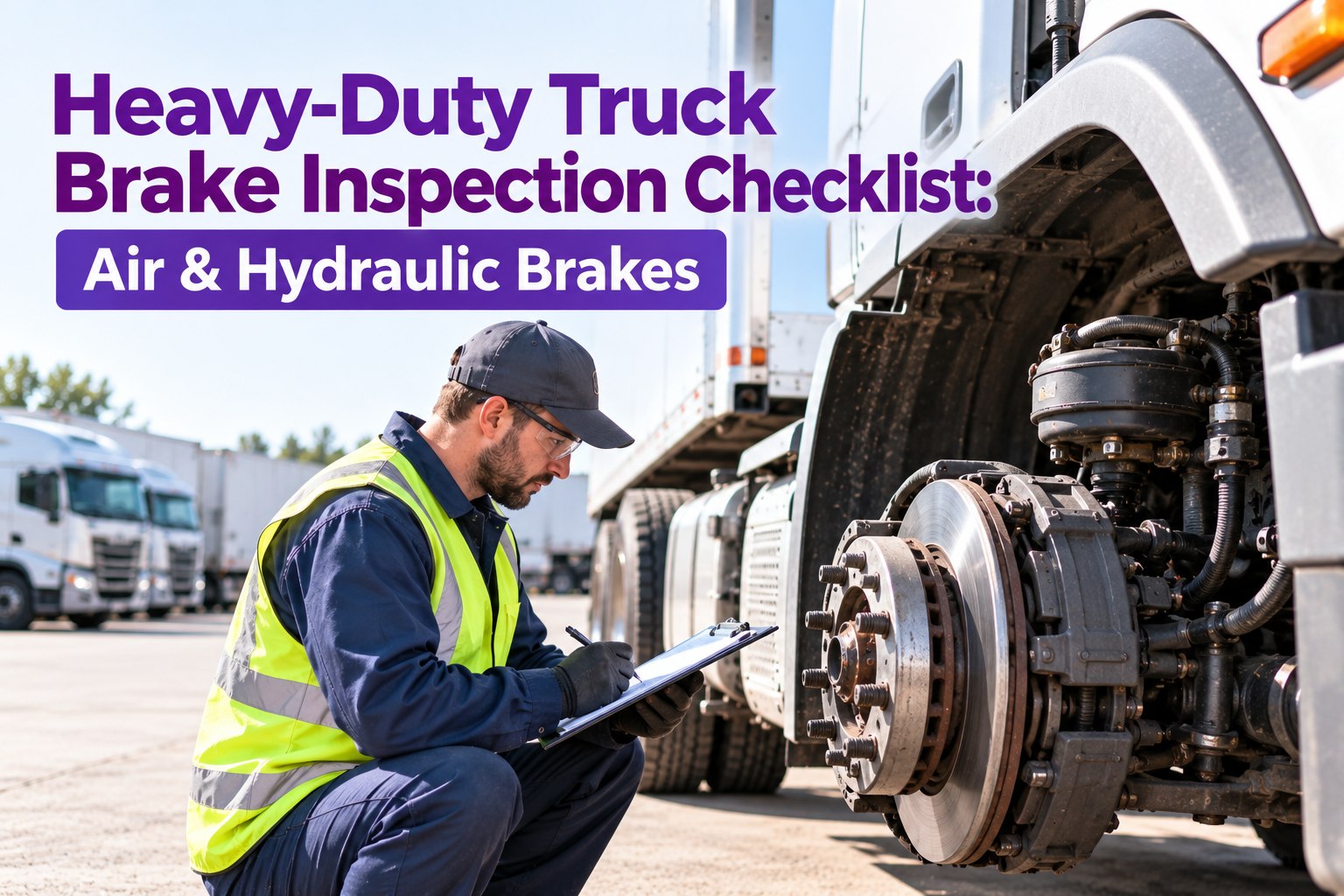
4Brake FluidRESERVOIR
LevelBetween MIN and MAX on the master-cylinder reservoir (hydraulic-brake trucks)
ConditionClear to light amber; dark fluid is due for service; cap sealed against moisture
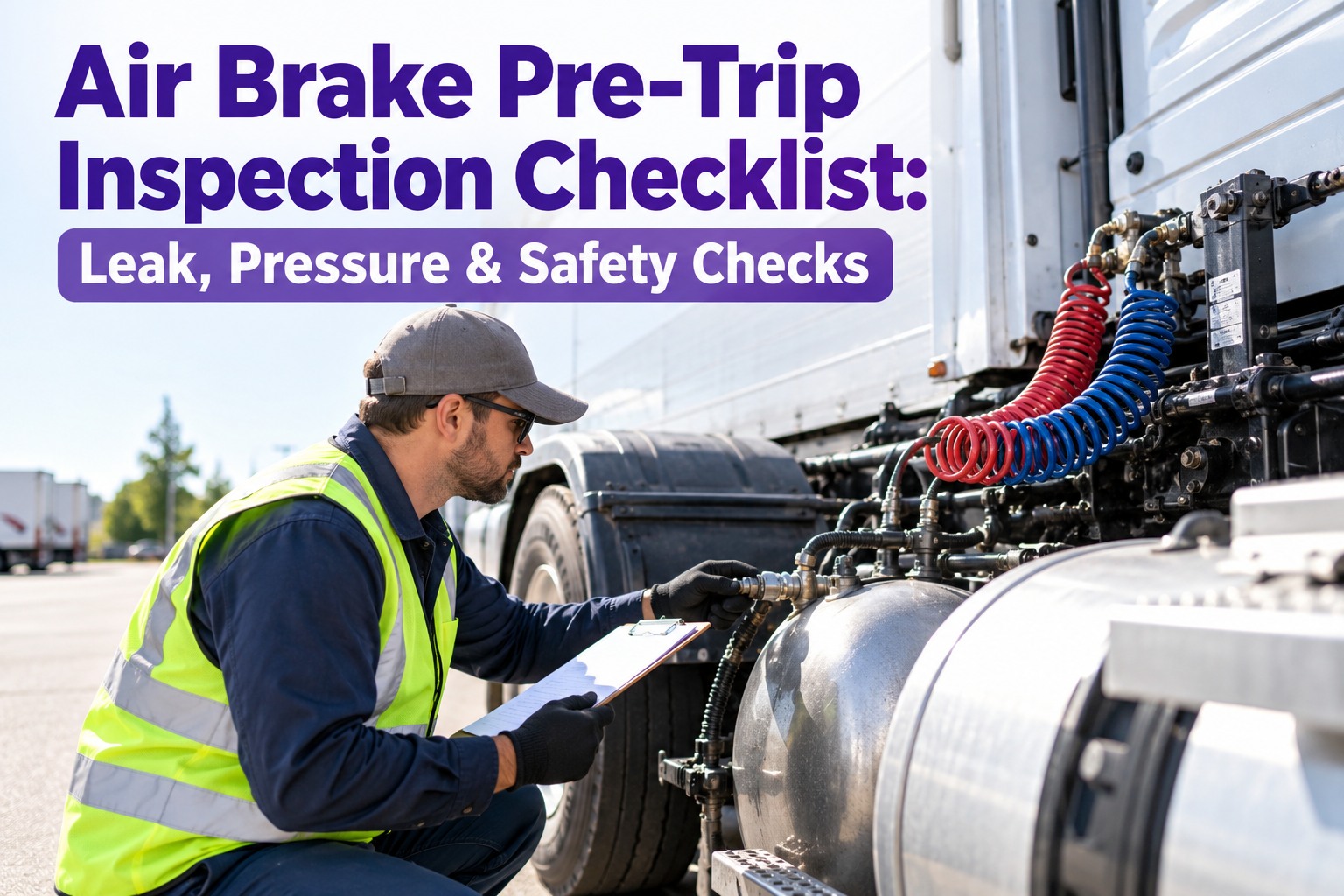
WarningA low level with a soft or sinking pedal is a leak — do not drive, report it
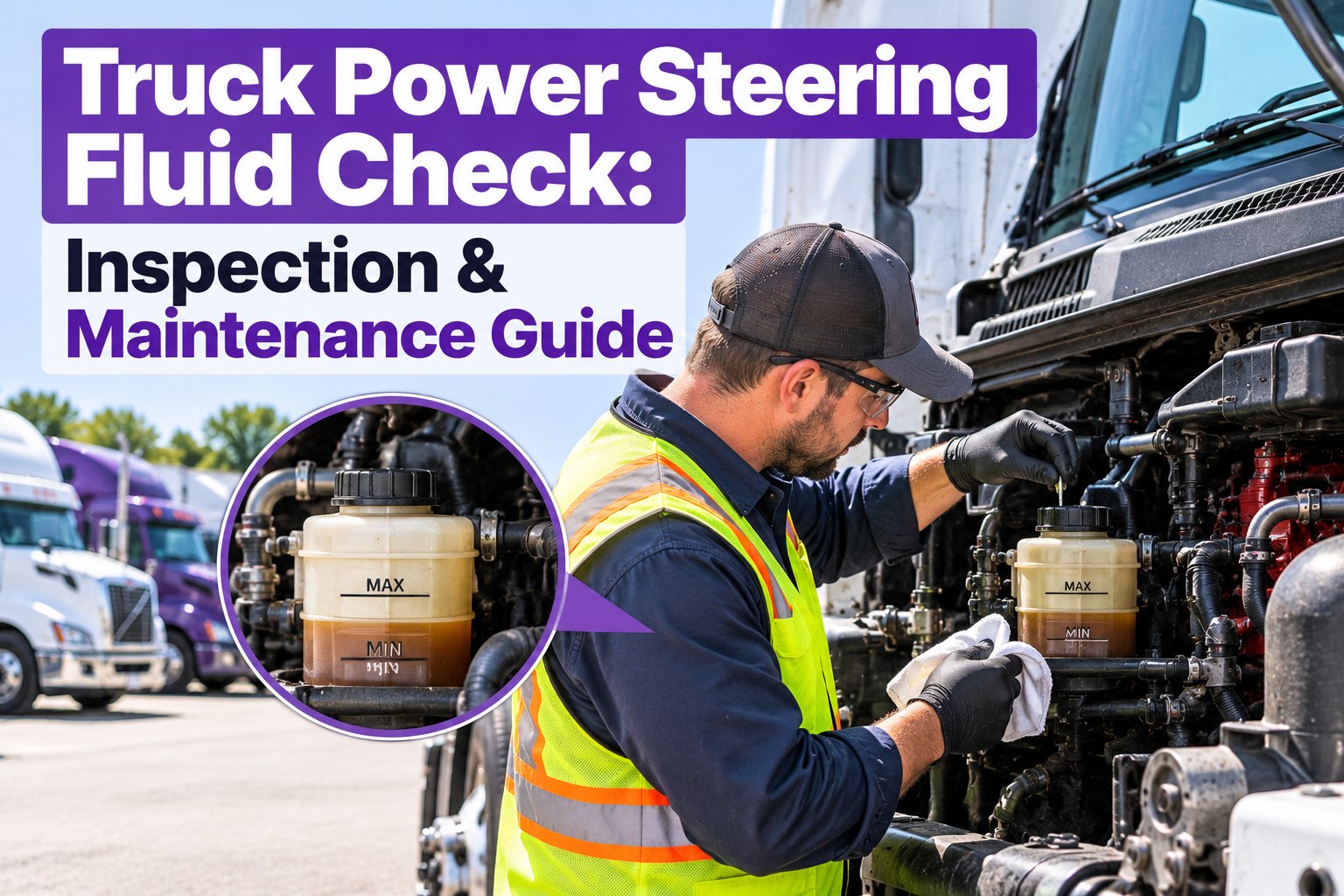
5Power Steering FluidRESERVOIR
LevelAt the marked line on the reservoir, checked per spec (cold or warm as marked)
ConditionClean, not foamy or dark; pump and lines dry, no weeping at fittings
WarningWhining at the wheel or heavy steering with a low level signals a leak or failing pump
6Diesel Exhaust Fluid (DEF)OWN TANK
LevelIn its own blue-capped tank, kept topped — running out triggers a speed derate
ConditionClear fluid, no crystalline deposits at the cap or filler; never mix with diesel
WarningA DEF or SCR warning lamp, or crystals at the filler, needs attention before it derates
Read the Fluid, Not Just the Level
Level tells you if there's enough; colour and feel tell you what's happening inside. A quick glance at condition turns the daily check from a top-up into an early warning.
Engine oil
→Milky / creamy — coolant getting into the oil
Coolant
→Oily film or sludge — a head gasket or cooler flag
Transmission
→Dark & burnt — overheated, overdue for service
Brake fluid
→Low + soft pedal — a leak; don't drive it
Software That Runs the Daily Check With the Driver
Helping with exactly this is the job. Truck Inspection & Maintenance Management Software puts the six-fluid walk-through on the driver's phone in order, with the check-cold and check-warm prompts built in and a photo field for anything that looks off. A low level or a milky, burnt, or dark reading flags the fluid and opens a dated work order the shop sees before dispatch — so a top-up gets done in the yard and a coolant-in-the-oil warning never leaves the lot. The two-minute check becomes a record, not a memory.
Why the Two Minutes Pays Off
Each fluid skipped has a failure waiting behind it, and all of them cost more than the check. Here's what the daily walk-through is actually buying you.
⊘Low oilruns an engine toward seizure — a catastrophic, truck-ending failure.
⊘Low coolantoverheats the engine on the first grade and warps what it touches.
⊘Low brake fluidis a leak and a soft pedal — a stopping-distance problem.
⊘Empty DEFforces the truck into a speed derate until it's refilled.
Frequently Asked Questions
Which truck fluids should a driver check every day?
Six: engine oil, coolant, transmission fluid, brake fluid, power steering fluid, and diesel exhaust fluid (DEF). Not all are literally dipped every single morning on every fleet, but all six are part of a complete daily walk-through, and the critical ones — oil, coolant, and brake fluid — should be eyeballed before every trip because they're the ones that turn into a seized engine, an overheat, or a stopping problem if they run low. The whole check takes about two minutes on a level, cold truck.
Should I check fluids with the engine hot or cold?
Mostly cold, with one important exception. Engine oil and coolant are checked cold: a hot engine gives a false-low oil reading because oil is still draining back to the pan, and a hot cooling system is pressurized, so opening the cap can spray scalding coolant. Transmission fluid is the exception — many units are designed to be checked warm with the engine running, which is the opposite of oil and coolant, so confirm your truck's method. The one rule that applies to all of them is to park on level ground first, or every reading is off.
What does milky or discolored fluid mean?
Colour is the early-warning half of a fluid check. Milky or creamy engine oil means coolant is getting into it — a serious flag that shouldn't just be topped up. An oily film or sludge in the coolant points the same problem from the other side, often a head gasket or oil cooler. Transmission fluid that's gone dark and smells burnt is overheated and overdue for service rather than a top-up. Brake and power steering fluid that's turned dark is due for a change, and in the case of brake fluid a low level with a soft pedal means a leak you shouldn't drive on.
What happens if a truck runs out of DEF?
The engine management forces a derate that limits the truck's speed — the same mechanism that protects the SCR emissions system also makes it impossible to ignore an empty DEF tank, so a loaded truck can end up crawling until it's refilled. DEF lives in its own separate tank with a blue cap and should be kept topped during the daily check, and watched for crystalline deposits at the filler, which signal a slow leak affecting dosing. The key habit is to never let it run near empty and never mix it with diesel.
Contact us to put DEF level on the driver's daily check.
Level · Clean · Logged
Make the Two-Minute Fluid Check a Logged Habit
Truck Inspection & Maintenance Management Software puts the six-fluid daily walk-through on the driver's phone, flags a low or dirty reading, and opens a work order the shop sees before the truck rolls. Fleets run it to catch fluid trouble in the yard — where it's a top-up — instead of on the road, where it's a tow.
No credit card required. Free for up to 3 trucks. Built for FMCSA-compliant fleets.