On a loaded Class 8 truck the power steering runs at over a thousand psi, and the fluid carries that pressure. Let it run low, aerated, or dirty and you get heavy, unpredictable steering — then a failed pump or worn gear. The fluid's level, colour, and feel warn you long before that. Here's how to read it. Start free and keep every power steering check on record.
Level · Condition · Leaks
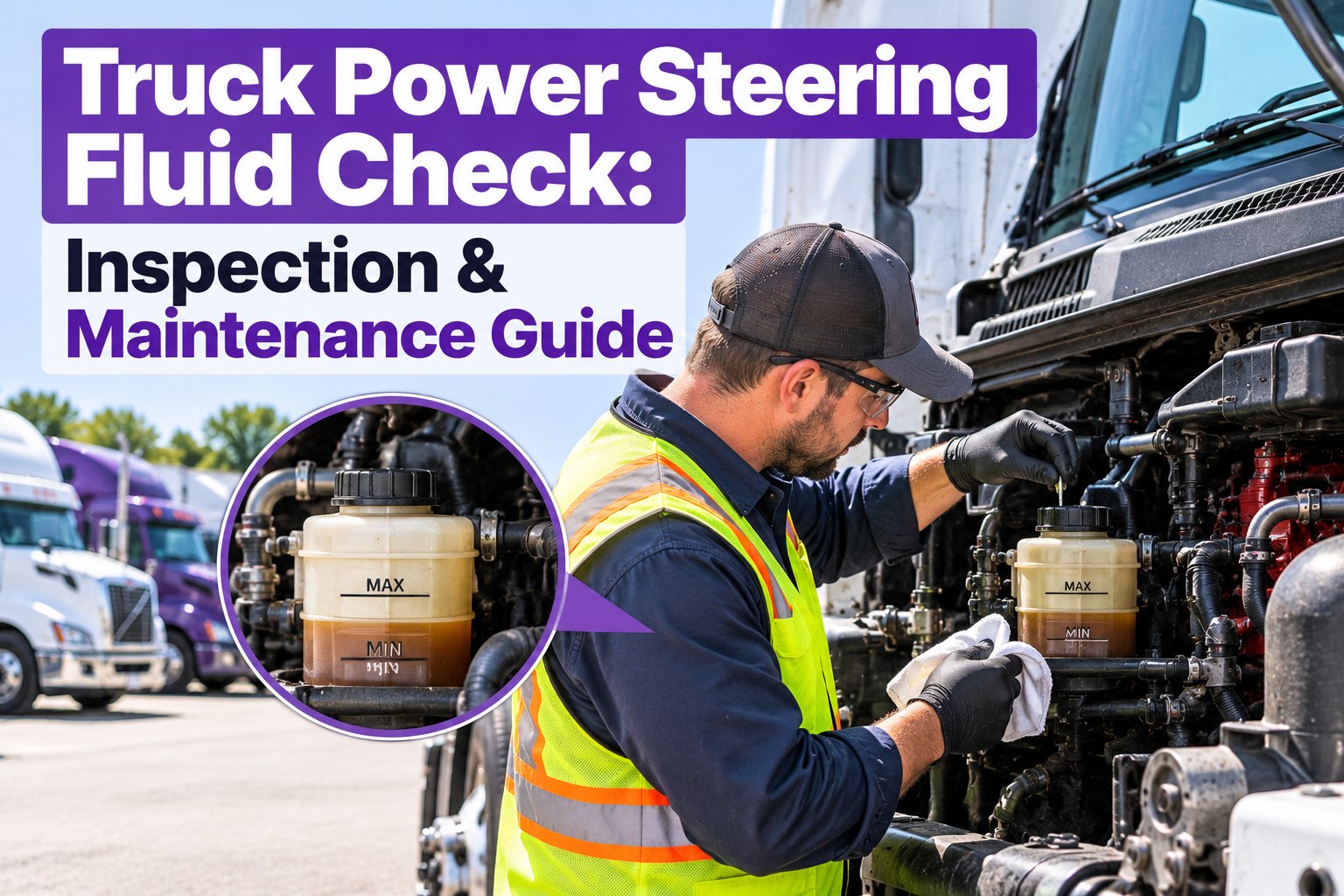
Truck Power Steering Fluid Check: Inspection & Maintenance Guide
Reading the fluid is the fastest diagnosis in the steering system. Truck Inspection & Maintenance Management Software puts the power steering check on the inspection with its own condition limits, and turns a dark reading or a weeping fitting into a dated work order before the pump cavitates.
900–1,500psi the heavy-truck steering circuit runs at
Warmcheck the level with the engine running, fluid warm
§393.209the federal steering-lash and leak limit
Check It Right — Warm, Running, and the Correct Fluid
Two things trip fleets up before they even look at the fluid: how they check the level, and what they top it up with.
01
Check warm, with the engine runningCold and hot readings differ, so take the level with the fluid at operating temperature and the engine running. Read it against the mark the gauge or dipstick calls for — at the correct level, not just above empty.
02
Use the fluid the gear maker specifiesOn many heavy trucks the correct fluid is a transmission fluid, not something sold as "power steering fluid." The wrong fluid foams and attacks seals and hoses — and brake fluid or engine oil never belong in a steering system.
Read the Fluid by Colour
Colour and clarity are the fastest read on the system's health. Pull a sample and match it — each state points at a condition inside the pump and gear.
Clear to light amberNormal, healthy fluid. Nothing to do but keep it at level.
Pink froth, foam, or bubblesEntrained air — felt as a lumpy or chattering wheel. Trace the air-entry point.
Dark grey, cloudy, metallic sheenMetal debris from a failing pump. The fluid is now abrasive and spreading wear.
Milky, "coffee-with-milk"Water ingress — it corrodes the steering gear from the inside. Flush and find the source.
Match the Symptom to the Cause
Each feel or sound maps to a specific flow or pressure problem — this is how you turn "it steers funny" into a repair.
What the driver feelsWhat it usually means
Whine or growl rising with engine speedPump starved — clogged reservoir filter or a pinched return hose
Moan or groan, worst at full lockAerated fluid, or a low level uncovering the pickup
Heavy at low speed, normal at road speedLow pressure or flow — slipping belt, weak pump, or a restriction
Effort that varies turn to turnA gear seal drawing air during reversal
Excess play in the wheelLash beyond the §393.209 limit — a federal out-of-spec condition
Where the Fluid Leaks — and Where Air Gets In
The problem is often not low fluid but a leak or an air path — the low-pressure side pulls air in just as the high-pressure side pushes fluid out. Walk these points.
01Pump shaft sealWeeps red/amber fluid at the front; a classic high-mileage leak.
02Pressure hose fittingsHigh-pressure side — fittings seep under load, worst when hot.
03Suction hose & clampsLow-pressure side — a loose clamp here draws air, not just leaks.
04Gear input & sector sealsThe steering gear's own seals leak fluid and let air in on reversal.
05Return line / low reservoirA low level uncovers the pickup and feeds the pump air.
06Reservoir cap & filterA clogged filter starves the pump; treat any weeping fitting as an air path.
Software That Catches It at the Reservoir, Not the Roadside
Helping with exactly this is the job. Truck Inspection & Maintenance Management Software puts the power steering check on the inspection — level taken warm, condition graded by colour, hoses and fittings walked for leaks — each with its own pass/fail limit. A dark or milky reading, a weeping fitting, or lash beyond the §393.209 limit opens a dated work order with a photo, so the fluid's warning reaches someone who can act before the pump cavitates.
Service by Condition, Not Just the Calendar
There's no single flush mileage — the interval comes from the chassis and gear maker, and the fluid's condition is the better trigger. Shorten it for hard duty.
✓Let condition set the clockDark, milky, or gritty fluid is due regardless of mileage. Tighten the interval for high heat, constant low-speed maneuvering, refuse, or yard work.
✓Change the filter with the fluidRenew the reservoir filter every time the fluid is changed — a clogged one starves the pump and causes the whine.
✓Flush after any pump failureMetal debris left in the circuit will take out the new pump too. Flush the whole system before fitting a replacement.
✓Check the hardware and beltTorque the Pitman arm, drag links, and tie rods, confirm axle stops, and make sure the belt isn't frayed, cracked, or slipping.
Frequently Asked Questions
How do I check power steering fluid on a heavy truck?
Take the level with the engine running and the fluid warm, since cold and hot readings differ, and read it against the gauge or dipstick mark rather than just above empty. Check the colour while you're there, not only the height. And mind what you top it up with — many heavy trucks call for a specific transmission fluid, not something sold as "power steering fluid," and the wrong fluid foams and attacks the seals.
What color should truck power steering fluid be?
Healthy fluid is clear to light amber. Pink foam or bubbles means entrained air; dark grey with a metallic sheen means metal debris from a failing pump; and a milky, coffee-with-milk look means water ingress that corrodes the gear. Any of the three is a reason to act — the colour is often the first sign of a problem the driver hasn't felt yet.
Why does my truck's power steering whine or groan?
The sound tells you where to look. A whine rising with engine speed means the pump is starved — a clogged filter or pinched return hose. A moan worst at full lock points to aerated fluid or a low level picking up air. Heavy at low speed but normal at road speed is low pressure from a slipping belt or weak pump. In most cases the fluid level or condition is the first thing to check.
How often should power steering fluid be changed on a Class 8 truck?
There's no universal mileage — the interval comes from the chassis and gear manufacturer, shortened for hard duty like high heat, constant low-speed maneuvering, or refuse and yard work. The better trigger is condition: dark, milky, or gritty fluid is due regardless of miles. Two rules matter too — renew the reservoir filter with every fluid change, and always flush the circuit after a pump failure, since leftover metal debris destroys the replacement.
Contact us to build power steering checks into your inspection routine.
Level · Clean · Sealed
Let the Fluid Warn You Before the Pump Does
Truck Inspection & Maintenance Management Software puts the power steering check on every inspection and opens a work order the moment a reading or fitting fails its limit. Fleets run it to catch a steering problem at the reservoir — where it's a top-up or a seal — instead of at the roadside, where it's a dead pump.
No credit card required. Free for up to 3 trucks. Built for FMCSA-compliant fleets.