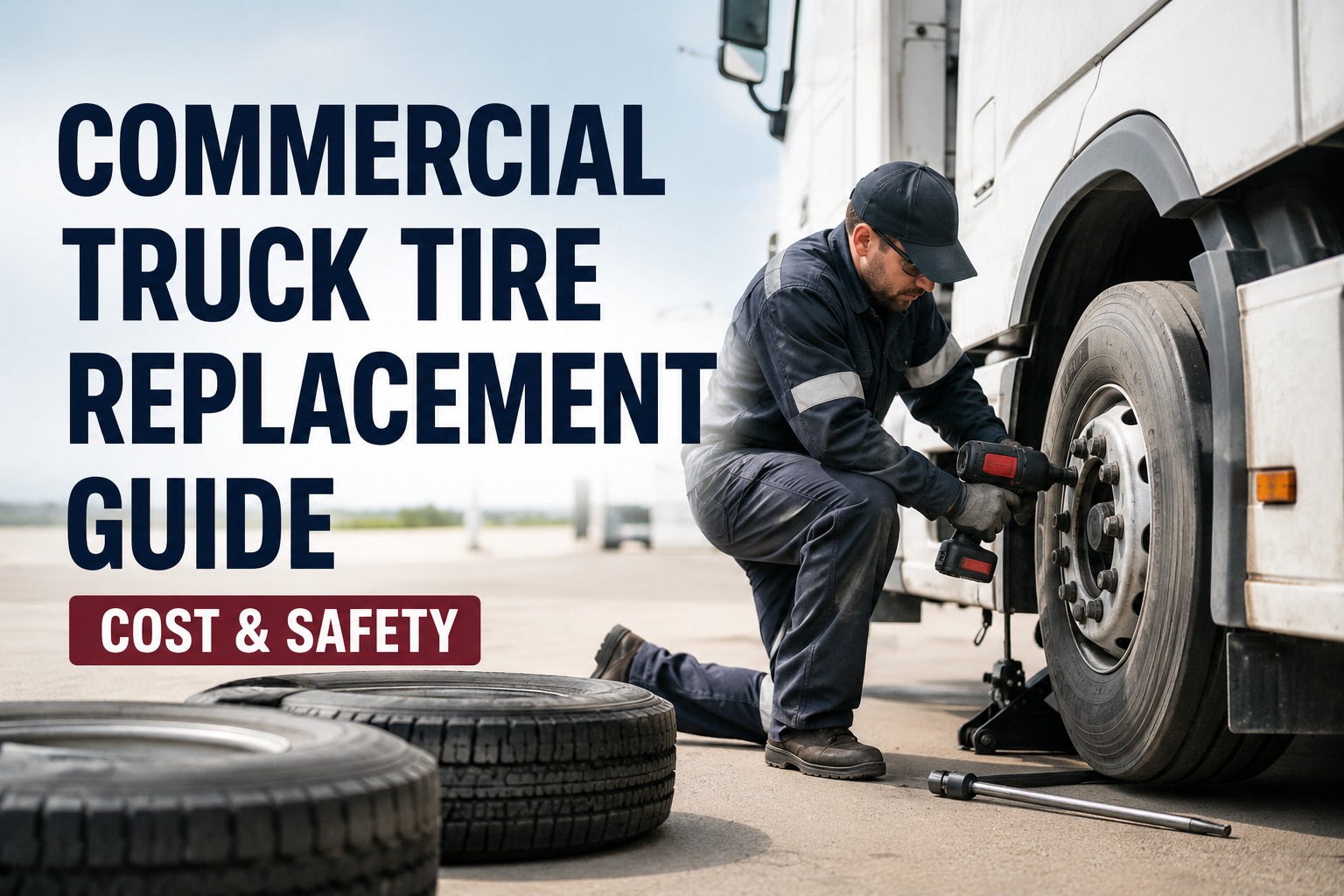
Tires are the second-biggest reason trucks get pulled off the road, and tread depth is the easiest violation to avoid — if you measure it right. The trap is that the legal limit isn't one number: a steer tire is out of service at 4/32" while a drive or trailer tire runs to 2/32", and both are measured at the shallowest point of a major groove, not by eye. This checklist gives you the limits, the right way to measure, and the other conditions that fail a tire regardless of tread. Start free and log tread depth by position on every truck.
Measure · Judge · Replace
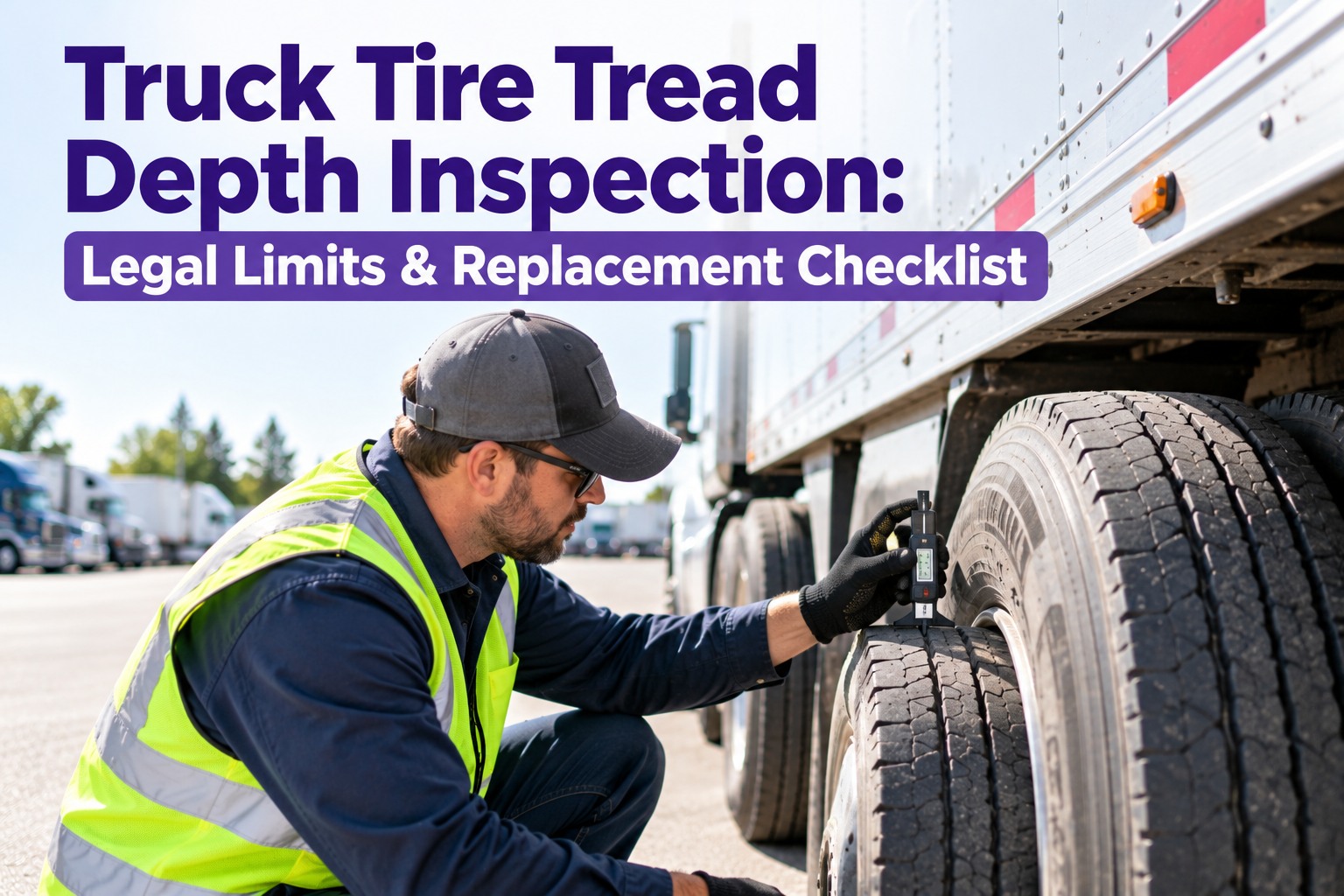
Truck Tire Tread Depth Inspection: Legal Limits & Replacement Checklist
The limit depends on the position, and the reading depends on where you measure — get either wrong and a legal tire fails roadside. Truck Inspection & Maintenance Management Software records tread depth by wheel position against each truck, flags a tire nearing its limit, and opens a work order before a worn steer tire becomes an out-of-service order.
4/32"minimum tread on steer / front tires
2/32"minimum on drive & trailer tires
§393.75the federal tread-depth rule
The Legal Limits — Position Decides the Number
This is the one fact that catches fleets out: the minimum isn't the same everywhere on the truck. A new commercial tire starts around 12/32", and these are the lines it must stay above by position.
Steer / Front
4/32"
Higher minimum — steer tires carry steering response and wet-weather control. Replace well before this line.
§393.75 · measured in a major groove
Drive & Trailer
2/32"
All other positions. Still a hard minimum — one spot below the line is a violation, not an average.
§393.75 · measured in a major groove
Measure It Right — Where the Reading Counts
The number only means something if you take it in the right spot with the right tool. Most tread-depth violations are really measurement mistakes.
01In a major groove onlyMeasure a major circumferential groove — not a tie bar, hump, fillet, or the thin shoulder decoupling groove, which don't count.
02At the shallowest pointUse the lowest relevant reading, not an average — a single spot below the minimum can be a violation.
03With a calibrated gaugeUse a proper tread-depth gauge; the penny test and a visual check can't reliably catch a steer tire near 4/32".
04Record position & dateLog the depth, the wheel position, and the date — so you can watch the trend and prove the check happened.
The Tread Depth Checklist
Work every wheel position in turn. Measure, record, and judge each tyre against its own limit — steer tyres to the higher line.
When to Replace — Before the Legal Line, Not At It
The legal minimum is where a tyre goes out of service, not where you should plan to change it. Smart replacement happens with margin — here's how to judge it.
✓Replace steer tyres earlyChange steer tyres well before 4/32" — they carry steering and wet-weather grip, and the margin is cheap insurance.
✓Watch the trend, not the dayLogged readings over time show the wear rate, so you can plan a change rather than discover a worn tyre at a scale.
✓Fix the cause of uneven wearIrregular wear points to alignment, suspension, or inflation — fix that first, or the new tyre wears out the same way.
✓Any OOS condition = replace nowExposed cord, separation, a bulge, or a cut to the belt is a replacement regardless of how much tread is left.
Software That Tracks Tread by Position, Not by Memory
Helping with exactly this is the job. Truck Inspection & Maintenance Management Software records tread depth against each wheel position on each truck, with the right limit attached — 4/32" on the steer, 2/32" elsewhere — and flags a tyre as it nears the line. A reading below minimum, an exposed belt, or a sidewall separation opens a dated work order with a photo, and the logged readings over time show the wear rate so a change gets planned, not discovered at a scale house. Because every reading ties to the position and the date, the proof that the check happened is already in the record when an auditor asks.
What Shortens Tread Life
Tread doesn't just wear out — it's worn out by things you can fix. Catch these and the tyres last to their proper life instead of failing early.
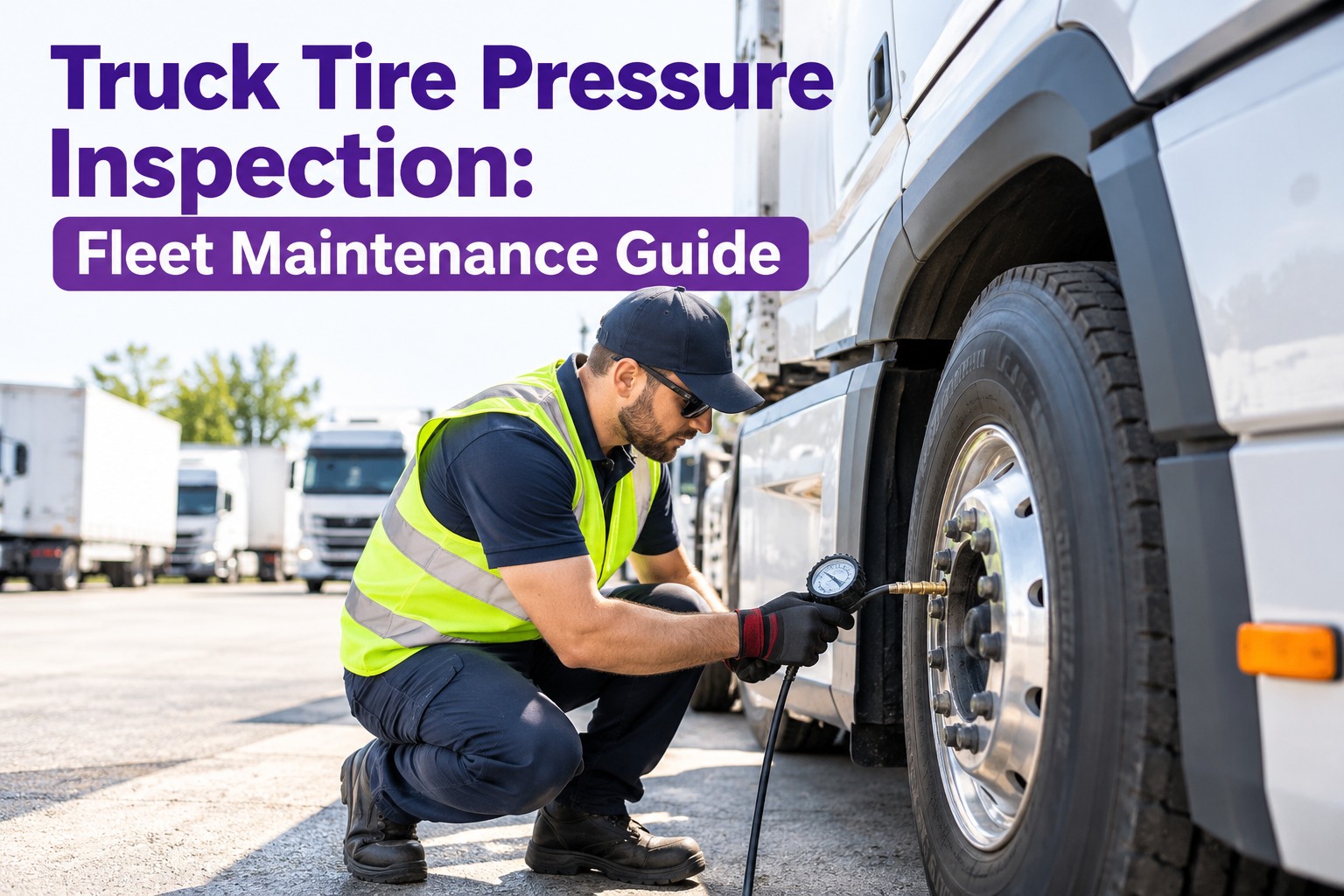
⊘Under-inflationBuilds heat, wears the shoulders, and risks a blowout — the most common tread-killer.
⊘Over-inflationWears the centre rib fast and gives a harsh ride that batters the rest of the truck.
⊘Alignment & suspensionUneven, feathered, or cupped wear means a fault that scraps the tyre early — fix the cause.
Frequently Asked Questions
What is the legal minimum tread depth for a commercial truck tire?
It depends on the wheel position. Under 49 CFR §393.75, steer and front tires must have at least 4/32" of tread, measured in a major groove, while all other positions — drive and trailer — must have at least 2/32". The steer minimum is higher because those tires carry steering response and wet-weather control. A new commercial tire starts around 12/32", and the limits are hard floors: one spot below the line at the shallowest point of a major groove is a violation, not something you average out across the tire.
Where exactly do I measure truck tire tread depth?
In a major circumferential groove, at the shallowest relevant point — and with a calibrated tread-depth gauge, not by eye. Readings taken on a tie bar, a wear hump, a fillet, or the thin shoulder decoupling groove don't count, because those aren't major grooves. The reason the tool matters is precision: a visual check or the penny test can't reliably tell a steer tire sitting right around 4/32", which is exactly the tire you most need to measure accurately. Record the depth, the wheel position, and the date each time so you can track the wear.
What tire problems put a truck out of service even if the tread is legal?
Several conditions fail a tire regardless of how much tread it has: body ply or belt material exposed through the tread or sidewall, tread or sidewall separation, a cut that exposes the ply or belt, a bulge or knot indicating internal damage, a flat tire or an audible air leak, and running a tire marked "Not for Highway Use." There are also retread and regroove limits — buses can't run retreaded tires on the front wheels, and trucks can't run regrooved tires rated 4,920 lb or more on the front. Any of these is a replacement, not a judgment call.
When should I replace a truck tire rather than run it to the limit?
Before the legal line, not at it — the minimum is where the tire goes out of service, not where a well-run fleet plans to change it. Steer tires especially should be replaced well before 4/32", since they carry the steering and wet-weather grip and the extra margin is inexpensive insurance against a roadside failure. The practical approach is to track tread readings over time so you can see the wear rate and schedule the change, and to always fix the cause of any uneven wear — alignment, suspension, or inflation — because a fresh tire fitted over an unfixed fault just wears out the same way.
Contact us to put position-based tread tracking on your fleet.
4/32 · 2/32 · Logged
Catch the Worn Tire in the Yard, Not at the Scale
Truck Inspection & Maintenance Management Software records tread depth by wheel position with the right limit on each, flags a tire nearing its line, and opens a work order the moment one fails on tread or condition. Fleets run it to keep worn steer tires off the out-of-service list and plan replacements instead of discovering them.
No credit card required. Free for up to 3 trucks. Built for FMCSA-compliant fleets.