A refuse truck rolls out at 6 AM with a weeping hydraulic hose nobody logged. By mid-morning it is stalled with half its stops uncollected, the crew is idle and dispatch is scrambling. The repair was cheap; the missing schedule was not. This guide shows how to fit preventive maintenance into the collection week so routes stay reliable. Start free and schedule every service around your routes.
Preventive · Inspections · Repairs · Route uptime
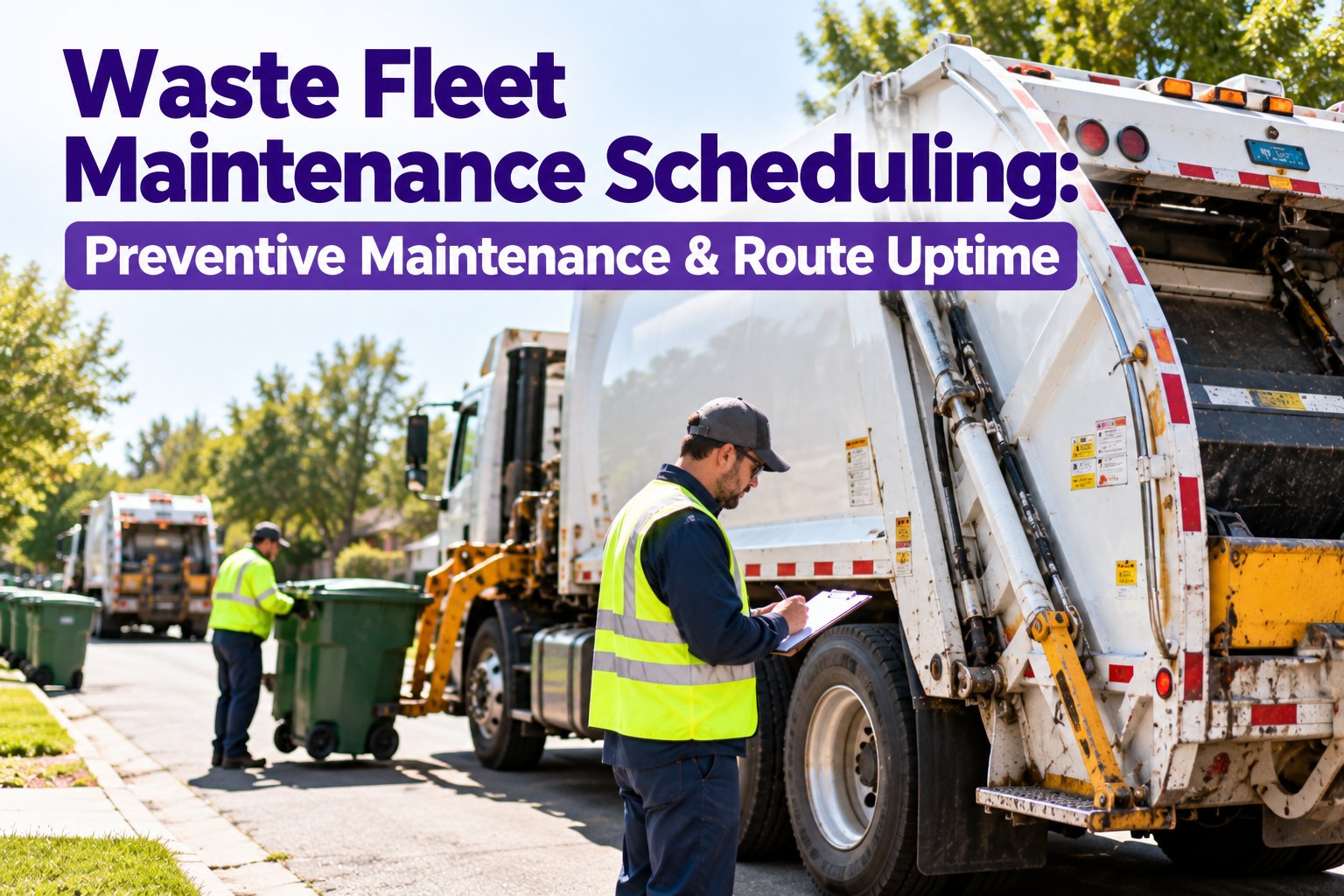
Waste Fleet Maintenance Scheduling: Preventive Maintenance & Route Uptime
Our Truck Inspection & Maintenance Management Software puts every service on a calendar built around your routes, turns driver-reported defects into work orders, and shows dispatch which trucks are due — so waste collection vehicles get serviced without a single route cancelled.
20–25%of breakdowns estimated to trace to missed PMs, worn hoses or low hydraulic fluid
2–3 daysa hydraulic blowout can sideline a refuse truck
10–15%spare-truck ratio commonly recommended to cover PM
One Truck Down at 7 AM Takes the Whole Route With It
A garbage truck has no slack. Its route is fixed, its crew is paid by the hour, and residents expect a bin emptied on a set day. When a truck fails, the cost ripples well past the repair bill.
1Truck fails on routeA hose bursts or a pump gives out mid-shift.
2Stops go uncollectedThe crew waits, the route stalls, calls come in.
3Dispatch scramblesOvertime, a spare truck or a contractor covers the gap.
4Repair takes daysHydraulic failures can keep the truck out for 2–3 days.
$270 / hourestimated fully loaded cost of a refuse truck sitting idle
~$3,200typical cost of one breakdown in overtime and contractor fees
Vendor-published estimates; your own costs will vary by route and crew.
The Route-Week Calendar: Where Each Service Fits Without Cancelling a Route
The trick is to protect the hours when trucks are collecting and use the gaps. Daily checks happen before the route, weekly services rotate through truck groups after the route, and the heavy work moves to nights and weekends.
MonTueWedThuFriSat
Before routeWalkaround DVIRWalkaround DVIRWalkaround DVIRWalkaround DVIRWalkaround DVIRWalkaround DVIR
On routeCollectingCollectingCollectingCollectingCollectingShort route
After routeGroup A weeklyGroup B weeklyGroup C weeklyGroup D weeklyCatch-up—
Overnight / weekendDefect repairsDefect repairsDefect repairsDefect repairsDefect repairsMonthly & annual, spare swap
Example rotation for a four-group fleet. Adjust the groups to your route pattern.
A rotation like this means no more than one group is out of position on any day, and nothing is left to whoever remembers. Contact our team to build a rotation that fits your routes.
Service tierTriggerWhat gets checked
Daily, pre-routeEvery shiftWalkaround, hydraulic fluid level and hoses, brake air pressure, lights, cameras
WeeklyAbout every 250 hoursCylinder seals, grease on packer tracks and pins, brake adjustment, undercarriage wash
MonthlyAbout every 1,000 hoursEngine oil and filters, fuel/water separator, hydraulic filter, battery, fault codes
AnnualCalendarDOT annual inspection, hydraulic fluid change, relief valve test, hopper and body weld inspection
Intervals are a typical starting point. Always follow your manufacturer's schedule and adjust from experience.
Spare Trucks Are What Make Preventive Maintenance Possible
You can't pull a truck for service if no truck can cover its route. Guidance for refuse fleets commonly points to a spare ratio of 10–15%, so a service day never becomes a missed-route day.
A 20-truck fleet at 15% spare
TTTTTTTTTTTTTTTTTSSS
17 trucks on route3 spares to cover service days
Where Refuse Trucks Fail First — and What to Schedule Against It
HydraulicsPump failures, blown seals and hose ruptures from heat and contamination. A failed pump is among the costliest repairs.Schedule: fluid sampling about every 500 hours, filter checks, hose inspections
TiresCurb strikes and tight turns wear front tires fast, often within 30,000–40,000 miles, and underinflation shortens them further.Schedule: pressure checks every pre-route, rotation about every 10,000 miles
Body and weldsVibration and heavy loads crack hopper floors, body mounts and subframe rails over time.Schedule: weld and mount inspection at each annual service
How Truck Inspection & Maintenance Management Software Keeps Every Truck on Schedule
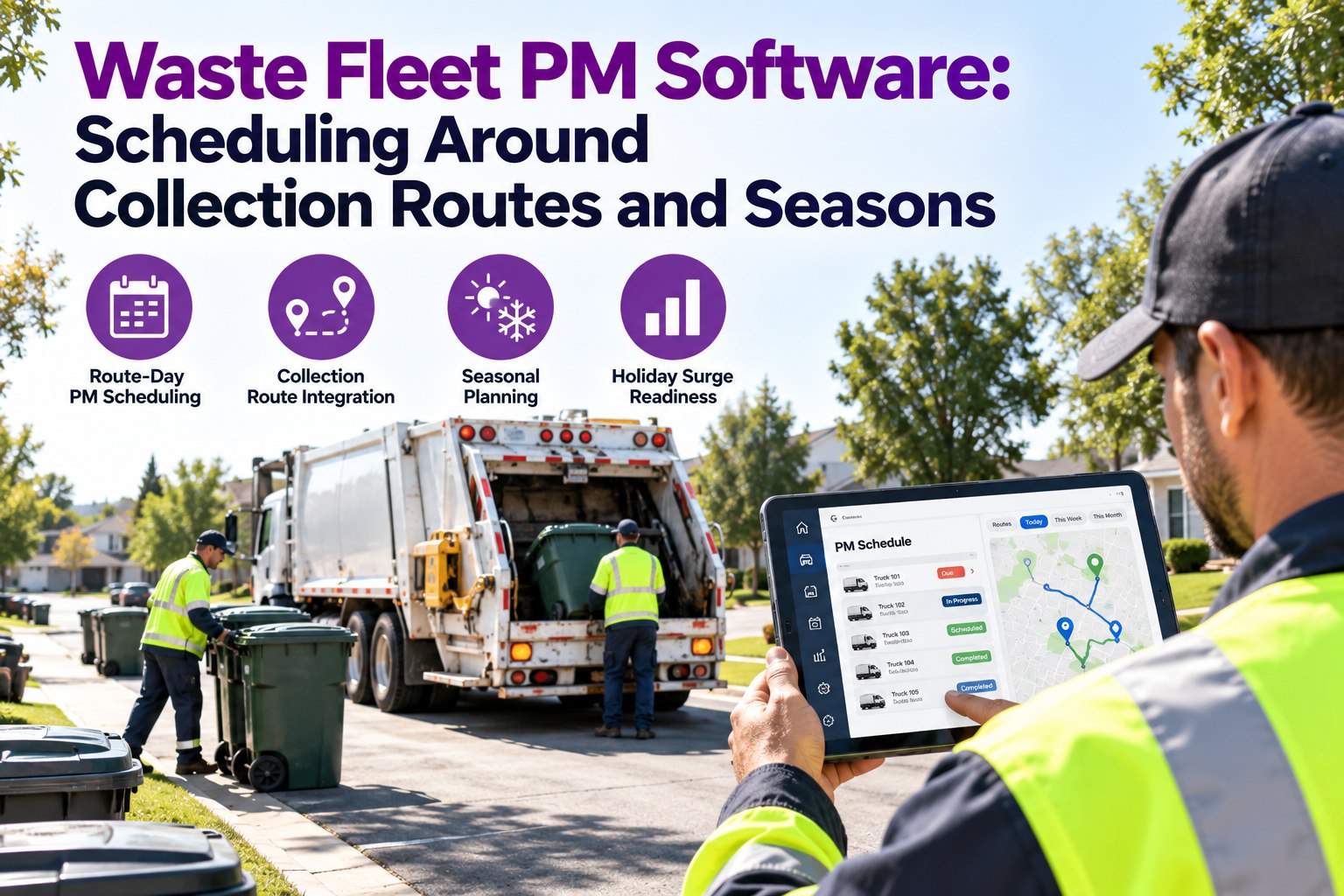
Spreadsheets can't tell you which trucks are due before the route starts. Our software tracks each truck's mileage, engine hours and calendar dates, so every service is flagged early and every driver-reported defect becomes a work order.
Fleet board: due this week (illustrative)
Truck 08Hydraulic filter checkOverdue 2 days
Truck 21Weekly service, Group BDue today
Truck 33Hose weep reported on pre-trip, work order openedTonight
Truck 05Monthly service, spare swap bookedSaturday
Truck 14DOT annual inspectionIn 12 days
Triggers that fit the duty cycleServices come due by mileage, engine hours or calendar date, whichever fires first.
Pre-trip defects become work ordersA flagged hose or brake issue reaches the shop the same day, with a photo and a priority.
Dispatch sees truck statusKnowing which trucks are in service lets dispatch plan the day without last-minute route changes.
Every repair on the truck's recordInspections, services and repairs stay together, ready for DOT audits and interval reviews.
Weekly, check how often breakdowns, downtime hours and mechanical route disruptions occur by truck. That shows where intervals should tighten. Start free and see your fleet's service schedule in one view.
Keep Every Route Running on Schedule
Truck Inspection & Maintenance Management Software schedules preventive maintenance around your collection week, turns inspections into repairs and keeps every truck's history in one place. Fewer breakdowns on route, fewer emergency bills, more reliable pickups.
Frequently Asked Questions
How often should garbage trucks get preventive maintenance?
Most fleets work in tiers: a walkaround and fluid check before every route, a weekly service, a monthly service and an annual inspection. A common starting point is about every 250 hours for the weekly service and every 1,000 hours for the monthly one, but always follow the manufacturer's intervals and adjust from your own breakdown history.
Start free and set triggers by hours, miles or date.
When should maintenance be scheduled so routes aren't disrupted?
Use the gaps in the collection week: daily checks before the route, weekly services after the route on a rotating group of trucks, and heavy work overnight or on weekends. A spare truck covers any route whose vehicle is in the shop, so service never means a missed pickup.
What causes most refuse truck breakdowns?
Hydraulic failures lead the list, followed by tire wear from curb strikes and cracking in the body and hopper from vibration and load. Many of these start as small, visible problems such as a weeping hose or low fluid, which is why daily inspections and a clear path from defect to repair matter.
Contact us to see how defects reach the shop faster.
How many spare trucks does a waste fleet need?
Guidance for refuse fleets commonly points to roughly 10–15% of the fleet. The right number depends on how often trucks are in service, how long repairs take and how tightly your routes are built. Tracking downtime by truck shows whether your current spare ratio is enough.
Scheduled · Inspected · On route
Stop Letting a Missed Service Stall Your Route
Truck Inspection & Maintenance Management Software keeps every waste collection vehicle on a service schedule built around your routes, and turns every inspection finding into a tracked repair.
No credit card required. Free for up to 3 trucks. Built for FMCSA-compliant fleets.