A garbage truck might cover only 40 miles in a shift, yet work harder than a long-haul tractor that ran 600. It makes a stop every few seconds, idles nearly half the day, and cycles a packer at 3,000 psi hundreds of times before noon. Schedule its preventive maintenance by the odometer and you will service it far too late — the real wear is measured in engine hours, hydraulic cycles, and stops, not miles. This guide shows how to schedule refuse PM on the clock that matches the work, and fit it into the route calendar instead of fighting it. Start free and schedule refuse PM the right way on TIM.
TIM · Refuse Fleet PM Scheduling
Your Garbage Trucks Don't Wear Out by the Mile — So Stop Scheduling by It
A refuse truck that misses its route can't skip the day — the trash is still at the curb, and a breakdown mid-route means missed collections and a phone ringing at the depot. The way to avoid it is PM scheduled on the clock that matches the brutal stop-and-go duty cycle, and slotted into the window between routes rather than pulling a truck you need. That's the loop Truck Inspection & Maintenance Management Software (TIM) runs for you: inspections and defects flow into graded work orders, repairs are tracked to a verified close, and PM is scheduled by engine hours and cycles — not just mileage.
On the route-day clockPM scheduled by engine hours and hydraulic cycles, timed to the window between routes — so service never pulls a truck a route needs.
Why the Odometer Lies on a Refuse Truck
A collection truck racks up tiny mileage and enormous wear. The duty cycle is the most severe in trucking, and none of it shows on the odometer. These are the numbers that should drive the schedule instead.
1,000–2,000
Start-and-stop cycles a day — each one working the brakes and driveline
40–50%
Of the shift spent idling — engine hours pile up while the odometer sits still
800+
Packer and lift cycles a day at 3,000+ psi, fluid running 180–240°F
3 : 1
Engine-hours-to-miles ratio at 8–12 mph — three hours of wear for every mile shown
At that ratio, a truck reading 2,500 miles has run its engine as hard as a highway truck at four or five times the distance. Mileage-based PM services it long after it was due. Contact our team to set hour-based intervals for your fleet.
Schedule by the Clock That Matches the Work
Refuse duty compresses every interval. The fix is to set PM on engine hours and hydraulic cycles for the systems that wear by use, and keep mileage only where it still fits. Here's how the severe-duty clock compares to a standard one.
System
Right clock
Severe-duty interval
Engine oil
Engine hours
Every 150–200 hours, with oil analysis for idle dilution
Hydraulics
Cycles / hours
Fluid every 500–800 hours; filter around 250 hours
Brakes
Stops / hours
Adjustment every 2 weeks, linings monthly — wear runs ~4× standard
Chassis lube
Hours / days
Far more often than mileage implies — contamination is constant
DPF / regen
Engine hours
Cleaning every 400–600 hours; forced regen at least weekly
Tires
Mileage (still fits)
Rotate more often; curb and scrub wear is heavy on tight routes
A simple rule of thumb from severe-duty practice: multiply the standard interval frequency by the stop load — roughly 2× at 200–500 stops a day, 3× at 500–1,000, and 4× above 1,000. Start free and track hours and cycles per truck with TIM.
The Route Day — and Where PM Fits In It
A refuse truck runs a tight daily rhythm, and there's exactly one window where it can be serviced without missing a collection. Route-based scheduling means knowing that window and booking PM into it.
Pre-dawn
Pre-trip & roll-out
Driver inspection, fluids, brakes, hydraulics checked before the route.
→
Morning
Collection route
Hundreds of stops, constant packing — the hardest hours of the day.
→
Midday
Disposal & return
Tip at the landfill or transfer station, then back to the yard.
→
Afternoon / overnight
The maintenance window
The truck is back and idle — the one slot to service it without pulling it from a route.
Scheduling PM into that afternoon-to-overnight window is the whole game: the work gets done while the truck would be parked anyway, and it rolls out ready the next morning. Contact our team to map PM to your route windows.
Service the Truck Between Routes, Not Against Them
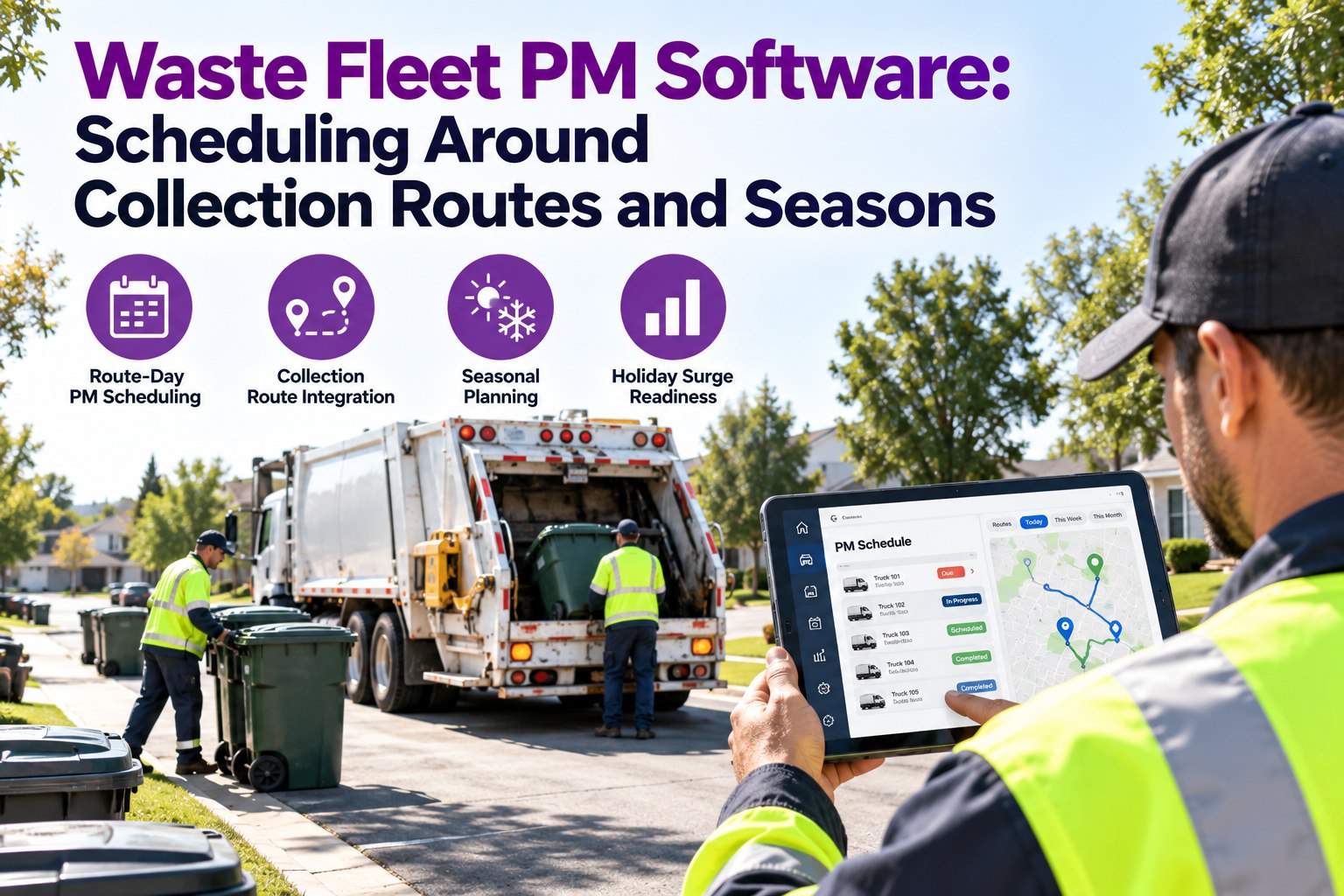
A refuse fleet can't afford to pull a truck during collection — the route still has to run. TIM schedules PM by engine hours and cycles, flags each truck as it approaches due, and fits the work into the window between routes, so a unit is never in the shop when a route needs it. Defects found on the pre-trip become work orders that close in the same window.
Schedule the Fleet, Not Just the Truck
The trap in refuse PM is bunching — letting a batch of trucks all come due the same week, so you either defer service or short the routes. Route-based scheduling staggers the fleet so the shop load is even and a spare is always ready.
01
Stagger the due dates
Spread PM across the weeks so only a manageable few units are ever in the window at once.
02
Keep the spare ratio
Hold enough ready units that a truck in for PM is covered without shorting a route.
03
Match the hardest routes
Put freshly serviced trucks on the highest-stop routes; rotate so wear is shared.
04
Tune on real data
Track failures for a few months and adjust intervals to what your routes actually do.
Done well, PM becomes invisible to operations — trucks are always ready, and the shop is never slammed. Start free and stagger your fleet's PM with TIM.
How TIM Delivers It
Route-Aware PM for a Fleet That Can't Stop
Refuse PM only works if it's scheduled on the right clock and timed to the route. TIM is built to do both — tracking each truck by the measures that actually wear it, and keeping the whole fleet ready for the next morning's collection.
PM by hours & cyclesSchedule on engine hours, hydraulic cycles, or mileage — whichever fits each system.
Due-soon flagsEach truck signals as it nears its interval, so PM books into the next window.
Pre-trip to work orderA defect a driver flags becomes a graded repair that closes before the next route.
Staggered fleet viewSee which units are due across the fleet, so service never bunches up.
Hydraulics & body trackedPacker, lift, and hopper service kept on their own cycle-based schedule.
History that tunes intervalsFailure patterns per route refine the schedule to what your fleet really does.
Frequently Asked Questions
Why shouldn't I schedule garbage truck PM by mileage?
Because a refuse truck's mileage badly understates its wear. It averages 8–12 mph, idles 40–50% of the shift, and runs roughly three engine hours for every mile on the odometer. A truck showing 2,500 miles has worked its engine as hard as a highway truck at several times that distance. Mileage-based intervals therefore service it far too late. Schedule the wear-by-use systems — engine oil, hydraulics, brakes, chassis lube, DPF — on engine hours and cycles instead, and keep mileage only where it still fits, like tire rotation.
What makes refuse trucks "severe duty" for maintenance?
The duty cycle. A collection truck makes 1,000–2,000 start-stop cycles a day, idles nearly half the time, and cycles its packer and lift 800 or more times a day at over 3,000 psi with fluid at 180–240°F, all while swinging about 40,000 pounds between empty and full. Every one of those is wear the odometer never records. That's why standard OEM intervals have to be compressed — commonly to half or less for oil, and far shorter for hydraulics, brakes, and chassis lube — using the stop load as the multiplier.
What is route-based PM scheduling?
It's scheduling preventive maintenance around the collection calendar rather than a fixed mileage date. A refuse truck runs a tight daily rhythm — pre-trip, route, disposal, return — and there's one window, usually afternoon to overnight, when it's back at the yard and idle. Route-based scheduling books PM into that window so the work happens while the truck would be parked anyway, and staggers due dates across the fleet so you're never pulling a truck a route needs. The route calendar drives the maintenance calendar, not the other way around.
How often should refuse truck hydraulics be serviced?
On a cycle or hours basis, not mileage, because the packer and lift are working constantly regardless of distance driven. Severe-duty practice puts hydraulic fluid service around every 500–800 engine hours and the hydraulic filter near every 250 hours, with the exact figure tuned to how many cycles a given route demands. The fluid runs hot — 180–240°F — and dirty, so contamination and heat degradation, not miles, are what drive the interval. Watching fluid condition and cycle count is more reliable than any odometer reading.
How does software help schedule refuse fleet PM?
By tracking each truck on the measures that actually wear it and fitting service to the route. Good software schedules PM by engine hours, hydraulic cycles, or mileage per system, flags a truck as it nears an interval so the work books into the next maintenance window, turns a driver's pre-trip defect into a work order that closes before the next route, and shows the whole fleet's due dates so service never bunches up and leaves you short a truck. It also keeps the failure history that lets you tune intervals to what your routes really do.
Start free and schedule your refuse fleet on TIM.
Engine Hours · Cycles · Route Windows · Staggered Fleet
Schedule Refuse PM on the Clock That Matches the Work
Garbage trucks wear by hours, stops, and cycles — not miles — and they can't be pulled when a route is running. Schedule PM on the right clock, fit it into the window between routes, and stagger it across the fleet so a truck is always ready. TIM runs the whole route-aware loop, free to start on your first three trucks.
No credit card required · Free for up to 3 trucks · Hour-based PM, route-window scheduling, and defect-to-work-order built in