Ninety seconds. That's roughly how long a proper walkaround takes on a delivery van — and it's the cheapest insurance a last-mile operation can buy. A soft tire, a dead brake light, a mirror knocked out of place overnight: none of these announce themselves from the driver's seat, but every one can turn into a roadside stop, a failed delivery window, or a crash. The trouble is that most delivery drivers were never taught a repeatable walkaround, so the "inspection" becomes a glance and a shrug. Turn this checklist into a digital DVIR free. This guide gives delivery and box-truck drivers a fast, memorable pre-trip inspection routine — the 7-point walkaround, the exact items to check at each stop, and a printable checklist you can tape to the dash or run digitally on a phone in under two minutes before every route.
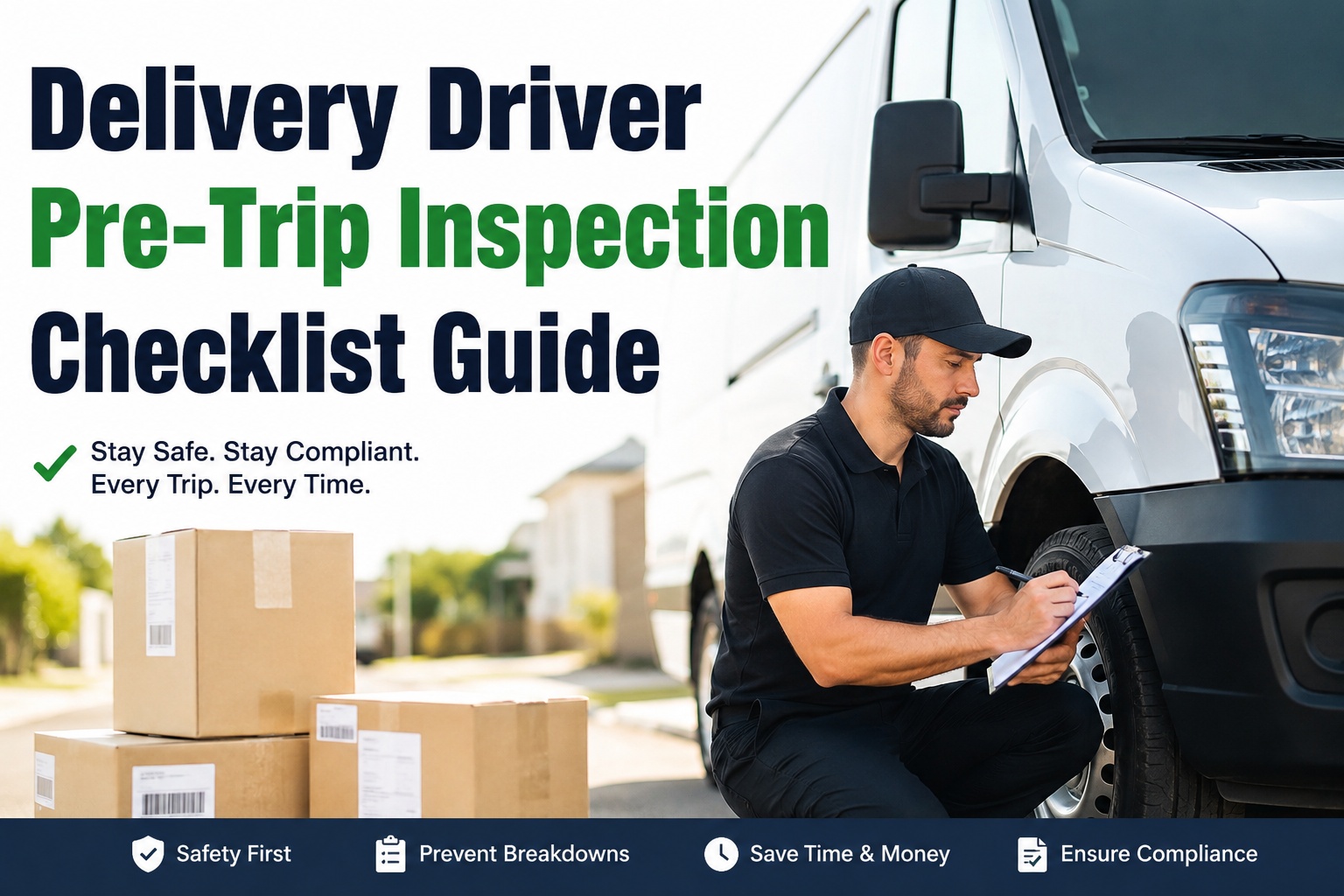
Delivery Driver Pre-Trip Inspection Checklist Guide
A fast, FMCSA-aligned walkaround for delivery vans and box trucks — print it for the dash or run it as a digital DVIR. Covers tires, lights, brakes, mirrors, and safety gear in a routine drivers actually finish in under two minutes.
Two Minutes That Save Your Whole Day
Skipping the walkaround feels like saving time — until it costs hours. The defects a pre-trip catches are the same ones that pull vehicles off the road, and they take seconds to spot.
The 7-Point Walkaround
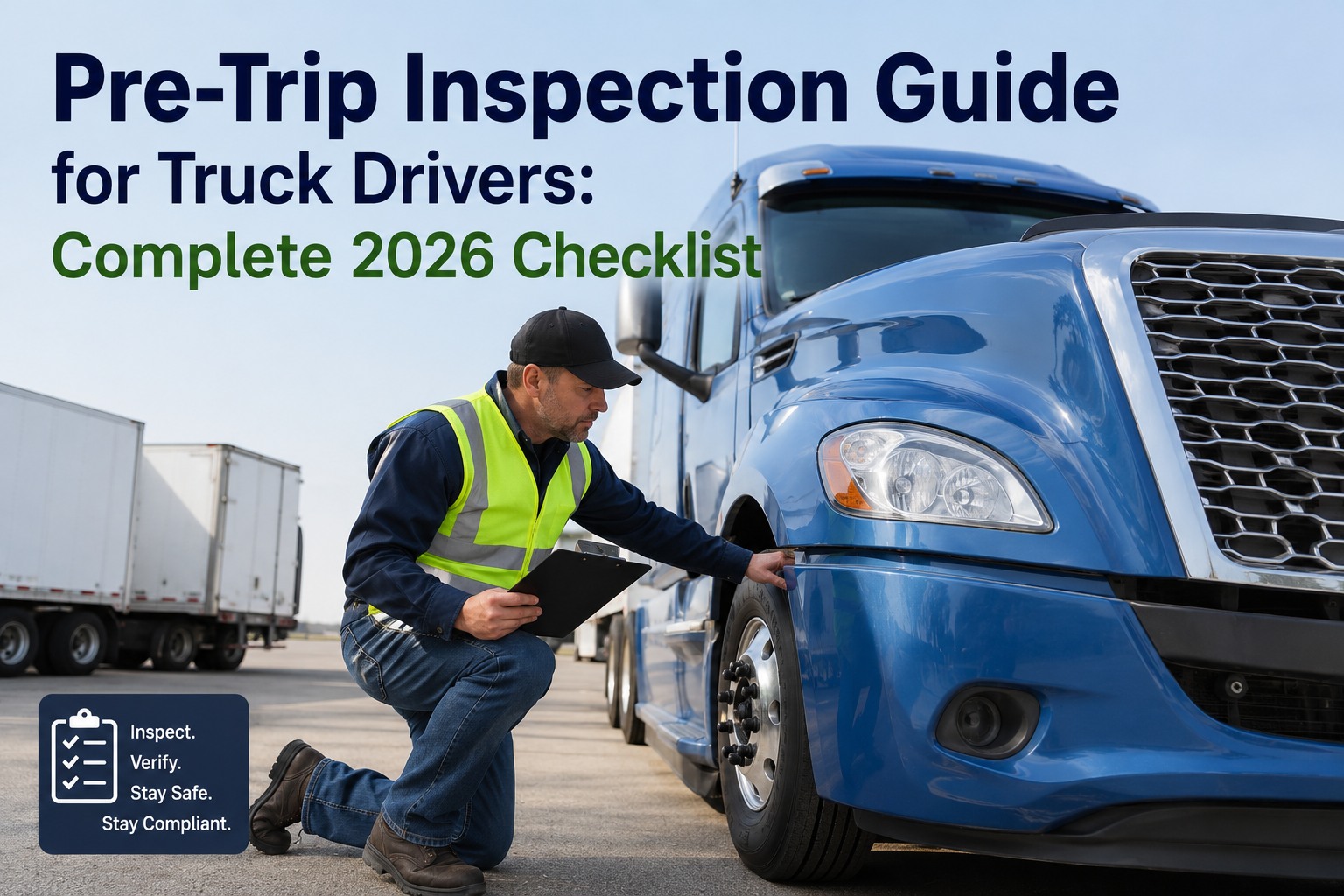
The trick to a fast, complete inspection is a fixed path — the same loop every time, so nothing gets skipped. This is the FMCSA-recommended method, adapted for a delivery van or box truck. Start at the front and circle the vehicle.
Vehicle sits level, no fluid puddles underneath. Headlights, turn signals, and hazards work. Body panels and bumper undamaged.
Quick under-hood look: oil and coolant levels, no belts frayed, no obvious leaks or loose wiring. Windshield washer fluid topped up.
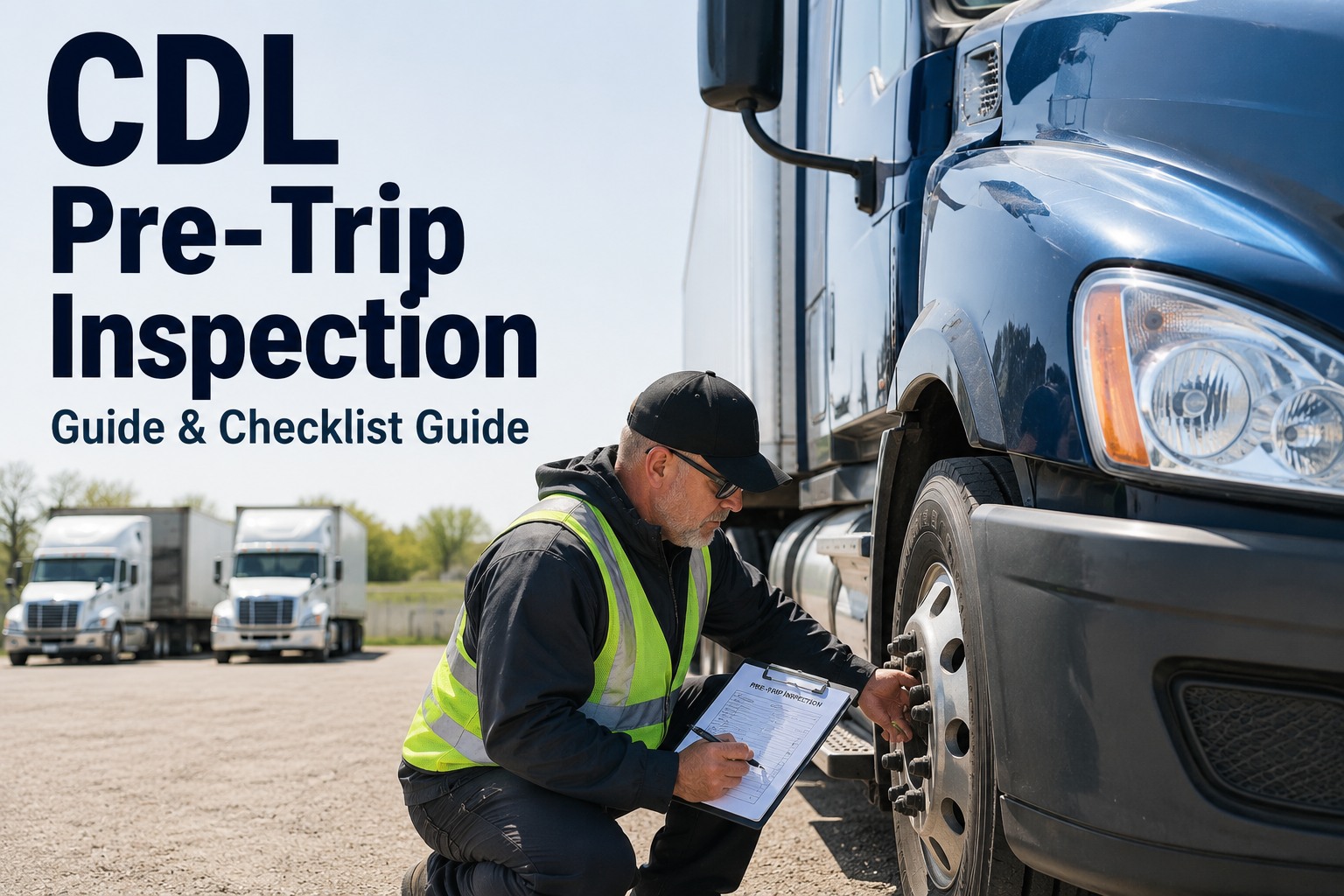
Front and rear tire tread and pressure, no cuts or bulges. Lug nuts tight, no rust trails. Mirror clean and secure. Fuel cap sealed.
Brake lights, tail lights, reverse lights, and reflectors. Doors and latches secure. Cargo area load bars and straps in place.
Same tire, wheel, and mirror checks as the driver side. Marker lights and reflectors clean and working. No body damage.
Seatbelt, horn, wipers, and defroster work. Dash warning lights clear after start. Windshield and windows clean, no cracks in view.
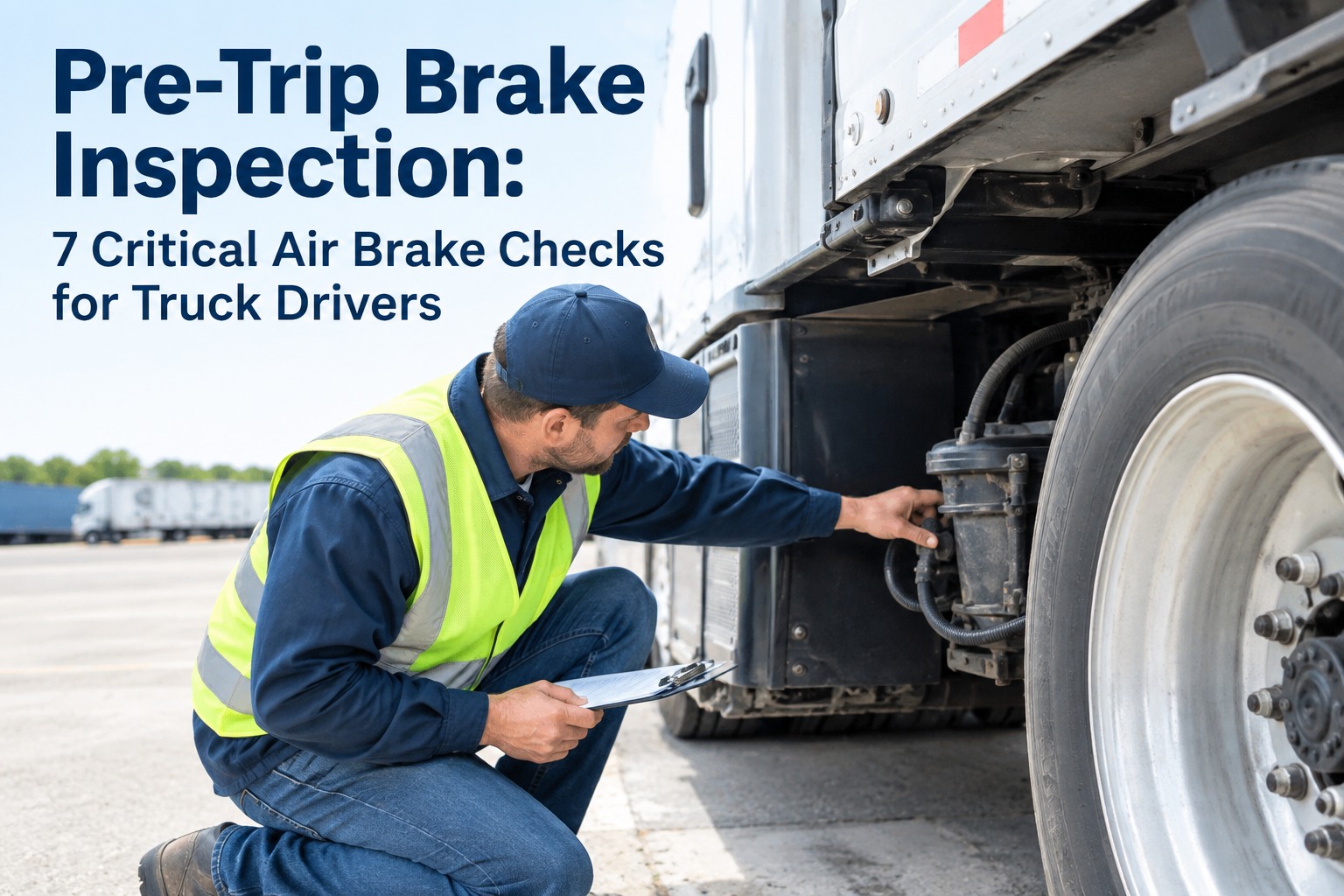
Press the brake pedal — firm, not spongy. Parking brake holds. Fire extinguisher charged, reflective triangles and first-aid kit present.
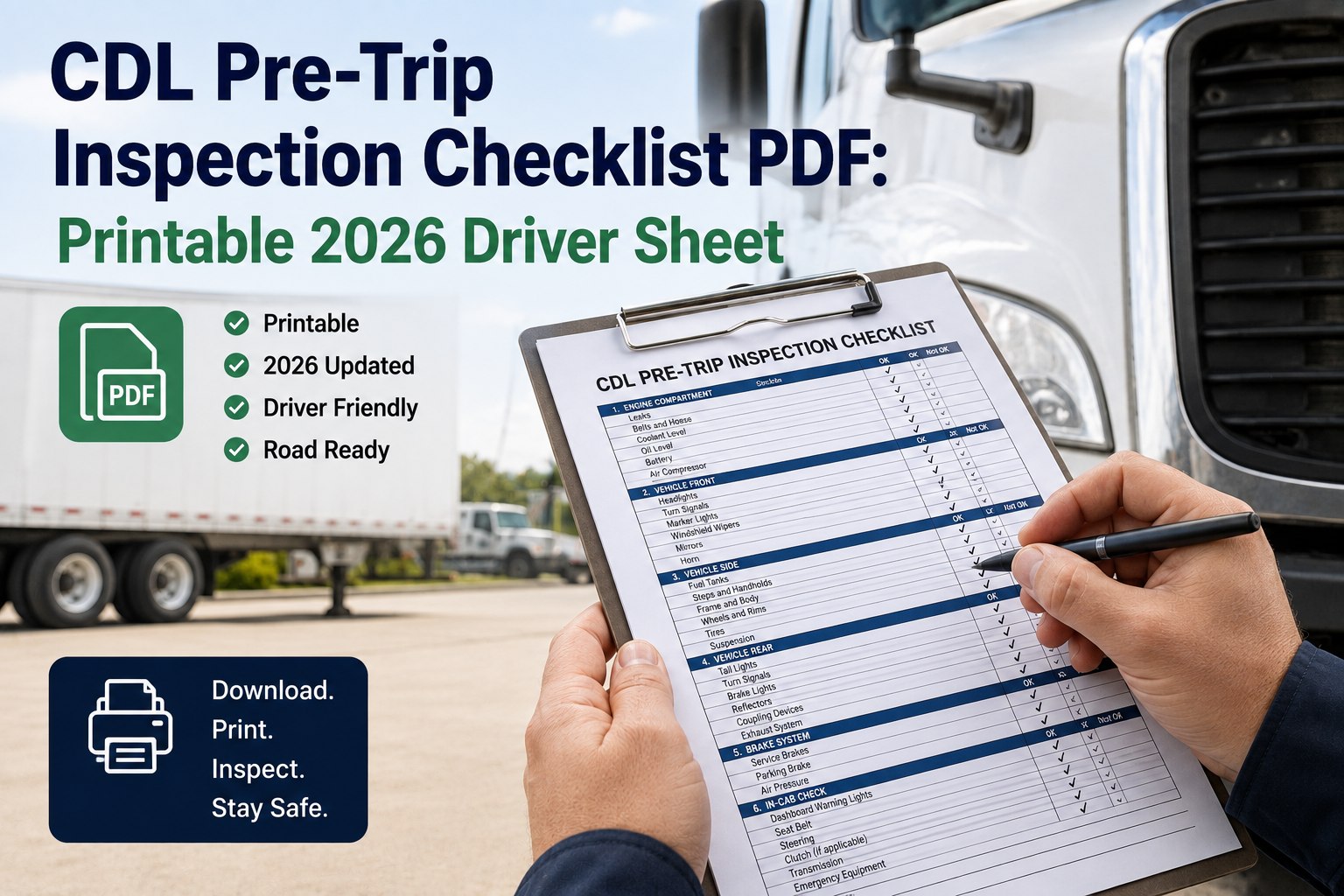
The Printable Checklist
Here's the whole routine as a scannable list — tape it to the dash, or better, run it on a phone where each check is a tap and a defect becomes a work order automatically. Every item maps to an FMCSA-required category.
- Tread depth adequate, even wear
- No cuts, bulges, or exposed cord
- Pressure correct (use a gauge)
- Lug nuts tight, no rust trails
- Headlights, high beams, hazards
- Brake, tail, reverse lights
- Turn signals front and rear
- Markers and reflectors clean
- Windshield clean, no cracks in view
- Both mirrors secure and adjusted
- Wipers and washer working
- Windows roll and seal
- Firm brake pedal, no sponginess
- Parking brake holds
- Steering free, no excess play
- No warning lights after start
- Panels, bumper, doors undamaged
- Latches and locks secure
- Load restrained, straps sound
- No fluid leaks underneath
- Seatbelt and horn work
- Fire extinguisher charged
- Reflective triangles present
- First-aid kit stocked
Skip the Paper — Run It on a Phone
Truck Inspection & Maintenance turns this walkaround into a guided digital checklist your drivers finish in under two minutes. Defects are captured with a photo, a work order fires to maintenance automatically, and every inspection is timestamped and stored as a compliant DVIR — no lost forms, no illegible handwriting.
Pre-Trip vs. DVIR: Know the Difference
Drivers mix these two up constantly, and the confusion causes both wasted paperwork and missed compliance. They're related but distinct — here's the clean version.
The walkaround itself — the physical act of confirming the vehicle is safe before your route. Under 49 CFR 392.7, you may not operate a vehicle unless satisfied it's in good working order. No written form is federally required just for this step on property-carrying vehicles.
The written Driver Vehicle Inspection Report under 49 CFR 396.11, completed at the end of the workday to document any defects found. For delivery/property vehicles it's required when a defect exists. The next driver reviews and signs it before rolling — that's the compliance chain.
Why Digital Beats the Clipboard
A paper checklist is better than no checklist — but it fails in the ways that matter most: it gets lost, it gets pencil-whipped, and nobody sees the defect until the form surfaces days later. Digital closes every one of those gaps.
- Forms get lost or go illegible
- Easy to "pencil-whip" without looking
- Defects sit unseen until the form turns up
- No proof the inspection actually happened
- Painful to retrieve during an audit
- Guided checklist — no item skipped
- Photo evidence proves the check was done
- Defects route to maintenance instantly
- Timestamp and GPS on every report
- Full history exported in seconds for audits
Frequently Asked Questions
If the vehicle meets the commercial motor vehicle threshold, yes — under 49 CFR 392.7 a driver may not operate it unless satisfied its parts and accessories are in good working order, and 49 CFR 396.13 requires reviewing the last DVIR before driving. Even for smaller vans below the CMV threshold, a daily walkaround is a strong best practice that prevents breakdowns, failed deliveries, and liability. The two minutes it takes is trivial next to a roadside failure. Start a free trial to standardize it across your fleet.
For a delivery van or light box truck, a focused walkaround runs about two minutes with a checklist — faster than a full CDL tractor-trailer inspection because there's no trailer, coupling, or air-brake sequence to work through. Digital tools make it even quicker by guiding the driver item to item. The goal isn't speed for its own sake; it's a repeatable path that never skips tires, lights, or brakes.
Yes. FMCSA allows electronic DVIRs under 49 CFR 390.32 as long as they capture the required information, include electronic signatures and timestamps, and are retained per the rules. Carriers increasingly prefer digital because it improves accuracy and compliance rates and creates a defensible audit trail. A guided app also prevents skipped items and routes any defect straight to maintenance. See how the digital DVIR works.
Tire pressure and lighting top the list. A tire can be significantly under-inflated and still look normal from the seat, which is why a gauge beats a glance — tires alone account for roughly a fifth of out-of-service violations. Burned-out brake and marker lights are the other frequent miss, since the driver can't see them without walking to the rear. Safety gear — a charged extinguisher and reflective triangles — is quick to check but often forgotten.
Document it and don't operate the vehicle if the defect affects safe operation. Report it so the carrier can repair or confirm it before dispatch — that's the core of the inspection chain. With a paper form, that means writing it up and hoping it's seen; with a digital DVIR, logging the defect fires a work order to maintenance instantly and flags the unit, so it can't quietly go back out unrepaired. Closing that defect-to-repair loop fast is what actually keeps the fleet safe. Start free and close the loop automatically.
Make Every Route Start With a Two-Minute Check
Truck Inspection & Maintenance gives last-mile fleets a guided pre-trip built for vans and box trucks — every walkaround item on the driver's phone, photo-documented defects, instant work orders, and compliant DVIRs stored and searchable. Fewer breakdowns, fewer missed deliveries, and a clean record every time an auditor asks.