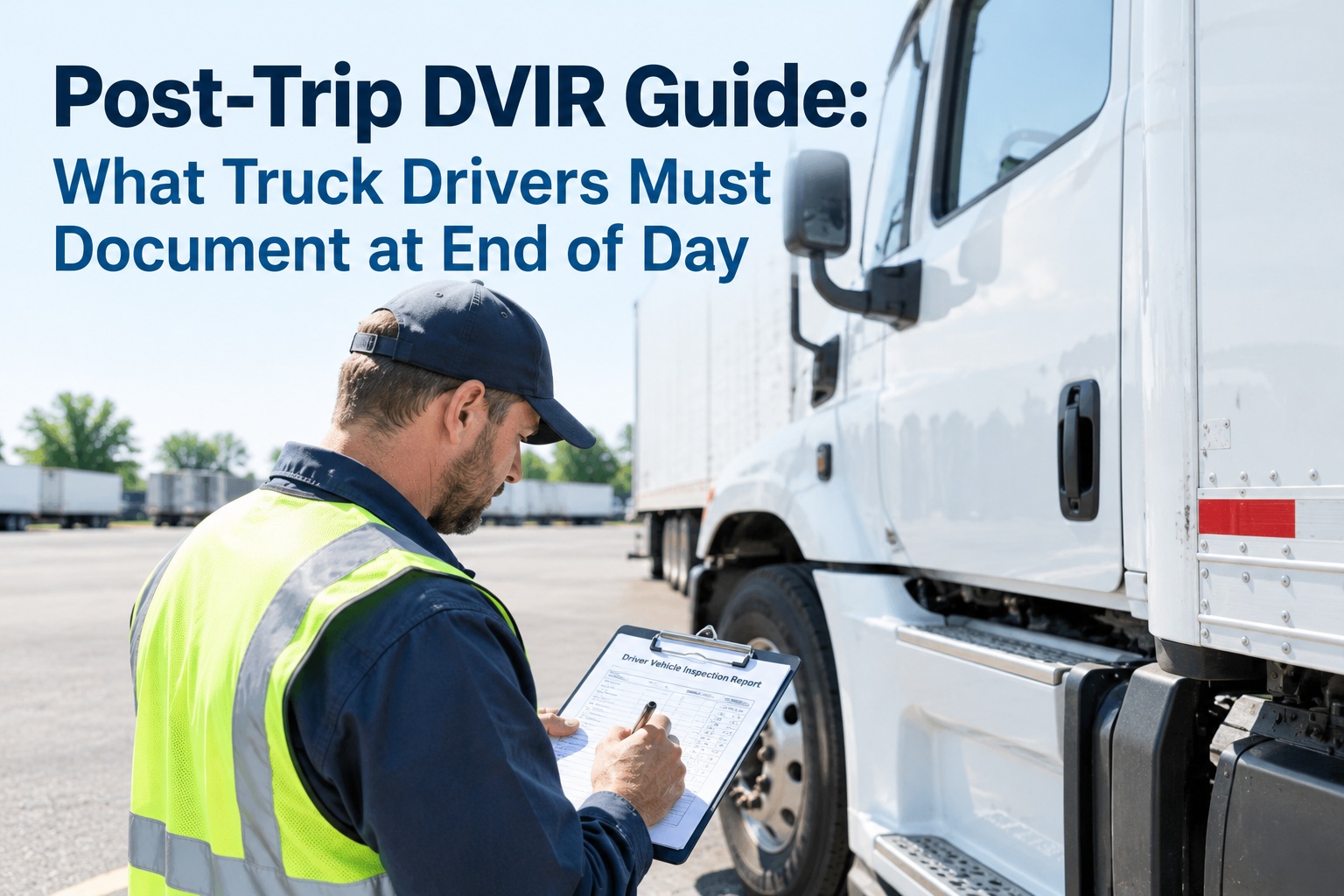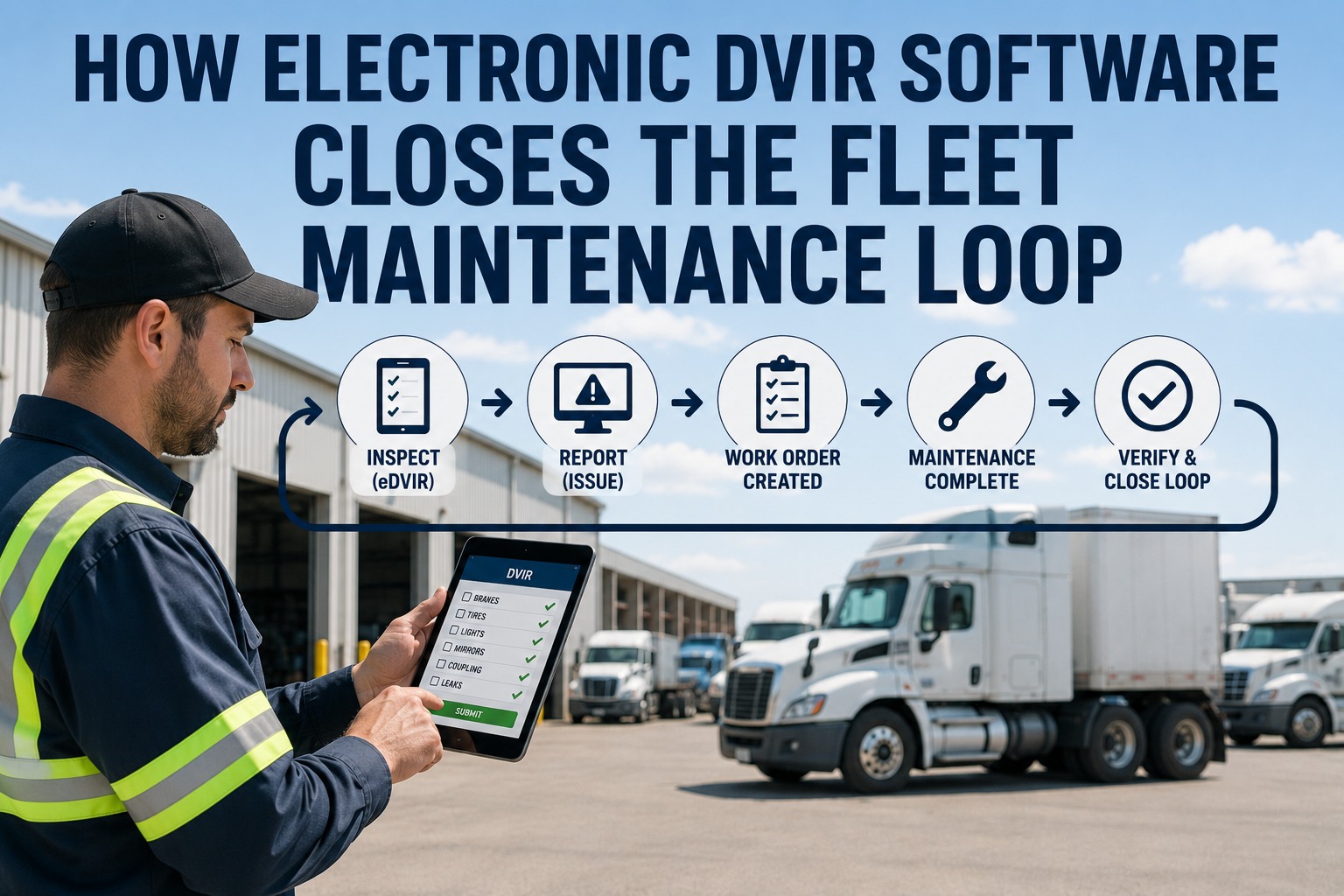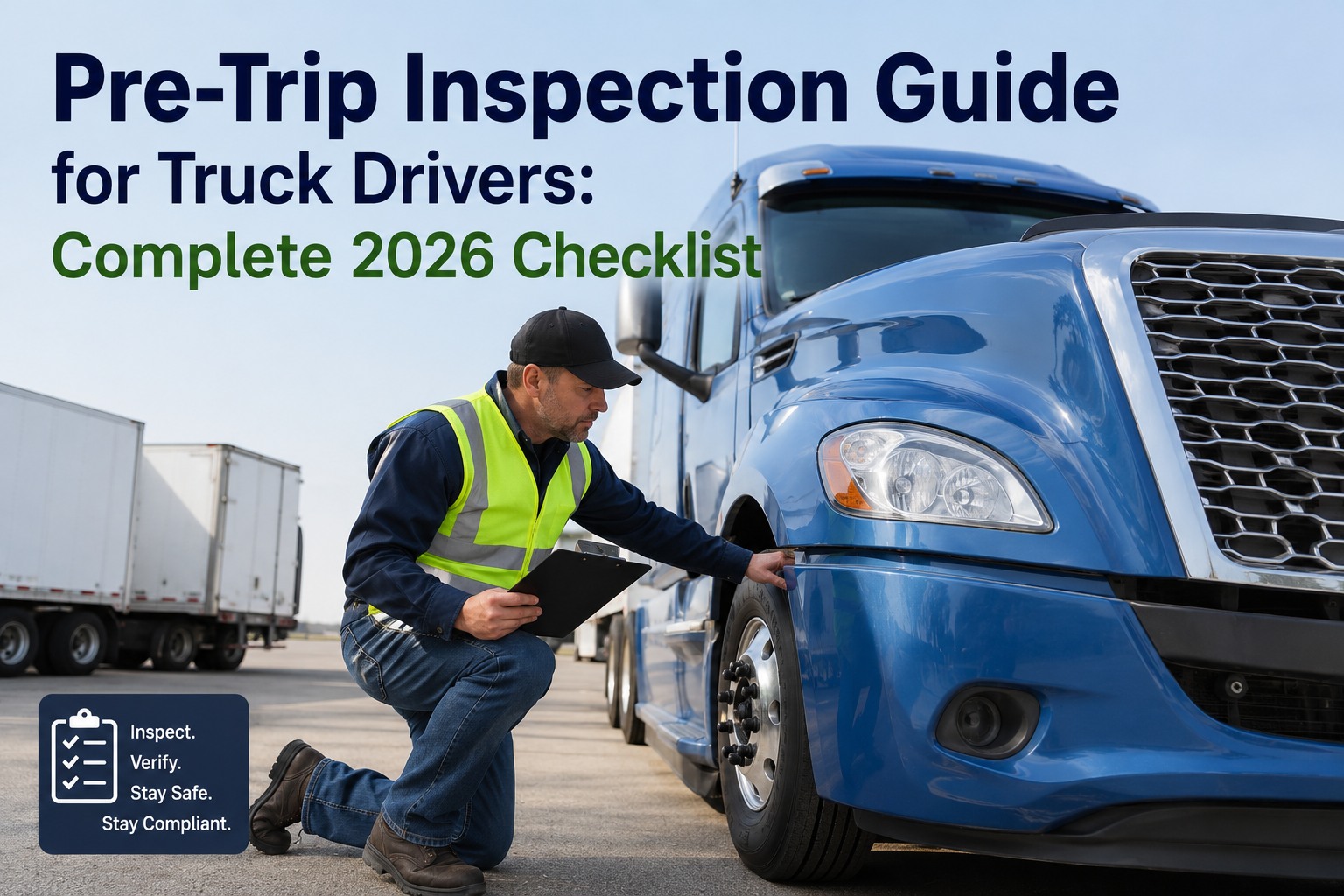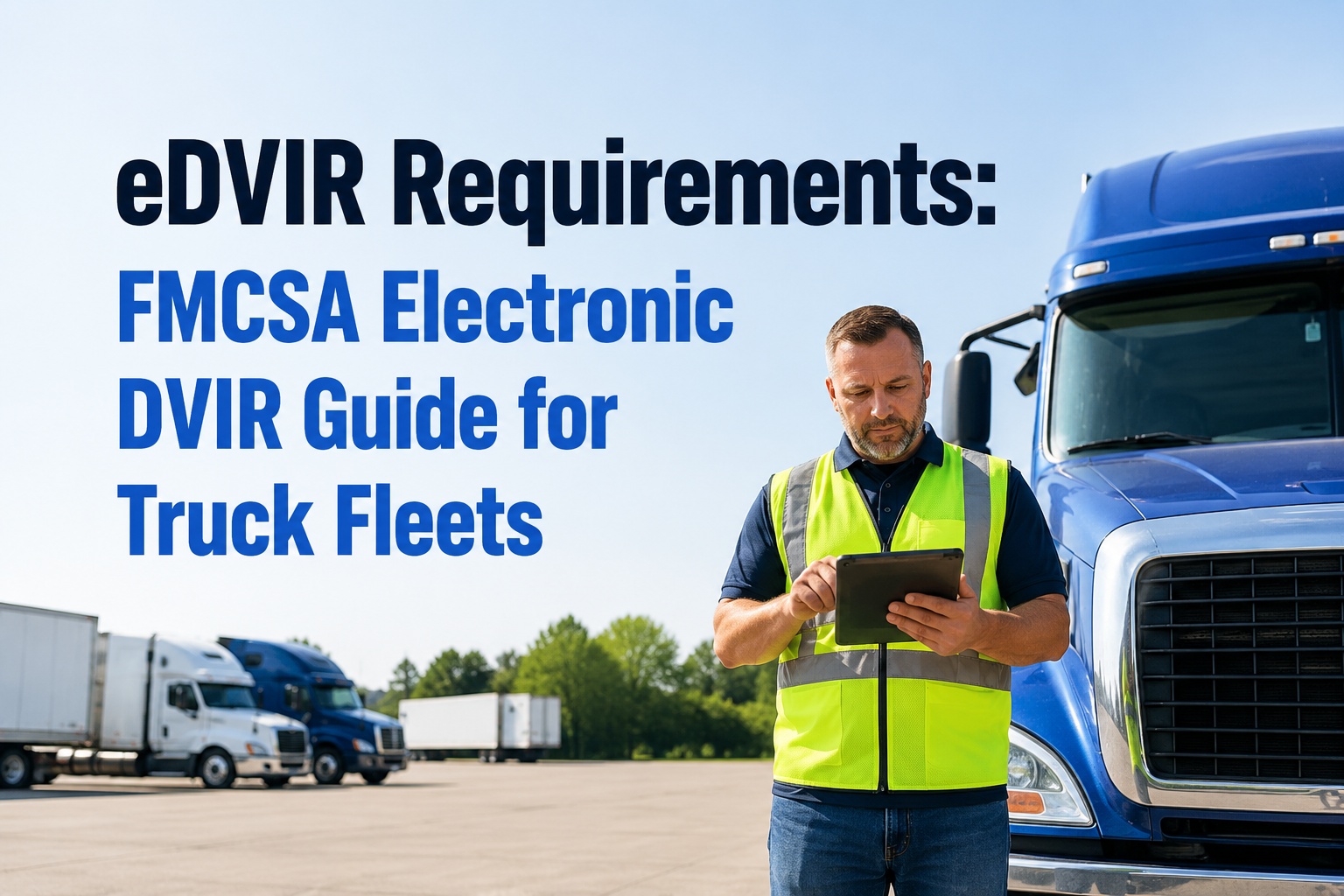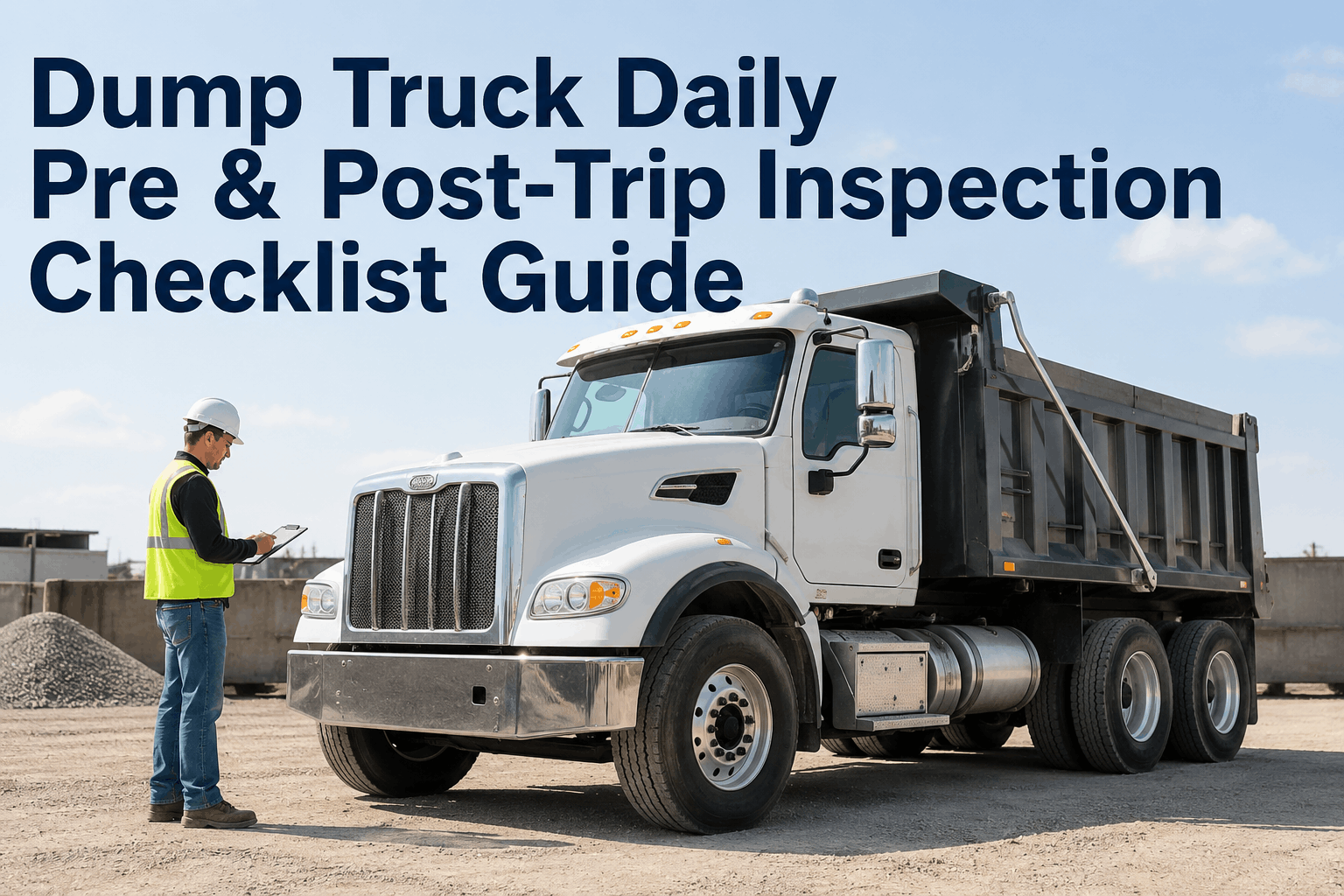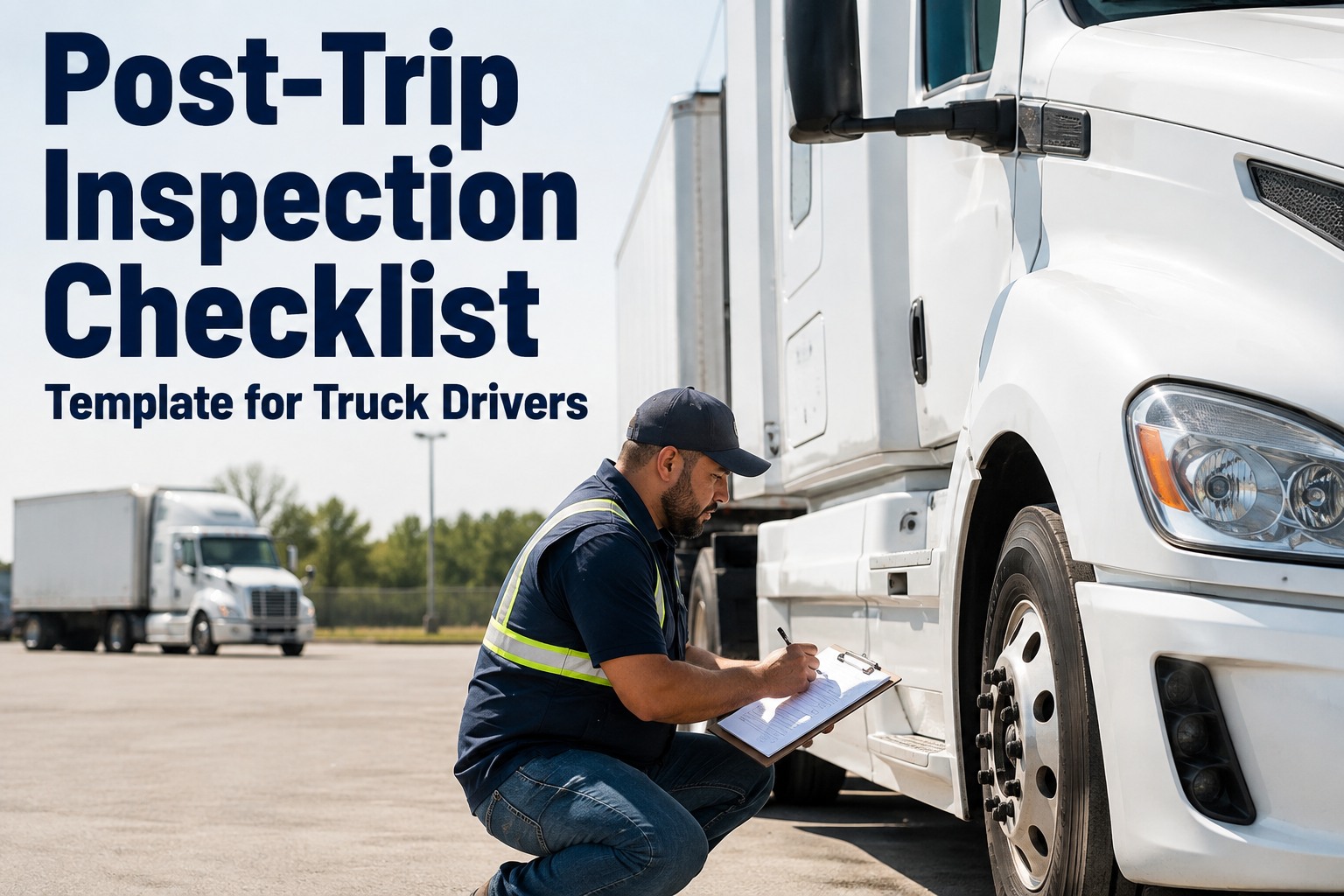
Here's the truth most CDL training programs skim over: FMCSA doesn't technically mandate a formal "post-trip inspection" the way it mandates the pre-trip. What 49 CFR 396.11 actually requires is the DVIR — a written report of defects discovered during the day's work. The post-trip inspection is simply how a driver finds those defects. In practice, you do both — walk the truck at end of shift, then document what you found — and the document is the one FMCSA auditors examine first. FMCSA estimates DVIRs prevent approximately 14,000 accidents annually through early defect identification, yet industry data shows 95% of all DVIRs report no defects — a statistic that raises serious questions about inspection quality across the fleet industry. The post-trip is also where the real maintenance value lives: defects found at end of shift give technicians 8–12 hours overnight to diagnose and repair, so trucks roll out clean the next morning instead of delaying departure. And with FMCSA's eDVIR final rule taking effect March 23, 2026, every remaining regulatory ambiguity about digital post-trip inspections has been resolved — paper is optional, electronic is fully compliant. This guide walks through the exact 11 components §396.11 requires, the 3-signature chain of custody that trips up nearly every fleet in an audit, a downloadable post-trip template, the most common mistakes, and how Truck Inspection & Maintenance automates the whole chain digitally — free forever for up to 3 vehicles.
Post-Trip Inspection Checklist Template: The Complete 2026 Guide
The DVIR that prevents 14,000 accidents a year — and the 3-signature chain that trips up every audit.
Post-Trip vs Pre-Trip — The Distinction That Matters
Both inspections cover the same 11 FMCSA components, but they serve different purposes in your compliance workflow. Confusing them is how fleets miss half their required documentation:
Before Departure
End of Shift
The 2014 "No-Defect" Rule
Since 2014, a property-carrying CMV needs NO DVIR on a day with zero defects — but nearly every compliance expert recommends filing a "no-defect" report anyway, because it builds a positive record that speaks for itself in an audit. Passenger-carrying CMVs must file a DVIR every day regardless of defects.
The 11 Required Components Under §396.11
Every DVIR must cover these 11 specific parts and accessories — no exceptions. Missing any one during an audit is a violation regardless of whether the truck was actually safe. This is the exact list FMCSA auditors check against:
Service Brakes
Trailer brake connections, application response, no pulling under braking, air pressure holds.
Parking Brake
Full hold engagement, functional release, no drift when set on incline.
Steering Mechanism
Under 10° play, no unusual noise, no binding through full turn range.
Lighting Devices
All headlights, tail, brake, turn, marker, and clearance lamps functional at shift end.
Reflectors
DOT reflective tape intact on truck and trailer, no missing or damaged sections.
Tires
Tread depth check, sidewall damage from day's operation, no cuts or embedded debris.
Horn
Both electric and air horns operational — required functional item under §396.11.
Windshield Wipers
Blade condition, washer fluid level, wipers clear entire windshield sweep area.
Rear-Vision Mirrors
All mirrors adjusted, no cracks or damage, secure mounting brackets.
Coupling Devices
Fifth wheel, kingpin, safety chains, glad hands, electrical connection — combination vehicles.
Emergency Equipment
Fire extinguisher charged and dated, warning triangles present, spare fuses (if fuse type).
The 5-Step Post-Trip Flow
Do the same sequence every shift-end. Skipping order or steps creates the DVIR gaps auditors find. Under 10 minutes total when you follow this flow:
Systematic Walkaround
Same clockwise pattern every time. Cover all 11 §396.11 components plus any dump/tanker/reefer specifics for your vehicle type. 5–7 minutes for tractor + trailer.
Photograph Defects
Every defect gets a photo. Serial number of the part, tread depth against a ruler, oil leak dripping. Photos convert "driver claims" into "documented evidence" — protects driver, fleet, and shop.
Complete the DVIR
Vehicle ID, date, time, odometer reading. Note each defect with location and severity. Sign and date the report. Missing signature = missing document = compliance violation.
Route to Maintenance
Deliver DVIR to shop or upload digitally. Overnight is your repair window — get it there while the shop has time to diagnose, order parts, and complete repair before next dispatch.
Secure Vehicle
Keys out. Wheel chocks if grade. Body cavity locked. Doors secured. Never leave a truck with a known unrepaired safety defect for next-day dispatch — that's how DOT complaints start.
The 3-Signature Chain of Custody
This is the single most audited element of DVIR compliance — and where most fleets fail. Every DVIR that contains a defect requires three signatures, each timestamped, forming an unbroken chain from discovery to next-shift acknowledgment. Breaking this chain is one of the most common violations cited during DOT audits:
Driver
End of shift. Inspects all 11 components, documents defects on DVIR, signs and dates the report. Chain starts here.
Mechanic
Certifies whether defects were repaired OR determined unnecessary to repair. Signs and dates the certification. This is the step most often skipped.
Next Driver
Before dispatch, reviews the mechanic's certification and signs acknowledging repairs made or deferred. Chain closes here. Truck can now be dispatched.
Downloadable Post-Trip Template Layout
Every compliant DVIR needs this exact structure. Copy this template onto paper if you're not digital yet — but if a defect ends up unreadable, unsigned, or missing a section, you're not covered. Better: get a digital DVIR that enforces the fields:
Enforce the 3-signature chain automatically — free for up to 3 vehicles
Truck Inspection & Maintenance replaces paper post-trip DVIRs with FMCSA-compliant digital records. Every §396.11 component captured, defects photographed, driver signs on screen. Mechanic gets instant notification and certifies digitally. Next driver literally cannot dispatch until acknowledgment is signed. Chain closes itself. Sign up free in 10 minutes.
The 6 Most Common Post-Trip Mistakes
Every fleet safety manager sees the same DVIR failures repeat across drivers, shifts, and years. Recognizing them lets you build training that actually catches them. If your fleet does any of these, address them today — not after the next audit finds them:
Rushing at End of Shift
Driver's tired, truck made it back, walkaround gets 30 seconds and a signature. That's exactly what auditors look for and what accidents come from.
"No Defects" Every Day
95% of DVIRs report no defects. Zero defects across a whole fleet all week is statistically impossible — auditors know this and dig deeper.
Missing Signatures
DVIR signed by driver but not mechanic. Or mechanic signed but next driver didn't acknowledge. Chain broken = compliance violation regardless of actual repair.
Vague Defect Descriptions
"Brakes weak" is not documentation. "Left rear wheel — pushrod travel 2.5 inches at 90 PSI, exceeds re-adjustment limit" is documentation.
Passenger CMV Missing Reports
Passenger-carrying CMVs need a DVIR every day regardless of defects. Property CMVs got the 2014 exception. Buses did not. Missing daily DVIRs = major violation.
Not Reviewing Prior DVIR
Pre-trip driver must review the previous post-trip DVIR and sign acknowledgment. Skipping this step is one of the most common CVSA citations at roadside stops.
Paper vs Digital Post-Trip DVIR
The FMCSA eDVIR final rule (March 23, 2026) resolved every regulatory question about digital post-trip inspections. Electronic is fully compliant, more auditable, and enforces the chain of custody automatically. Here's the side-by-side that matters:
Traditional Method
Truck Inspection & Maintenance
Frequently Asked Questions
Is a post-trip inspection legally required by FMCSA?
Technically no — but the DVIR is. FMCSA regulation 49 CFR 396.11 requires drivers to prepare a written report at the completion of each day's work listing any defects discovered during operation. The post-trip inspection is how you find those defects. For property-carrying CMVs, no DVIR is needed on a day with zero defects (2014 rule change). Passenger-carrying CMVs need a DVIR every day regardless. Most compliance experts recommend filing a "no-defect" DVIR anyway to build a positive record.
What are the 11 components required in a post-trip DVIR?
Under §396.11(a)(1): service brakes (including trailer brake connections), parking brake, steering mechanism, lighting devices and reflectors, tires, horn, windshield wipers, rear-vision mirrors, coupling devices (combination vehicles), wheels and rims, and emergency equipment. Missing any component during an audit is a violation regardless of whether the truck was actually safe to operate. This exact list is what FMCSA auditors check against.
What's the 3-signature chain of custody?
Every DVIR containing defects requires three signatures forming an unbroken chain: driver (documents defects at shift end), mechanic (certifies defects repaired or determined unnecessary), and next driver (acknowledges certification before operating). Breaking this chain is one of the most common violations cited during DOT audits. Digital DVIR systems enforce it automatically — paper systems rely on humans remembering to sign at each step.
How long should I keep DVIR records?
FMCSA requires 3 months minimum retention for DVIRs. Many fleets keep records for 12+ months to cover CSA audit windows and insurance claim periods. Digital DVIR systems retain records indefinitely with no storage cost — a filing-cabinet worth of paper turns into searchable database entries. Retrieving a specific DVIR from 2 years ago drops from hours of searching to under 10 seconds. Talk to our team about audit-ready record retention.
Are digital DVIRs fully FMCSA compliant in 2026?
Yes — unambiguously. FMCSA final rule FMCSA-2025-0115, effective March 23, 2026, explicitly authorized electronic DVIRs under 49 CFR 396.11 and 396.13. Digital signatures fully replace wet ink. eDVIRs with timestamped photos, GPS verification, and complete component checklists exceed the minimum standard — providing more auditable data than paper ever could. Every regulatory ambiguity about digital post-trip inspections has been resolved.
How does Truck Inspection & Maintenance handle post-trip DVIRs?
Truck Inspection & Maintenance delivers a digital post-trip workflow covering all 11 §396.11 components with mandatory fields that cannot be skipped, photo documentation, automatic timestamps and GPS, and enforced 3-signature chain of custody. Defects route to maintenance instantly for overnight repair. Next driver literally cannot dispatch until acknowledgment is signed. DOT auditors access 90+ days of records in seconds. Free forever for up to 3 vehicles. Sign up in 10 minutes.
Every §396.11 component, every signature, every timestamp — captured and enforced automatically.
Every post-trip DVIR — driver signature, defect photo, mechanic certification, next-driver acknowledgment — captured digitally with GPS location and tamper-proof timestamp. The 3-signature chain that trips up every paper fleet enforces itself. Defects route to shop instantly for overnight repair. Fully FMCSA-compliant under the March 2026 eDVIR final rule. Free forever for up to 3 vehicles with no hardware and no contracts. Set it up in 10 minutes.