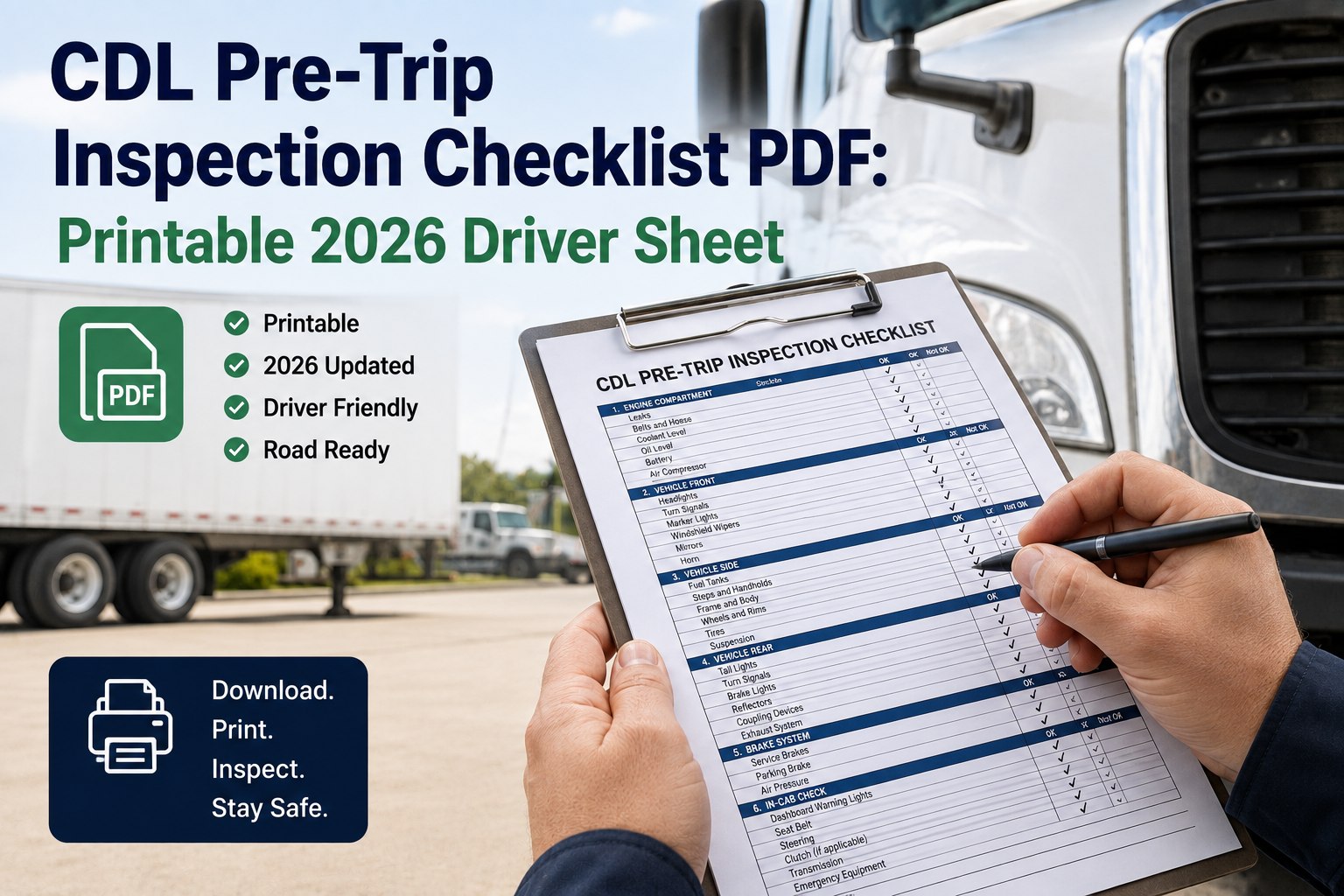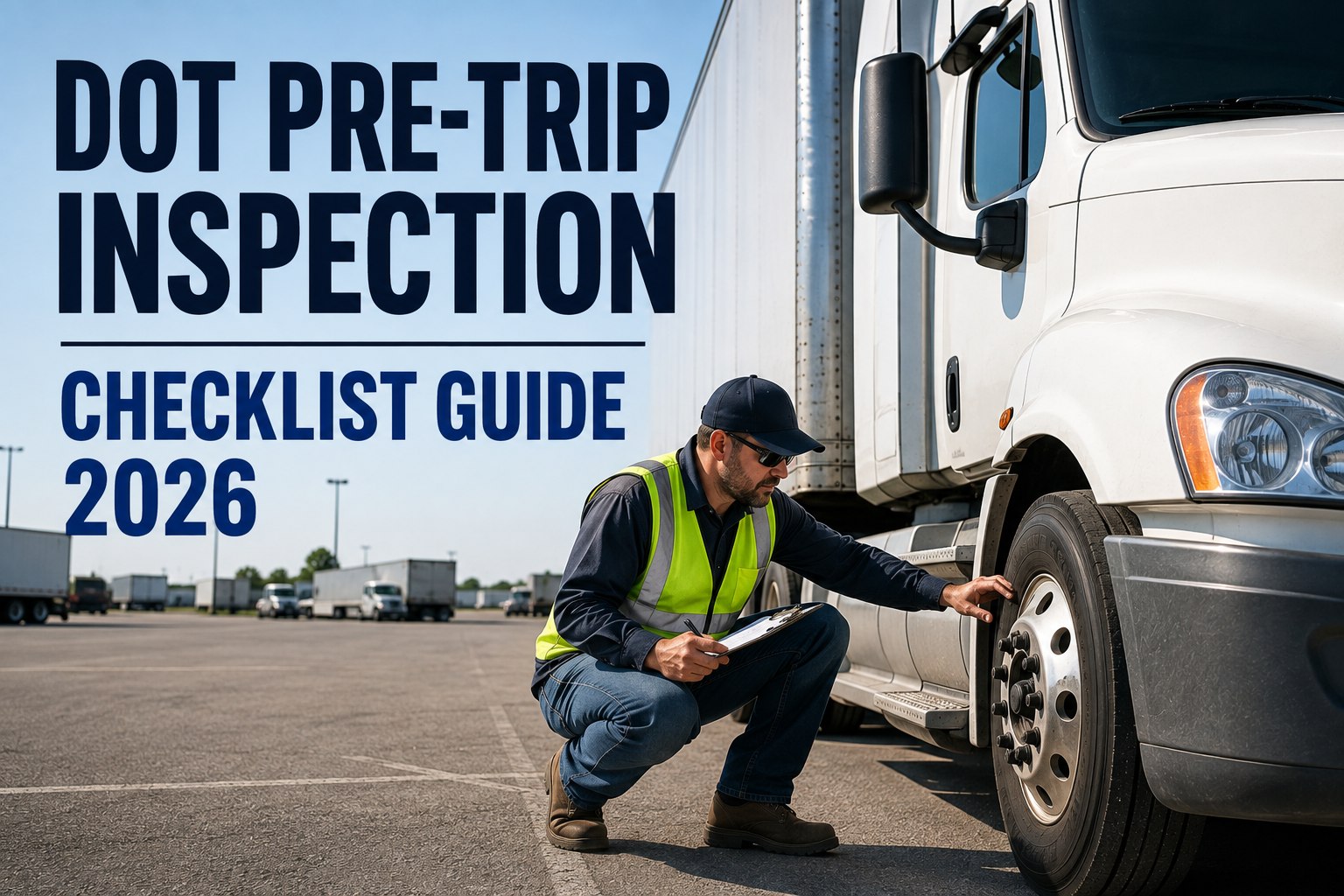
The DOT pre-trip inspection isn't optional. Under FMCSA §396.13 and §396.11, every driver of a commercial motor vehicle over 10,001 pounds GVWR must inspect the vehicle before operating, review the previous DVIR, and file a written report of any defect at end of day. Skip it and the consequences stack fast: roadside inspection violations averaging $1,200 each, out-of-service orders that ground the truck for hours or days, CSA score damage that raises insurance premiums, and — for the fleet — audit findings that can trigger DOT compliance reviews. Yet the average fleet still runs pre-trip on a photocopied checklist filled out in 90 seconds, filed unread, and stored for the required 3 months in a box no one will open until an auditor asks for it. This guide provides the complete DOT pre-trip inspection checklist covering all FMCSA-required points across 8 walkaround zones, the exact regulations that apply, the 6 levels of DOT roadside inspection your drivers will face, the top out-of-service violations to prevent, and how digital DVIR software turns compliance from paperwork into automation. Download the printable PDF below, or skip paper entirely and start a free trial of our DOT compliance platform, or reach out to our support team for a walkthrough.
DOT Pre-Trip Inspection Checklist & PDF Guide (2026)
Every FMCSA §396.11 required inspection point, the 6 DOT roadside inspection levels drivers will face, top out-of-service violations to prevent, and the digital DVIR alternative to paper compliance.
The Federal Regulations Behind DOT Pre-Trip
Every fleet operator should know the exact regulations that require pre-trip inspection, what those regulations actually say, and where the enforcement bite comes from. Vague understanding is how expensive compliance mistakes happen.
The 6 DOT Roadside Inspection Levels
Every driver should know what level of inspection they're facing at a roadside stop. Different levels check different things — and drivers who understand the level focus their answers correctly.
The Complete 8-Zone DOT Pre-Trip Checklist
Walk the truck in the same physical order every day — 8 zones, counterclockwise starting at the driver door. This sequence is used in the digital DVIR platform and the printable checklist below.
Skip paper compliance entirely
Voice-enabled digital DVIR with guided walkaround, structured defect capture, auto-routing to maintenance, and complete FMCSA §396.11 audit trail. Every driver becomes a real inspector.
Top 10 Out-of-Service Violations to Prevent
The FMCSA publishes annual data on which violations most often result in Out-of-Service orders at roadside. These 10 categories account for the vast majority. All are pre-trip preventable.
The Cost of Skipping Pre-Trip
Every roadside violation has a direct cost — and cascading costs downstream. Here's what fleets actually pay for defects that should have been caught at pre-trip.
Paper vs Digital DVIR: The Compliance Difference
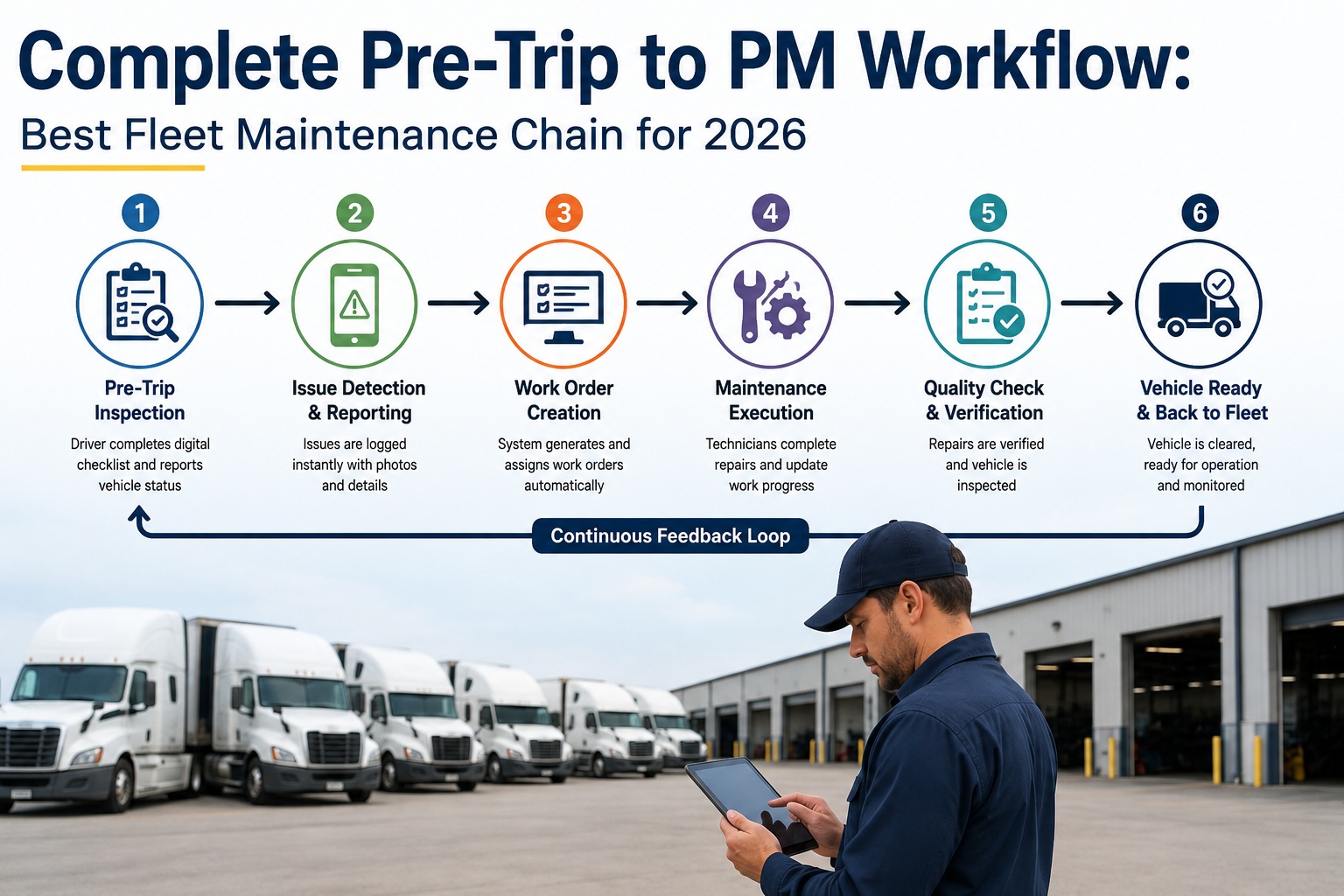
A PDF checklist is better than nothing, but it doesn't meet the "systematic" standard §396.3 expects. Here's what paper can't do that digital DVIR does automatically.
ROI Math for DOT Compliance Automation
Digital DVIR ROI comes from four separate streams — time savings, violation reduction, OOS prevention, and audit defense. Here's the math for typical fleets.
7 Best Practices for DOT Compliance
The fleets that avoid compliance issues do these seven things consistently. The ones that get cited typically skip three or more.
Walk the Same Order Every Day
Eight zones, counterclockwise. When drivers walk the same order every day, missed items become obvious. Random inspection is how "no defects" reports get filed on defective trucks.
Photograph Every Defect
"Air chamber weeping" is a text note. A photo is a work order and audit evidence. Photo evidence separates real inspection from checklist theater — and defends the fleet in disputes.
Route Safety-Critical Defects Same-Shift
Brake, tire, steering, and coupling defects don't wait for next PM. The DVIR must trigger a maintenance work order the same shift — not next Tuesday.
Retain Records 12 Months, Not Just 3
§396.11 requires 3 months. Best practice is 12 months, matching CSA calculation window. Fleets keeping just 3 months lose audit defense capability on older violations.
Track Trends Across the Fleet
Same defect on 8 trucks flags an alignment, parts, or training issue. Individual paper inspections stay individual; digital DVIR turns them into fleet-wide intelligence.
Monitor CSA Scores Monthly
CSA data updates monthly. Fleets checking quarterly miss patterns emerging. Rising Vehicle Maintenance BASIC = pre-trip discipline slipping.
Prepare for Audit Before You Get One
Compliance reviews come with 48-hour notice. Fleets with digital DVIR pull records instantly; paper-based fleets scramble for weeks. Preparation is a system, not an event — talk to our team about audit-ready compliance dashboards.
Frequently Asked Questions
Yes. FMCSA §392.7 requires drivers to inspect certain parts and accessories before operating any commercial motor vehicle over 10,001 pounds GVWR. §396.11 requires a written or electronic Driver Vehicle Inspection Report at the end of each driving day covering brakes, coupling, lights, tires, wheels, mirrors, wipers, horn, and emergency equipment. §396.13 requires drivers to review the last DVIR before operating. See our digital DVIR platform for automated compliance.
FMCSA §396.11(f) requires 3-month retention of Driver Vehicle Inspection Reports from the date of preparation. §396.3 requires maintenance and repair records to be kept for the duration of the vehicle's use plus 6 months. Best practice is retaining DVIRs for 12 months, matching the CSA calculation window. Digital DVIR platforms handle retention automatically.
Consequences cascade: any defect that would have been caught becomes a roadside violation ($300–$1,500 average), potentially an out-of-service order ($4,500 average cost), CSA score damage that raises insurance premiums, and for the fleet, a pattern of violations can trigger a DOT compliance review with fines of $500–$16,000 per violation. Systematic skipping constitutes a §396.3 violation on its own.
Yes. FMCSA §396.11 explicitly permits electronic DVIRs as long as they capture all required elements: driver ID, vehicle ID, date and time, all required inspection points, defect descriptions, driver certification signature, and 3-month retention capability. Digital DVIR is actually more defensible than paper because timestamps and GPS location prove the inspection actually happened.
Level 1 (North American Standard) is the full 37-step inspection including under-vehicle examination — the most thorough level. Level 2 (Walk-Around) covers the same items minus the under-vehicle portion, so the inspector doesn't need to physically get under the truck. Levels 3–6 cover progressively narrower scopes. See the level breakdown above.
Yes — the checklist above prints directly from browser (File to Print). For fleets moving beyond paper compliance, the same 8-zone walkaround structure is built into the digital DVIR platform with voice guidance, structured defect capture, and audit-ready record retention. Start free to try it: sign up here.
Turn paper compliance into automated audit defense
Voice-guided 8-zone walkaround aligned to FMCSA §396.11. Structured defect capture with photo evidence. Auto-routing to maintenance for safety-critical defects. Cloud retention with instant audit retrieval. CSA score dashboards. Fleet-wide defect trend visibility. Everything a DOT-regulated fleet needs to move beyond paper compliance — one platform, one voice interface.