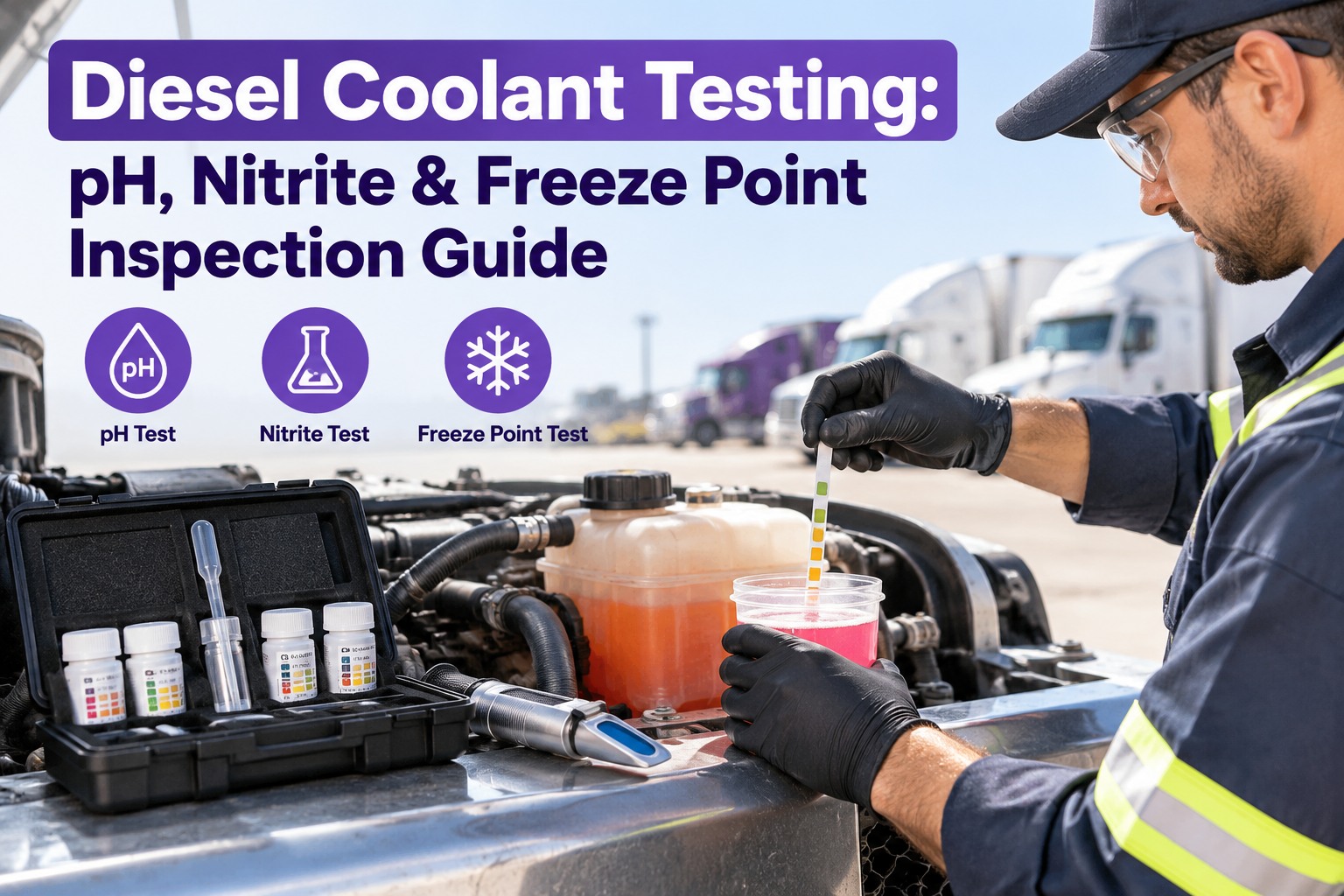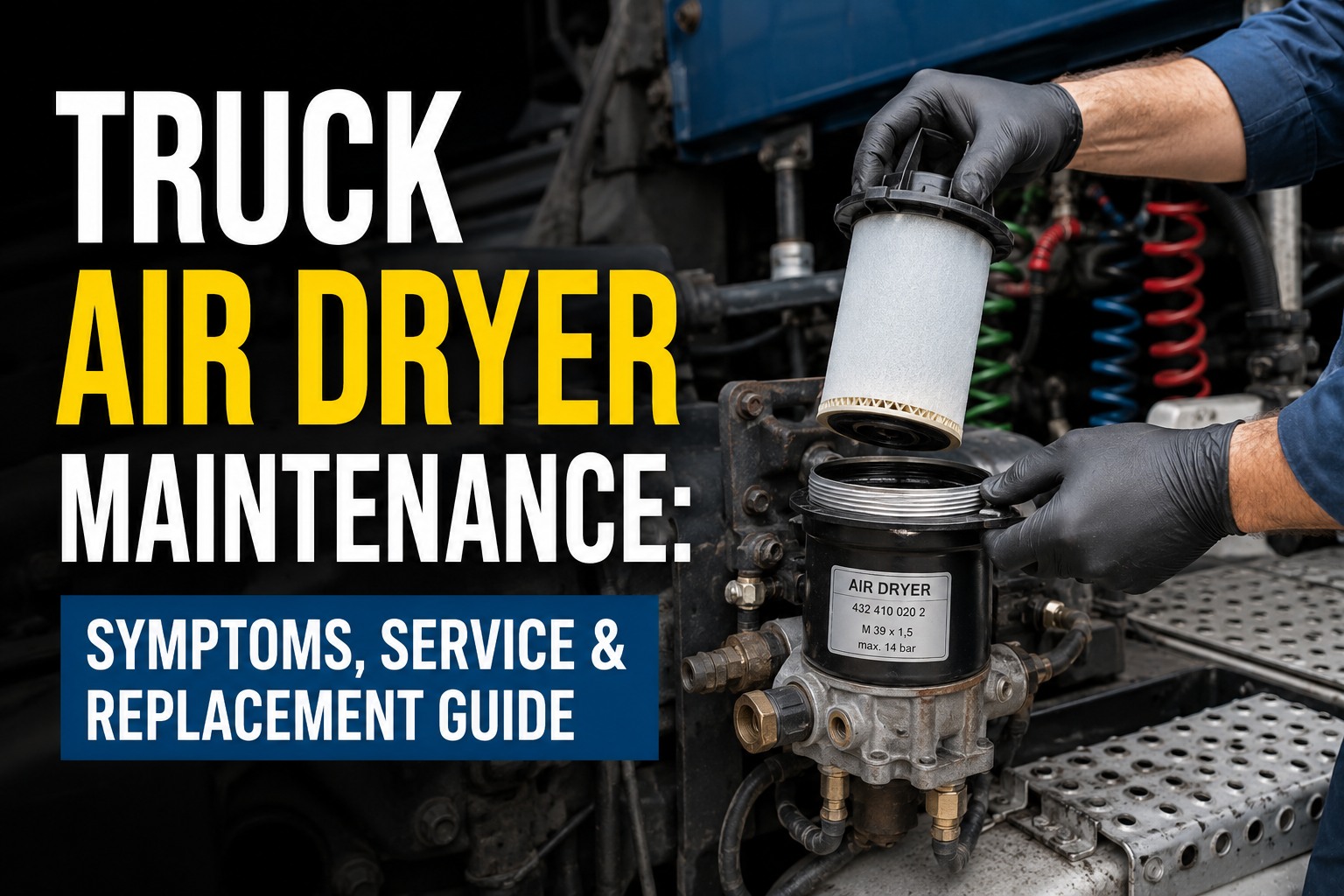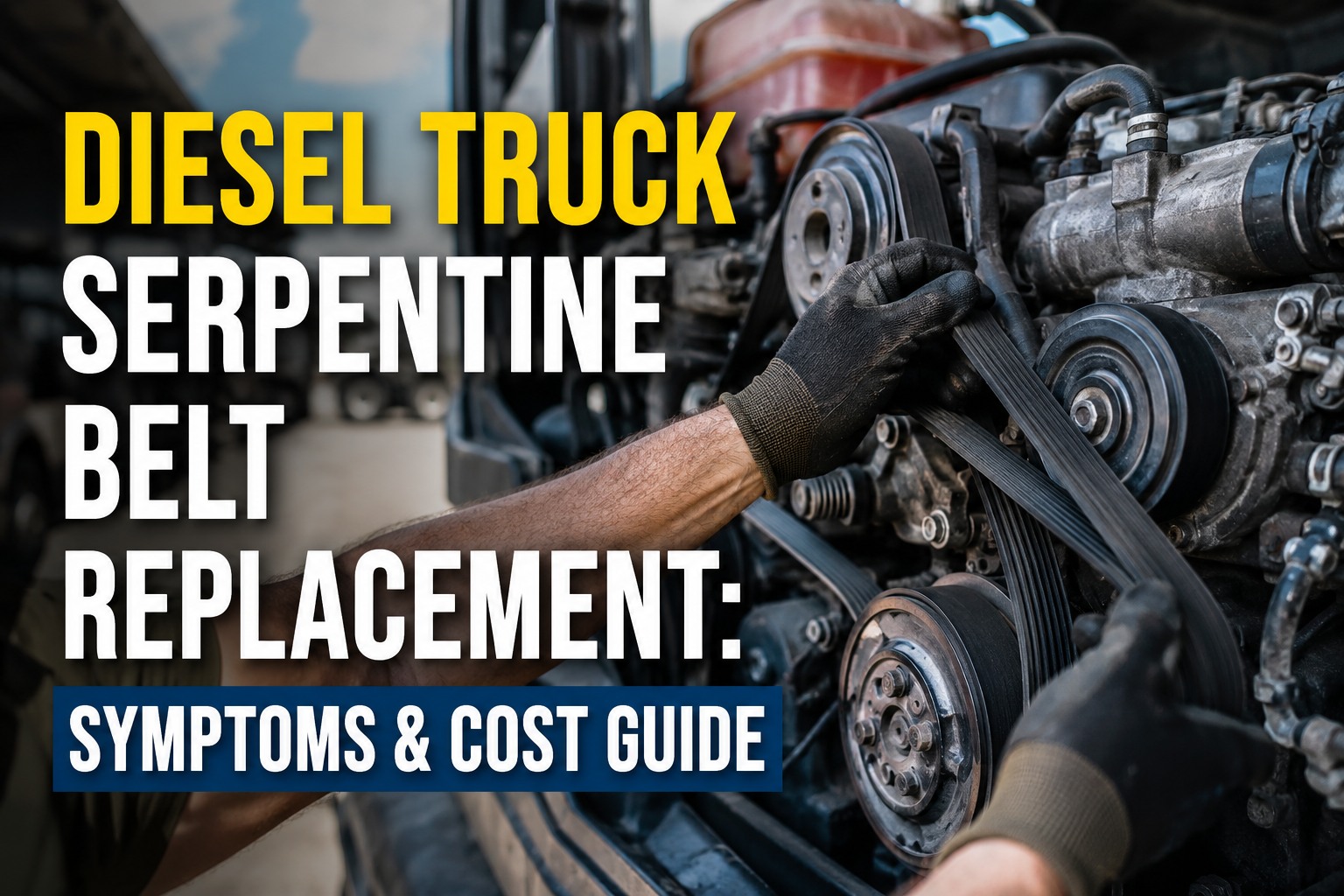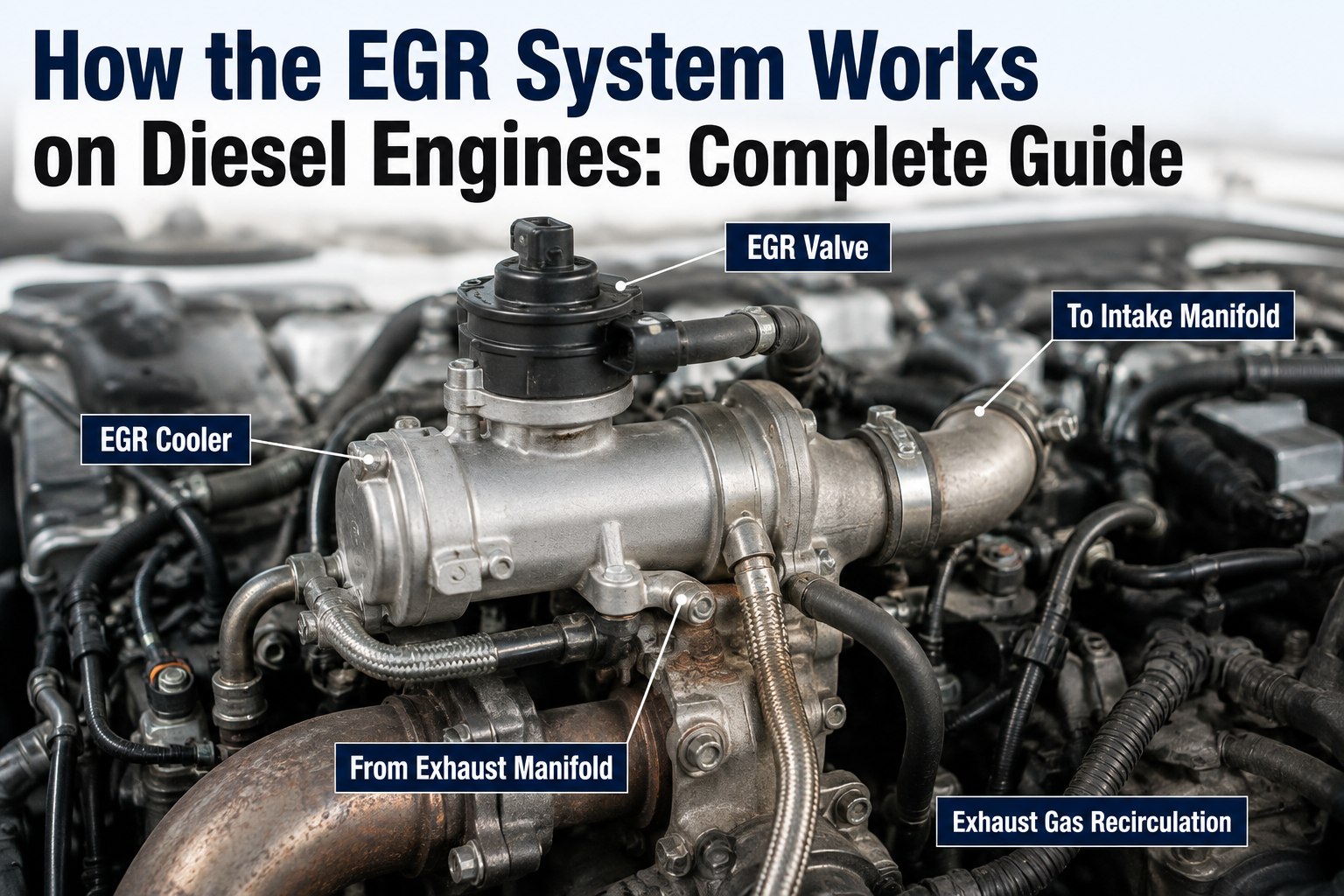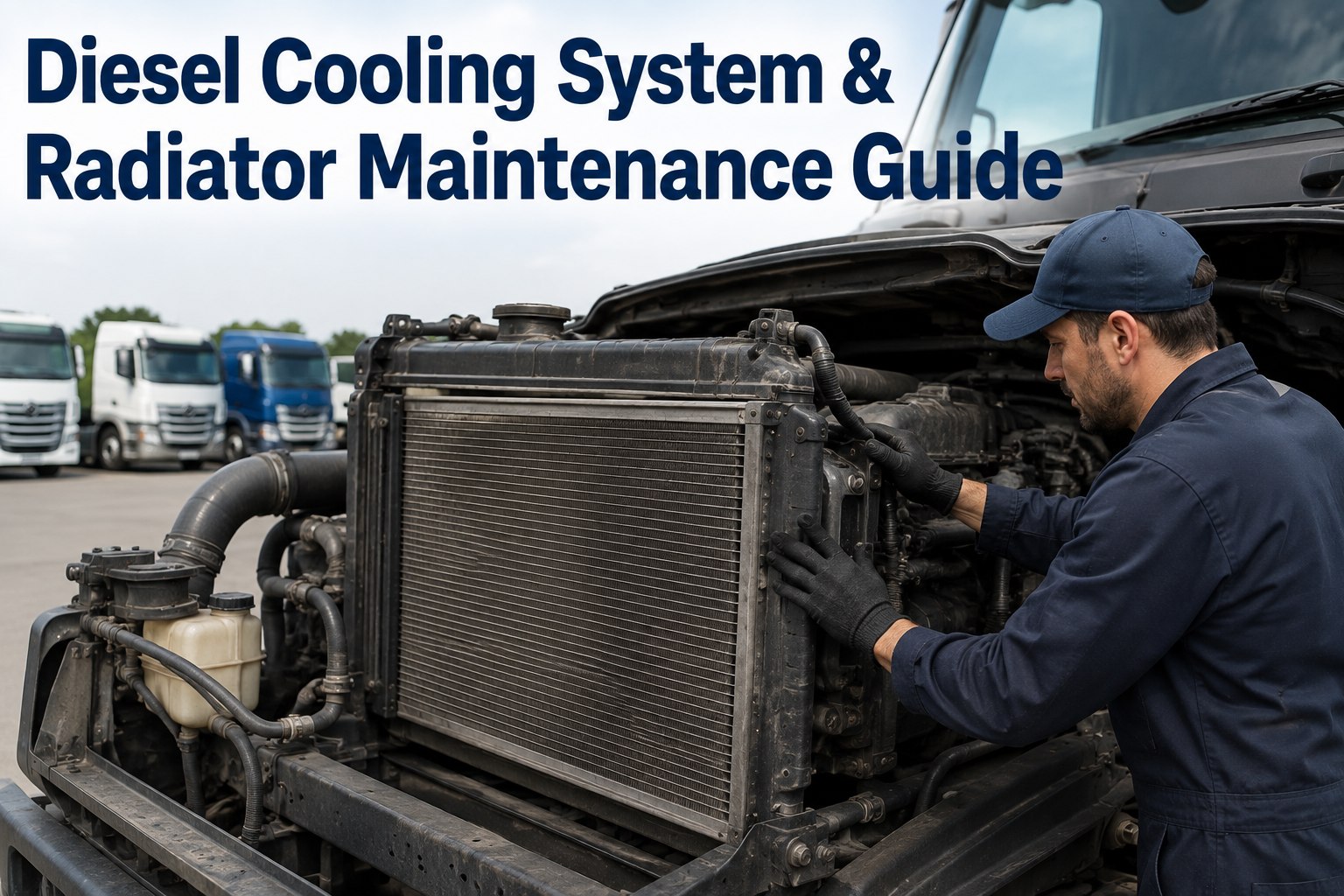
The cooling system is the single most overlooked component of diesel maintenance — and industry data consistently shows it causes roughly one in four major diesel engine failures. Every gallon of diesel burned generates enormous amounts of heat, and only about a third of that energy actually moves the truck. The rest has to go somewhere, and the cooling system is what stands between profitable operations and a $15,000 engine rebuild. When it fails, it fails fast — a stuck thermostat, a leaking hose, or a clogged radiator can push engine temperatures past 220°F in minutes, warping cylinder heads, blowing gaskets, and cracking engine blocks. The good news: nearly every overheating event is preventable with a systematic maintenance approach. This guide walks through exactly how the cooling loop works, the six components that fail, the coolant types that protect them, the warning signs that predict trouble, and how Truck Inspection & Maintenance turns cooling checks into documented DVIR items so early problems become tracked defects instead of side-of-the-road disasters.
Diesel Cooling System & Radiator Maintenance Guide
The system that stands between profitable operations and a $15,000 engine rebuild.
The Cooling Loop — How It All Connects
Understanding the cooling system starts with visualizing the loop. Coolant is a closed-circuit fluid that continuously carries heat from the engine block to the radiator, releases it into airflow, then returns to do it again. Every component in that loop must work — one weak link and the whole system collapses:
The 6 Core Cooling System Components
Beyond the four loop stages, six components need individual maintenance attention. Every one has a distinct failure pattern, a distinct warning sign, and a distinct maintenance schedule. Master these and you master 90% of cooling system reliability:
Radiator
Water Pump
Thermostat
Hoses & Clamps
Cooling Fan
Coolant
Coolant Types — Know Yours Before You Mix
Using the wrong coolant is one of the fastest ways to destroy a diesel cooling system. The three families are chemically incompatible — mixing them creates gel-like deposits that clog radiators and destroy water pumps within weeks. Here's the side-by-side that matters:
The 6 Root Causes of Diesel Overheating
Overheating isn't random — it comes from one of six specific root causes. Knowing which one is happening saves diagnostic time and prevents throwing parts at a symptom instead of fixing the actual problem:
Low Coolant Level
A leak somewhere in the system, an old top-up you forgot, or evaporation loss over months. Simplest cause, easiest fix — but low coolant hides the underlying leak that made it low.
Failed Thermostat
Stuck closed = rapid overheat. Stuck open = engine never warms fully, fuel economy drops. Costs $30 for the part — costs a rebuild if ignored.
Water Pump Failure
Worn bearings, corroded impeller, or seal leak. Coolant may look full but isn't circulating. Weep hole showing coolant traces is the classic early warning.
Clogged Radiator
External: bugs, dirt, road debris blocking airflow across fins. Internal: rust, scale, and old coolant deposits restricting flow through tubes. Both starve the system of cooling capacity.
Degraded Coolant
Corrosion inhibitors break down over time. pH turns acidic. Acidic coolant corrodes aluminum water pumps, heads, and radiator tubes from the inside — silent damage that shows up as leaks.
Head Gasket / Internal Leak
Coolant enters combustion chamber. Symptoms: white exhaust smoke, sweet smell, coolant loss with no visible leak, milky oil on dipstick. Emergency — pull the truck off the road.
Cooling checks belong on every pre-trip — documented, not remembered
Every coolant level, temperature gauge reading, and leak observation is a maintenance signal. Truck Inspection & Maintenance turns them into DVIR items — GPS-tagged, timestamped, and routed to your shop the moment they appear. Catch the failing thermostat, the weeping water pump, the low-level trend before they become a highway shutdown. Sign up free for up to 3 vehicles.
Warning Signs Every Driver Must Recognize
Cooling problems escalate on their own schedule. Catch them early and the fix is a $30 thermostat. Catch them late and the fix is a $15,000 engine rebuild. Every driver needs to recognize these six signs — because the temperature gauge climbing is the LAST warning, not the first:
Coolant Level Dropping
Reservoir needs top-ups more often than usual. Even small drops signal a slow leak somewhere. Investigate before the drops accelerate.
Sweet Smell Near Engine
Ethylene glycol has a distinct sweet odor. Smell it after a run and you have a leak — even before you see coolant on the ground.
Temperature Gauge Creeping Up
Gauge reading higher than normal for the same load and conditions. Not yet in the red, but the system is struggling. Diagnose before the next hot day.
Loss of Cabin Heat
Heater core depends on hot coolant flow. Cold air from the heater means low coolant or blocked circulation — problems you feel before the engine complains.
Steam Under the Hood
Coolant boiling out of a leak or overflow. Pull over immediately. Never open a hot cap — pressurized coolant causes severe burns.
Engine Derate / Red Zone
ECU cuts power to protect the engine. Temperature past 220°F. This is a shutdown warning — continuing to drive risks warped heads and cracked blocks.
Preventive Maintenance Schedule
The vast majority of cooling failures are 100% preventable with a systematic maintenance schedule. Here's the interval framework proven fleets use — plus what to check at each stop. Skip these at your peril:
Pre-Trip Visual Check
Deeper Inspection
Coolant Test
Preventive Replacement
Coolant Flush
Frequently Asked Questions
How often should I flush my diesel truck's cooling system?
It depends on your coolant type. Conventional green IAT coolant needs flushing every 60,000 miles or 2 years. Extended-life OAT (orange, red, pink) coolants can last 150,000–600,000 miles. HOAT (yellow, turquoise) hybrids typically last 150,000 miles or 5 years. Always follow your engine manufacturer's spec — flushing too rarely allows corrosion; flushing too often wastes fluid and doesn't add protection.
What's the most common cause of diesel truck overheating?
Low coolant level is #1, but it's usually a symptom — something leaked or evaporated. After that, the top causes are failed thermostats (stuck closed), water pump failures (worn bearings or corroded impellers), and clogged radiators (external debris or internal scale). A truck overheating with a full coolant reservoir almost always points to circulation problems (thermostat, water pump, or airflow) rather than fluid loss.
Can I mix different types of coolant?
No — and this is one of the most costly mistakes in diesel maintenance. IAT, OAT, and HOAT coolants use different chemistries that react when mixed, creating gel-like deposits that clog radiators, plug heater cores, and destroy water pumps within weeks. If you don't know what's in the system, flush completely before adding new coolant. When in doubt, use only the type specified in your owner's manual.
What temperature is considered overheating for a diesel engine?
Most diesel engines run normally between 190°F and 210°F. Anything above 220°F is considered overheating and triggers warning systems. Past 230°F, most modern diesels engage engine derate (power reduction) to protect internal components. If the gauge reaches the red zone, pull over immediately — continuing to drive risks warped cylinder heads, blown gaskets, and cracked blocks costing $15,000+ to repair. Talk to our team about cooling checks in DVIRs.
Why is my truck overheating with a full coolant reservoir?
Full coolant means fluid loss isn't the problem — circulation is. Common causes: stuck thermostat blocking flow to the radiator, failing water pump not circulating coolant properly, clogged radiator (internal deposits) preventing heat exchange, or airflow blockage (bugs, debris) starving the radiator of cooling air. Head gasket failure can also let combustion gases into the coolant system, creating airlocks that stop flow entirely.
How does Truck Inspection & Maintenance help with cooling system issues?
Every cooling system check on your DVIR — coolant level, temp gauge reading, leak observation, hose condition — becomes a documented, timestamped, GPS-tagged data point. A single low-coolant top-up is data; three top-ups in two weeks is a pattern that catches a slow leak before it becomes a highway breakdown. Truck Inspection & Maintenance routes cooling defects straight to your shop as work orders. Sign up free for up to 3 vehicles.
A $30 thermostat becomes a $15,000 rebuild when the warnings aren't logged.
Every cooling system observation — level, temperature, leak, hose condition — is a data point that either sits in a driver's memory or on a digital DVIR. Truck Inspection & Maintenance captures them GPS-tagged, timestamped, and routed to your shop as defect work orders before the temp gauge hits red. Free for up to 3 vehicles with no hardware and no contracts. Set it up in 10 minutes.