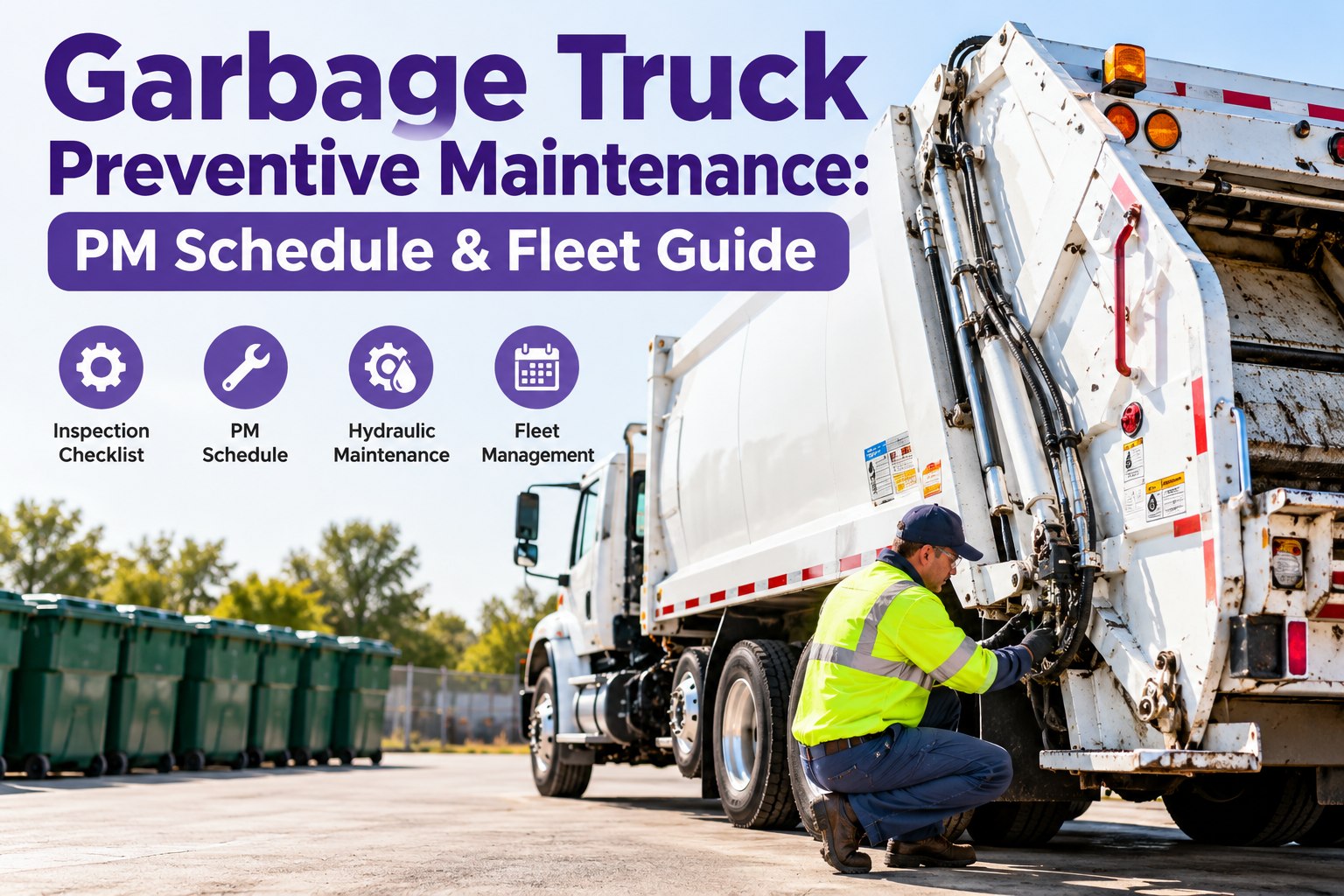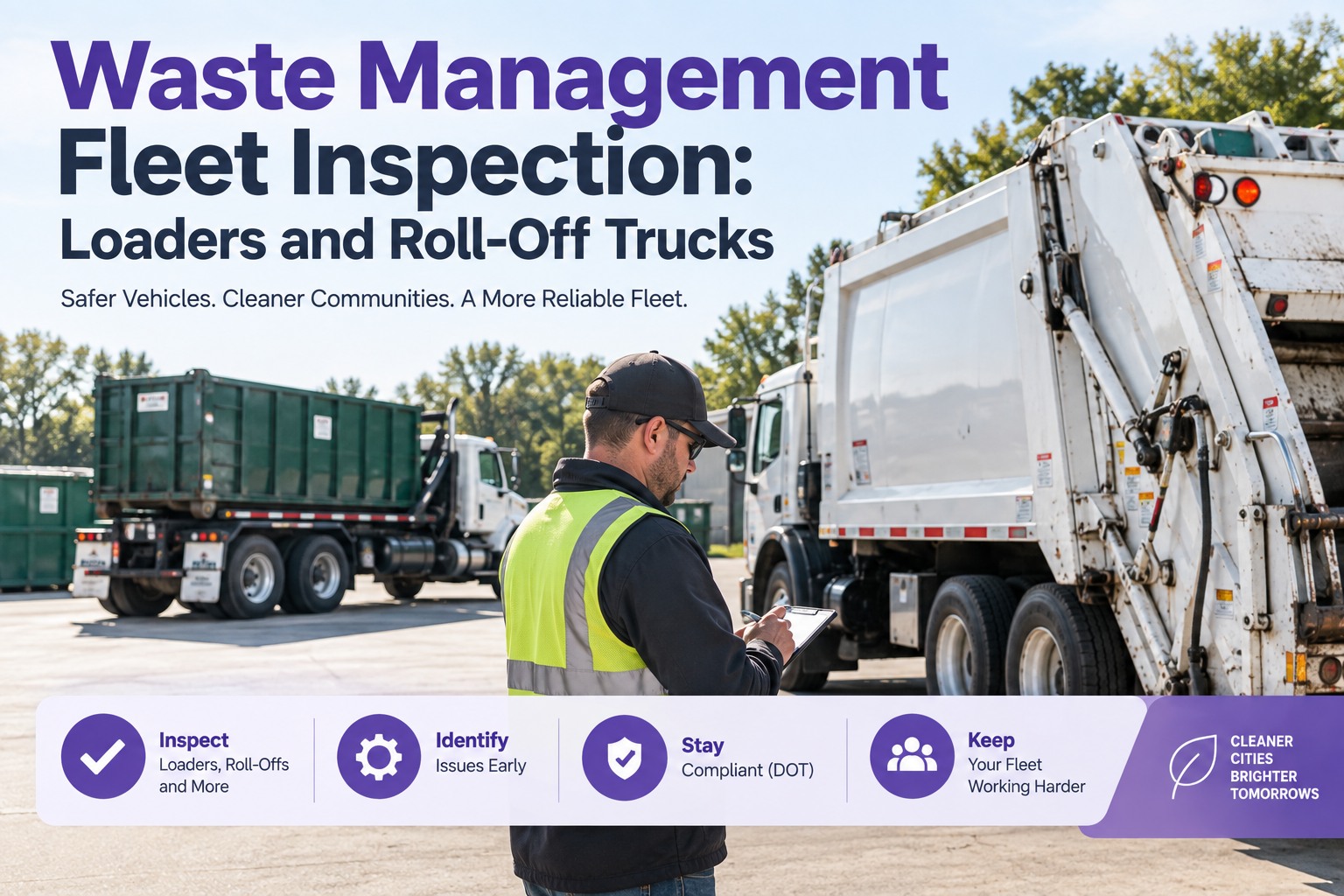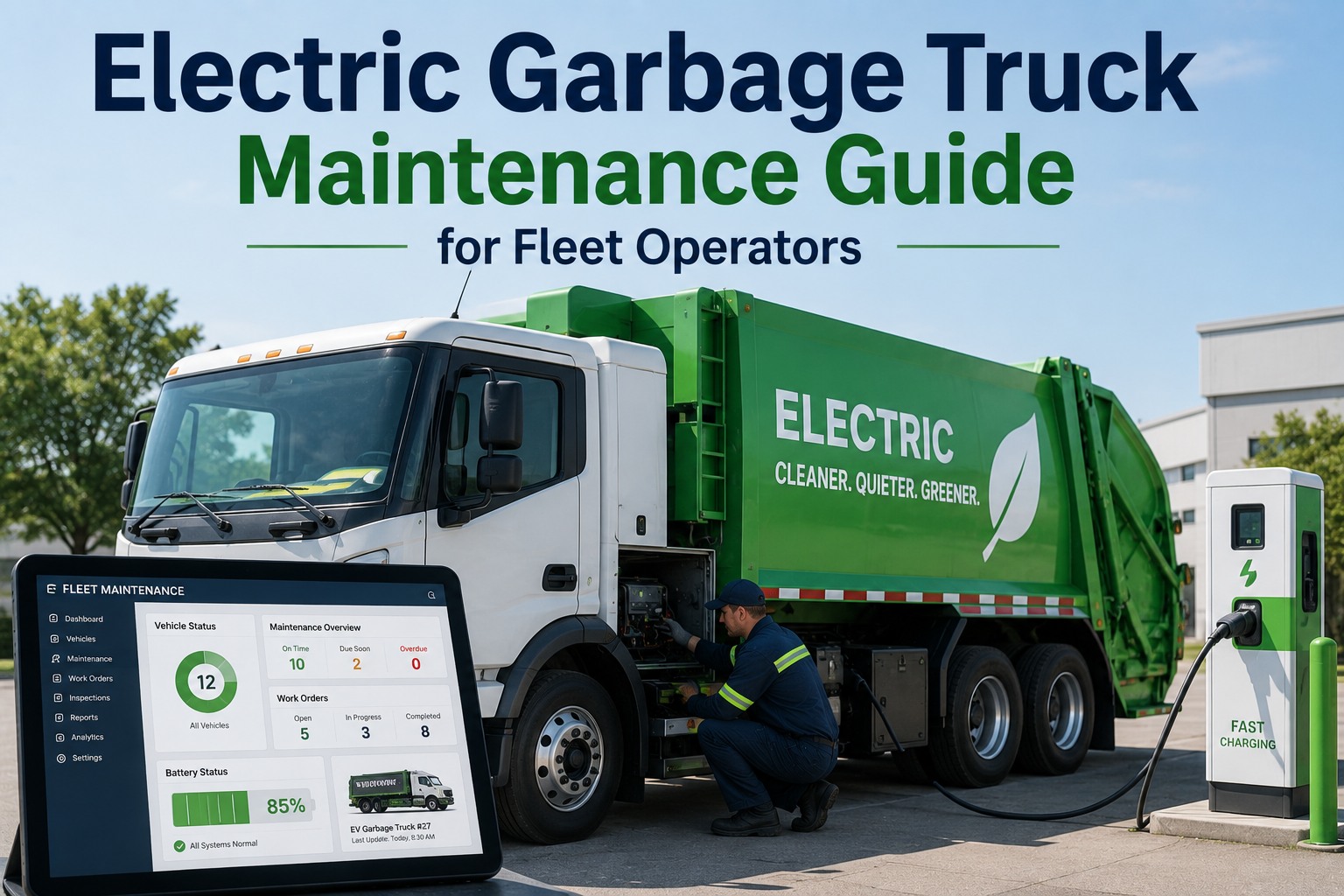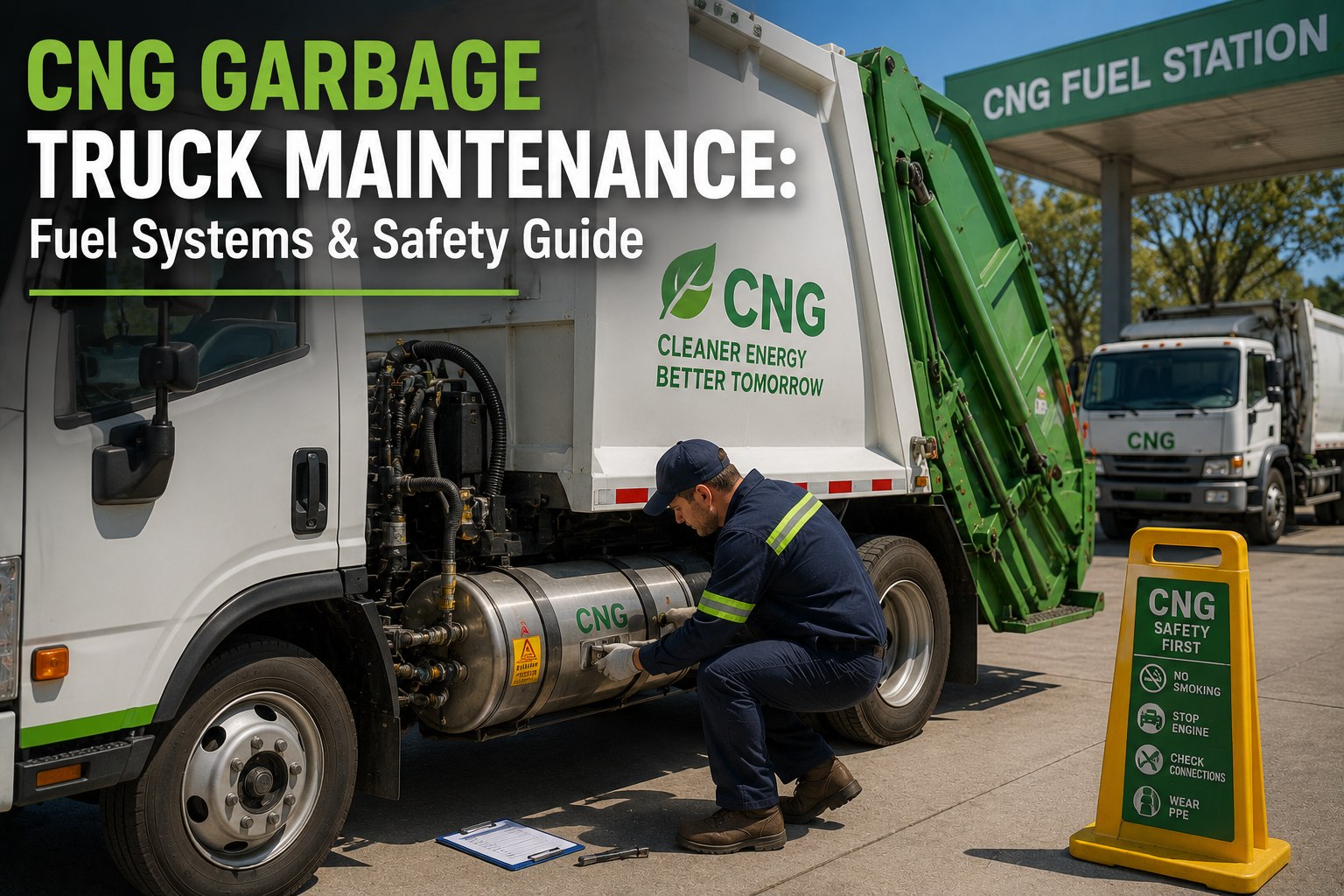
A CNG garbage truck carries something no diesel truck does: a bank of cylinders holding natural gas at 3,600 psi, mounted on the roof or behind the cab, riding through the single harshest duty cycle in trucking. Constant stop-start, heavy loads, and hydraulics that never rest — all while a high-pressure fuel system demands a safety and inspection regime diesel operators never think about. That combination is exactly why fleets that treat a CNG refuse truck like a diesel one get expensive, sometimes dangerous surprises. Natural gas trucks deliver real advantages — commonly 30-40% lower fuel costs and 20-30% less carbon than diesel — but only when the fuel system is inspected, the cylinders are requalified on schedule, and the gas-specific components are maintained on their own timeline. This guide covers the high-pressure fuel path, the mandated inspection intervals, the safety rules that protect your crew, and the CNG-specific maintenance that keeps these trucks compliant — plus how fleet maintenance software tracks every cylinder, inspection, and requalification deadline.
Fleet Maintenance Guide · CNG Refuse Trucks · 2026
CNG Garbage Truck Maintenance: Fuel Systems & Safety
The high-pressure fuel system, the inspection regime, and the safety rules that make maintaining a natural gas refuse fleet fundamentally different from diesel.
3,600 psi
Nominal pressure CNG is stored at on-board
Annual
Fuel-system inspection for heavy trucks (10k+ lbs)
15-20 yr
Cylinder service life before mandatory retirement
30-40%
Lower fuel cost than diesel in many markets
Why a CNG Truck Isn't Just a Diesel Truck
The engine may look familiar, but almost everything about the fuel system and its upkeep is different. Treating the two the same is the root of most CNG maintenance failures — these are the distinctions that matter:
Diesel
Low-pressure liquid fuel
Compression ignition — no spark plugs
Tanks with no requalification deadline
Emissions aftertreatment (DEF/DPF)
CNG
Gas stored at 3,600 psi — a pressure vessel
Spark ignition — spark plugs to maintain
Cylinders requalified on a legal schedule, retired at 15-20 yrs
Pressure relief devices, regulators & leak-checks
The High-Pressure Fuel Path
Understanding where the pressure is — and where it drops — is the foundation of both safety and diagnosis. CNG travels from storage to engine through a series of deliberate pressure reductions:
Cylinders
Gas stored in one or more cylinders, each protected by pressure relief devices, mounted on the roof, sides, or behind the cab.
High-pressure regulator
Reduces pressure sharply from cylinder level down toward the engine's working range — the system's key step-down.
Low-pressure filter
Cleaned, regulated gas passes through the coalescing and low-pressure filters on its way to the engine.
Spark-ignited engine
An internal regulator drops pressure further for combustion in a spark-ignition engine — not compression like diesel.
Why the pressures matter: a leak or fault behaves very differently at 3,600 psi than at 125 psi, and every high-pressure joint is a leak-check point. This is also why CNG work demands trained, qualified technicians — the high-pressure section of the system is unforgiving of the shortcuts that are routine on a diesel.
The Inspection Regime: Non-Negotiable Intervals
This is where CNG compliance lives, and it's stricter than most operators expect. Cylinder and fuel-system inspection isn't optional or flexible — it's tied to fixed intervals and hard rules:
Heavy trucks: at least every 12 months
Garbage trucks (10,000 lbs GVWR and above) require a detailed fuel-system inspection at least annually — more frequent than the 3-year / 36,000-mile interval that applies to lighter vehicles.
After any fire or accident
Regardless of vehicle weight, every CNG cylinder must be inspected after any fire or collision before the truck returns to service — no exceptions.
Retire at 15-20 years
CNG cylinders have a finite service life stamped by the manufacturer. At end of life they must be removed and retired — they cannot legally or safely be re-certified indefinitely.
Manufacturer first, then the standard: inspections follow the cylinder manufacturer's requirements as the primary authority, with the Compressed Gas Association's CGA C-6.4 external-visual-inspection method as the recognized secondary reference. Inspectors must be certified or qualified — this is not a job for an untrained hand.
The Detailed Visual Inspection
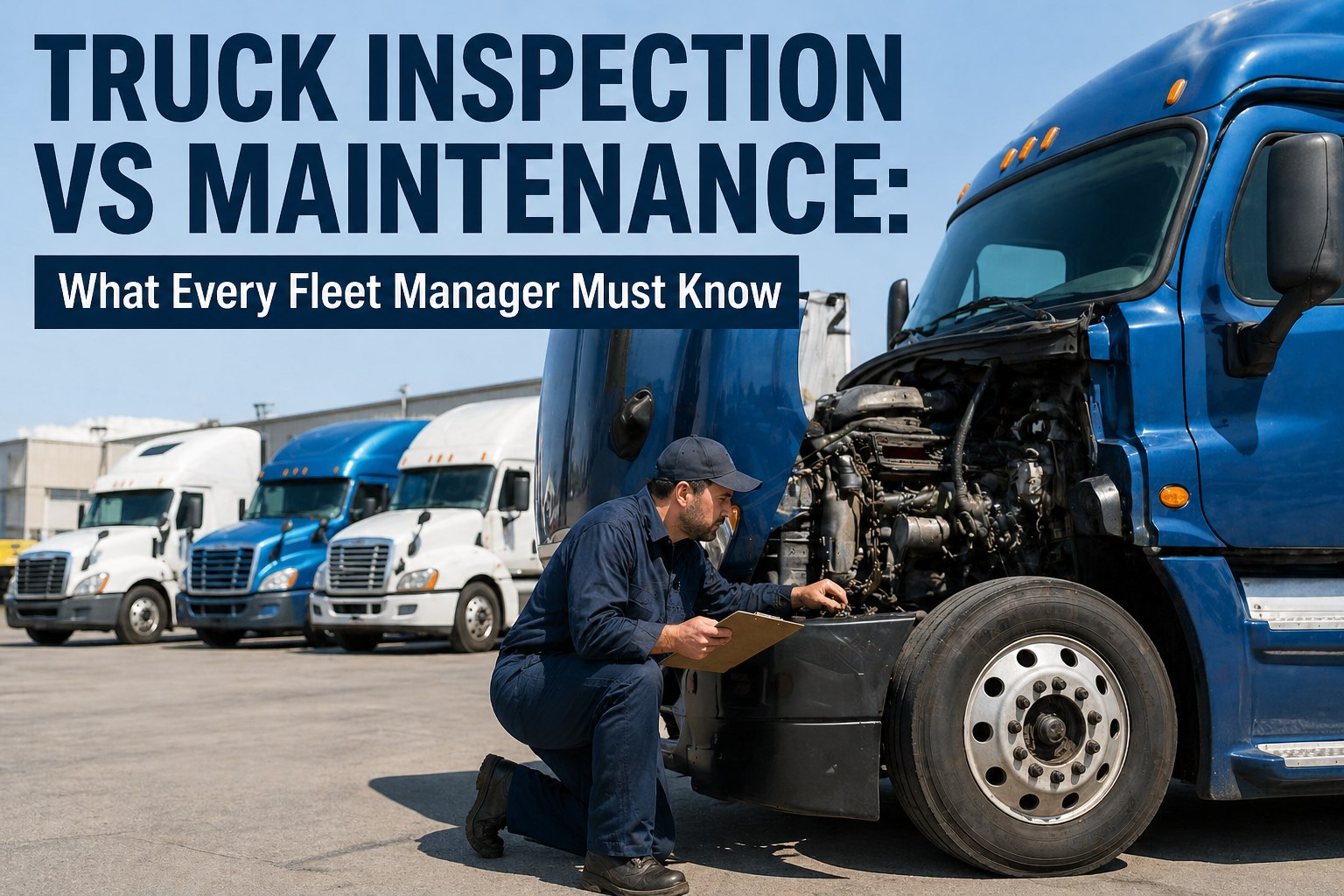
Since 2008, industry best practice inspects the entire high-pressure system, not just the cylinders. A proper Detailed Visual Inspection — roughly 45 minutes to an hour — examines and leak-checks every one of these components:
Documented with evidence: each inspection is recorded on a CNG fuel-system inspection form with photos of any damage, measured with a depth gauge and rule, and leak-checked with solution or a methane detector. Labels must be present and legible — a missing cylinder label alone can fail an inspection.
Safety rules that protect your crew
CNG's high pressure and flammability make a few rules absolute. Pressure relief devices are designed to vent high-pressure gas when they reach roughly 212-220°F, so heat sources near the fuel system are a serious hazard. A single spark or piece of weld slag can compromise CNG components — never perform welding or hot work near the fuel system without proper isolation and precautions. Always leak-check with solution or a methane detector, never a flame, and treat every high-pressure connection as a potential leak point until verified.
Free · Up to 3 Vehicles
Never miss a requalification deadline
Fleet maintenance software tracks every CNG cylinder's serial number, manufacture date, inspection history, and retirement date — and auto-alerts before each requalification and annual inspection comes due. Gas-specific PM schedules for PRDs, regulators, hoses, and spark plugs run alongside your standard truck maintenance, and one-click reports keep you audit-ready. Sign up free for up to 3 vehicles and put your CNG compliance on autopilot.
CNG-Specific Maintenance
Beyond the standard chassis, brake, and hydraulic maintenance every refuse truck needs, CNG trucks carry a separate set of gas-system items on their own schedules. Missing these is where CNG programs fall short:
Pressure relief devices
The system's primary safety component. Inspected at every detailed inspection for damage, obstruction, and proper seating — a failed PRD is a direct safety risk.
High-pressure regulator
Steps pressure down from cylinder to engine level. Checked for leaks and correct operation, since a regulator fault affects the whole fuel delivery.
Flexible CNG fuel hoses
High-pressure flexible hoses carry their own manufacturer replacement schedule and inspection criteria — they are a wear item, not a fit-and-forget part.
Spark plugs
CNG engines are spark-ignited, unlike diesel — so spark plugs are a genuine maintenance item, and natural gas can foul them differently than gasoline.
Coalescing & fuel filters
Filters keep contaminants and oil mist out of the low-pressure side. Serviced on schedule to protect the engine and downstream components.
Methane detection systems
On-board and shop methane detection must be tested and maintained — it's the early-warning layer for a leak you can't see or smell reliably.
Documentation & Compliance
With CNG, the paperwork is the compliance. Because a lapse can mean liability exposure or a fleet-wide shutdown order, complete records aren't clerical — they're operational protection:
Cylinder lifecycle records
Serial numbers, manufacture dates, inspection history, and retirement dates for every cylinder — the backbone of annual DOT inspection readiness.
Inspection forms & photos
Each detailed inspection retained with its completed form and supporting photos. Records are kept on file, ready to produce on demand.
Deadline alerts
Automated warnings before each requalification and annual inspection falls due, so a missed date never becomes a grounded truck.
Emissions & fuel reporting
GGE consumed, cost per mile, and emissions data for EPA- and CARB-aligned reports, contract renewals, and sustainability filings.
Frequently Asked Questions
How often must CNG garbage truck cylinders be inspected?
For heavy vehicles at 10,000 lbs GVWR and above — which includes garbage trucks — the CNG fuel system must be inspected at least every 12 months. Lighter vehicles follow a 3-year or 36,000-mile interval, whichever comes first. On top of that, every CNG cylinder must be inspected after any fire or accident regardless of vehicle weight, before the truck returns to service.
What pressure does CNG operate at?
CNG is stored on-board at a nominal pressure of about 3,600 psi. A high-pressure regulator steps that down to roughly 125 psi before the gas reaches the low-pressure filter, and an internal regulator in the engine reduces it further for combustion. That high storage pressure is exactly why the fuel system requires trained technicians, dedicated leak-checks, and pressure relief devices throughout. Contact our team about managing CNG fleet maintenance.
Do CNG cylinders expire?
Yes. CNG cylinders have a finite service life — typically 15 to 20 years — stamped by the manufacturer, after which they must be removed from service and retired. They cannot be re-certified indefinitely. Tracking each cylinder's manufacture date and retirement deadline is essential, because running a truck on an expired cylinder is both illegal and dangerous.
What gets checked in a CNG fuel system inspection?
Since 2008, best practice inspects the entire high-pressure system, not just the cylinders. A detailed visual inspection covers cylinders and shields, brackets, pressure relief devices, valves, fittings, high-pressure lines and hoses, the regulator, the coalescing filter, and the fuel receptacle — with every connection leak-checked. It follows the cylinder manufacturer's requirements first, then the CGA C-6.4 standard, and takes roughly 45 minutes to an hour.
How is CNG maintenance different from diesel?
Fundamentally. CNG engines are spark-ignited, so they have spark plugs to maintain; the fuel is stored at high pressure, so the system has cylinders, PRDs, regulators, and high-pressure hoses that all need dedicated inspection. There's no DEF or DPF aftertreatment, but there is a strict cylinder requalification and retirement regime diesel doesn't have. Treating a CNG truck like a diesel one is the most common and costly mistake.
What happens if I miss an inspection or requalification?
Missing a required CNG inspection or running an expired cylinder creates serious liability exposure and can result in a fleet-wide shutdown order — not just a single grounded truck. Because inspection and cylinder records are reviewed at annual DOT inspection, incomplete documentation is itself a compliance failure. Automated deadline tracking is the simplest way to make sure a requalification date is never the reason a route goes uncovered. Sign up free to track every CNG deadline automatically.
Compliant, Safe, On the Road
Keep every CNG cylinder inspected, tracked, and in-date.
Fleet maintenance software manages the full CNG lifecycle — cylinder serial numbers and retirement dates, annual inspection and requalification alerts, gas-specific PM for PRDs, regulators, hoses, and spark plugs, and one-click EPA and CARB reporting — alongside your standard refuse-truck maintenance. Free for up to 3 vehicles. Works with your existing fleet, no contracts.