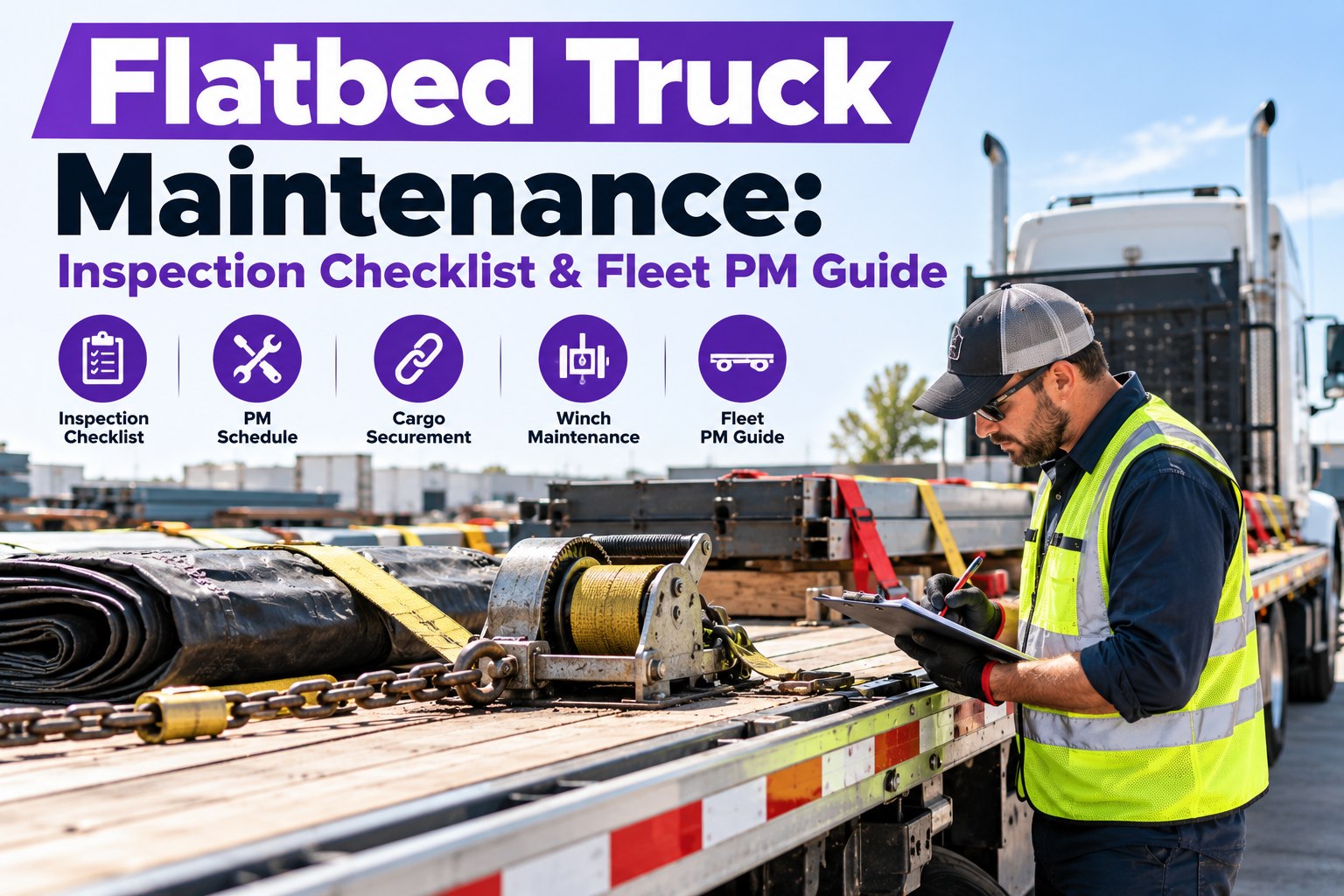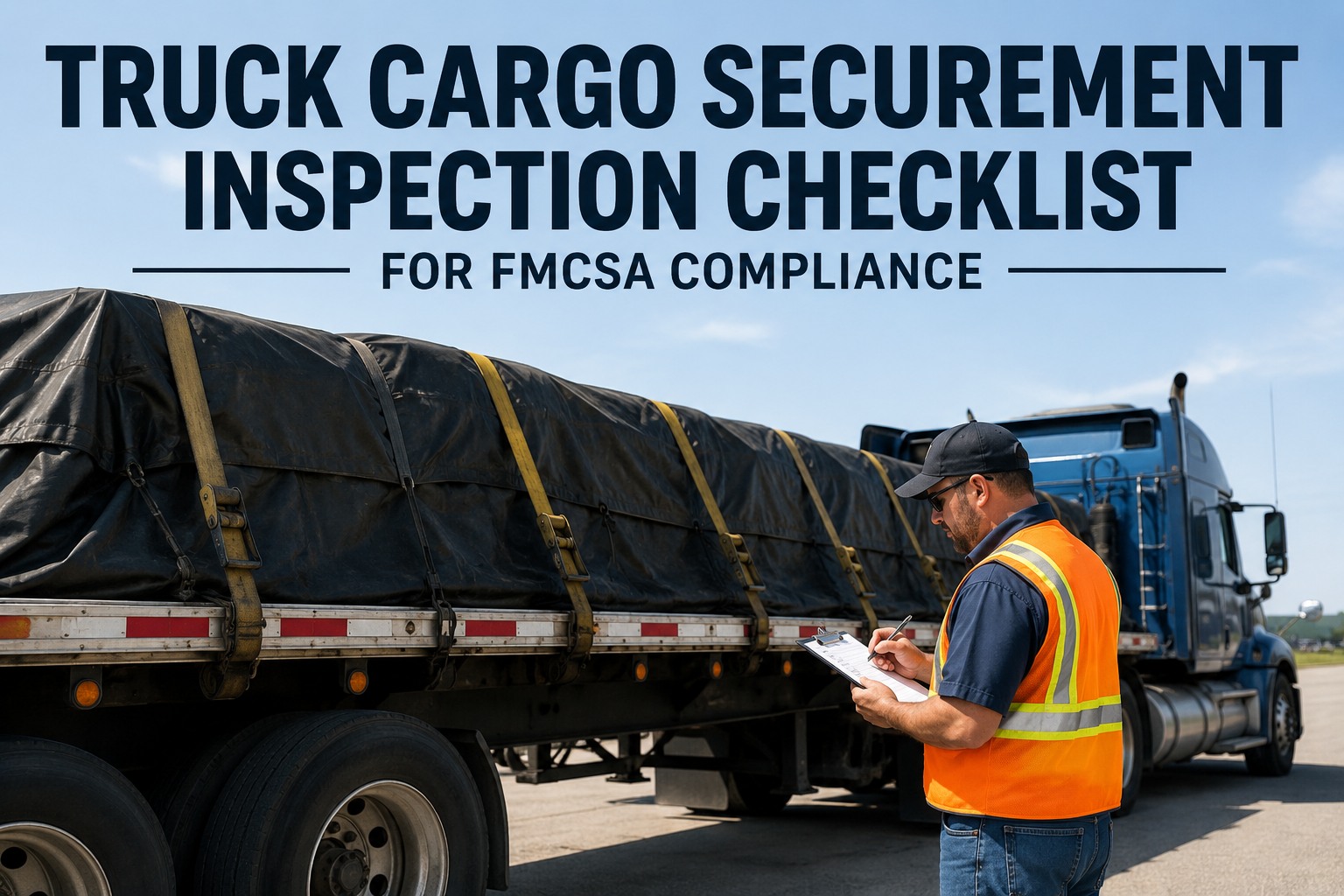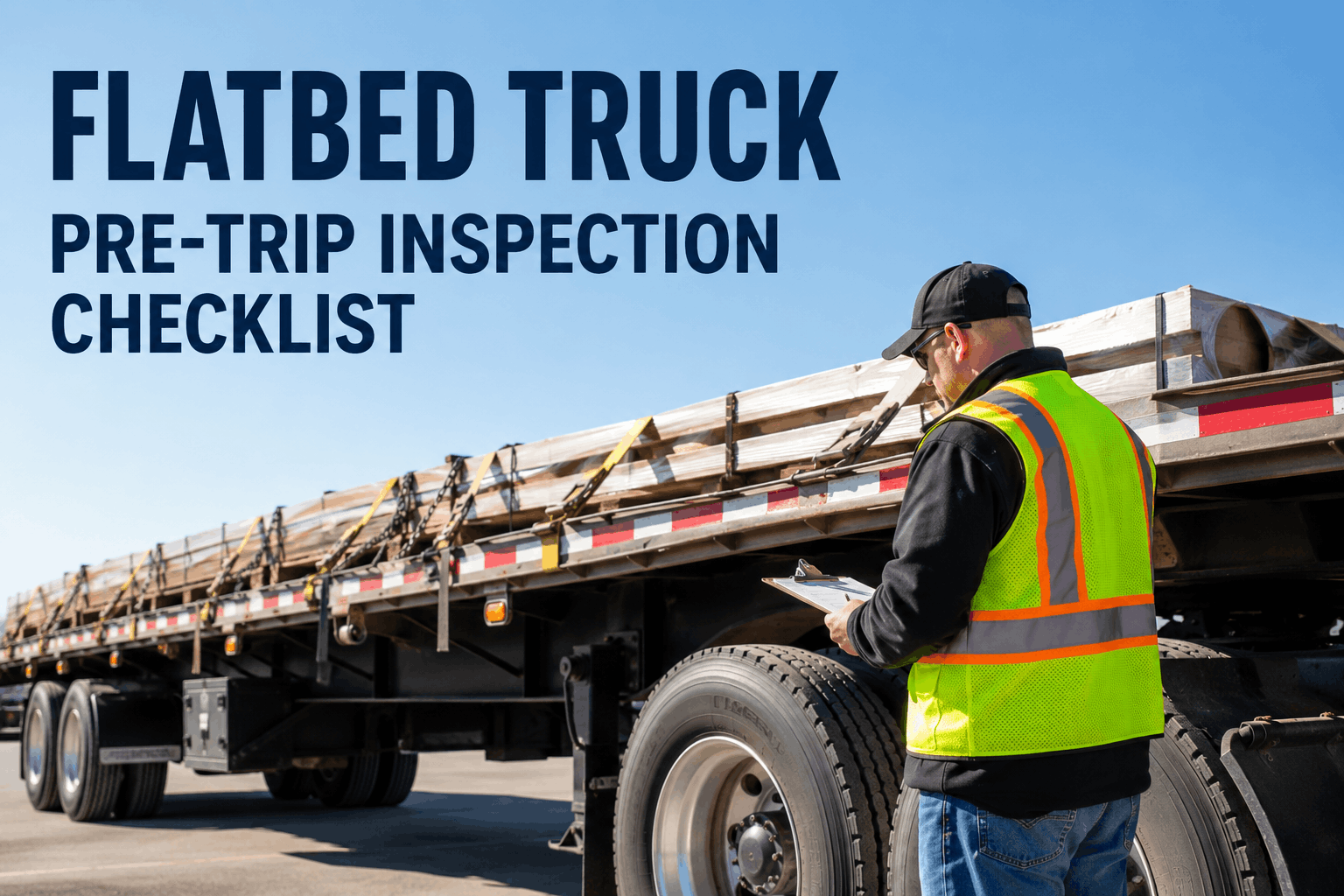
Flatbed trucking carries a compliance burden no enclosed trailer faces: the load is exposed, the securement is visible to every passing inspector, and a single shifted strap can put a vehicle out of service on the spot. FMCSA cargo securement rules under 49 CFR Part 393 Subpart I (§393.100-136) govern every flatbed load in interstate commerce, built on one principle — cargo must be immovable under all conditions of acceleration, braking, turning, and road shock. Get it wrong and the penalties run $1,000-$16,000 per violation, with an out-of-service order that strands the truck until the load is re-secured to federal standards. Worse, cargo securement violations generate CSA points in the Cargo-Related BASIC category for both driver and carrier — repeat violations trigger safety audits.
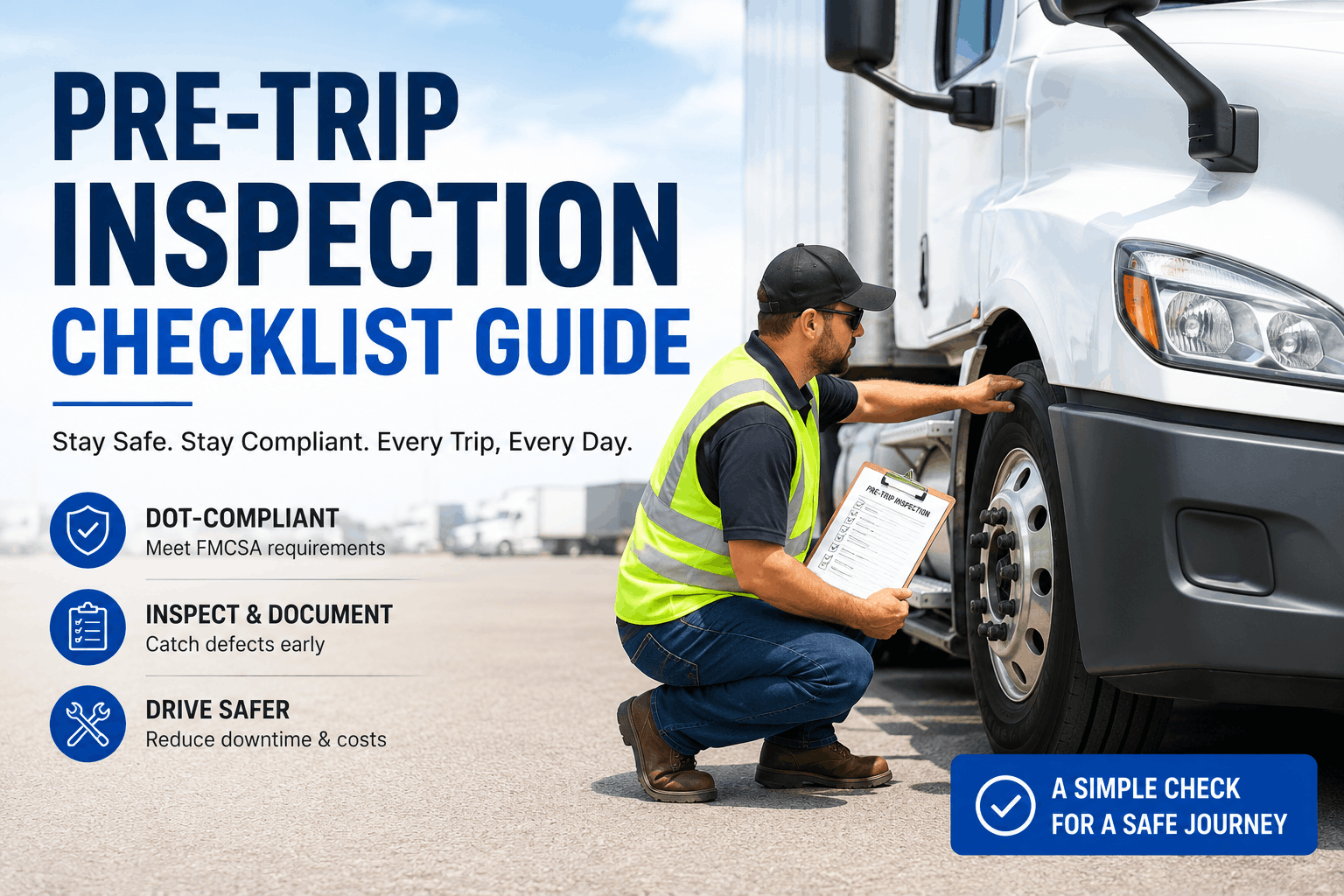
The good news: a proper flatbed pre-trip inspection is fast, repeatable, and catches every common violation before the truck rolls. It combines a standard vehicle inspection with flatbed-specific checks — deck condition, tie-down working load limits, chain and binder integrity, tarp condition, and the aggregate WLL math that determines whether your load is legally secured. This guide is the focused flatbed pre-trip checklist for 2026. Start your free trial of our truck inspection and maintenance software to deploy flatbed securement checklists with WLL tracking — live in 10 minutes, free for up to 3 trucks.
Flatbed Truck Pre-Trip Inspection Checklist
The focused 2026 flatbed pre-trip framework — deck and securement checks, tie-down WLL math, chain and binder inspection, tarp condition, and the §393 cargo securement rules that keep you out of service-free at every roadside stop.
Quick Answer: Flatbed Pre-Trip Essentials
A flatbed pre-trip inspection combines a standard vehicle check with flatbed-specific securement verification under 49 CFR Part 393 Subpart I. The core rule: the aggregate working load limit (WLL) of all tie-downs must equal at least 50% of the cargo weight, with a minimum tie-down count based on cargo length — 1 for cargo up to 5 feet, 2 up to 10 feet, plus 1 additional for each extra 10 feet. Inspect: deck condition (clean, dry, no damage), tie-downs for WLL rating and wear, chains (Grade 70/80 transport, no stretched links or cracks), binders (ratchet/lever function), edge protectors where straps contact sharp corners, and tarps for tears. The weakest-link rule applies — a securement line is only as strong as its lowest-rated component. Re-check the load within the first 50 miles, then every 150 miles or 3 hours per §393.110. Violations run $1,000-$16,000 with possible out-of-service order and CSA Cargo-Related BASIC points.
The 6-Section Flatbed Pre-Trip Walkaround
Flatbed pre-trip covers standard vehicle items plus securement-specific checks. Contact our sales team for help deploying flatbed checklist templates across your fleet.
The WLL Math — How Many Tie-Downs You Need
The aggregate working load limit rule is the single most important calculation in flatbed securement. Two requirements must both be satisfied: the WLL minimum and the tie-down count minimum.
Weakest-link rule: a securement line is only as strong as its lowest-rated component. A 6,600 lb chain with a 4,000 lb binder counts as 4,000 lb WLL — always match component ratings. When in doubt, add a strap: there's no citation for excessive securement.
Frequently Asked Questions
Two rules must both be met. First, the aggregate working load limit (WLL) of all tie-downs must equal at least 50% of the cargo weight. Second, the minimum tie-down count by length: 1 for cargo up to 5 feet and 1,100 lbs; 2 for cargo up to 10 feet; plus 1 additional tie-down for each additional 10 feet (or fraction thereof). Heavy equipment under §393.130 requires a minimum of 4 tie-downs regardless. Both requirements apply simultaneously — meeting the WLL minimum doesn't waive the count minimum. When in doubt, add a strap; there's no citation for excessive securement. Start your free trial to track tie-down WLL across your fleet.
Under §393.110, drivers must inspect cargo securement within the first 50 miles after beginning a trip, then re-check every 150 miles or every 3 hours (whichever comes first) for the remainder of the trip. The first 50 miles matter most because that's when loads settle and straps lose initial tension. A roadside inspector who can flex a strap by hand or observe load movement will issue a Loose Cargo violation. Document each re-check — digital inspection platforms timestamp and GPS-tag re-checks automatically, creating defensible records.
Only Grade 70 or Grade 80 transport chain is legal for cargo securement — never utility, proof coil, or hardware-store chain, which lack the rated working load limit and can fail under load. Each chain must have a legible WLL marking. Inspect chains for stretched links (a sign of overload), cracks, gouges, excessive wear, and twisted or kinked links before every use. The weakest-link rule applies: pairing a high-WLL chain with a lower-rated binder limits the entire securement line to the binder's rating. Match all components. Contact our sales team for chain WLL tracking templates.
Edge protectors are required whenever a tie-down would be subject to abrasion or cutting at a point where it contacts the cargo — typically sharp corners on steel, lumber bundles, or machinery. Without edge protection, a strap under tension can be cut by a sharp edge mid-transit, causing securement failure and load loss. While FMCSA doesn't mandate edge protectors universally, they become mandatory the moment a tie-down crosses an edge that could damage it. Roadside inspectors cite missing edge protection as a securement defect. Keep edge protectors in the truck and use them proactively — they cost little and prevent both violations and catastrophic load loss. Sign up free to build edge-protection checks into your flatbed inspections.
Stay Out-of-Service-Free at Every Roadside Stop
500+ fleets deploy flatbed pre-trip inspections on our truck inspection and maintenance software: securement checklists, WLL tracking, re-check scheduling, photo evidence, defect-to-work-order automation, and audit-ready records exported in seconds. The 2026 standard for flatbed compliance.