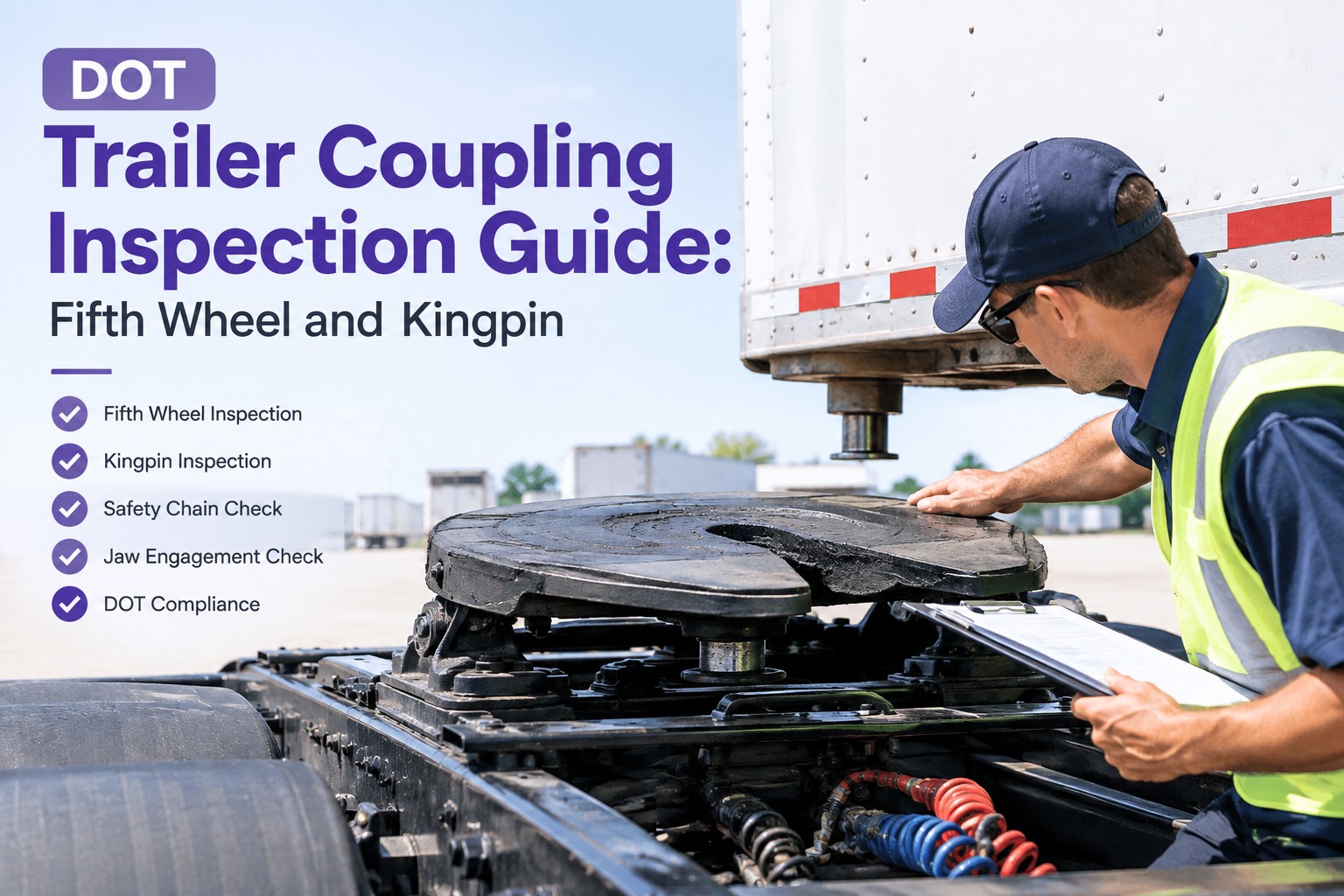
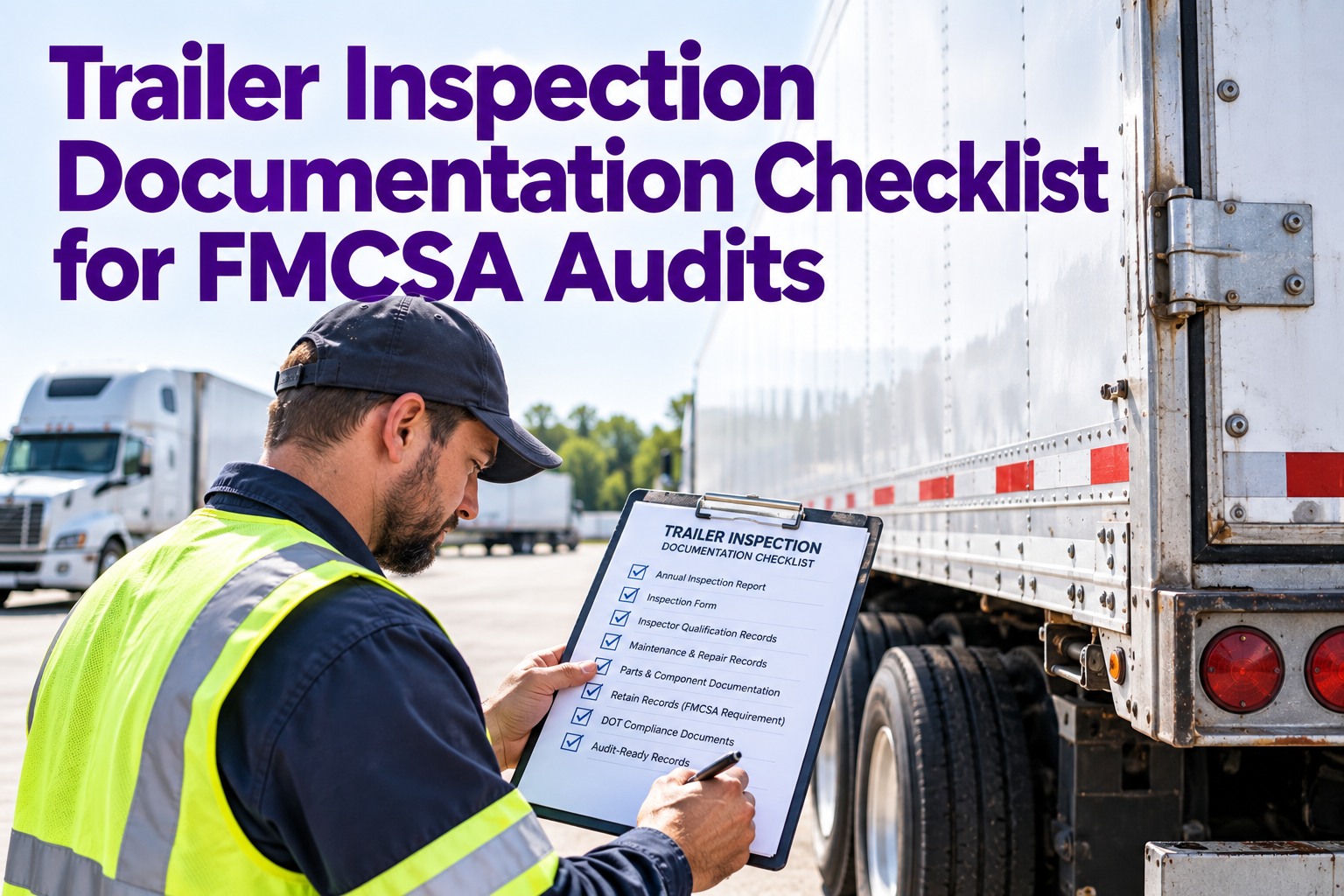
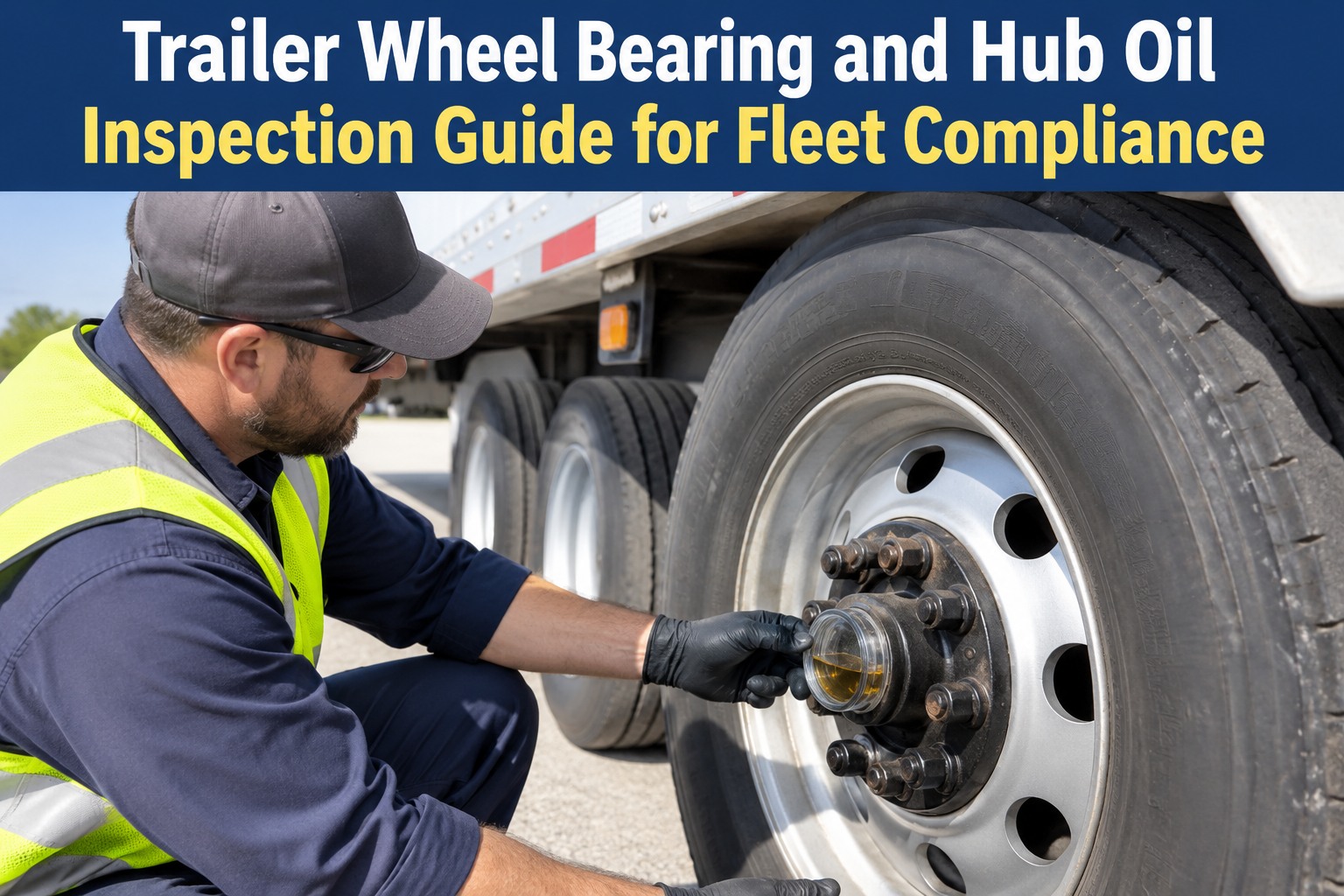
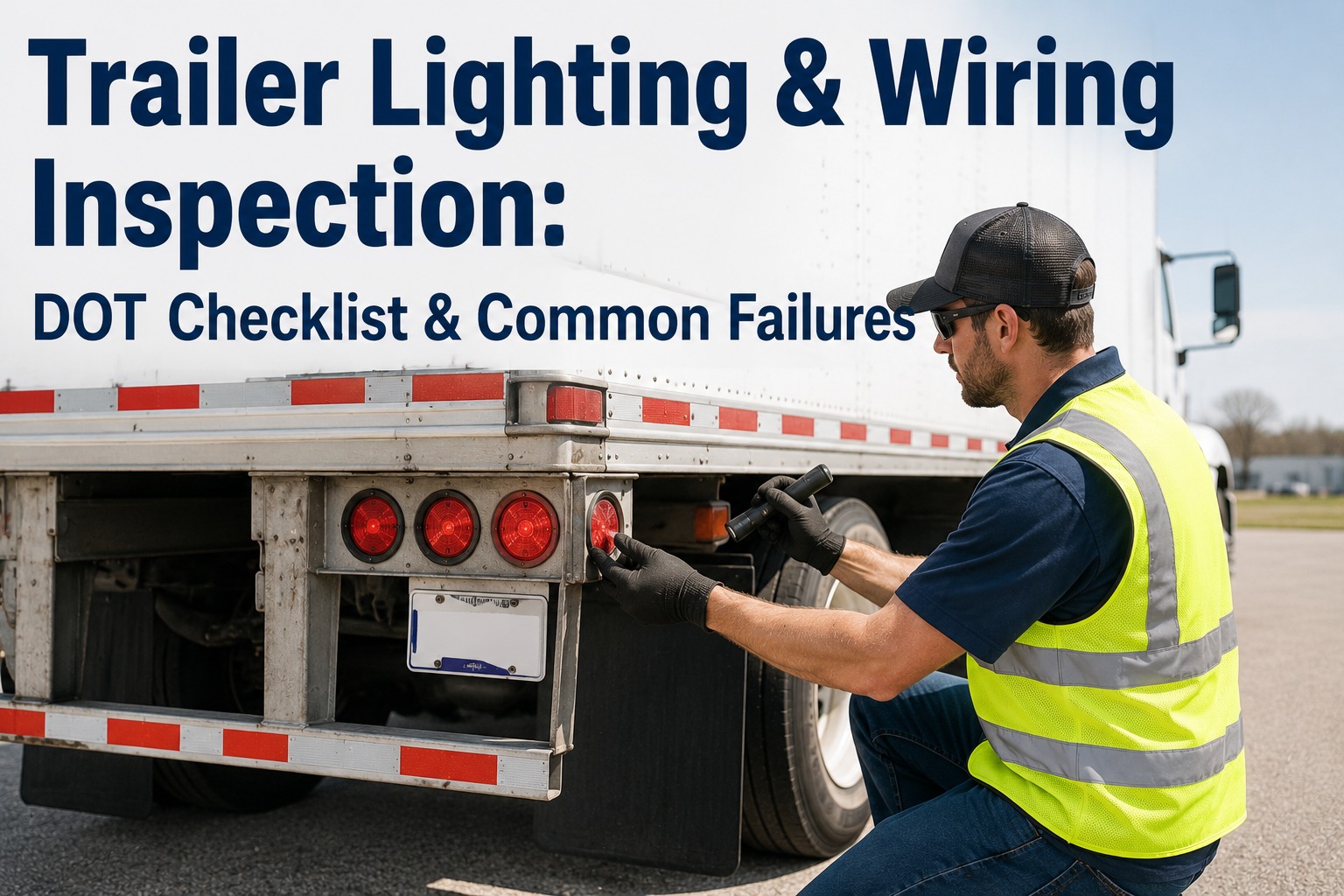
A driver couples up, feels the "tug test" hold, and pulls out — forty minutes later a roadside inspector gauges the kingpin and finds it worn past spec. The tug test passed. The coupling didn't. Fifth-wheel and kingpin inspection isn't a look-and-feel discipline; it's a measurement discipline, and the gap between the two is exactly where runaway-trailer incidents come from. Start free and turn every coupling defect into a work order within hours, not shifts.
49 CFR 393.70 · SAE J700 / J2228 · Fifth Wheel & Kingpin
A Tug Test Confirms the Lock Held. It Doesn't Confirm the Kingpin Is Legal.
A kingpin worn to 2.115 inches or a fifth-wheel horn worn past 20% can still pass a driver's tug test and still be an out-of-service condition at a scale house. Truck Inspection & Maintenance Management Software builds the measurement — not just the feel — into every coupling inspection, and guarantees any logged coupling defect is acknowledged, graded, and assigned to a technician within 4 hours.
Measuredgauge-based checks, not just a tug test
Zonedsix coupling points, checked every time
4-Hrguaranteed defect acknowledgment & assignment
Three Layers Hold a Trailer On — All Three Have to Be In-Spec
A legal coupling isn't one connection; it's three, stacked as backups for each other. A weakness in any one of them turns a normal shift into a separation risk.
1KingpinThe trailer's upper-coupler pin — hardened alloy steel, 2" or 3.5" nominal. Cannot be welded; welding destroys the heat treatment.
2Locking JawsThe tractor's primary retention — must close fully around the kingpin. Worn jaws let the pin rattle free under load even when it looks locked.
3Safety LatchBackup retention that prevents jaw release even if the primary lock is disturbed. Missing or defective = separation risk with jaws intact.
Why the Tug Test Alone Isn't a Security Check
The tug test is real and it's a legitimate first step — rolling forward until the truck "bites" does confirm the jaws are engaged at that exact moment. What it can't tell you is a kingpin measurement. A worn kingpin, a fifth wheel closed before coupling, or stiff cold-weather grease preventing the locking fork from fully seating can all pass a tug test and still fail a gauge check.
The visual cue that matters more Check that the locking fork adjustment nut sits flush with the face of the fifth wheel, and confirm there's no air space between the trailer's kingpin apron and the fifth wheel plate. If either is off, the jaws may look closed while the coupling is not actually seated — and it will eventually separate.
Out-of-Service Thresholds — What a Gauge Check Actually Measures
0.125"Maximum kingpin wear on a 2" pin before it's out of service
1/2"Maximum kingpin-to-jaw gap on a gauge check
20%Fifth-wheel horn wear threshold before replacement is required
Any CrackIn the kingpin or mounting plate weld — immediate out-of-service
The Six Zones a Real Fifth-Wheel Inspection Covers
Top plateFlatness, cracks, gouges, or warpage that would compromise weight transfer
Kingpin boreDebris or damage that would prevent full engagement
Release handleFully retracted, secondary lock engaged, no partial-lock position
Mounting boltsTorqued, no missing or loose fasteners — a loose mount is an immediate out-of-service condition
Don't forget the rest of the connection A coupling inspection isn't finished at the fifth wheel. Glad hands need to be checked under pressure for leaks, safety chains must be crossed and rated for the towed unit's weight, and — on pintle-hook combinations — the drawbar eye and retaining pin need their own separate check. A missing or disconnected safety chain is an out-of-service condition with no discretion at roadside.
Every Coupling Point, Measured — Not Just Felt
Our Truck Inspection & Maintenance Management Software walks drivers and technicians through all six fifth-wheel zones plus kingpin, safety chain, and glad hand checks, and guarantees any defect it catches is acknowledged, graded, and assigned to a technician within 4 hours.
Frequently Asked Questions
How often should the kingpin actually be gauge-measured, not just visually checked?
Can a worn kingpin be repaired instead of replaced?
No. A kingpin is a hardened, heat-treated component, and welding or field repair destroys that heat treatment, creating a brittle failure point that's arguably worse than the original wear. A kingpin outside tolerance is a straight replacement, not a repair job.
Do safety chains apply to a standard fifth-wheel semi-trailer setup?
Safety chain requirements primarily apply to pintle-hook and drawbar combinations rather than a standard fifth-wheel semi-trailer coupling, since the fifth wheel's kingpin-and-jaw system is the retention method there. Confirming which coupling type is on a given combination is the first step in knowing which checklist applies.
What's the most commonly missed coupling defect at roadside inspections?
Kingpin-to-jaw gap exceeding the gauge tolerance is a frequent finding, largely because it's invisible to a standard tug test and a quick visual look — it only shows up when someone actually applies a gauge, which is exactly the step a rushed pre-trip skips.
Contact us to build the gauge step into your driver's routine.
Kingpin · Jaws · Latch — All Measured, Every Time
Stop Trusting a Tug Test to Catch What a Gauge Would Find
Our Truck Inspection & Maintenance Management Software builds gauge-based coupling checks into every DVIR, covers all six fifth-wheel inspection zones, and guarantees any logged defect is acknowledged, graded, and assigned within 4 hours.
No credit card required. Free for up to 3 trucks.