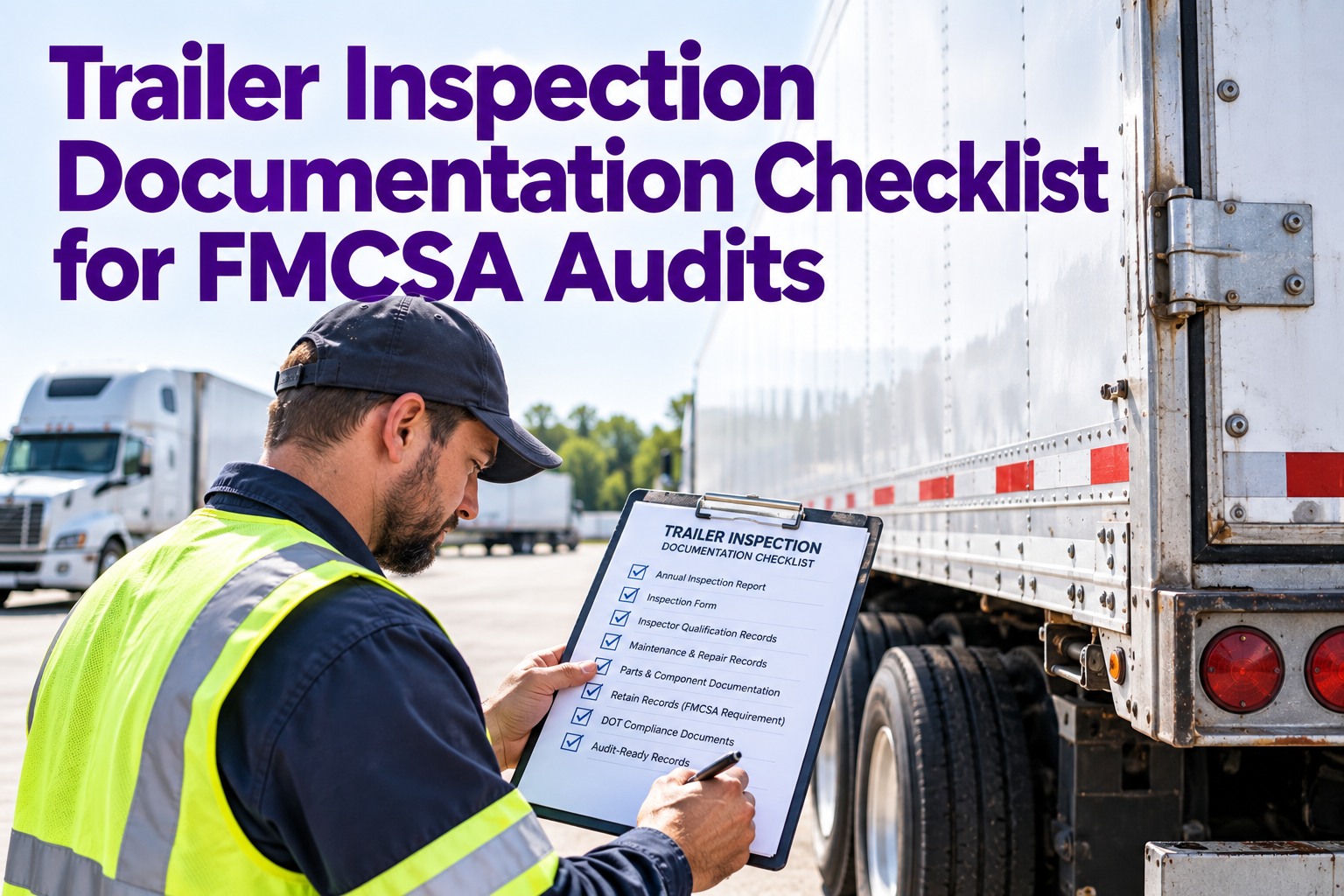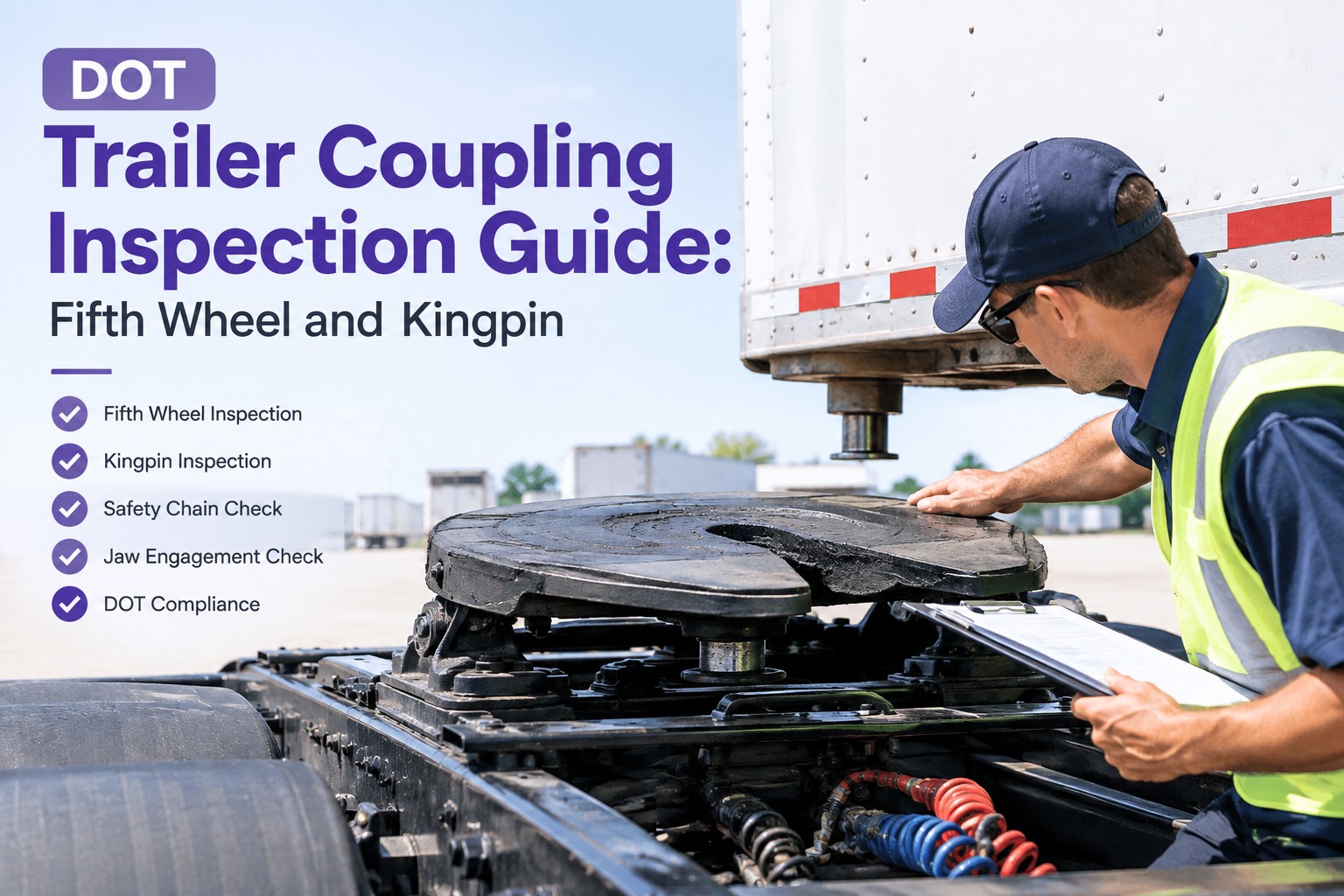
Lighting failures are the single most preventable out-of-service violation on a commercial trailer — and one of the most common. In every CVSA International Roadcheck year over year, inoperative lights, missing reflectors, and defective marker lamps consistently rank in the top five OOS categories, sitting behind only brakes and tires. Unlike a brake adjustment that requires a chalk mark and a stopwatch, a bad light is visible to every officer at every weigh station from 100 feet away in the dark. A single burned-out marker lamp is a citation. A broken ground on the 7-way connector can dim every light on the trailer and produce a cascade of citations from one root cause. The dedicated blue-wire ABS power line under FMVSS 121 is a separate compliance issue entirely — trailers manufactured after March 1, 2001 must have functional ABS with an external malfunction lamp, and an ABS fault light that's illuminated at roadside triggers immediate scrutiny. What makes trailer electrical inspection deceptively difficult is that most defects don't announce themselves during a walk-around: a corroded ground pin passes a static continuity check but fails under load; a chafed wire in the harness works fine until a bump; and a working tail light doesn't mean the brake filament is working. This guide covers exactly how to inspect a commercial trailer's lighting and wiring system — the 7-pin connector pinout function-by-function, the required lights and reflectors under 49 CFR 393, the dedicated ABS power line, how to test grounds and voltage drop properly, the top 6 electrical OOS violations, and how Truck Inspection & Maintenance software builds photo-verified lighting DVIRs that catch a burned-out marker before the officer does. Ready to eliminate lighting citations from your CSA record? Start a free trial of Truck Inspection & Maintenance, or contact our support team for a walkthrough.
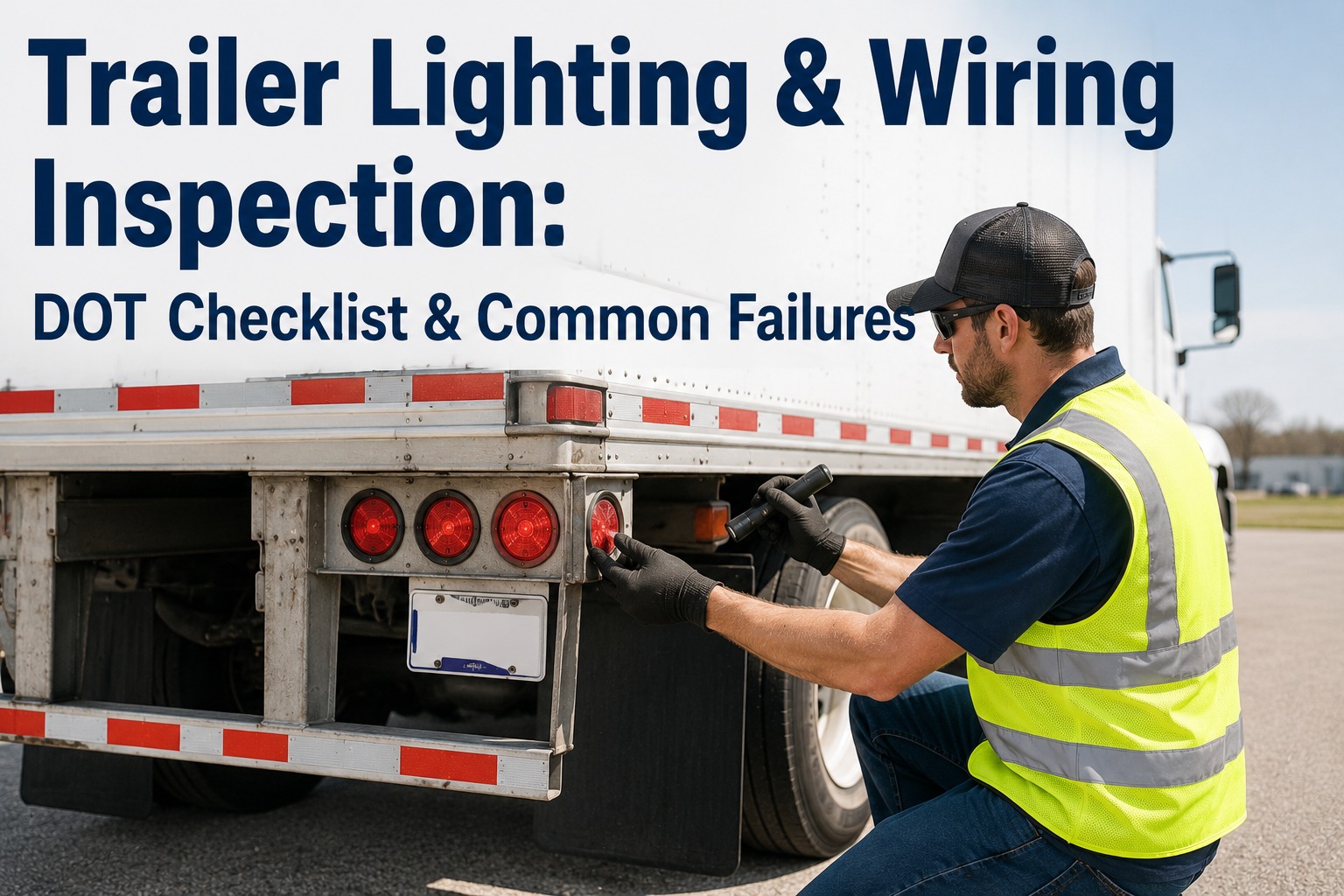
Trailer Lighting & Wiring Inspection: DOT Checklist & Common Failures
Every lighting defect is visible to every officer from 100 feet away. Here's how to inspect every circuit, every ground, every reflector — before an inspector does it for you.
The Commercial 7-Pin Connector — All 7 Circuits Mapped
Every heavy-duty trailer connects to the tractor through a SAE J560 7-pin connector. Understanding what each pin actually does — and its expected color code — is the foundation of every troubleshooting call.
Required Lights & Reflectors on a Commercial Trailer
49 CFR 393 specifies exactly which lights and reflectors are required by trailer location, color, and position. Missing or inoperative equipment is an out-of-service condition.
The ABS Power Line — Its Own Compliance Issue
Under FMVSS 121, trailers manufactured after March 1, 2001 must have functional antilock brake systems. The dedicated blue-wire ABS power line and the external malfunction lamp are the pieces that determine roadworthiness at inspection.
The 6 Most Common Trailer Electrical Failures
Every electrical citation traces back to one of these six root causes. Learn to spot them at pre-trip and you eliminate the vast majority of lighting OOS violations.
The 6-Step Lighting Pre-Trip Inspection
A systematic lighting check takes 5 minutes and catches every preventable OOS violation. Skip a step and you're gambling on the officer not being thorough.
Turn every pre-trip into a photographed lighting audit
Photo-verified marker light count. Automatic reflector checklist. ABS malfunction lamp status logged. Ground resistance history per trailer. Truck Inspection & Maintenance software makes the 5-minute lighting check a documented, repeatable event — not a memory-based scan.
Troubleshooting — Voltage Drop vs Continuity
When lights don't work as expected, most technicians reach for a continuity tester. That's the wrong tool for most trailer electrical problems. Here's why voltage drop testing is what actually finds the fault.
Wire Gauge Requirements — Minimums Matter
Undersized wire overheats, drops voltage, and fails under high-current loads like ABS or brake magnets. The minimum wire gauges for a heavy-duty 7-pin are specific — and skimping is a mistake.
Frequently Asked Questions
On a standard commercial 7-pin SAE J560 connector, the color codes are: White = Ground (the return path for every circuit); Blue = ABS Power (constant 12V+ to the trailer ABS ECU under FMVSS 121); Black = Running/Marker Lights (tail, clearance, side markers, license plate); Yellow = Left Turn + Brake (dual-function signal + brake on the left side); Green = Right Turn + Brake (dual-function on the right); Red = Stop or Auxiliary Power (varies by configuration); Purple = Reverse Lights or auxiliary function. Wire colors are not universally standardized — always verify pin function with a multimeter rather than trusting color alone. Truck Inspection & Maintenance software tracks lighting inspection results per trailer.
The #1 cause of dim or flickering trailer lights is a bad ground — corrosion at the white pin or at the trailer's ground connection to the frame. A weak ground shows up as flickering lights, marker lamps that dim when the blinker flashes, or turn signals that work on one side but not the other. Test with a multimeter: you want under 0.2 ohms of resistance between the ground pin at the connector and the tractor battery negative post. Other causes include corroded connector pins, chafed wire in the harness, and moisture inside sealed lamps. Voltage drop testing under load — not just continuity testing — is what actually finds these resistance-based failures.
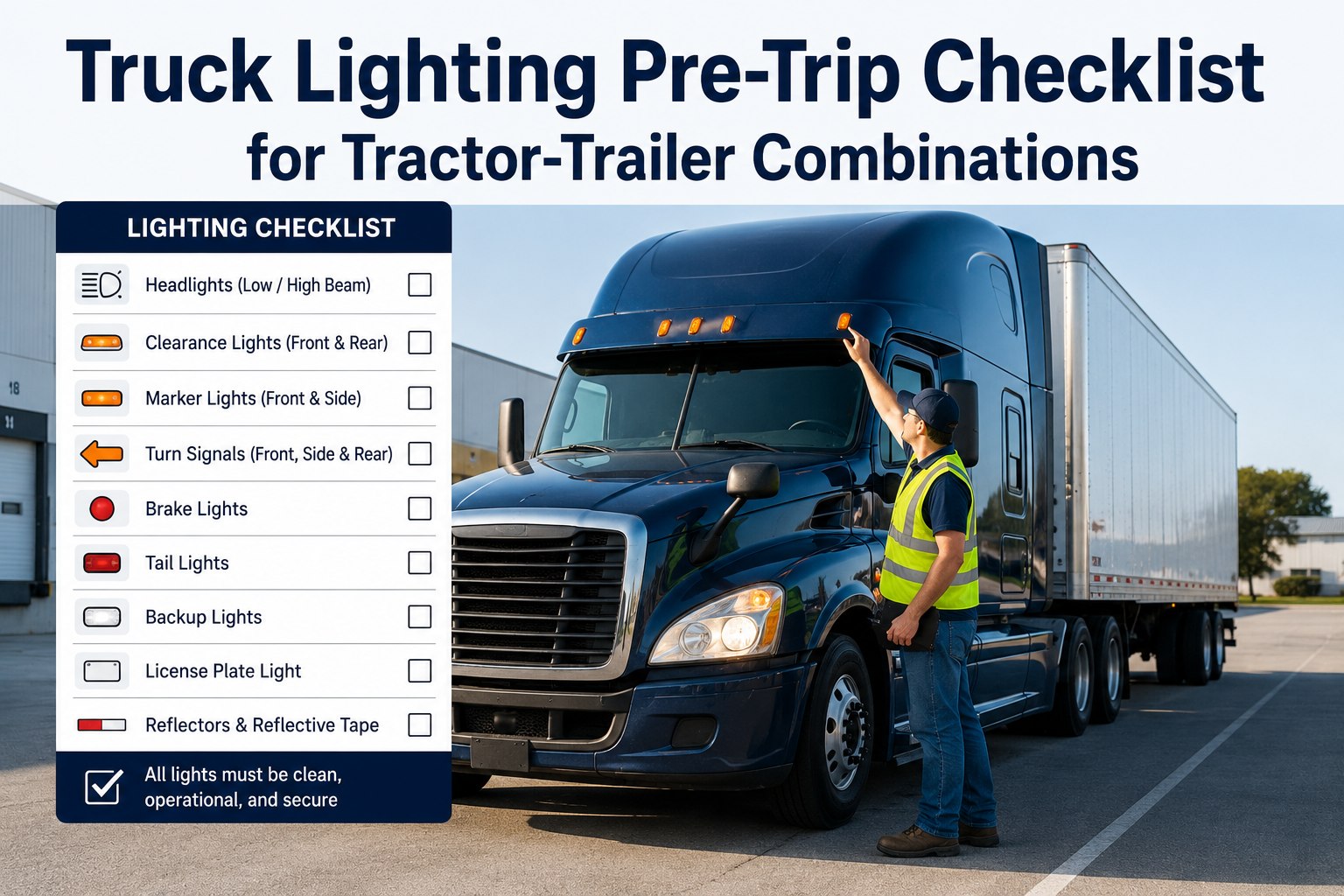
Under 49 CFR 393, a commercial trailer requires: at the front — two amber clearance lamps, two amber side marker lamps at the front-most position, two amber side marker reflectors; on the sides — amber intermediate side marker lamps and reflectors on trailers over 30 feet, red rear side markers and reflectors, white/red alternating conspicuity tape; at the rear — two red stop lamps, two red tail lamps, two amber turn signals, three red identification lamps grouped at center-top, two red upper corner clearance lamps, two red reflectors, and a white license plate lamp. Missing or inoperative equipment in any position is an out-of-service condition.
Under FMVSS 121, trailers manufactured after March 1, 2001 must have functional antilock braking systems. The dedicated blue-wire ABS power line on the SAE J560 7-pin connector provides constant 12V+ power to the trailer's ABS Electronic Control Unit (ECU) whenever the tractor's ignition is on. A separate external malfunction lamp on the left side of the trailer indicates ABS system status — it should cycle on then off during the power-up self-test. If the lamp stays illuminated during operation, the ABS system has an active fault code. Wire gauge minimum for the ABS power line is 12 AWG — undersized wire causes voltage drop that triggers false ABS faults. An illuminated ABS lamp at roadside is typically enough for an officer to pull the trailer for a Level I inspection. Contact our team to see how the software logs ABS lamp status per pre-trip.
Use a multimeter set to DC voltage — not just a continuity tester. First, verify the tractor socket is sending power: with ignition on, test each pin at the tractor socket against a known ground. Ground pin should show < 0.2Ω to the battery negative. Blue pin should show constant 12V+. Black pin should show 12V+ when headlights are on. Yellow, green, and red pins should show 12V+ when their respective circuits activate (turn signals, brakes, reverse). Once the tractor socket is verified, connect the trailer and repeat every function while walking the trailer. If a circuit fails under load but tests fine at rest, that's a voltage drop problem — resistance somewhere in the circuit. Trace from the tractor toward the affected lamp until the voltage loss appears.
Legally, no. Under 49 CFR 393, any inoperative lamp required by the regulation — brake light, turn signal, marker light, ID lamp, clearance lamp, license plate lamp — is a violation. Some lamps trigger an immediate out-of-service order at roadside. Even lamps that don't result in OOS still generate citations that feed into your CSA Vehicle Maintenance BASIC score for 12 months, and under the 2026 CSA overhaul, "Driver Observed" defects (things a driver should have caught at pre-trip) score separately and hit harder. Financially, the math is unbeatable: a replacement LED marker lamp costs $10 to $30, a bulb costs $2 to $5, and a citation costs hundreds in fines plus long-term insurance and CSA impact. Fix it before you depart. Try free: sign up here.
Truck Inspection & Maintenance software eliminates lighting citations by catching every defect at pre-trip
Photo-verified marker light count per trailer. Automatic reflector position checklist. ABS malfunction lamp status logged at every pre-trip. Ground resistance history per unit. 7-pin socket condition tracking. Lamp replacement history with mileage correlation. Voltage drop test results captured. Every element of § 393 lighting compliance managed in one platform — because a burned-out marker lamp is a $10 fix in the yard and a $500+ problem at roadside.