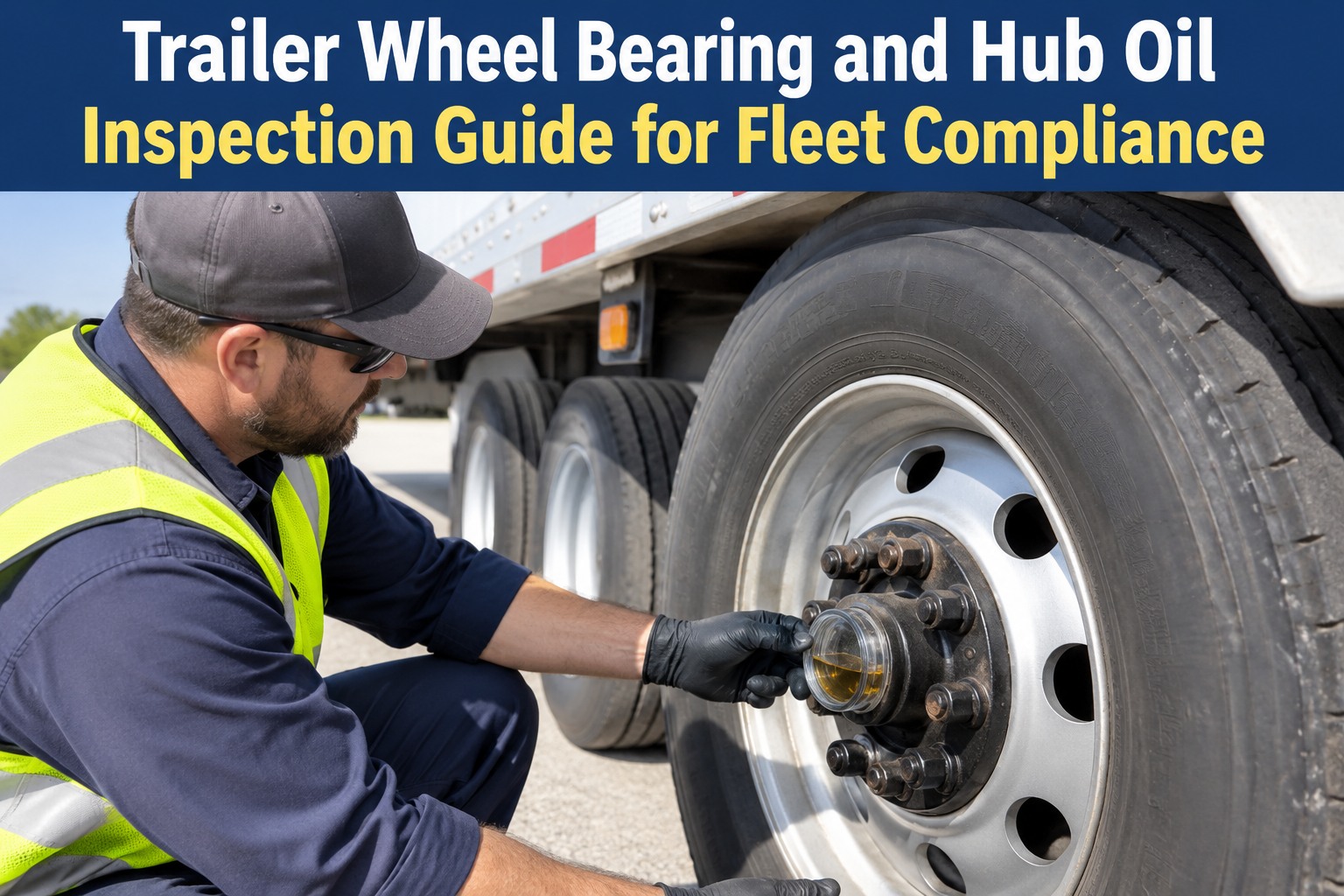
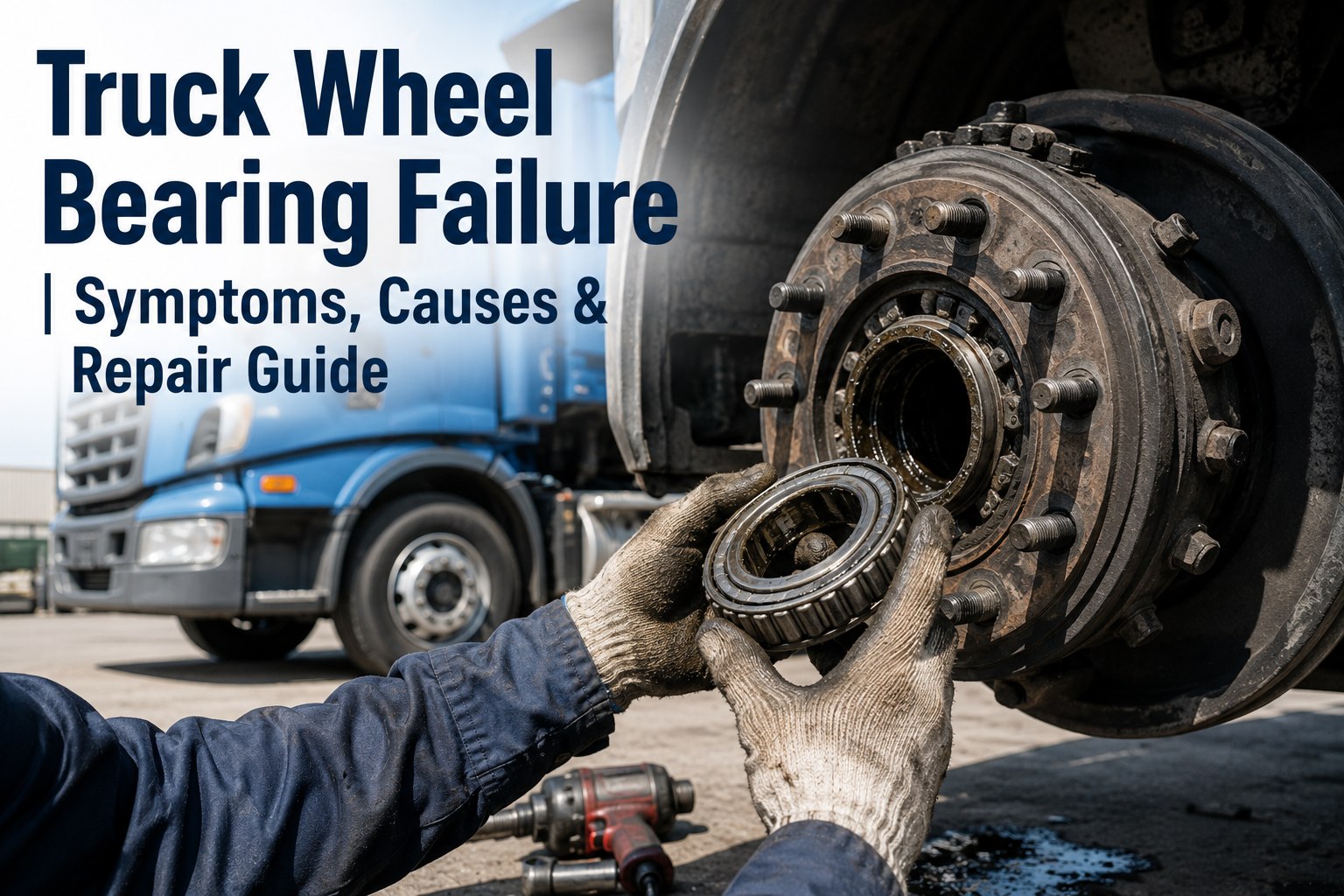
A wheel-end failure is never just a wheel-end failure. When a trailer hub seal lets go, it doesn't fail one system — it fails two. The lubricant drains and the bearing starves toward seizure; the same oil slings inward onto the brake shoes and kills your stopping power. One $40 seal, two safety systems down, and at the end of the chain a wheel-off event at highway speed. Wheel bearing and hub problems drive a meaningful share of trailer roadside events, and nearly every one traces back to a check that takes two seconds: reading the hub sight glass. This guide covers the inspection method, what the oil is telling you, the driver-and-tech handoff that catches failures early, and the exact triggers that mean "pull it now." Start a free trial and trend every hub's oil level with photo evidence.
Trailer Wheel End · Bearing & Hub Oil
Trailer Wheel Bearing & Hub Oil Inspection
One failed hub seal takes down two systems at once — lubrication and braking — and ends in wheel separation if it's missed. The catch is a two-second sight-glass read. Here's the inspection that prevents the catastrophe.
2 secto read a hub sight glass per wheel end
2safety systems one seal leak takes down
Warmnot hot — a correctly adjusted bearing's temp
Why One Seal Failure Is Two Failures
This is what makes the wheel end so unforgiving. The inner seal does two jobs at once — keep oil in the hub and keep oil off the brakes. When it fails, both jobs fail together, on the same axle, at the same moment.
Branch 1 · Lubrication lost
Oil drains from the hub. Once the level drops below the bottom of the bearing race, the upper bearing runs dry on every rotation. Heat builds, wear accelerates, and the bearing marches toward seizure — and a seized bearing can throw a wheel or start a fire.
Branch 2 · Brakes contaminated
The same escaping oil slings inward onto the brake shoes and drum. Oil-soaked friction material can't grip — stopping distance grows just as the bearing is overheating. In most cases contaminated linings can't be cleaned; they must be replaced.
The point Inspectors know this, which is why a wheel seal leak is treated as a serious violation, not a cosmetic one. CVSA guidance has them look for oil sling on the rim, wetness around the seal, and contamination on the shoes or drum. A "messy hub" is a lubrication problem, a brake problem, or both — never just a mess.
Ask how wheel-end checks get standardized.
Reading the Sight Glass: Three Things the Oil Tells You
Oil-bath hubs carry a reservoir of gear oil with a sight glass or hubcap window. That little window is a diagnostic instrument — a two-second glance reads three different failure modes at once.
Level at the fill line
Clear oil, at or above the fill mark, covering the bearing race. This is healthy — note it and move on.
Below the fill line
Low lubricant. A seal, hubcap gasket, or an underfilled last service is losing oil. Flag it before the level drops below the bearing and damage begins.
Milky or opaque
Water contamination has gotten into the hub. The lubricant can no longer protect the bearing properly — service it, don't run it.
Metal particles / debris
Visible metal in the oil means the bearing is already coming apart inside. This is a pull-it-now finding, not a watch item.
The Failure Cascade — and Where to Break It
Wheel-end failures follow a predictable chain. The earlier you catch it, the cheaper and safer the fix — a seal is a routine repair, a wheel-off is a catastrophe. Every stage before the last is a place to break the chain.
1Seal wears or is damaged — heat cycling, miles, a bad prior install, or road impact starts a slow leak. Catch here: cheapest
↓
2Oil level drops — visible in the sight glass well before any damage. A pre-trip glance catches it. Catch here: still cheap
↓
3Bearing runs hot — starved of oil, the hub climbs above normal temp. A side-to-side temp check flags it. Catch here: repair, not replace-all
↓
4Seizure → wheel separation / fire — the bearing welds itself or the wheel leaves the trailer. Too late
Turn the Two-Second Glance Into a Trended Record
Truck Inspection & Maintenance replaces paper DVIRs and PM spreadsheets with mobile wheel-end checks: drivers photo-document each hub's sight glass at coupling and pre-trip, the level and condition get trended over time, and a low reading or a hot hub routes straight to a work order before the bearing is damaged. Every check is a timestamped, audit-ready record — so a slow seal leak shows up as a downward trend on the dashboard instead of a wheel-off on the interstate. That's how fleets push PM compliance above 95%.
The Handoff That Catches Failures: Driver + Tech
Wheel-end safety is a two-person job, and the gap between them is where failures slip through. Drivers catch the dynamic warning signs on the road; technicians catch the structural condition in the bay. The check only works when the handoff between them is clean.
The Driver Catches
Sight-glass level low, milky, or debris in oil
A hub running noticeably hotter than the others
Grinding, humming, or rumbling from a wheel end
Oil sling on the rim or the inner tire sidewall
The Tech Catches
Seal condition, bearing adjustment, endplay
Brake-lining contamination from a leaking seal
Hubcap cracks, gasket condition, vent function
Root cause — why the lubricant left in the first place
Temperature check A correctly adjusted bearing runs warm, not hot. After a run, compare hub temps across the axle with an IR thermometer or a careful hand-touch — you're not chasing an exact number, just an abnormal difference. One hub markedly hotter than its neighbors is pulling too much friction. Some fleets now run automatic hub-temp sensors that alert the dashboard before the driver feels a thing.
Repair Triggers: When It Comes Off the Road
Not every finding is an emergency, but several are non-negotiable. These are the wheel-end conditions that mean stop now — no "finish the route first."
!Any active oil leak from the seal or hubcap — it's a lubrication and a brake risk at once
!Metal particles visible in the hub oil — the bearing is already failing internally
!Oil contamination reaching the brake shoes or drum — braking is compromised
!A hub running significantly hotter than the others on the axle
!Grinding or rumbling from the wheel end, or any detectable bearing play
The whole wheel-end story comes down to one habit: read the sight glass, compare the temps, and route anything abnormal before the next dispatch. Caught at the seal, it's a routine repair; caught at the shoulder, it's a tow, a violation, and a contaminated brake job.
Start free and make the two-second check a documented safety gate on every trailer.
Frequently Asked Questions
How often should trailer hub oil be checked?
The sight-glass level and seal condition should be checked at every pre-trip, and — critically for drop-and-hook fleets — at every coupling, since a driver swapping trailers several times a day may pick up a hub they've never seen. It takes about two seconds per wheel end and catches a low-oil condition from a seal leak before any bearing damage occurs. Beyond the visual, the hub oil and bearings themselves get serviced on the manufacturer's interval and any time a leak or contamination is found. The daily glance is what prevents the failure; the scheduled service is what maintains the wheel end.
Start free and tie the check to every coupling.
Is a small wheel seal leak really an out-of-service issue?
It can be, and it should never be treated casually. FMCSA and CVSA consider active wheel seal leakage a serious matter because it attacks two safety systems at once — it drains the lubricant the bearing depends on and contaminates the brake friction surfaces. Inspectors specifically look for oil sling on the rim, wetness around the seal, and contamination on the shoes or drum. Even a leak that looks minor is letting contaminants in as it lets oil out, so it worsens quickly. The safe and compliant move is to pull the trailer and repair the seal before it becomes a bearing failure or a brake violation.
What does milky hub oil in the sight glass mean?
Milky or opaque oil means water has gotten into the hub — through a failed seal, a cracked or missing hubcap, or a compromised vent. Water-contaminated lubricant loses its ability to protect the bearing and promotes corrosion and accelerated wear. It's not a top-off situation; the hub needs to be serviced, the contamination source found, and the lubricant replaced. Clear oil at the fill line is healthy; anything cloudy is a flag. And if you see actual metal particles or debris suspended in the oil, that's a further step — the bearing is already breaking up internally and the wheel end comes off the road.
How do we catch a bad bearing before the sight glass shows anything?
Temperature and sound are your early warning. A correctly adjusted, well-lubricated bearing runs warm, not hot — so after a run, compare hub temperatures side to side across the axle with an infrared thermometer or a careful hand-touch. A hub that's markedly hotter than its neighbors is generating excess friction, often before the oil level tells the story. Drivers also frequently hear a failing bearing — grinding, humming, or rumbling — before a mechanic sees it, so make it easy for them to report a weird sound without feeling like they're creating work. The best fleets pair this with hub-temp sensors that push an alert to the maintenance dashboard automatically.
Talk to our team about wheel-end monitoring on Truck Inspection & Maintenance.
Read the glass · Check the heat · Route the defect
Catch the Seal, Not the Wheel-Off
Truck Inspection & Maintenance replaces paper DVIRs and PM spreadsheets with mobile wheel-end inspections, photo-documented hub oil levels trended over time, instant defect-to-shop work orders when a hub reads low or runs hot, and real-time compliance dashboards that keep every trailer DOT-ready. Turn the two-second sight-glass glance into a documented safety gate — and keep PM compliance above 95% year-round.
No credit card required. Free for up to 3 trucks. Built for FMCSA-compliant fleets.