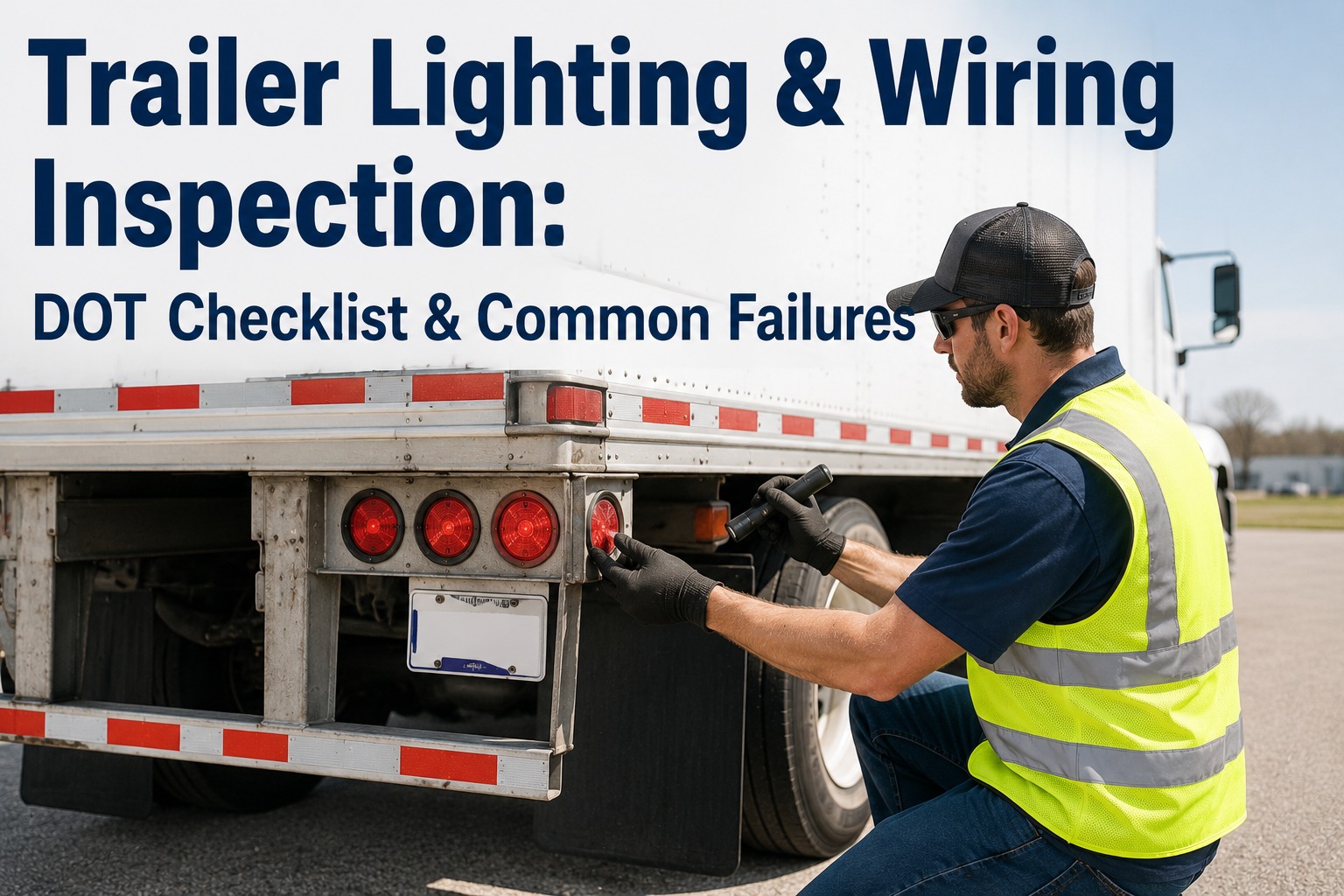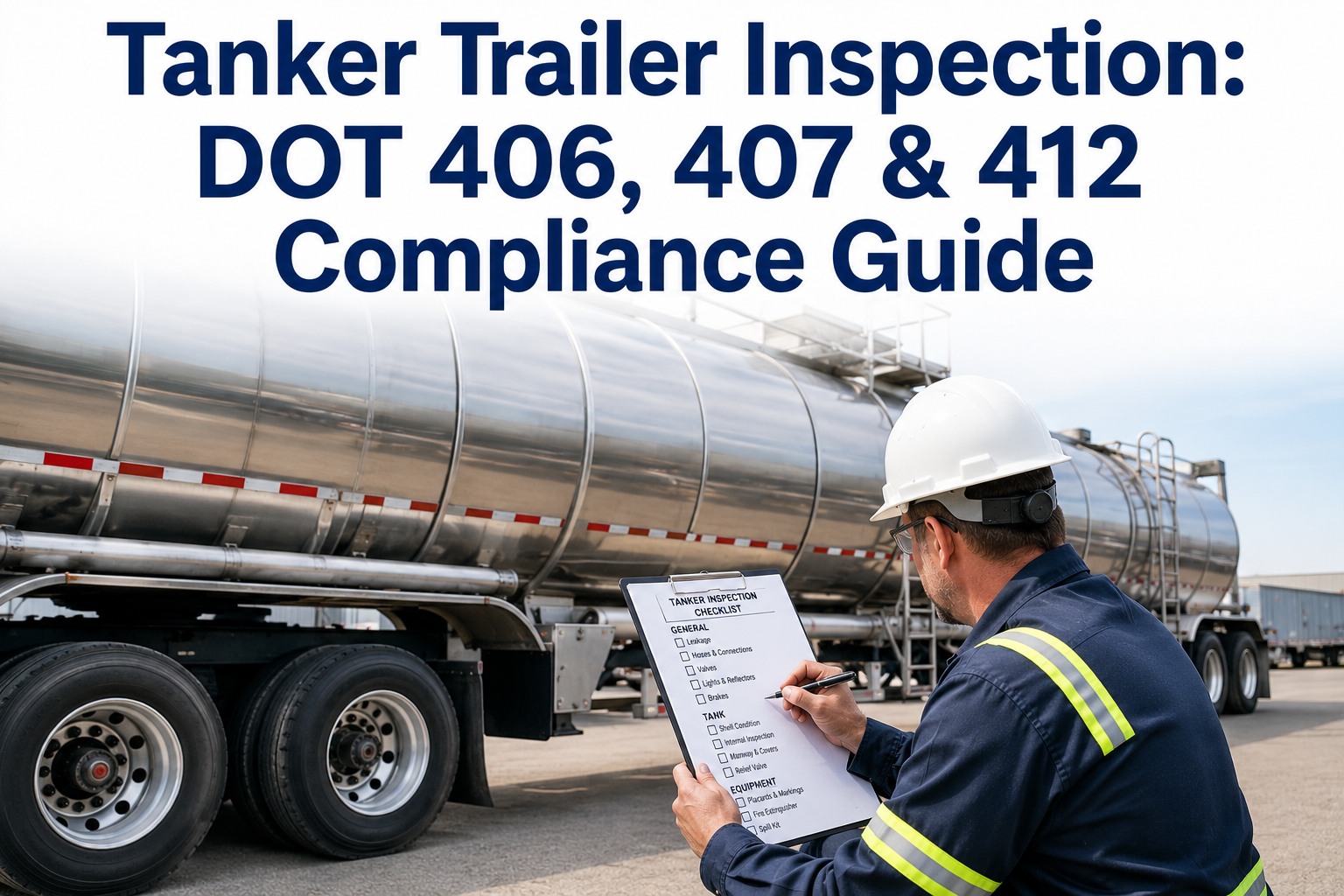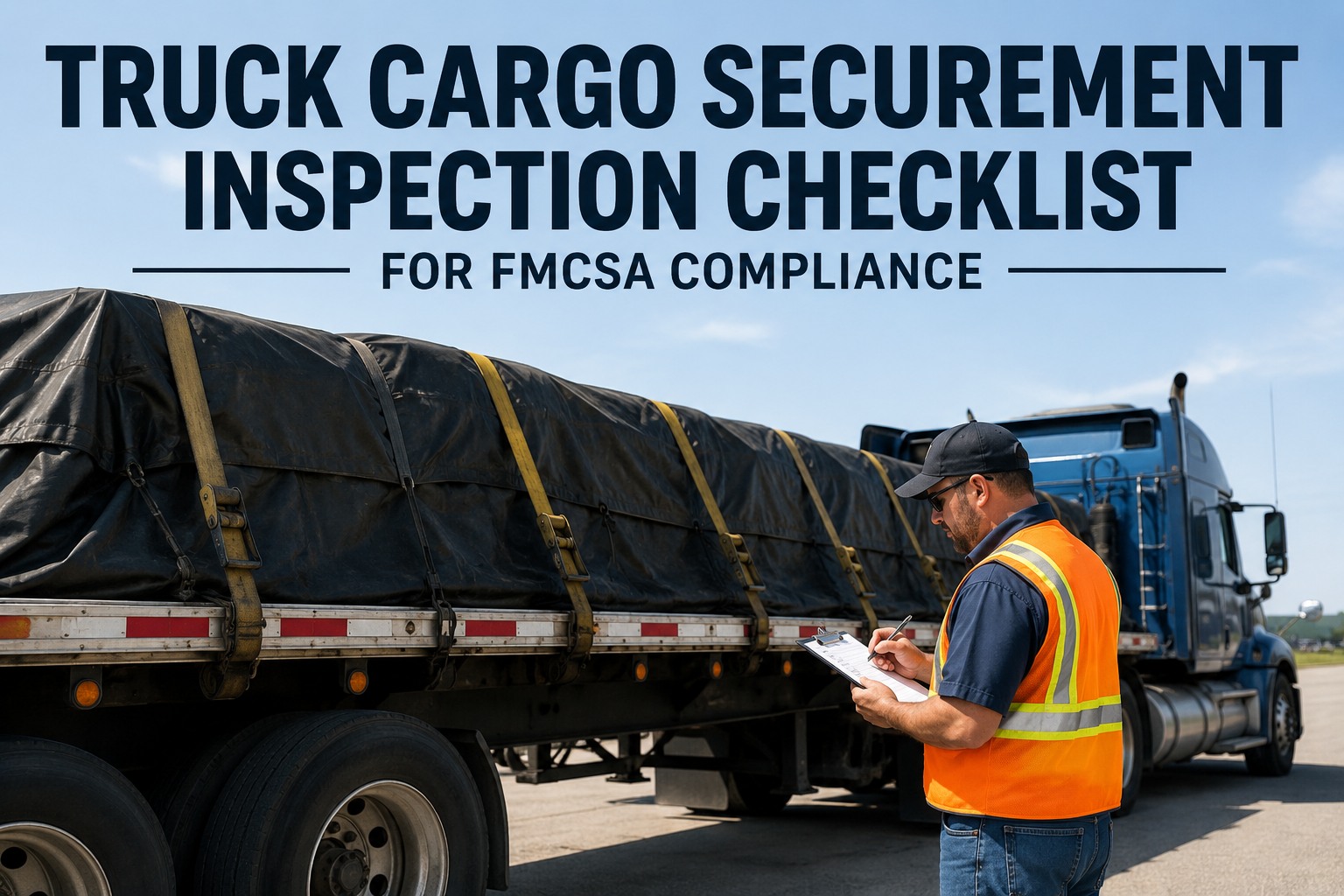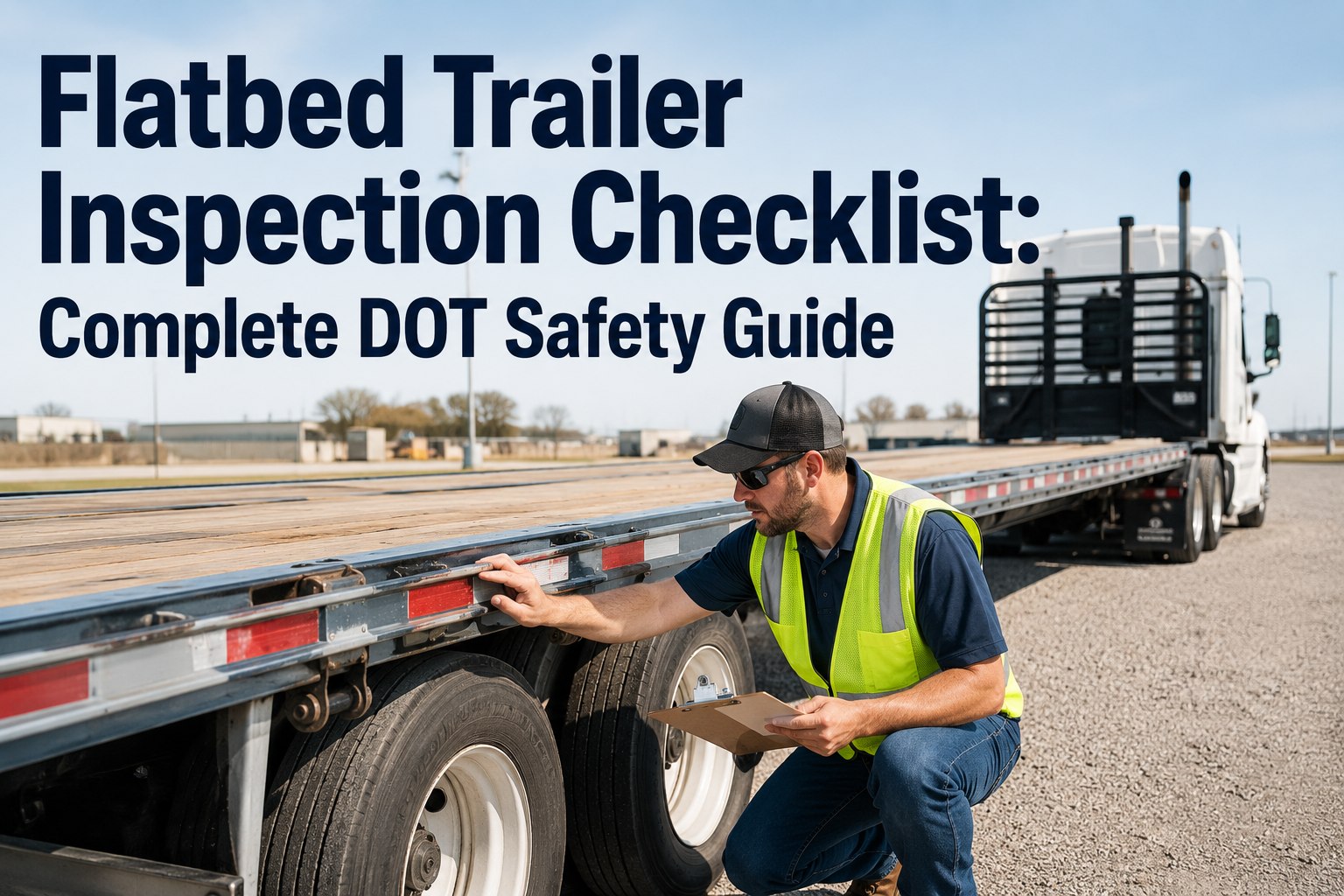
A flatbed load doesn't hide anything. Every strap, every chain, every binder, every stake pocket, every rub rail, and every inch of deck is visible to every inspector who walks past — which is exactly why flatbed loads draw disproportionate roadside attention at every weigh station in North America. And unlike a dry van where a defect stays hidden until it fails, a flatbed defect becomes a projectile the moment it lets go. FMCSA 49 CFR Part 393 Subpart I doesn't leave room for interpretation on this: cargo must be secured with at least one tie-down for articles 5 feet or less, additional tie-downs for each additional 10 feet, an aggregate working load limit equal to at least 50% of cargo weight, and the ability to withstand 0.8g forward, 0.5g rearward, and 0.5g lateral deceleration forces. A single securement violation carries civil penalties up to $16,000 per occurrence and an immediate out-of-service order. The math is unforgiving too — a 22,000 lb machine strapped with a 3,333 lb WLL strap has not been secured, it has been decorated, and the first hard brake will confirm it. Beyond securement, flatbeds have their own hardware inspection layer that enclosed trailers don't need: stake pockets that can lose capacity from cracks and bends, rub rails whose welds are CVSA out-of-service criteria when cracked, D-rings that shift under load, wooden deck boards that rot invisibly under paint, and headache racks whose 0.8g forward-deceleration rating (§ 393.106(b)) is worthless if the front bulkhead is punctured. This guide covers exactly what to inspect on a flatbed — a zone-by-zone pre-trip walk, the WLL math you have to satisfy before departure, the 6 most common OOS violations, tie-down retirement criteria under § 393.104, and how Truck Inspection & Maintenance software builds photo-verified flatbed DVIRs that document each tie-down and hardware condition before every load. Ready to leave the yard confident every strap and stake pocket is compliant? Start a free trial of Truck Inspection & Maintenance, or contact our support team for a walkthrough.
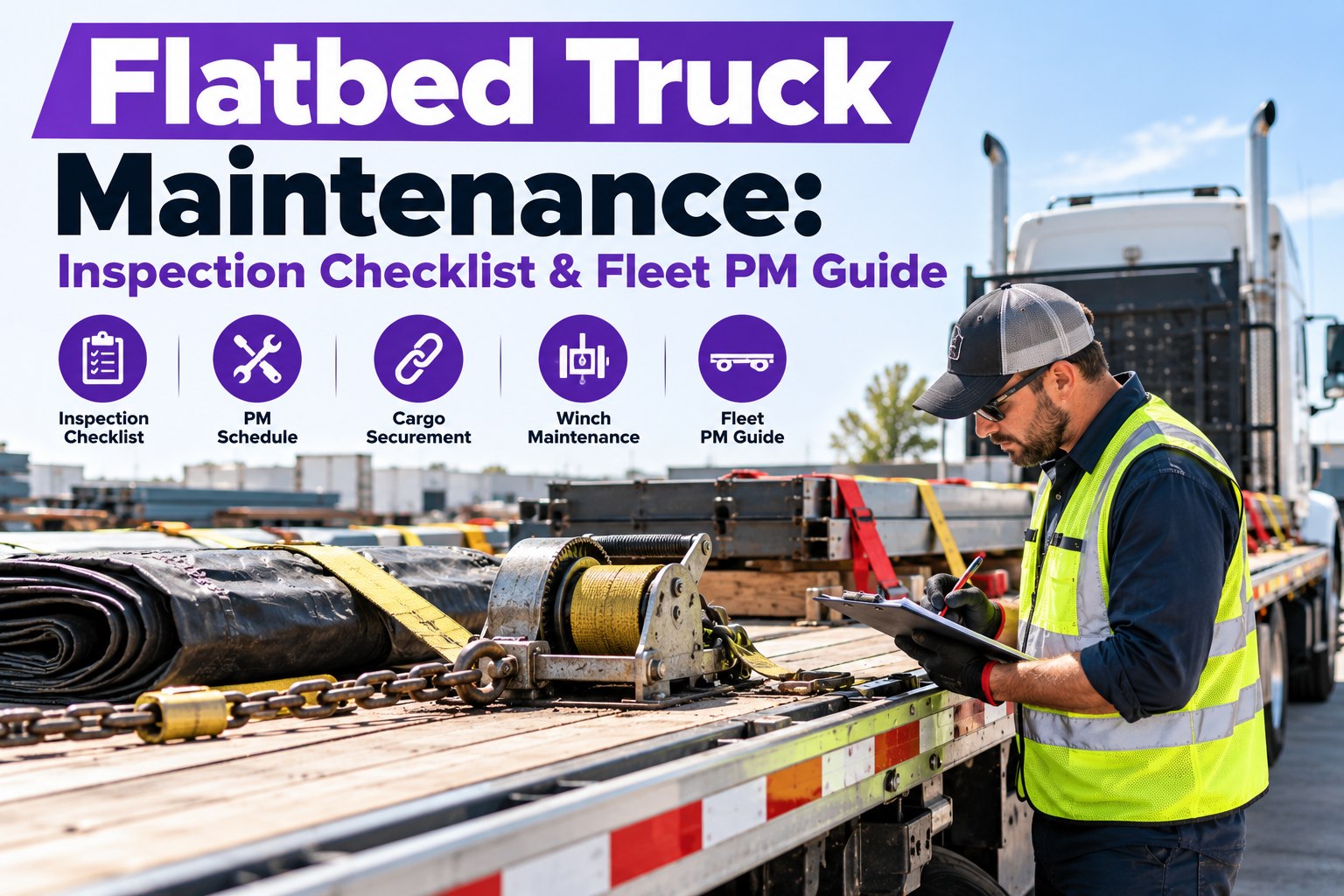
Flatbed Trailer Inspection Checklist: Complete DOT Safety Guide
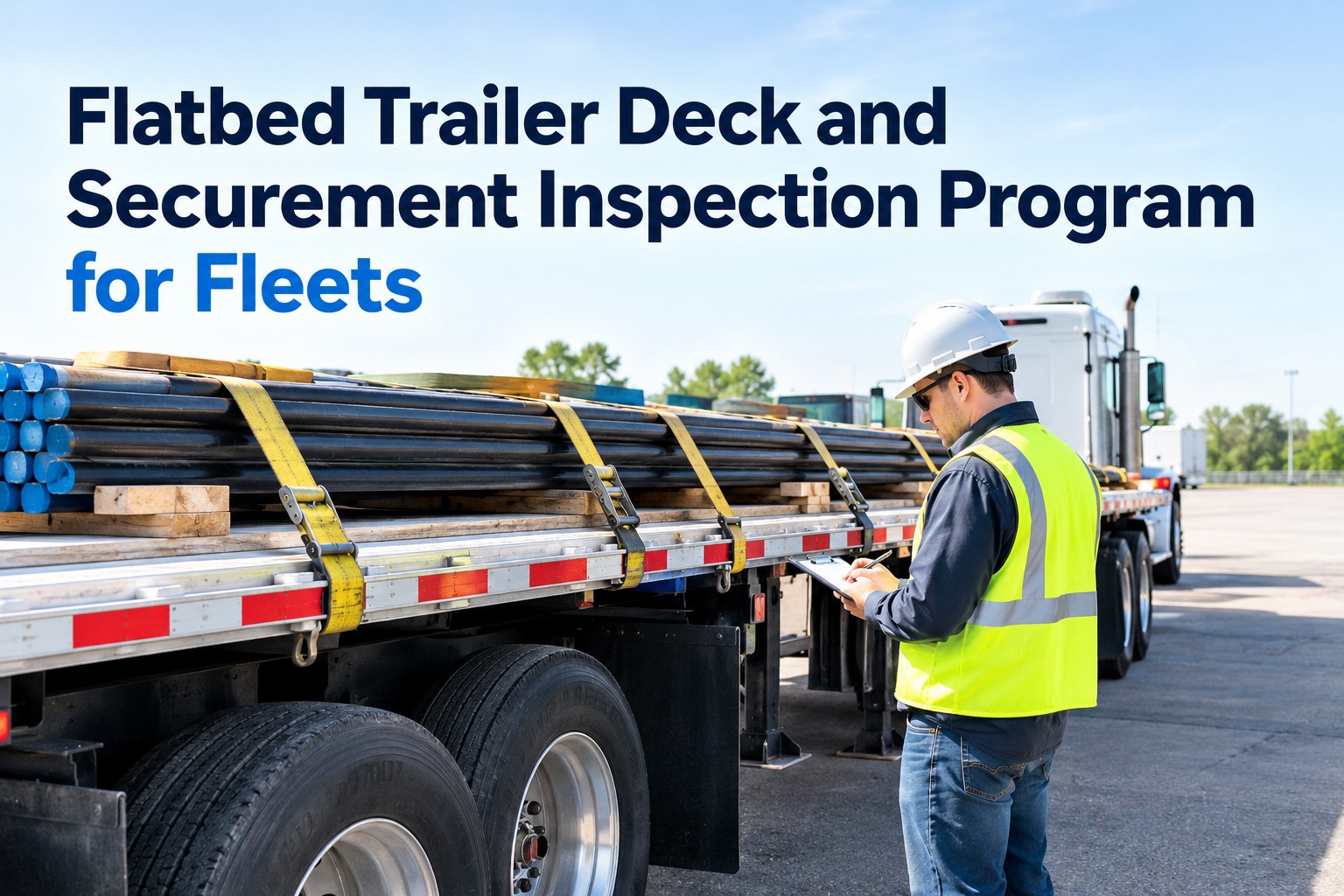
Every strap visible. Every stake pocket exposed. Every rub rail scrutinized. Flatbed inspections are the most rigorous roadside checks in trucking — here's how to pass every one.
The 8-Zone Flatbed Inspection Walk
A systematic pre-trip covers eight distinct zones. Skip any and you're gambling on the strongest zone compensating for the weakest — which under CVSA out-of-service criteria, it can't.
The 50% Working Load Limit Rule
The single most enforced number on any flatbed. Under 49 CFR 393.106, the aggregate working load limit of all tie-downs must equal at least 50% of the cargo weight. Get this math wrong and every downstream check becomes irrelevant.
Minimum Tie-Down Count Rules
Beyond the 50% WLL math, § 393.110 specifies a minimum number of tie-downs by cargo length. Both rules apply — meeting one doesn't satisfy the other.
When to Retire a Tie-Down — § 393.104 Criteria
Every strap and chain in service must be removed from service if any of these conditions are present. Not "consider removing" — must remove.
Every strap photographed. Every WLL verified. Every load documented.
Photo-verified flatbed DVIRs with per-tie-down capture. Automatic WLL aggregation against cargo weight. Retirement criteria checklist per strap. Truck Inspection & Maintenance software makes flatbed compliance a photograph, not a promise.
Edge Protectors — Non-Negotiable
Wherever a strap or chain contacts a sharp edge on the cargo or trailer, an edge protector is required. Missing edge protectors are one of the most common — and most preventable — flatbed OOS violations.
Top 6 Flatbed OOS Violations
The same six patterns dominate flatbed out-of-service violations. Each is preventable at pre-trip — every one is a systematic-inspection failure, not bad luck.
Pre-Trip · En-Route · Post-Trip — 3-Stage Inspection Rhythm
Modern fleets break flatbed inspections into three stages. Each catches different defects at different times. Skipping any stage lets small problems become citations.
Frequently Asked Questions
A complete flatbed pre-trip covers eight zones. Deck boards and surface (rot, splits, punctures). Stake pockets (cracks, bends, tears). Rub rails and side rails (weld cracks, sharp edges). D-rings and winch tracks (lateral play, binding). Headache rack and front bulkhead (0.8g forward restraint per § 393.106(b)). Tires, wheels, and brakes (2/32" tread, adjustment, air integrity). Lights and reflectors (all functional, conspicuity tape intact). Coupling and kingpin (kingpin condition, landing gear, safety chains). On top of these hardware checks, cargo securement must satisfy the 50% aggregate WLL rule and § 393.110 minimum tie-down count. Truck Inspection & Maintenance software builds photo-verified DVIRs for every zone.
Two rules apply simultaneously — you must meet both. First, the count rule under § 393.110: articles up to 5 feet and 1,100 lbs require 1 tie-down; articles up to 5 feet over 1,100 lbs require 2 tie-downs; articles 5–10 feet require 2 tie-downs regardless of weight; each additional 10 feet requires one more tie-down. Second, the aggregate working load limit rule under § 393.106: the combined WLL of all tie-downs must equal at least 50% of the cargo weight. A 22,000 lb machine requires aggregate WLL of at least 11,000 lbs. Meeting only the count rule but failing the WLL math is still a securement violation. Meeting only the WLL math but under-counting tie-downs is also a violation.
Under 49 CFR 393.104, tie-down devices must be removed from service if any of these conditions are present. Cuts, abrasions, or tears affecting more than 10% of the webbing width. A knot at any point in the webbing — knots reduce WLL by up to 50%. Evidence of acid or alkali damage, typically visible as chalky white staining or brittleness. Heat damage indicated by glazing, melting, or charring. Hardware (ratchets, hooks, end fittings) that is cracked, broken, or deformed. Missing or illegible WLL markings — no marking means the strap doesn't exist for compliance purposes. UV-degraded webbing that's faded, stiff, or heavily soiled should also be evaluated even without visible damage.
The 50% rule under 49 CFR 393.106(b) requires that the aggregate working load limit of all tie-downs equal at least 50% of the cargo weight. Working load limit is not breaking strength — WLL is typically one-third of breaking strength, providing a 3:1 safety factor. Example: a 22,000 lb machine requires at least 11,000 lbs of aggregate WLL. Four chains rated at 5,400 lbs WLL each provide 21,600 lbs aggregate — well over the 11,000 lb minimum and compliant. Three straps rated at 3,333 lbs each provide only 9,999 lbs aggregate — under the minimum and a securement violation carrying penalties up to $16,000 per occurrence. The 50% rule applies to every load, on every trip, regardless of cargo type. Contact our team to see how the software auto-calculates WLL vs. cargo weight per load.
Yes. Under CVSA criteria, cracked, bent, or torn stake pockets reduce the anchor capacity below the tie-down's working load limit — and the weakest link governs the entire securement system. If a strap is rated at 5,400 lbs WLL but the stake pocket it's attached to is cracked and can only hold 2,000 lbs, the effective securement at that point is 2,000 lbs, not 5,400 lbs. Rub-rail welds with visible cracking are similarly out-of-service per CVSA. Every stake pocket and every rub rail weld should be inspected at every pre-trip. Damaged hardware compromises the entire system regardless of how new or well-rated the tie-downs themselves are.
The commonly accepted rhythm is check after the first 50 miles, then every 3 hours or 150 miles thereafter, plus whenever conditions change (heavy braking, load geometry visibly shifts, weather changes). Straps and chains loosen over time due to load settling, vibration, and material compression — a strap tight in the yard can be measurably looser after the first hour. Post-trip re-tensioning check also catches components stressed near their WLL. The three-stage inspection rhythm — pre-trip, en-route re-tension checks, post-trip damage documentation — is what separates fleets that pass every roadside from fleets that get parked. Try free: sign up here.
Truck Inspection & Maintenance software makes flatbed compliance a photograph, not a promise
Photo-verified 8-zone DVIRs per trailer. Per-tie-down capture with WLL tagging. Automatic aggregate WLL calculation against cargo weight. Retirement criteria checklist per strap. Edge protector placement verification. Three-stage inspection rhythm built in (pre-trip, en-route, post-trip). Stake pocket and rub-rail condition history per unit. Every element of § 393 Subpart I compliance managed in one platform — because "the strap looked fine" isn't a valid answer after a load-loss event.