A dump truck is the only commercial vehicle that combines highway-speed operation with a hydraulically lifted bod capable of weighing 30,000+ pounds when loaded — which means the failure modes are unique and the consequences are severe. A burst hydraulic hose under load means instant loss of pressure: the bed drops uncontrolled, often onto crews working below. Contaminated hydraulic fluid causes 85% of pump failures industry-wide — yet a 30-second check during the daily walkaround catches it before the failure happens. Frozen or compacted residual material left in the body shifts the center of gravity during the next dump cycle, causing tip-overs that account for one of the most common dump truck fatality scenarios. And these are dump-truck-specific failure modes layered on top of the standard 49 CFR §396.11 inspection points that apply to every commercial motor vehicle.
The regulatory framework demands both a pre-trip inspection under §392.7 and a post-trip DVIR under §396.11 — and dump truck operations also fall under OSHA §1926.20 when working on construction sites, adding a second layer of compliance. FMCSA penalties for inadequate inspection compliance run up to $15,625 per violation per day, with potential operational suspension on repeated violations. 2025 CVSA Roadcheck data placed 18.1% of inspected vehicles out of service, with brake defects accounting for 41% of OOS findings and tire issues for 21.4% — both items a proper pre-trip would catch before the truck left the yard. The 2026 CSA SMS overhaul split Vehicle Maintenance into two separate BASIC categories and added "Driver Observed" violation tracking, making the quality of daily walkaround inspections directly impact carrier safety scores in ways they didn't a year ago.
This guide is the complete dump truck inspection checklist for 2026: the pre-trip walkaround structure, the dump-truck-specific items (hydraulic system, body, PTO, tailgate, body prop), the post-trip DVIR workflow under §396.11, the regulatory framework, and the digital documentation that satisfies both DOT and OSHA in seconds. Start your free trial of our truck inspection and maintenance software to deploy dump truck pre/post-trip workflows on every truck in your fleet — live in 10 minutes, free for up to 3 trucks.
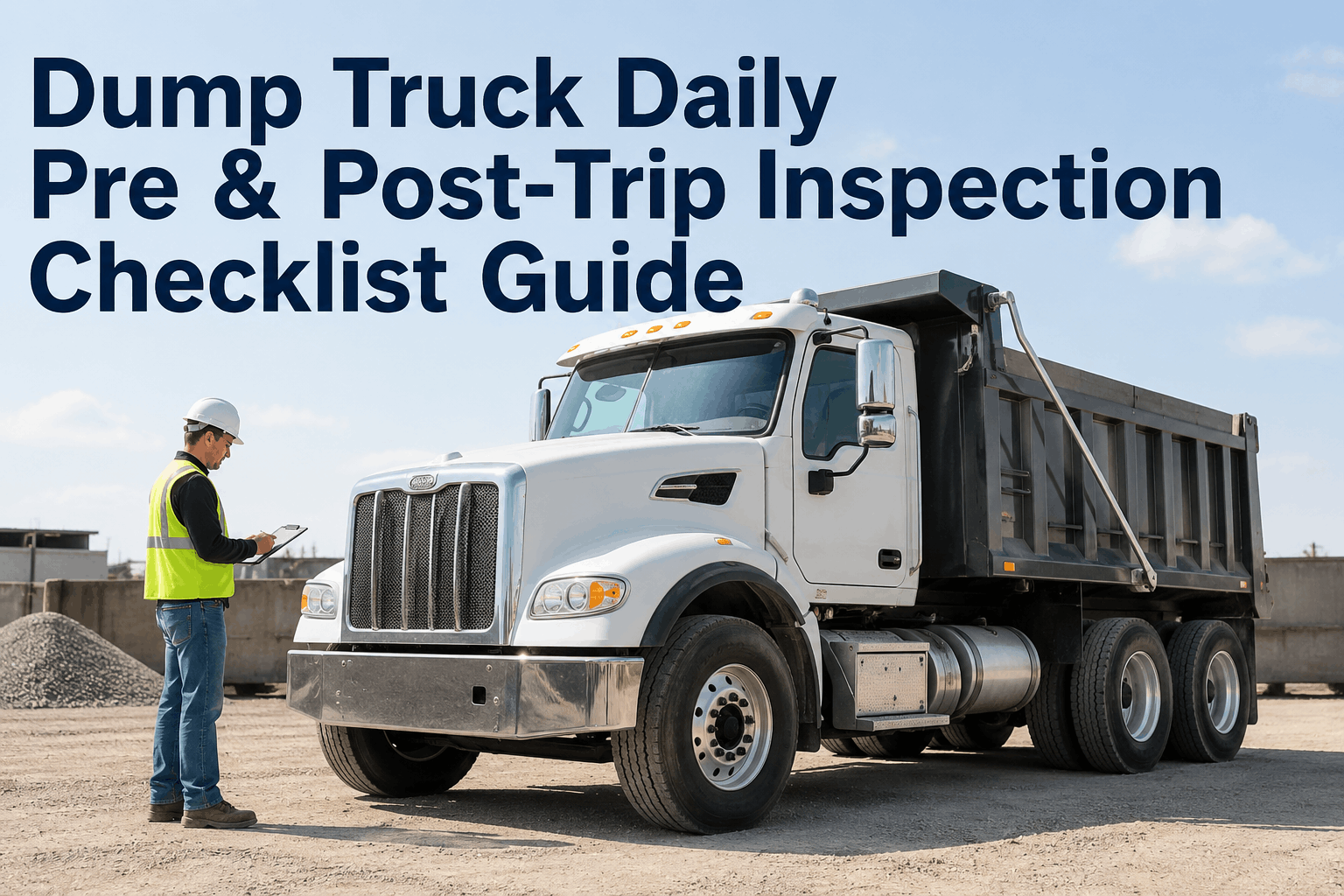
Dump Truck Daily Pre & Post-Trip Inspection Checklist Guide
The complete 2026 dump truck inspection framework — pre-trip walkaround under §392.7, dump-specific hydraulic and body items, post-trip DVIR under §396.11, OSHA construction-site compliance, and the digital workflow that catches catastrophic failure modes before they happen.
The Pre-Trip vs Post-Trip Framework
Many fleet managers conflate pre-trip and post-trip inspections — but they're governed by different regulations, serve different purposes, and produce different documentation. Both are required for dump truck operations.
The 7-System Pre-Trip Inspection Walkaround
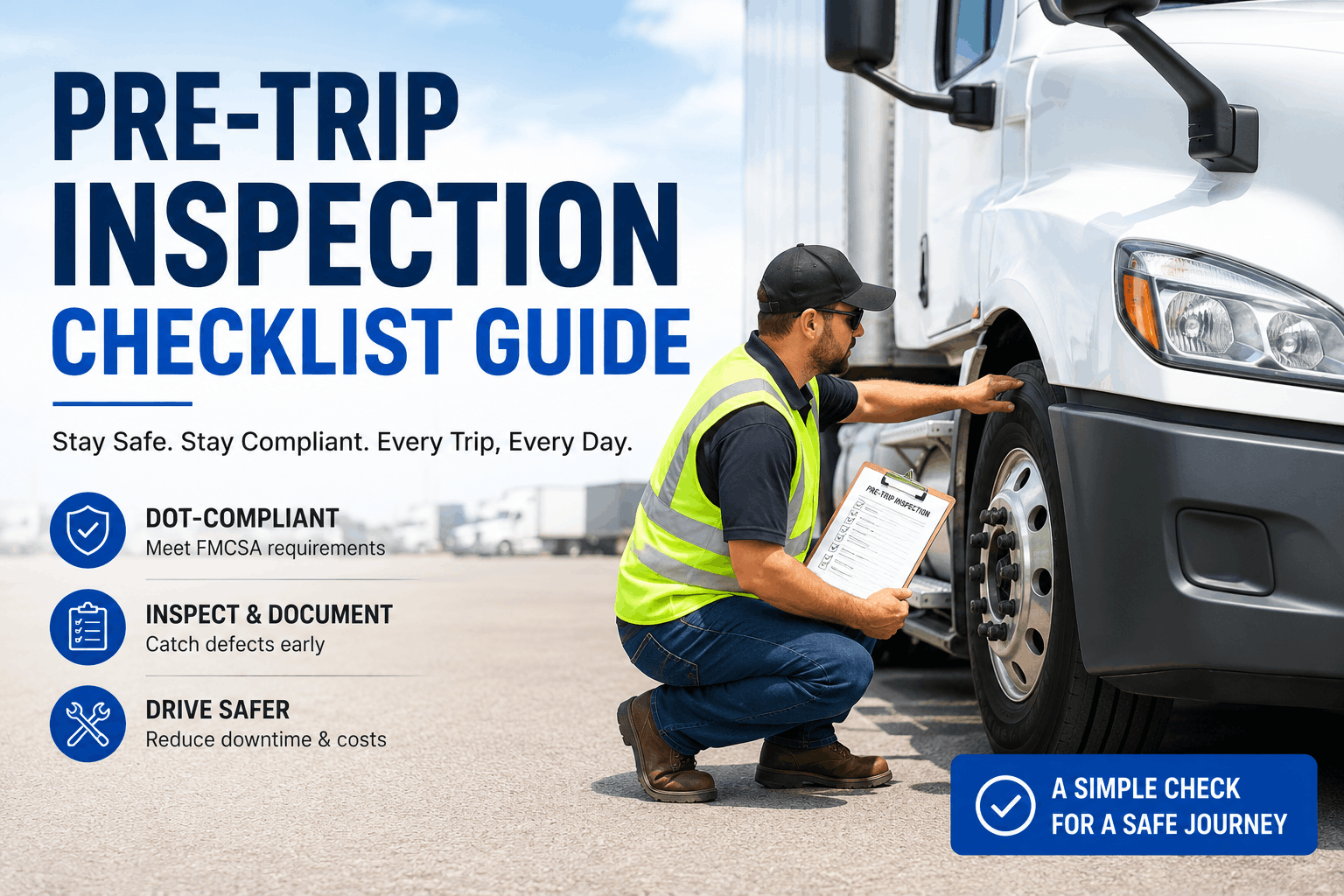
Every dump truck pre-trip follows the same 7-system structure. Sections 1-6 are standard CMV inspection; section 7 covers dump-truck-specific items. Contact our sales team for help configuring dump truck pre-trip templates across your fleet.
Dump-Truck-Specific Failure Modes & Why They Matter
Standard CMV pre-trip inspections don't catch dump-truck-specific failure modes — and these are the failures that produce the most catastrophic outcomes. Five critical items that deserve extra attention every single day.
The Post-Trip DVIR Workflow
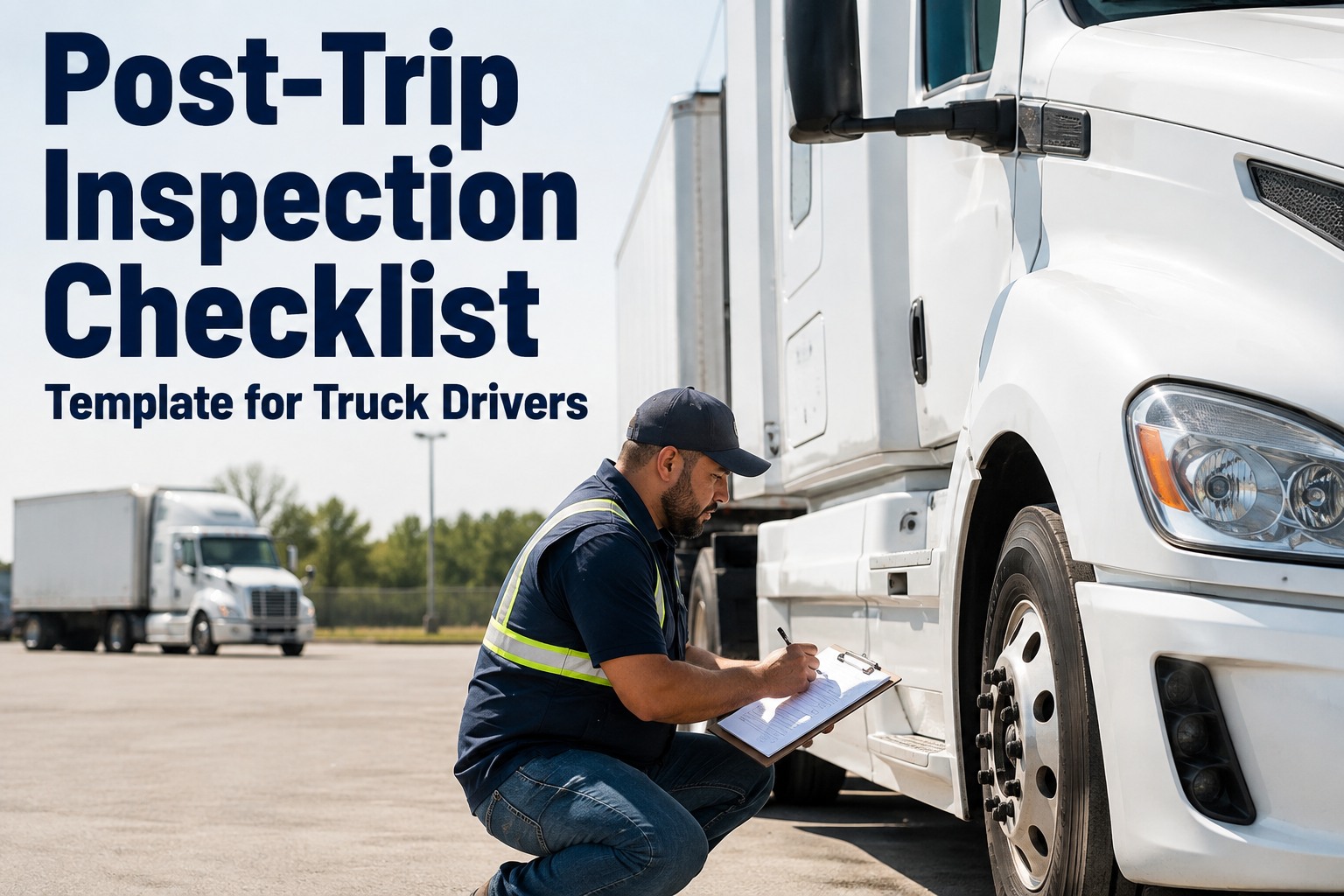
Pre-trip catches problems before operation. Post-trip documents what was discovered during operation — and creates the legally binding chain of custody that FMCSA reviewers verify during audits. Sign up free to deploy §396.11-compliant DVIR workflows.
The Regulatory Framework — Where Dump Trucks Sit
Dump trucks operate at the intersection of FMCSA (on-road) and OSHA (construction site) regulatory frameworks. Knowing which applies when keeps fleets compliant on both sides.
Frequently Asked Questions
Yes. The pre-trip inspection under 49 CFR §392.7 is required before operating the vehicle each day, with the driver satisfied that the vehicle is in safe operating condition. The post-trip DVIR under §396.11 is required at the completion of each day's work, documenting any defects discovered during operation. They serve different purposes: pre-trip catches problems before operation; post-trip documents what was found during operation. Both must be performed, but only the post-trip DVIR generates required written documentation (and only when defects are found for property-carrying CMVs). Contact our sales team to deploy both workflows on one platform.
Dump trucks add critical items beyond standard CMV inspections — primarily around the hydraulic system and dump body. Unique items include: hydraulic hose inspection at flex points and fittings (most failure-prone areas), ram and cylinder integrity, hydraulic fluid level and contamination check (85% of pump failures caused by contaminated fluid), PTO engagement and operation, dump body weld inspection at stress points, body prop and safety bar functionality, tailgate latching, and residual material assessment (frozen/compacted material shifts center of gravity causing tip-overs during the next dump). These items take 3-4 additional minutes on top of the standard 10-minute CMV pre-trip. Start your free trial to access dump-truck-specific inspection templates.
A complete dump truck pre-trip inspection takes 10-15 minutes with paper, and under 10 minutes with a digital mobile checklist. The 7-system structure covers approximately 50 inspection points: exterior walkaround (2-3 min), fluids/engine (2 min), tires/wheels/brakes (3 min), lights/signals/cab (2 min), safety equipment (1 min), operational test (2 min), and dump-truck-specific items (3-4 min). That 10-15 minute investment routinely prevents catastrophic hydraulic failures, tip-overs, and out-of-service citations worth hours to days of downtime per prevented incident.
Under §392.7 and §396.13, the driver must be satisfied the vehicle is in safe operating condition before driving. If a defect affecting safety is found during pre-trip, the truck must be held out of service until the defect is repaired and the repair certified. Critical safety defects (failed brakes, hydraulic leak in cab area, ROPS damage, broken safety device) trigger immediate OOS status with no exceptions. Non-safety-critical defects should be documented and repaired during the next scheduled service. The 2026 CSA SMS overhaul added "Driver Observed" violation tracking — meaning defects you spotted but operated anyway are now tracked separately in your carrier score. Talk to our sales team for help configuring out-of-service workflows.
For property-carrying dump trucks (most operations), FMCSA requires a written DVIR only when defects are discovered during the day's work. Defect-free days require no written report under the 2014 DVIR rule change. For passenger-carrying CMVs, a written DVIR is required every day regardless of defects. Despite the regulatory minimum, most compliance experts and insurers strongly recommend daily DVIRs for all vehicles as company policy — defect-free or not — because daily DVIRs create a complete operational history that's invaluable during accident investigations, insurance claims, and FMCSA compliance reviews. Digital DVIR platforms produce defect-free reports in seconds, eliminating the time-cost argument against universal daily DVIR.
Dump trucks operate at the intersection of two regulatory frameworks. On-road operations fall under FMCSA — pre-trip inspections under §392.7, post-trip DVIRs under §396.11, annual periodic inspections under §396.17. Construction-site operations add OSHA — pre-shift inspections under 29 CFR §1926.20 by a "competent person." A dump truck running between a quarry, a construction site, and back falls under both frameworks the same day. The good news: a well-designed inspection workflow satisfies both — most items overlap, and digital platforms can produce both FMCSA-format DVIRs and OSHA-format pre-shift records from a single inspection event. Sign up free to deploy unified FMCSA + OSHA dump truck workflows.
Catch Catastrophic Failure Modes Before They Happen
500+ fleets deploy dump truck pre/post-trip inspections on our truck inspection and maintenance software: 7-system mobile templates with dump-specific hydraulic and body items, photo evidence, 3-signature §396.11 chain of custody automation, defect-to-WO routing, FMCSA + OSHA audit packets in seconds. The 2026 standard for dump truck inspection compliance.