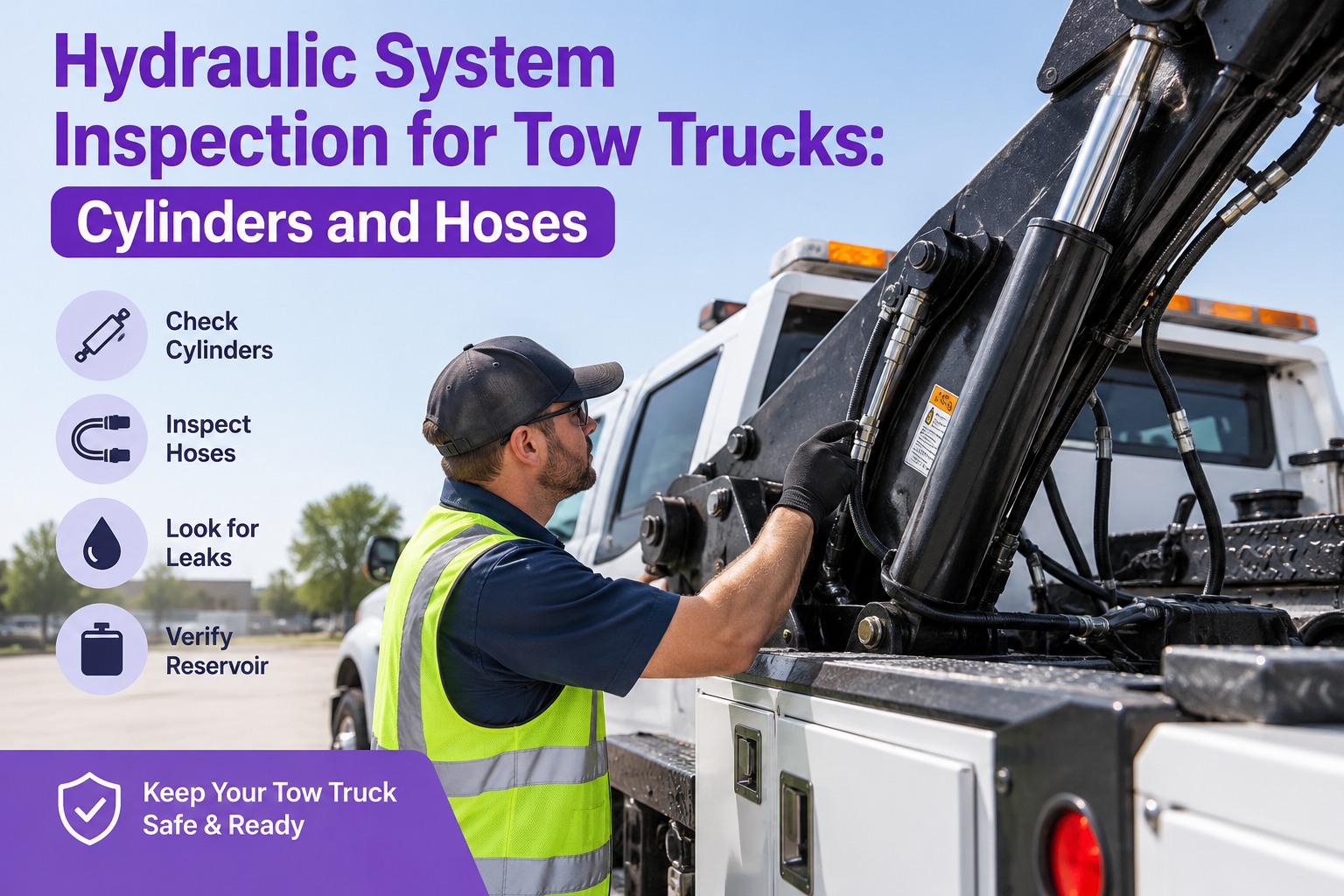
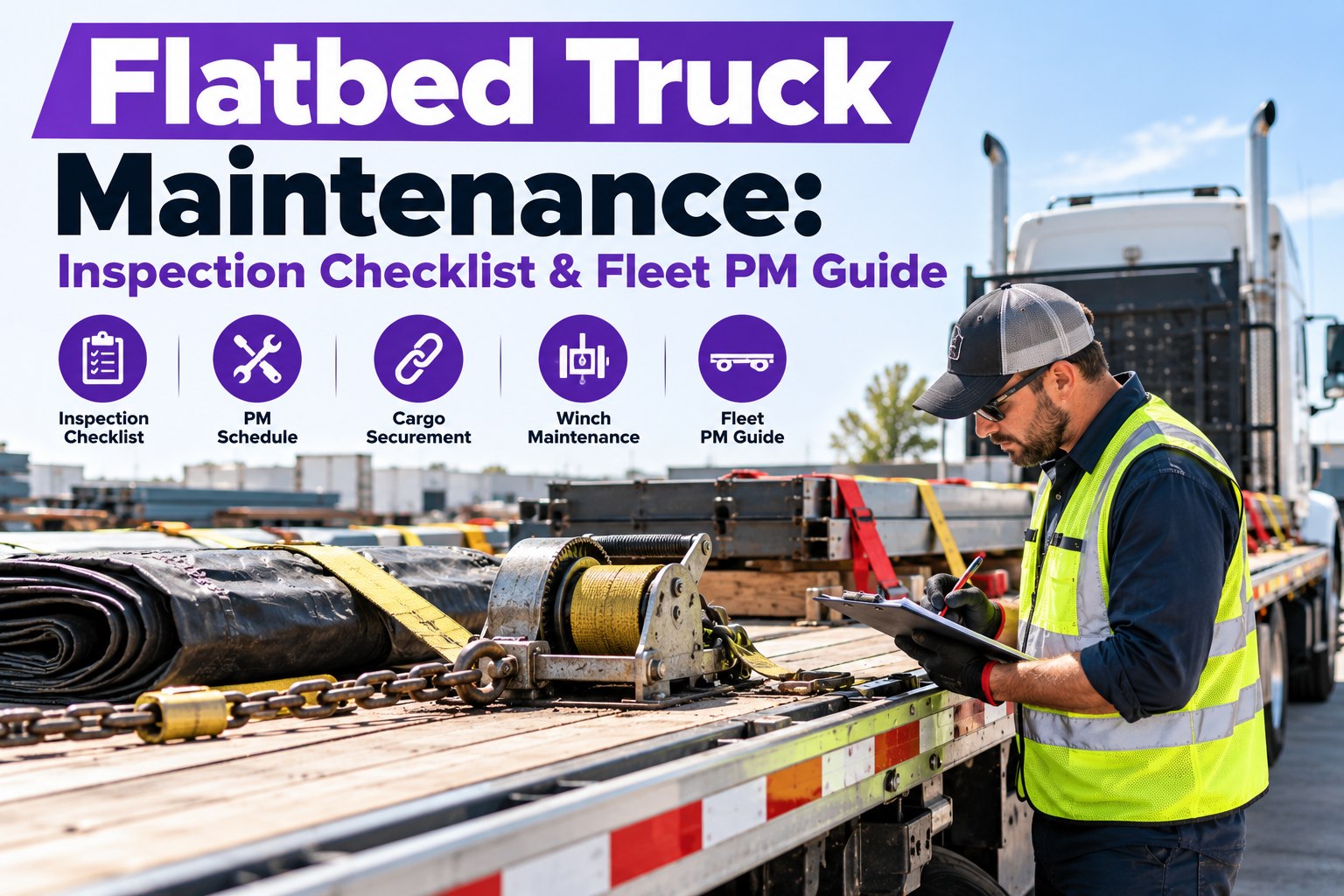
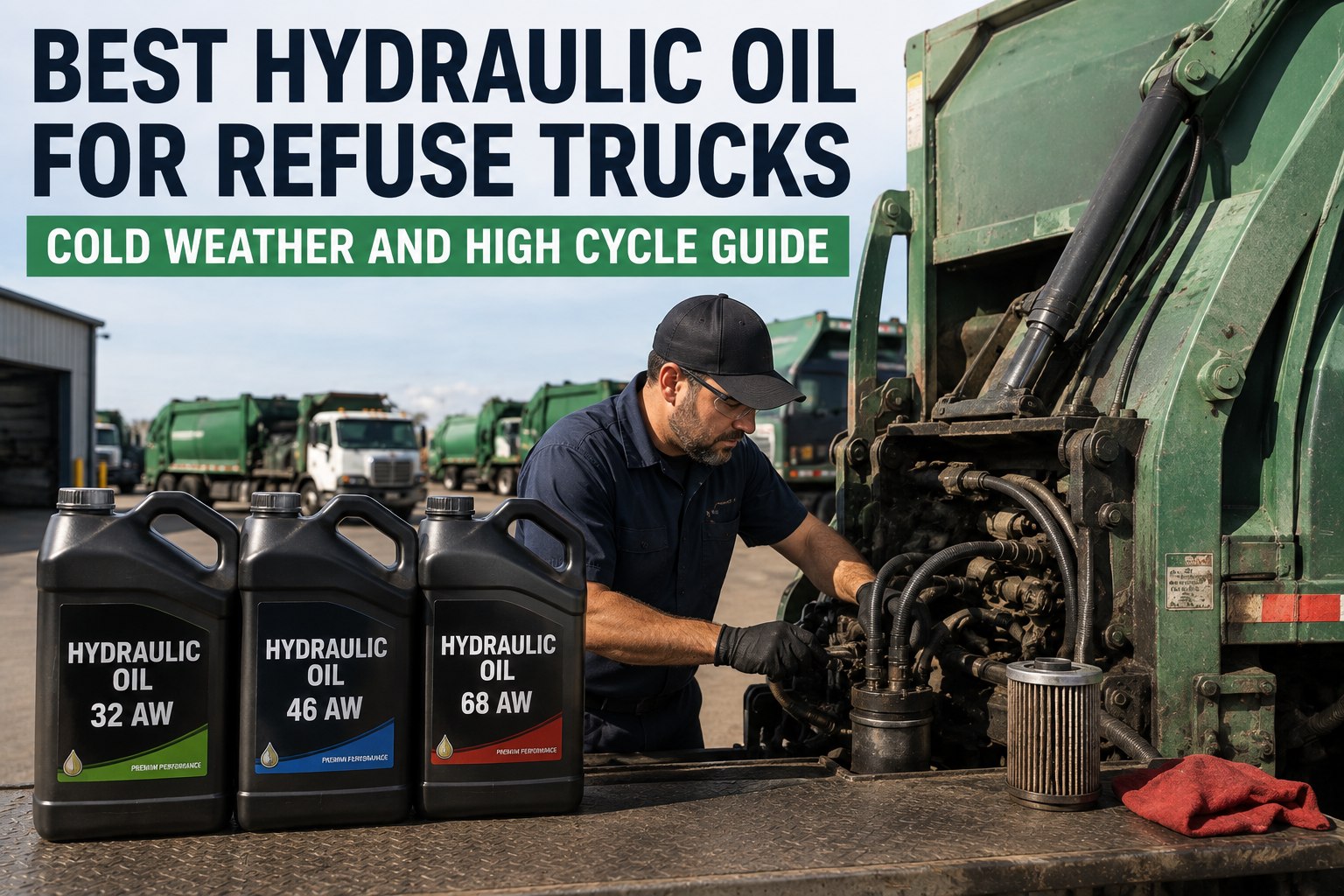
When a tow truck's hydraulics fail, it's not "the truck is down" — it's "the recovery in progress just became someone else's recovery." A boom that won't lift, a wheel-lift that won't lock, a wrecker cable stuck under load — every one of them turns your call into a competitor's call, and every one of them is preventable with an inspection that knows where hydraulic failures actually start. It isn't the pump. It's the seven components downstream of it, and they announce themselves in condition long before they announce themselves at 2 a.m. on a highway shoulder. Start free and put the hydraulic walkaround on every operator's phone.
Tow Truck Hydraulics · Cylinders · Hoses · Reservoir
A Hydraulic Inspection That Catches Failures Before the Recovery Call
A leak seen at the yard is a $200 hose. The same leak found mid-recovery is a competitor's tow ticket. Truck Inspection & Maintenance Management Software runs a guided hydraulic walkaround at every shift start — cylinder, hose, reservoir, and pressure checks in the order failures actually cascade — so you find the seep before the customer does.
7components in the hydraulic failure chain
85%of hydraulic failures trace to contaminated fluid
2,000 psitypical wrecker boom operating pressure
How a Tow Hydraulic System Actually Fails
Hydraulics don't fail at the pump — pumps get blamed, but they're usually the victim. The real failure chain runs upstream to downstream: contaminated fluid or a bad breather lets particles into the reservoir, particles score the cylinder rod, a scored rod destroys the seal, the seal leaks fluid the pump then tries to push through a starved intake — and the pump goes. Fix the front of the chain and the back never breaks.
🛢️
01
Reservoir + breather
Contamination enters here — 80% via the breather
→
💧
02
Fluid condition
Milky, dark, or metallic = the reservoir is losing
→
⚙️
03
Cylinder rods & seals
Particles score chrome, then destroy seals
→
🚨
04
Pump & system
Starved of clean fluid — this is when it stops
Where the money is Cylinder reseals run $100–500 if the rod is still clean. Once contamination has scored the rod, you're rebuilding or replacing the cylinder — $2,500–5,000. Waiting until the pump fails puts you into a full system rebuild in the $8,000–15,000 range. The inspection isn't for the pump; it's for the reservoir and cylinder rods, because that's where the failure starts and where the cost is still small.
The 4-Zone Hydraulic Walkaround
Inspect the system in the order failures actually travel through it — start where contamination enters, end where the load actually moves. Four zones, each with the specific defect thresholds that decide whether the truck rolls or stays parked.
Zone 1
Reservoir & Fluid Condition
The front of the failure chain
Fluid level
At operating temperature, sight glass at ½ to ¾ full. Low fluid runs hotter and cavitates the pump.
Fluid color & clarity
Clear red or amber = healthy. Milky = water intrusion. Dark brown or black = overheated. Metallic sparkle = component wear.
Breather cap
Desiccant beads dry (not saturated blue/pink). Cracked or missing caps let atmospheric moisture in — the #1 contamination source.
Return filter
Check indicator gauge. Bypass at 25 psi means the filter is loaded and dirty fluid is skipping filtration entirely.
Reservoir exterior
No dents, no seam weeps, mount bolts tight. A dented reservoir traps sediment and heats fluid unevenly.
Fluid sample
Every 250 operating hours — sample from mid-column, not the drain plug. Send to lab for ISO 4406 particle count.
Zone 2
Hoses, Lines & Fittings
Where visible leaks live
Hose exterior
No cover damage exposing reinforcement braid. No bulges when system is pressurized — bulge = ply separation.
Hose ends & fittings
No weeping at crimps. Fitting torque per spec, no cross-threading. Blue-dye trace stains = a leak you can't see with the system off.
Chafing points
Any hose contacting a metal edge or another hose gets replaced or re-routed. Chafe wear travels faster than seal wear.
Bend radius
No hose kinked below its rated bend radius. Kinks work-harden the reinforcement and burst under load.
Hose age
Rubber hoses have a service life whether they leak or not. Manufactured date on the layline — replace at 5 years max, sooner in high-heat use.
Quick-disconnects
Wheel-lift and dolly QDs — check for wear on the poppet and O-ring damage. A weeping QD contaminates every disconnect after it.
Zone 3
Cylinders — Boom, Wheel-Lift, Winch, Dolly
Where the load actually acts
Rod condition
Chrome smooth and mirror-clean. Pitting, scoring, or corrosion under the wiper seal = seal is failing next. Wipe with clean rag — no discoloration transfer.
Seal weep
A wet gland or drop trail on the barrel = seal degradation. Small weep + clean rod = reseal candidate; weep + scored rod = replace.
Bore & barrel
No dents, no unrepaired impact damage, no external corrosion at welds. A dented barrel scores rod internally where you can't see it.
Mount pins & bushings
No slop when cylinder is unloaded. Worn bushings misalign the rod, which then side-loads the seal — this is a hidden killer.
Static drift test
Extend cylinder to mid-stroke, hold under load, engine off, 5 minutes. Any settle = internal seal bypass. Wheel-lift under vehicle weight is the toughest test.
Cycle count
Track cycles, not just hours. A wrecker's boom cylinder cycles hundreds of times per shift on busy nights — cycle-based PM catches wear miles-based won't.
Zone 4
Pump, Valves & Pressure
Verifies the whole system holds spec
Pump mount & PTO
PTO shaft alignment, no wobble at idle. Loose PTO chews driveshafts and shears pump splines. Mount bolts torqued to spec.
Operating pressure
Verify at test port under load. Wrecker boom typically 2,000–2,500 psi; wheel-lift 1,800–2,200. Below spec = pump wear or relief valve leak.
Relief-valve setting
System pressure should peak at relief setting, not below or above. Above = valve stuck, below = pump can't reach spec.
Control-valve action
Levers return to neutral cleanly, no hydraulic hang. Detents hold under vibration. Stuck valve = unexpected motion under load.
Warm-up temperature
Reservoir warms 20–40°F above ambient at operating load. Above 180°F sustained = cooler failure or fluid degrading — check both.
Noise & cavitation
Whine under load = pump wear or intake air leak. Grinding = pump failing now — stop the truck.
Cylinder-by-Cylinder Focus — Wrecker vs. Wheel-Lift vs. Rotator
Different tow truck styles wear their hydraulics differently, and a one-size inspection misses what actually fails on each. The zones above are the common floor; the focus below is what to check harder based on your fleet's tow style.
🚚
Wrecker Boom
- Boom-lift cylinder: side-load wear at pin bushings
- Extension cylinder: chrome pitting near mid-stroke
- Winch cylinder (integrated units): highest cycle count
- Cable guides: fluid contamination if seal weep drips onto cable
🛞
Wheel-Lift
- Lift cylinder: static-drift under load is the whole test
- Crossbar cylinders: highest chafe risk from road debris
- QDs at yoke: prime contamination entry point
- Lock mechanism: hydraulic + mechanical — both must hold
🔄
Rotator (Heavy)
- Slew bearing: hydraulic + structural, full-load rotation test
- Outrigger cylinders: contamination via ground exposure
- Main boom + winch simultaneously = worst-case pump demand
- Multiple relief valves — verify each independently
What the Fluid Tells You — Sight-Glass Reads
A one-second look at the sight glass tells you more about hydraulic health than any other single check. Four reads, four different actions.
Clear amber or red
Healthy. Continue normal operation. Sample every 250 hours to catch trends.
Milky / cloudy
Water intrusion — usually breather cap. Sample immediately; drain and refill if lab confirms.
Dark brown / black
Overheated fluid, oxidation. Cooler blocked or fluid over life. Full drain, filter change, source investigation.
The Full Hydraulic Loop, on One Tablet
Truck Inspection & Maintenance Management Software runs the 4-zone hydraulic walkaround as a guided digital inspection — every checkpoint recorded with photo evidence at defects, cycle-count PM triggers per cylinder, sample-and-lab-result tracking against ISO 4406 targets, and defect-to-work-order routing the moment a scored rod or leaking hose is flagged. Wrecker down-time drops because the failure is caught at the reservoir, not at the roadside.
Common Inspection Mistakes That Kill Wreckers Early
Every fleet that loses a tow truck to hydraulics tends to lose it the same five ways. All of them are cheap to avoid if you know what to look for.
✕
Topping off contaminated fluid
Adding fresh fluid to a milky or metallic reservoir just contaminates the new fluid. Drain first, source the contamination, then refill.
✕
Ignoring the breather
An $8 breather cap is the #1 defense against atmospheric contamination — and the most-skipped inspection item on the entire truck.
✕
Resealing a scored rod
A fresh seal on a scored chrome rod tears within weeks. If the rod is pitted or scratched deeper than a fingernail catch, the cylinder gets replaced or rebuilt, not resealed.
✕
Miles-based PM on a cycle-based system
A tow truck at 40,000 miles has probably cycled its boom 20,000 times. Miles don't measure that. Track cycles, or engine hours as a proxy.
✕
No static drift test
Internal seal bypass doesn't leak externally — the only way to catch it is a hold-under-load drift test. Skipping this misses the failures that quit mid-recovery.
Frequently Asked Questions
How often should we inspect the full hydraulic system on a tow truck?
Three cadences work in combination. Every shift start: reservoir sight-glass check, walk the hoses, listen for pump noise on first engage — takes about 3 minutes. Weekly: full 4-zone walkaround including cylinder rod inspection, chafe points, and static drift test — about 20 minutes. Every 250 operating hours: fluid sample sent to lab against ISO 4406, filter change if indicator shows bypass, and system pressure verification. Miss any one of the three and you miss a different class of failure.
Start free with shift/weekly/hours cadences
Which is more important — visual inspection or fluid analysis?
Both, and they catch different things. Visual catches the external leak, the scored rod, the chafed hose — things you can see. Fluid analysis catches the internal wear — pump component particles, seal degradation, water contamination — that a visual can never surface until the failure is already happening. A fleet running only visuals will lose pumps to invisible wear; a fleet running only samples will lose hoses to external damage. The combination is what protects the whole system.
Contact us to set up combined visual+sample tracking
What's the difference between a reseal and a full cylinder replacement?
A reseal replaces the wear items — rod seal, wiper seal, piston seal, O-rings — and reuses the cylinder body and rod. It's $100–500 and holds only if the chrome rod is still clean and the bore is unscored. A full cylinder replacement (or reman) is $2,500–5,000 and is what you do when the rod is pitted, the bore is scored, or the barrel is dented. The rule: if the rod won't hold a fresh seal, resealing just buys you weeks. Our software tracks reseal history per cylinder so a third reseal automatically flags for full replacement.
Start free and track cylinder repair history
Can we run different hydraulic fluid brands in the same truck?
Only if they're the same base type and specification — mixing brands within a single ISO viscosity grade and additive package is fine short-term. What you can't do is mix mineral-based and synthetic fluids, or mix incompatible additive packages; the result is precipitation that clogs filters, wear-metal-looking sparkle in the sight glass, and false alarms on lab samples. Standardize on one spec across the fleet if possible. If a top-off with a different brand happened, sample sooner than the normal 250-hour cycle to make sure the two are getting along.
Contact us to standardize your fluid spec
Reservoir · Hoses · Cylinders · Pressure
Catch the Failure at the Reservoir, Not at the Roadside
Truck Inspection & Maintenance Management Software runs the full 4-zone hydraulic walkaround on any operator's phone — with cylinder-by-cylinder templates for wreckers, wheel-lifts, and rotators, cycle-count PM triggers, ISO 4406 fluid-sample tracking, and instant defect-to-work-order routing. Tow operators use it to catch the seep before the recovery, extend cylinder life between rebuilds, and stay dispatch-ready when the phone rings at 2 a.m.
No credit card required. Free for up to 3 trucks. Built for FMCSA-compliant fleets.