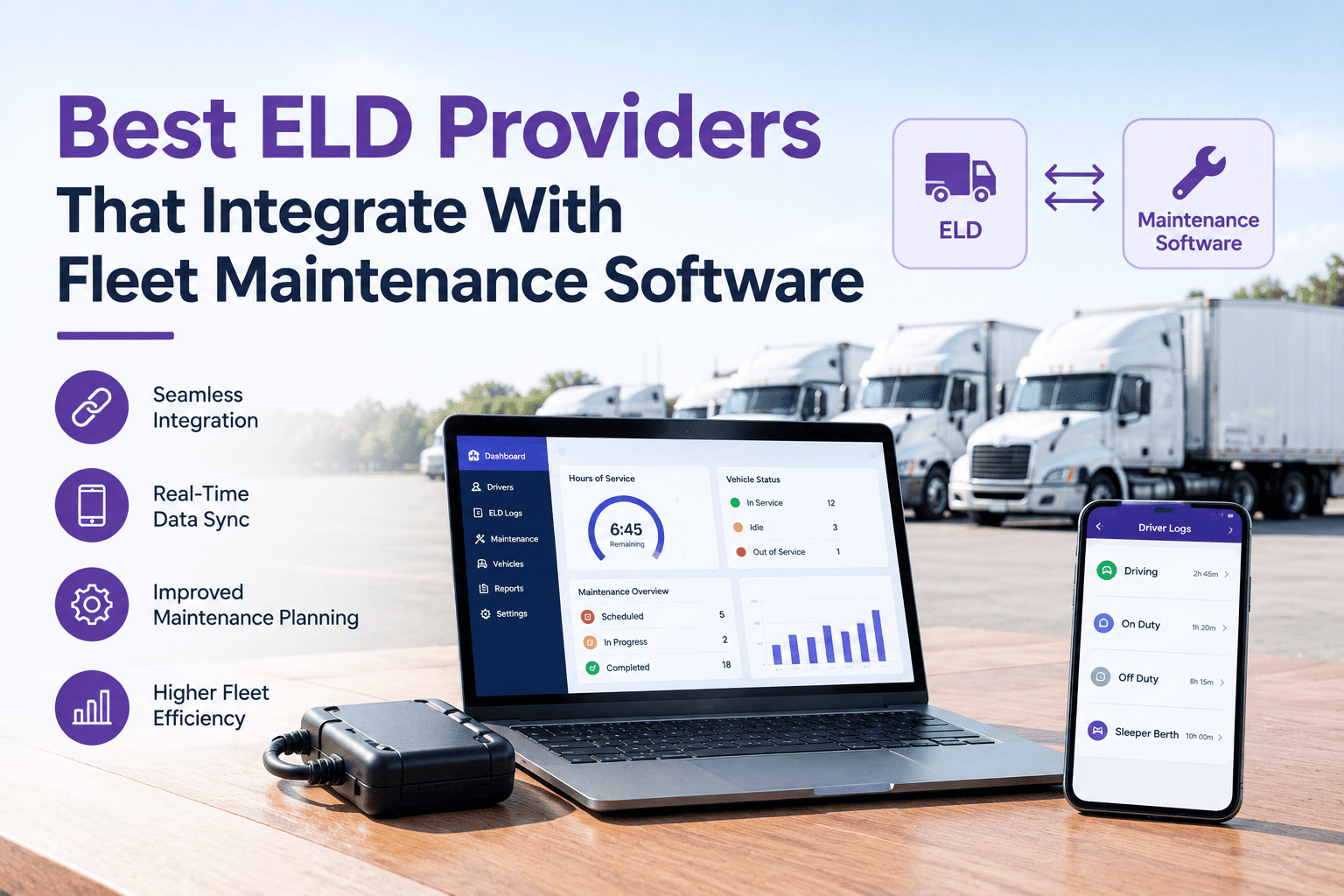
An ELD is mandatory equipment for most commercial drivers — but "mandatory" doesn't mean "all the same." Every certified device clears the same FMCSA bar, so certification is the floor, not the differentiator. What actually separates a good ELD from a frustrating one is how fast a driver can pull up logs with a DOT officer waiting, whether the device holds a signal in a dead zone, what happens during a malfunction, and whether you're locked into a three-year contract with a support line that goes to voicemail. This buyer's guide cuts through it: the one compliance fact that matters most, the features that earn their keep, the pricing reality from free to enterprise, and the questions that protect you before you sign. And because HOS data is only half the compliance picture, we'll show where inspections and maintenance fit alongside it. Talk to our team about pairing your ELD with digital DVIRs.
ELD Software for Trucking
Past the certification checkbox — features, pricing, and what to ask before you sign.
The One Compliance Fact That Matters
Before any feature comparison, get this right: the ELD solution must be certified and registered with FMCSA — and that includes the software, not just the hardware. If you're using a bring-your-own-device or portable setup, the software provider must self-certify and register it and list compatible operating systems. A device that was once certified can also be revoked, which instantly puts every truck running it out of compliance. Certification is the baseline every legitimate option meets; your job is to verify it's current and then evaluate everything else.
Registered, not just "compliant"
Confirm the exact device and software appear on FMCSA's registered list — marketing claims aren't proof.
Watch for revocations
FMCSA periodically revokes ELDs. A revoked device makes your whole fleet non-compliant overnight — check status before buying.
Know the malfunction rule
If an ELD fails, you have 8 days to repair or replace it (paper logs cover you meanwhile), or request an FMCSA extension.
The Features That Actually Earn Their Keep
Every ELD logs HOS — that's the legal minimum. These are the capabilities that separate a device your drivers tolerate from one that actually reduces compliance risk and admin time. Score every option against them. Start a free account to see how digital DVIRs complement whichever ELD you choose.
Automatic HOS logging
Records driving time, engine hours, and duty status straight from the ECM — with real-time timers showing time left in each status to prevent violations.
Fast roadside log display
The factor buyers regret ignoring: a driver must produce clean logs in seconds with an officer waiting. Test this before you commit.
Electronic DVIR
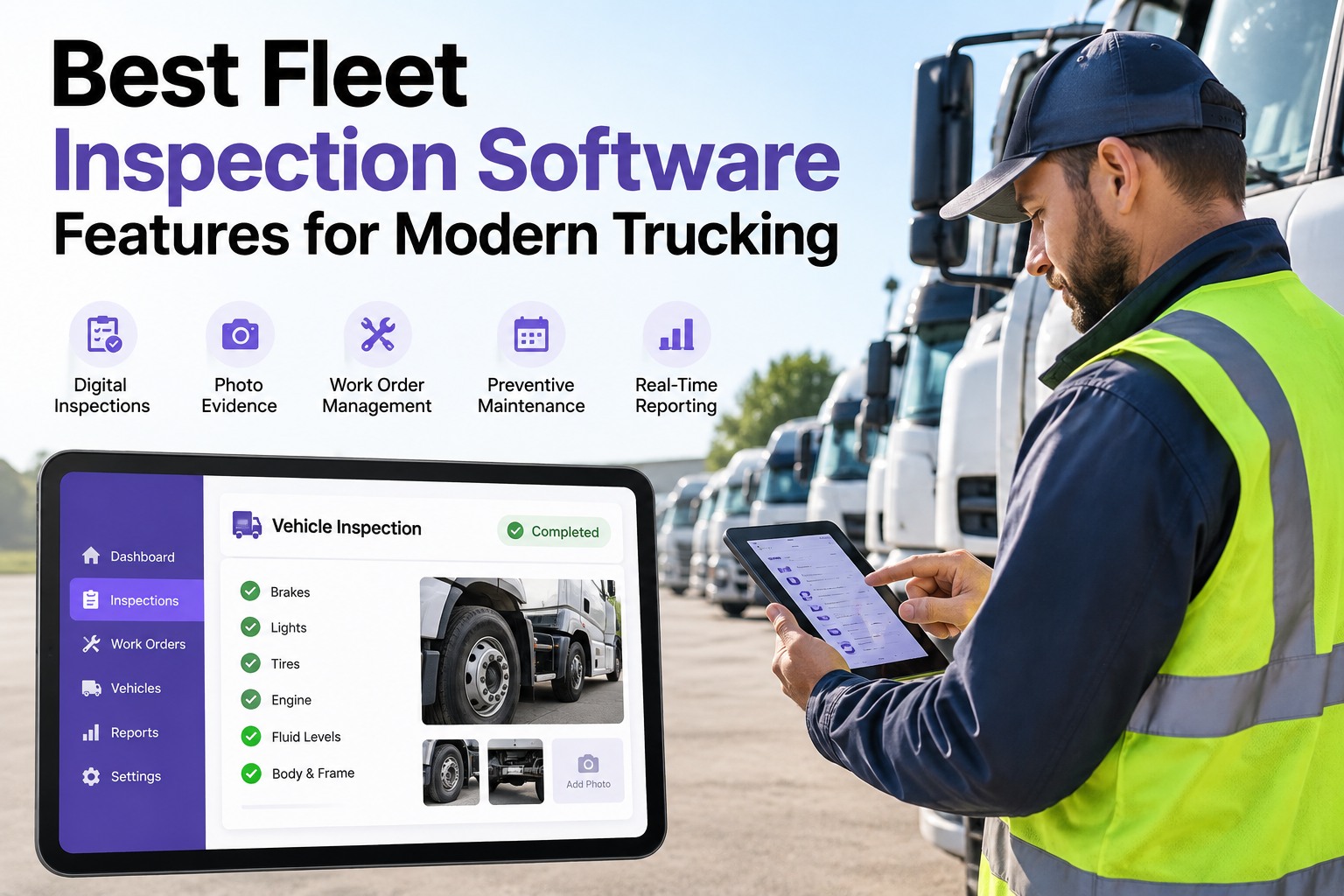
Paperless driver vehicle inspection reports tied to HOS — so inspection and duty data live together, not in separate systems.
IFTA reporting
Automated fuel-tax mileage by jurisdiction — saving interstate fleets a huge slice of annual administrative work.
GPS & signal resilience
Real-time tracking that keeps logging in dead zones and syncs on reconnection — weak-signal performance is a real differentiator.
Integration & support
Connects to maintenance, dispatch, and fuel systems — plus genuine 24/7 support, not a voicemail box, when something breaks at 2 a.m.
The other half of compliance: inspections & maintenance
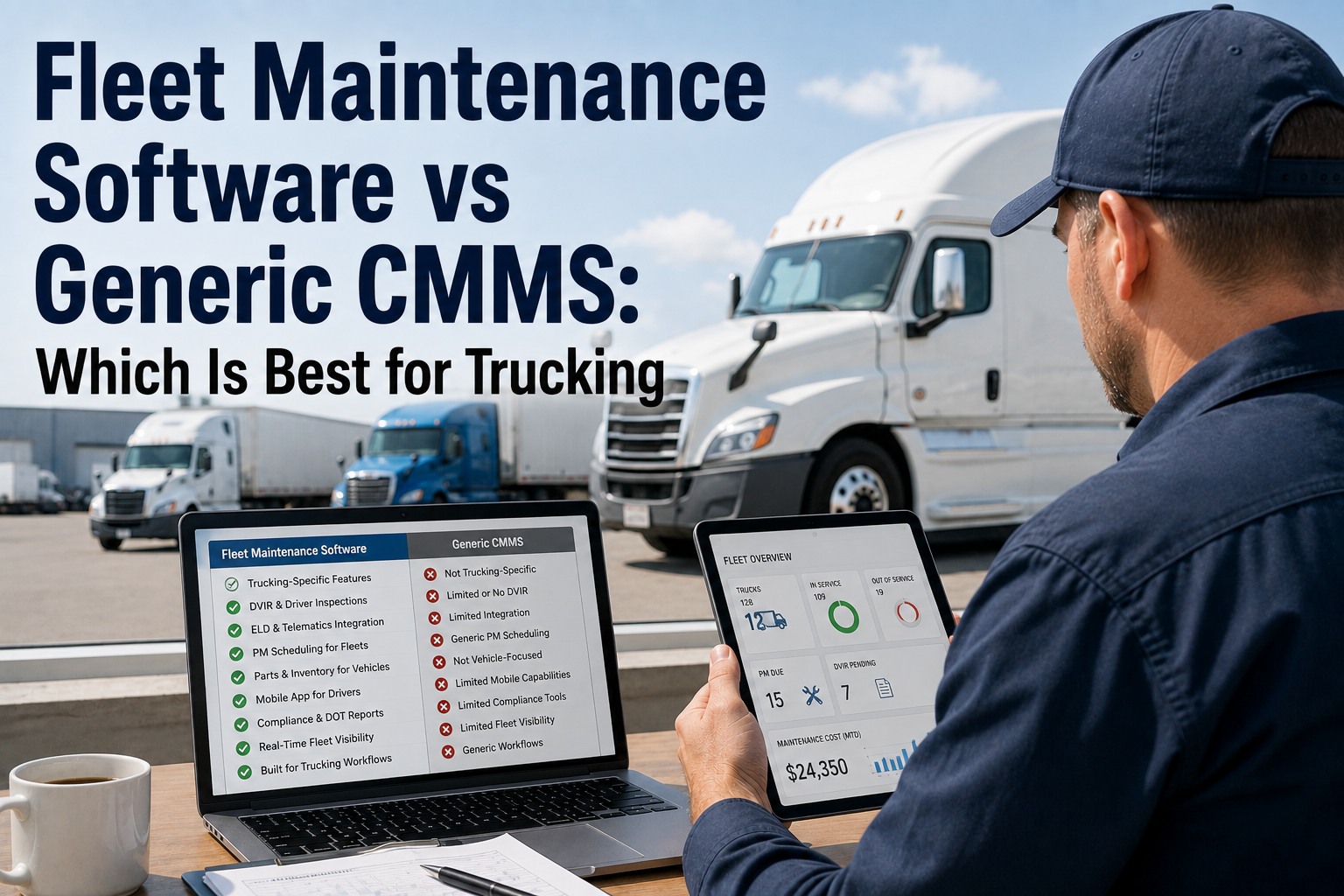
Your ELD handles HOS — Truck Inspection & Maintenance handles the digital DVIRs, defect routing, and PM scheduling that complete the picture, and it pairs with whatever ELD you run. No hardware, no contracts. Sign up free and close the compliance gap your ELD leaves open.
The Pricing Reality
ELD pricing splits into two models — one-time hardware buys with no monthly fee, and subscription plans — and the right choice depends on fleet size and how much beyond HOS you need. Knowing the bands keeps you from overbuying. Reach our team to think through total cost, not just sticker price.
One-time / free hardware, $0–low monthly
Budget devices and free-with-software offers. Solid FMCSA-compliant HOS, eDVIR, and IFTA. Best for owner-operators and cost-focused small fleets, often with no contract.
Per-truck monthly subscription
Mid-market platforms adding deeper telematics, dashboards, and integrations. Watch contract length — terms run from monthly up to three years.
Large-fleet & self-hosted
Enterprise telematics suites or self-hosted/white-label systems with private servers. Higher cost or large one-time buyout; built for big fleets needing data control.
5 Questions to Ask Before You Sign
The demo always looks good. These five questions surface the things that bite later — most of them about contracts and reliability, not features. Get the answers in writing.
Frequently Asked Questions
Does ELD software itself need to be FMCSA-certified?
Yes. The entire ELD solution must be certified and registered with FMCSA — and if you're using a bring-your-own-device or portable setup, the software provider specifically must self-certify and register the software, including a list of compatible operating systems. Certification of the hardware alone isn't enough. Always confirm the exact device-and-software combination appears on FMCSA's registered list. Start a free account to pair compliant DVIRs with your ELD.
What happens if my ELD malfunctions?
FMCSA gives carriers 8 days to repair or replace a malfunctioning ELD. While you wait, you stay compliant by keeping paper logs — so always carry extra log sheets in the cab. If you need more time, you can request an extension from FMCSA explaining the repair actions underway. If you get an HOS violation during a documented malfunction, you can file a DataQ appeal. Knowing this process protects you during audits.
How much does an ELD really cost?
Two models. One-time hardware purchases run roughly $149–$295 with $0 monthly — good for owner-operators wanting no subscription. Subscription plans typically start around $10 per truck per month and scale with features. Some all-in-one platforms include the ELD free with their software. Watch for hidden hardware fees and contract length — and get exit terms in writing before signing. Talk to our team about total cost.
What matters most beyond certification?
Reliability and contract terms. Since every certified ELD clears the same legal bar, the real differentiators are how fast a driver can display logs at roadside, weak-signal performance, what happens during a malfunction, genuine 24/7 support, and the contract you're locked into. Samsara and Verizon Connect often require three years; Motive offers shorter terms; some smaller providers have none. Always get exit terms in writing.
How does an ELD relate to DVIRs and maintenance?
They're complementary halves of compliance. The ELD records Hours of Service; DVIRs document vehicle condition and defects. Many ELDs include electronic DVIR features, but a dedicated inspection-and-maintenance platform adds photo-verified inspections, defect-to-work-order routing, and PM scheduling that a logging device alone doesn't. Running both — integrated — covers driver-hours and vehicle-fitness compliance together. Sign up free to add the maintenance layer.
Can I switch ELD providers if I'm in a contract?
Often yes, and some providers will even buy out your existing contract to win your business. The bigger issue is avoiding a bad lock-in to begin with: ask every vendor what your cancellation terms are, what happens if you scale down or they get acquired, and whether your data migrates cleanly. Contract flexibility is one of the most overlooked factors and one of the most regretted. Contact us for advice on a flexible setup.
Your ELD logs the hours. We handle the rest.
Truck Inspection & Maintenance pairs with any FMCSA-registered ELD to deliver digital DVIRs, defect-to-work-order routing, PM scheduling, and audit-ready records — covering the vehicle-fitness side your logging device leaves open. Free for up to 3 vehicles, no hardware, no contracts.