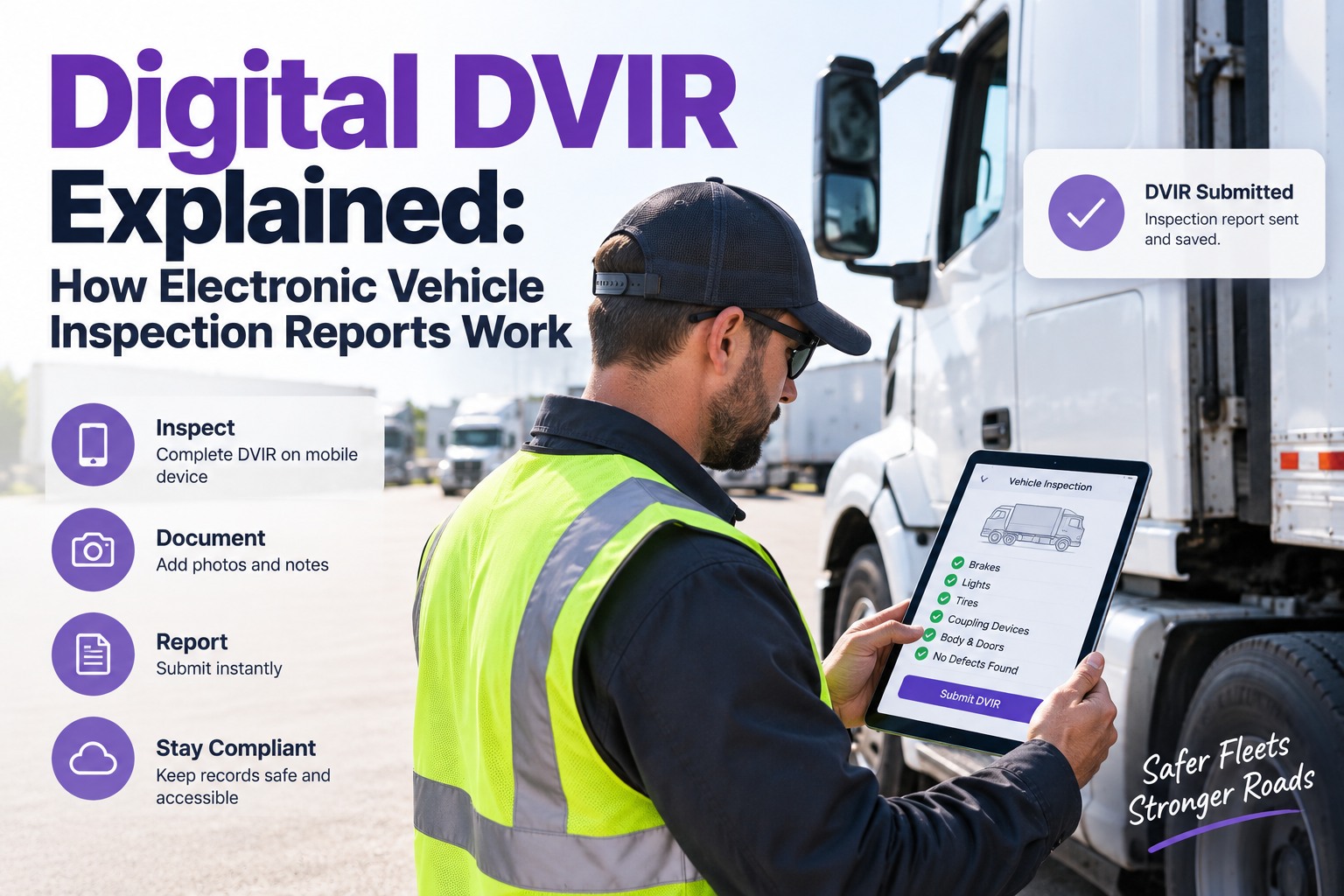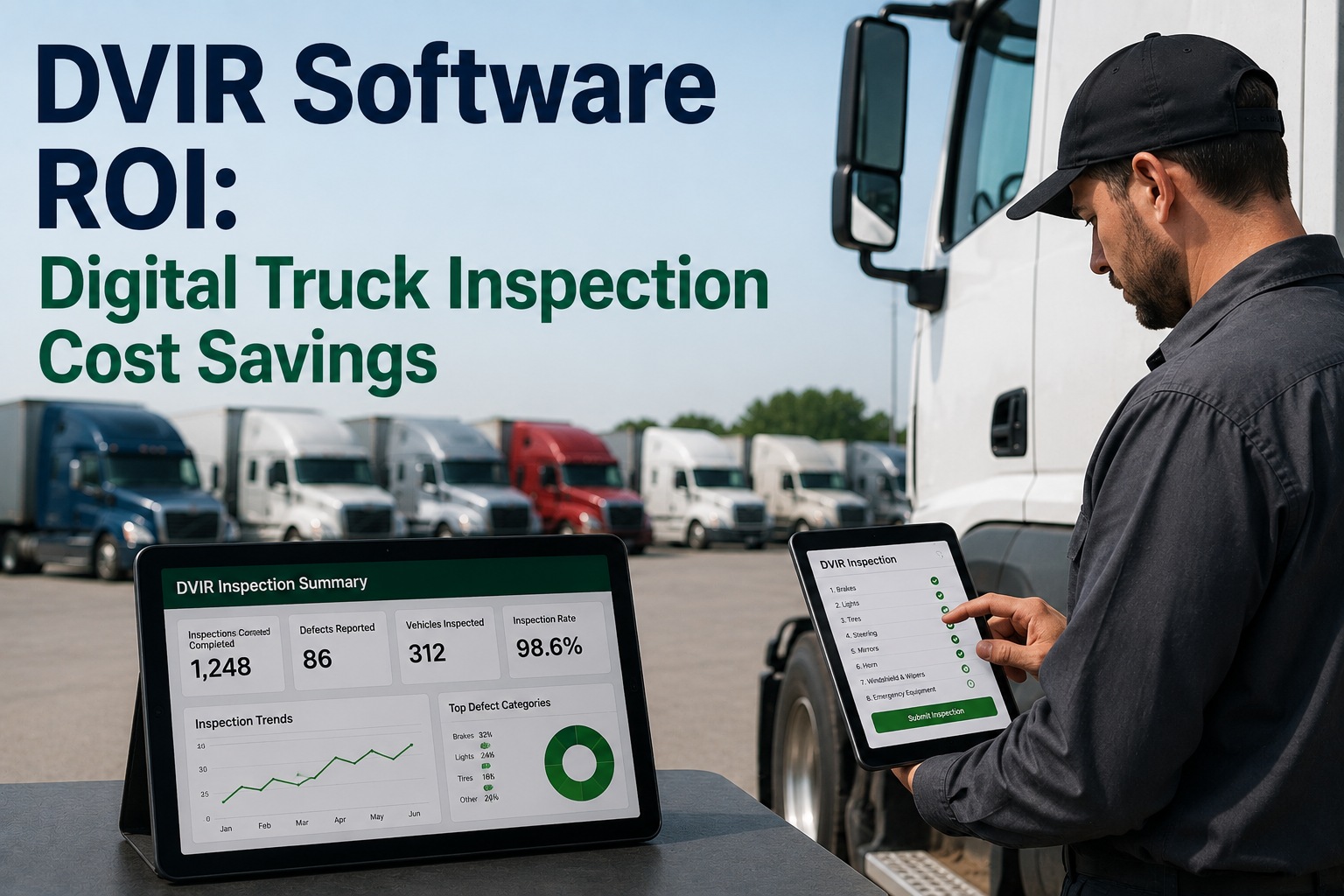
For a decade, fleets that wanted to go paperless on driver inspections lived in a grey area. Electronic DVIRs were technically allowed under 49 CFR 390.32, but the paper-centric wording in 396.11 and 396.13 meant different auditors, attorneys, and DOT officers read it differently — and that ambiguity cost carriers failed audits and litigation exposure. As of March 23, 2026, that grey area is gone. FMCSA's final rule (Docket FMCSA-2025-0115) added a single clarifying sentence to both sections, explicitly authorizing electronic creation, maintenance, and signature of DVIRs across the entire inspection lifecycle. This guide breaks down what the 2026 eDVIR rule actually requires, the 11-item checklist every report must cover, the signature chain auditors scrutinize, and how digital inspection reports with photo and GPS verification keep modern trucking fleets compliant and audit-ready.
eDVIR Requirements: The FMCSA Electronic DVIR Guide for Truck Fleets
A plain-English breakdown of the 2026 FMCSA electronic DVIR rule — what 49 CFR 396.11 and 396.13 now require, the 11-item checklist, the signature chain, retention rules, and how digital reports with photo and GPS proof keep fleets audit-ready.
The 2026 Final Rule, in Plain English
On February 19, 2026, FMCSA published its final rule on Electronic Driver Vehicle Inspection Reports, effective March 23, 2026. It was short — but it settled a decade of debate. Here's what it did, and just as importantly, what it left unchanged.
- Added explicit language to 396.11 and 396.13 allowing DVIRs to be created and maintained electronically per 390.32
- Authorized electronic signatures for all parties in the DVIR chain — no wet ink required
- Confirmed cloud storage satisfies the retention requirement
- The 11-item minimum inspection list stayed the same
- The 90-day retention requirement was untouched
- No-defect DVIRs are still not required for property-carrying CMVs
The 11-Item Inspection Checklist
Under 49 CFR 396.11, every DVIR — paper or digital — must cover these parts and accessories. They're harmonized with the pre-trip list under 392.7, so drivers inspect the same items before and after operating. Any defect affecting safe operation must be documented.
The DVIR Chain of Custody
A DVIR isn't a single signature — it's a documented chain with distinct phases, each with a responsible party. Break any link and the violation follows. This is what 396.11 and 396.13 create together, and what auditors and plaintiff attorneys examine most closely.
At the end of the workday, inspects all 11 components and documents any defect with description, severity, and evidence.
A mechanic or carrier official repairs the defect and certifies it on the original DVIR — before the next dispatch.
Before operating, reviews the last DVIR, confirms repairs are complete or unnecessary, and signs to close the chain.
Never Let a Link in the Chain Break
Truck Inspection & Maintenance enforces the full DVIR lifecycle digitally: driver completes a guided checklist with photos, defects route instantly to maintenance, the mechanic signs the repair certification, and the next driver acknowledges — all timestamped, GPS-stamped, and stored to the cloud.
What a Digital Signature Captures That Paper Can't
The 2026 rule accepts electronic signatures, and the federal E-SIGN Act gives them the same legal weight as handwritten ones. But a digital DVIR signature is often more defensible than wet ink — because of the metadata it records that paper simply cannot.
What Non-Compliance Costs
DVIR violations are among the most frequently cited in DOT audits — and the penalties scale fast with severity. Only about 7% of carriers pass a focused compliance review without a single DVIR citation.
Choosing an eDVIR Platform
The DVIR software market has matured. These are the capabilities that separate a true compliance tool from a glorified form — the criteria fleet managers should weigh before committing.
Enforces the 396.11 and 396.13 custody chain — driver report, repair certification, next-driver acknowledgment — so no link can be skipped.
All three signatures captured and retained with timestamps, compliant with 49 CFR 390.32 and the E-SIGN Act.
Camera integration for defect evidence; geotagged, timestamped photos prove the inspection occurred and show defect severity.
A reported defect auto-creates a maintenance work order and routes it to the right technician — no manual handoff.
Automatic retention beyond the federal minimum, with instant retrieval by date range, vehicle, or driver for 48-hour audit demands.
Add company-specific items while guaranteeing all FMCSA-required categories are always covered on every report.
Frequently Asked Questions
Yes — unambiguously. Electronic DVIRs were already permissible under 49 CFR 390.32 since 2018, and FMCSA's final rule (Docket FMCSA-2025-0115), effective March 23, 2026, added explicit eDVIR language to both 396.11 and 396.13. Electronic creation, maintenance, and signatures — across the full driver, mechanic, and next-driver chain — are fully compliant. FMCSA actively encourages carriers to adopt digital, cost-saving methods. Start a free trial to go paperless.
No. A pre-trip inspection under 392.7 is the physical act of checking the vehicle before driving — no written report is required by federal law. A DVIR under 396.11 is the written report completed at the end of the workday that documents any defects found. Pre-trip is the inspection; the DVIR is the documentation. They serve different regulatory purposes at different times of day, though they cover the same 11 harmonized items.
Up to three when a defect is found: the driver who prepared the report, the mechanic or carrier official who certifies the repair is complete or unnecessary, and the next driver who reviews the DVIR and acknowledges the repair status before operating. The most commonly missed signature in audits is the third — the next-driver acknowledgment. A platform that enforces the chain digitally prevents that gap entirely. See how chain enforcement works.
For property-carrying CMVs, no — since 2014, a no-defect DVIR is not federally required, and the 2026 rule did not reinstate that requirement. Passenger-carrying CMVs still require a DVIR every day regardless of defects. That said, many carriers require daily DVIRs as company policy because the records provide far stronger audit and litigation defense — and with eDVIRs, a no-defect report takes seconds.
At minimum, three months (90 days) from the date the report was prepared — covering the DVIR, the repair certification, and the next driver's acknowledgment. Annual inspection reports must be kept 14 months. Many carriers retain longer as best practice, and digital storage makes extended retention effectively free while giving you instant retrieval during an audit. Start free and store records in the cloud.
Make Every DVIR Digital, Defensible, and Done Right
Truck Inspection & Maintenance delivers fully compliant electronic DVIRs — guided 11-item checklists, photo and GPS verification, enforced three-signature chain, defect-to-work-order automation, and cloud retention that beats the federal minimum — so your fleet passes every roadside check and defends every audit without the paper.