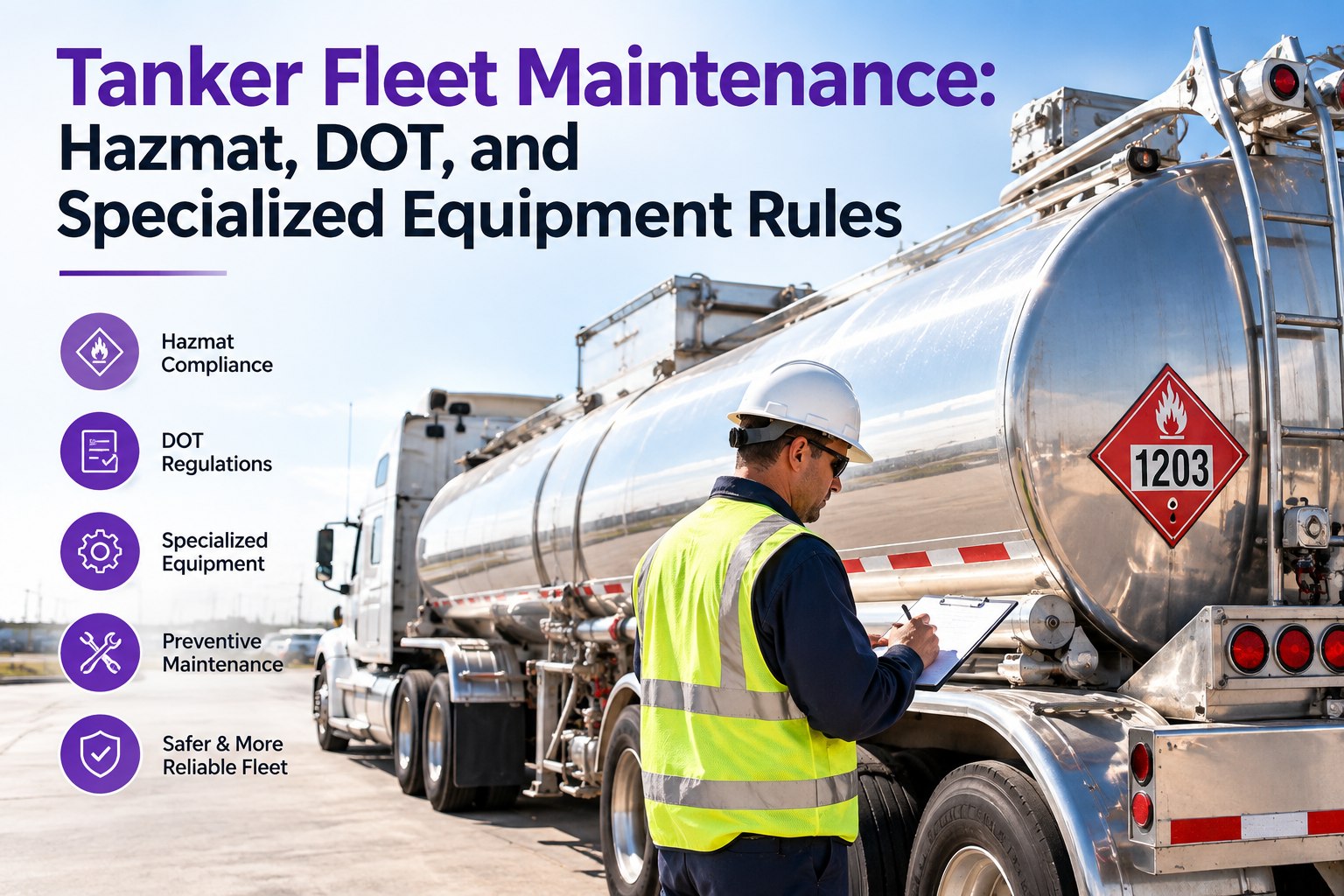
A tanker hauling 8,000 gallons of flammable liquid is a rolling compliance file. Miss one external visual inspection deadline, let a pressure-relief valve drift out of spec, or lose the paperwork from a five-year internal — and a single roadside stop can put the unit out of service with civil penalties that climb into tens of thousands of dollars per day. Bulk liquid and HAZMAT carriers don't just maintain trucks; they maintain DOT-specification cargo tanks under 49 CFR Part 180, each on its own inspection clock, each requiring records a Registered Inspector signed off on. Get your tanker fleet audit-ready free. This guide explains how tanker fleet management software keeps bulk liquid and HAZMAT operations compliant — cargo tank inspection scheduling, preventive maintenance, driver safety, and DOT-ready recordkeeping — so every tank passes its test on time and every truck stays on the road.
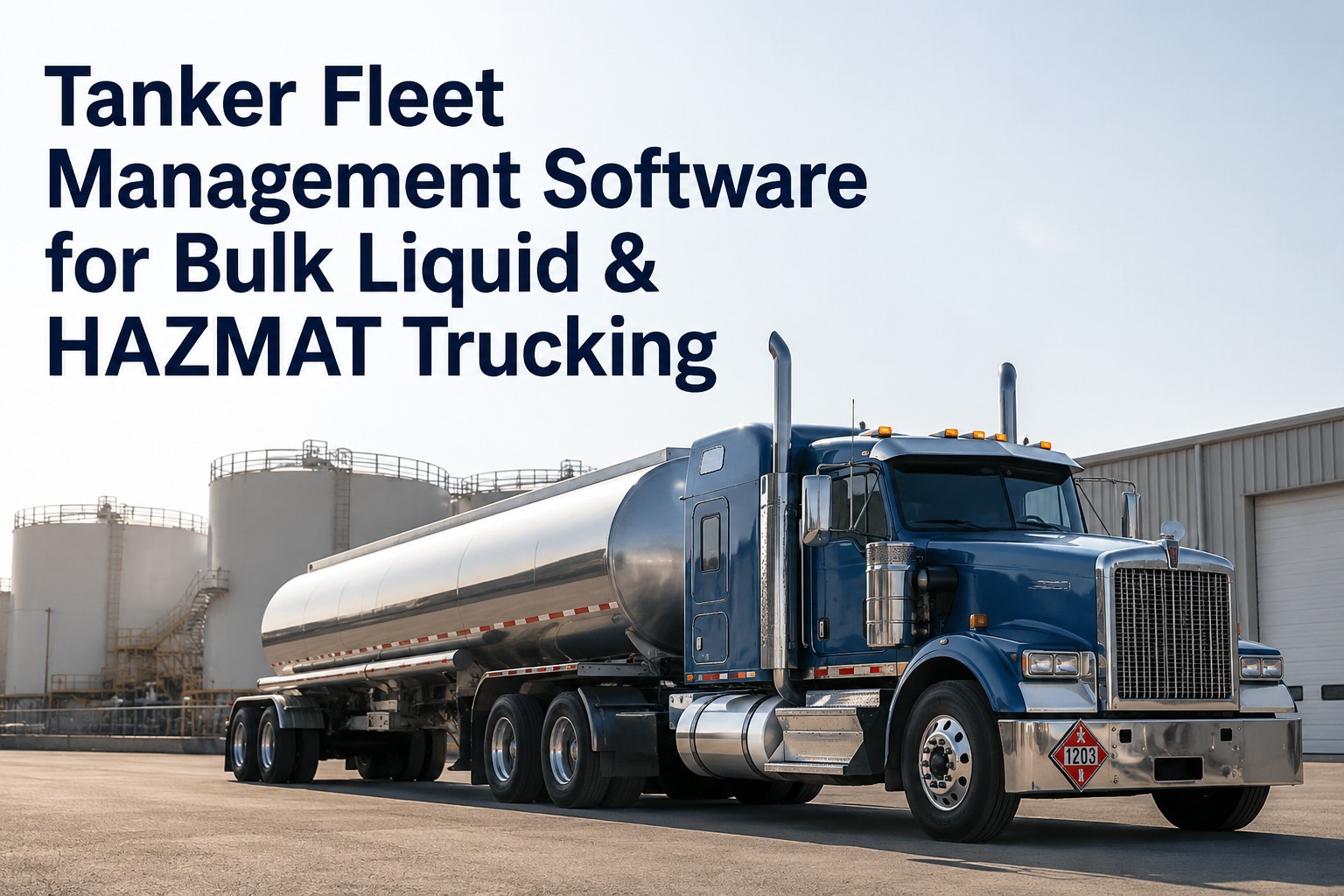
Tanker Fleet Management Software for Bulk Liquid & HAZMAT Trucking
Keep cargo tanks compliant, inspections on schedule, and DOT records audit-ready. Manage external visuals, internal inspections, leakage and pressure tests, preventive maintenance, and driver safety from one platform built for hazardous-materials fleets in 2026.
Why a Tanker Fleet Is a Different Animal
A dry-van operator tracks miles and brakes. A tanker operator tracks all of that plus a federally regulated pressure vessel on every trailer. Three pressures make purpose-built tanker software essential — not a nice-to-have.
Cargo tanks fall under 49 CFR Parts 107, 172, 173, 178 and 180 for hazmat, plus FMCSA Parts 383, 391, 392 and 395 for drivers and operations. Every layer carries its own records and deadlines.
External visuals run annually; internal visuals, pressure and leakage tests run on multi-year cycles that differ by tank spec and commodity. Every tank is on its own timeline, and a missed date pulls it from service.
Liquid surge makes tankers roughly ten times more likely to roll over than dry vans. A failure isn't a delayed load — it's a spill, an environmental event, and potential criminal liability.
The Cargo Tank Inspection Calendar
This is the heart of tanker compliance and the easiest thing to let slip across a fleet of dozens of tanks. Under 49 CFR 180.407, each DOT-specification cargo tank must pass a defined set of tests on recurring intervals — measured from the last inspection or the tank's certification date.
Leaks, securement, valves, pressure relief, tires, and lights checked and logged before every run.
Shell, heads, welds, gaskets and fittings inspected for corrosion, dents and leakage by a qualified inspector (§180.407(d)).
Tank and piping tested for leaks at ≥80% of MAWP, held at least 5 minutes with all valves in place (§180.407(h)).
Shell and heads inspected internally for corrosion, distortion and weld defects; liners checked where fitted (§180.407(e)).
Hydrostatic or pneumatic test held for the prescribed time; heating systems pressure-tested at least every 5 years (§180.407(g)).
Know Your Tank: DOT Spec Reference
Different commodities ride in different tanks, and the spec drives the inspection regime. Tracking which spec each trailer is — and what it can legally carry — is part of the compliance picture.
Every Tank, Every Test, One Dashboard
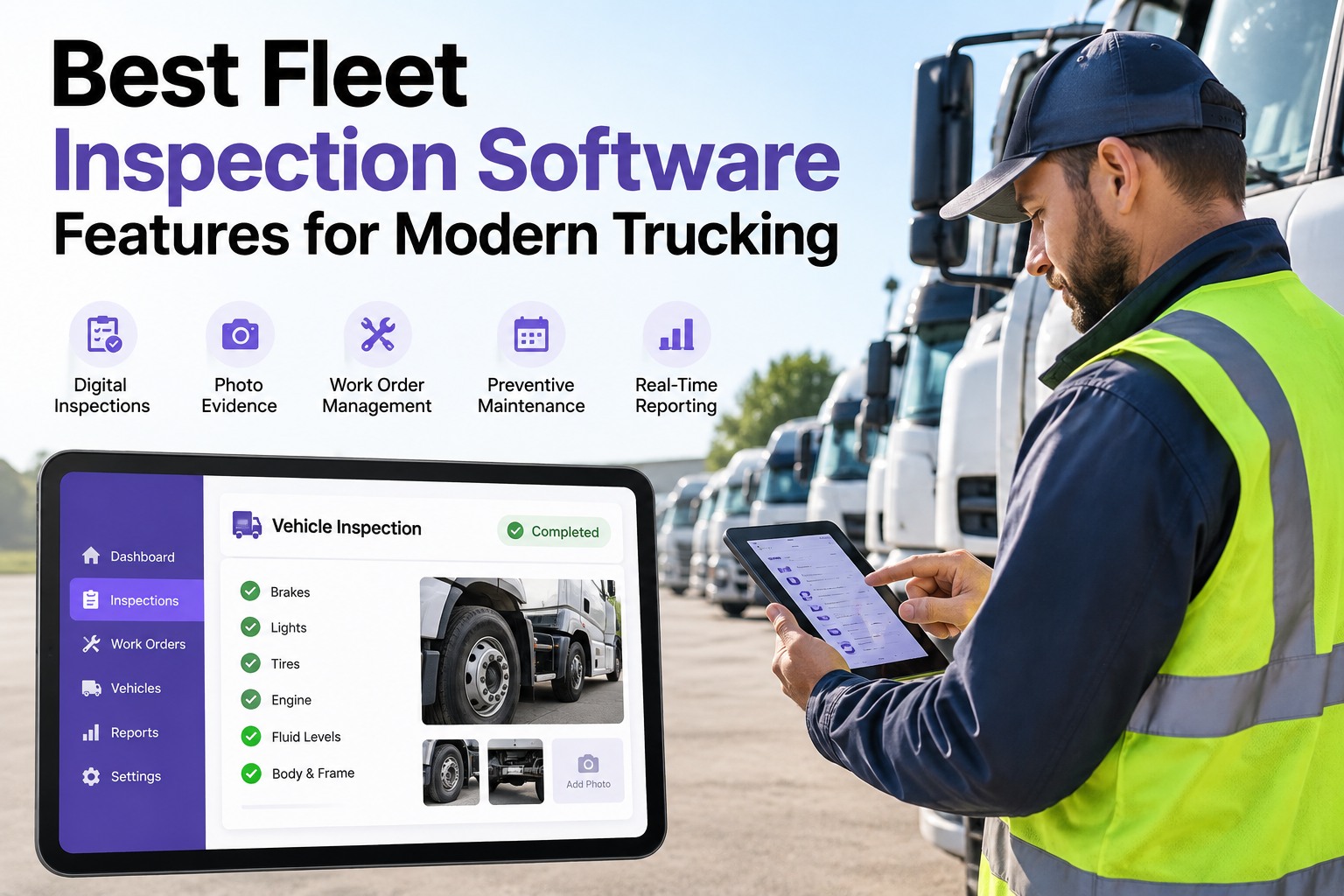
Truck Inspection & Maintenance tracks each cargo tank's spec, inspection intervals, and retest dates, sends alerts before deadlines, and stores every external, internal, leakage and pressure-test record for instant retrieval at a roadside stop or DOT audit.
What Tanker Fleet Software Should Do
Compliance is the floor, not the ceiling. The right platform ties cargo-tank requirements to the everyday work of keeping trucks running and drivers safe.
Track every tank's spec and retest dates, with automatic alerts before each external, internal, leakage or pressure test comes due — so nothing expires unnoticed.
Drivers complete pre- and post-trip inspections on a phone, flagging leaks, valves and securement issues that route straight to maintenance.
Service triggered by mileage, engine hours or calendar — including valve, gasket and relief-device replacement before failures, not after.
Driver CDLs with N (tank) and H (hazmat) endorsements, medical cards and TSA assessments — all with expiry alerts in one place.
Every inspection, test and repair retained and timestamped, retrievable in seconds for roadside checks and DOT compliance reviews.
Welds and modifications documented against original design specs, so a repair never quietly invalidates a tank's certification.
Driver Safety & Rollover Prevention
Liquid that shifts is the tanker driver's constant adversary. Because partial loads surge, tankers roll far more easily than dry vans — and the software has a role in keeping that from happening.
Track that baffles and surge-control devices are inspected and functional, and tie Part 380 surge training to each driver's record.
Monitor speeding, harsh braking and hard cornering — the behaviors most tied to rollover — and coach on real data.
Build grounding, securement and emergency-shutoff checks into digital workflows so loading and unloading follow the hazmat manual every time.
The Cost of Getting It Right
Tanker software isn't an expense line — it's the cheapest insurance against the things that actually hurt a HAZMAT carrier. Here's where it pays back.
Frequently Asked Questions
Under 49 CFR 180.407, external visual inspections are required every 12 months, while internal visual inspections and pressure or leakage tests typically run on multi-year cycles — most commonly five years — depending on the tank specification and the commodity carried. Drivers also complete daily DVIRs before each trip. Each tank's retest date is measured from its last inspection or certification date, so every trailer is on its own clock. Truck Inspection & Maintenance tracks all of them and alerts you before any come due. Start a free trial to map your fleet's deadlines.
A specification cargo tank with an overdue required test cannot legally be filled, offered for transport, or transported until it passes that test. At a roadside inspection, an expired external visual or missing record can trigger an out-of-service order, civil penalties, and — for hazmat — daily fines that reach tens of thousands of dollars. Automated scheduling and alerts are the simplest way to make sure no tank ever reaches that point. Talk to us about staying ahead of deadlines.
Drivers hauling liquids in bulk need the Tank Vehicle (N) endorsement on their CDL. If the load is hazardous, they also need the Hazardous Materials (H) endorsement, which includes a TSA security threat assessment. Surge-dynamics training under FMCSA Part 380 is also required. A platform that stores every CDL endorsement, medical card and assessment with expiry reminders keeps drivers legal and the fleet audit-ready without manual chasing.
It doesn't drive the truck, but it removes the conditions that lead to rollovers. The software confirms baffles and surge-control devices are inspected and working, ties surge-dynamics training to each driver, and monitors the behaviors most linked to rollover — speeding, harsh braking and hard cornering — so managers can coach on real data. Combined with loading and emergency-shutoff workflows, it builds safe practice into the daily routine rather than relying on memory.
DOT requires inspection and test reports — external visual, internal, leakage and thickness testing — to be retained, generally until the next scheduled inspection of that type, with longer retention tied to hazmat incidents. Repair and modification documentation matters too: missing repair records can invalidate a tank's certification. Cloud-based storage with one-click retrieval means those records are always at hand for a roadside check or audit. Start free and centralize your records.
Keep Every Tank Certified and Every Truck Rolling
Truck Inspection & Maintenance gives bulk liquid and HAZMAT carriers one platform for cargo tank inspection scheduling, digital DVIRs, preventive maintenance, driver credentials, and DOT-ready records — so you pass every roadside check, defend every audit, and never lose a truck to a missed deadline.