On an electric truck, the battery isn't a component — it's the single most valuable asset on the vehicle, and it has an odometer that only runs one direction. That gauge is called State of Health, and it quietly decides when a truck stops being able to finish its route and starts being a candidate for a battery replacement that can cost as much as a used truck. Here's the number that should get every fleet manager's attention: a pack losing a healthy 2% of capacity a year reaches the end-of-service threshold at about year 10 — but that same truck, charged carelessly and run hot, gets there by year 6. Across a 50-truck fleet, that four-year gap is roughly $80,000 to $120,000 in accelerated replacement cost. The good news is that most battery degradation is self-inflicted, which means it's largely preventable. Monitor your fleet's battery health free. This guide explains what State of Health really measures, what accelerates degradation and by how much, the charging habits that add years of life, and when a pack should be reconditioned or replaced.
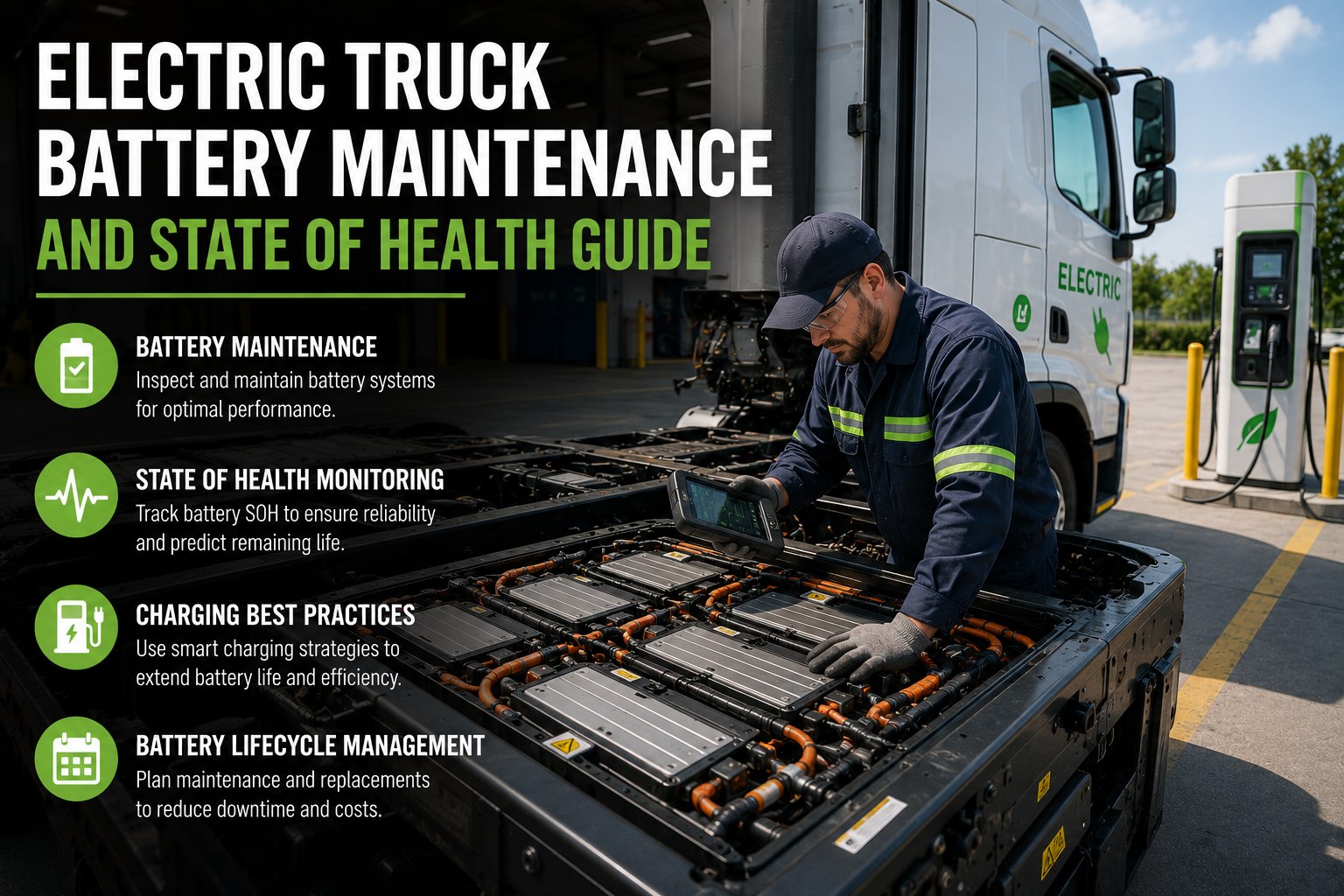
Electric Truck Battery Maintenance and State of Health Guide
The battery is the asset — and State of Health is its odometer. Learn what SOH measures, what quietly destroys it, and the charging discipline that stretches a pack from a 6-year life to a 10-year one, protecting tens of thousands per truck.
Two Numbers: SOC and SOH
Battery maintenance starts with never confusing these two. One tells you about today; the other tells you about the pack's whole life. You manage the truck with the first and protect your investment with the second.
How much energy is stored right now, like a fuel gauge. It rises and falls with every charge and discharge, and tells you whether the truck can finish today's route.
The pack's current maximum capacity versus when it was new. It only goes down — this is what "degradation" measures, and it's the number that decides the battery's remaining service life.
The Shape of a Battery's Life
Degradation isn't a straight line — it follows a predictable three-phase curve. Knowing where a pack sits on that curve tells you what to expect next and when intervention actually pays off.
New packs shed a few percent quickly as the cell chemistry settles. This is normal and expected — not a warranty alarm.
The long middle plateau where the pack loses capacity slowly and predictably. Most of the truck's working life is spent here.
As the pack nears its end-of-life threshold, loss speeds up again. This is where replacement or second-life planning belongs.
What Actually Destroys a Battery
Degradation isn't random — it follows chemistry, which means the causes are known and mostly controllable. Here are the stressors ranked by real-world impact, so you know where discipline matters most.
The number-one stressor. Trucks leaning on high-power DCFC degrade at up to ~3%/year versus ~1.5% for Level 2 AC-primary fleets — the high current generates heat that damages the cathode over time.
Sitting for long periods near full or near empty stresses the electrodes. Degradation accelerates when a pack spends more than 80% of its time at or near 100% or 0% — parking at full charge overnight for weeks is a silent killer.
Sustained heat degrades a pack even when parked — time plus heat is double trouble. Packs without active thermal management in hot climates have degraded nearly twice as fast as liquid-cooled ones.
Every full cycle causes microscopic electrode changes. Modern cells are rated for 1,000–3,000 full cycles; routinely draining to near-zero uses that budget faster than staying in a shallower band.
Most Degradation Is Self-Inflicted
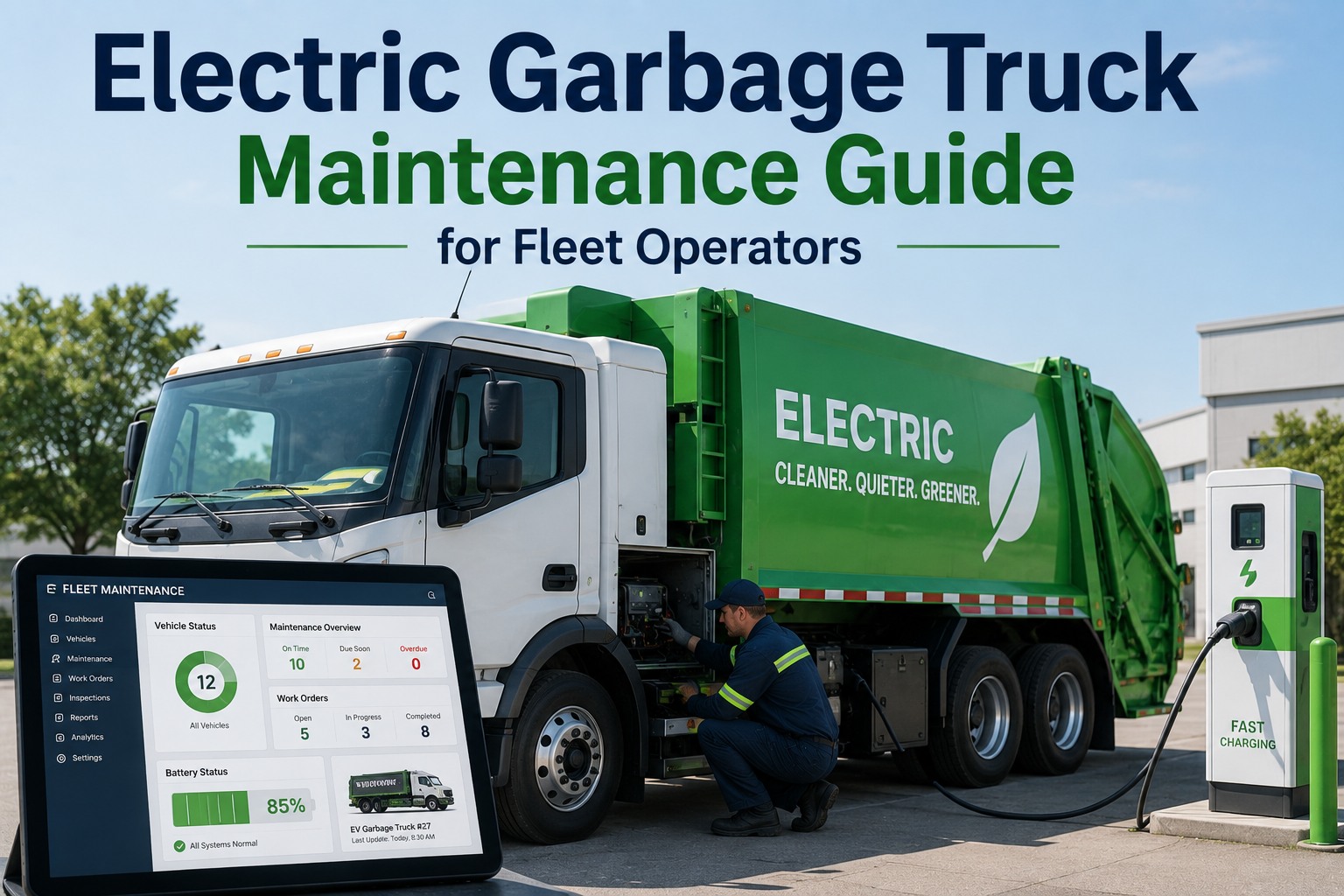
Here's the encouraging flip side of that list: because the top stressors are all charging and thermal habits, they're within your control. Fleets that enforce charging discipline through their maintenance system — charge limits, thermal checks, degradation alerts — can extend pack life by 30 to 50%. Truck Inspection & Maintenance pulls SOH, charge-cycle counts, and thermal events from EV telematics and flags the trucks and the habits quietly costing you battery life.
The Charging Rules That Add Years
How you charge determines how long your batteries last — most fleet degradation traces to charging policies that chose convenience over chemistry. These are the rules that pay off.
Heat Is the Enemy You Don't See
Of all the stressors, temperature is the one fleets underestimate most — because its damage is invisible and cumulative, happening even when the truck is parked and idle.
High temperatures permanently degrade the pack over time. A battery baking in a hot yard loses capacity with the truck sitting still — the classic summer-storage-at-full-charge trap.
Cold weather temporarily cuts range but causes less permanent damage than sustained heat. The risk with cold is fast-charging a cold pack — precondition first.
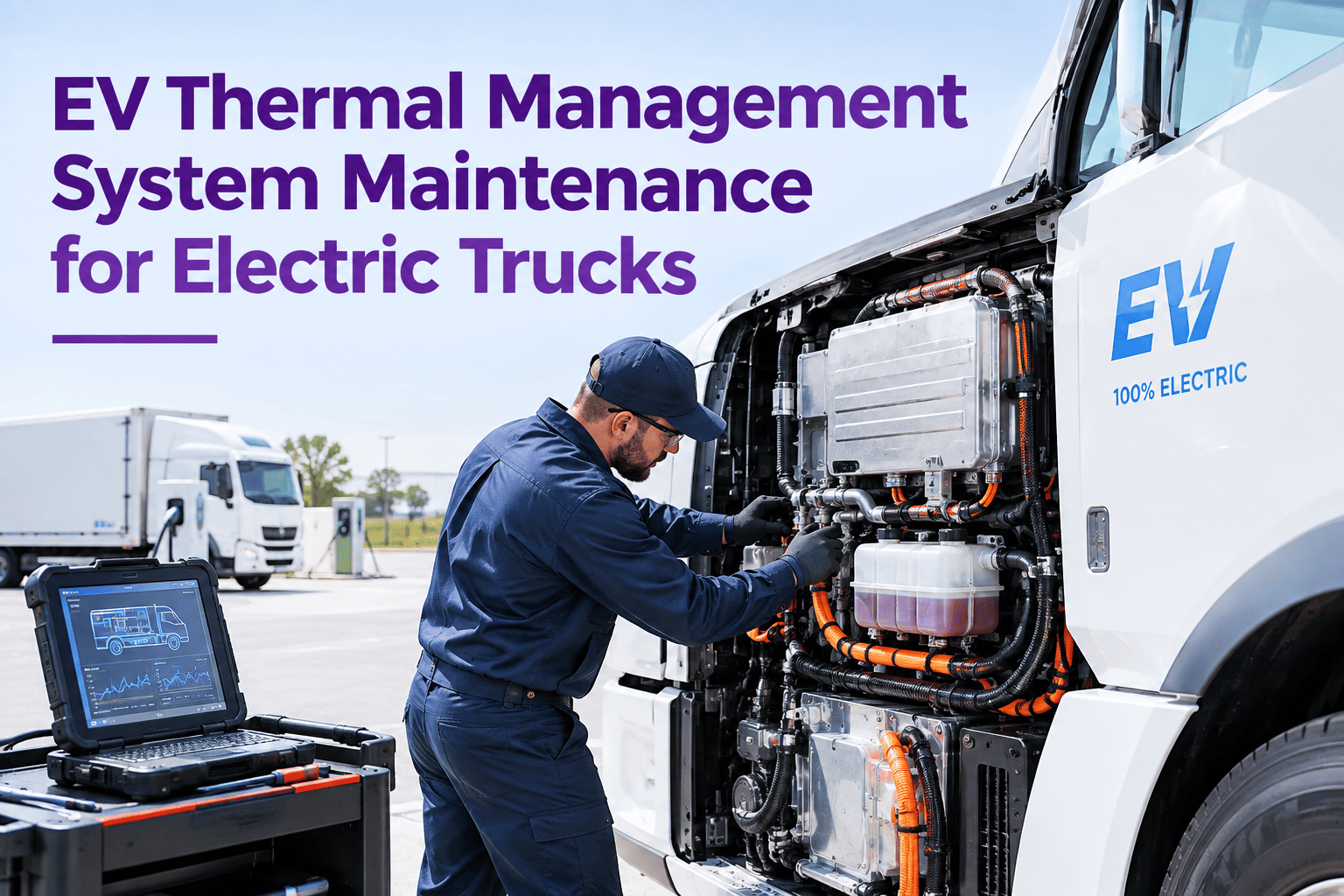
The liquid-cooling system that keeps cells in their safe window is now a maintained item. Coolant, pumps, and controls need checking — a failure here accelerates everything.
When to Replace, Recondition, or Keep Running
State of Health drives the biggest financial decision in an EV fleet. As a pack descends the SOH ladder, the right move changes — and knowing the thresholds keeps you from replacing too early or getting stranded too late.
Healthy working life. Trend SOH and watch the degradation rate — over about 3% a year warrants investigating charging and thermal habits.
The common end-of-service threshold and where most warranties end. Start planning — the truck may still suit lighter duties.
Reduced capacity may still meet lighter routes. Match the truck to shorter runs rather than retiring it outright.
Check the warranty, then weigh module-level reconditioning against full replacement, or a second-life stationary use.
Get SOH Out of the Portal and Into Your Workflow
The battery management system already tracks dozens of parameters in real time. The problem is that the data usually lives in an OEM telematics portal nobody checks. The fix is pulling the metrics that matter into the maintenance system where they trigger action.
Pull state of health from telematics and chart it per pack, so a truck degrading faster than its peers surfaces as a rising line — not a year-end surprise.
Track charge-cycle counts, DCFC frequency, and extreme-SOC dwell, and alert on the trucks and drivers whose habits are burning battery life.
Log thermal events and cooling-system status so a degrading thermal system is caught before it accelerates pack-wide degradation.
Convert a degradation-rate threshold or thermal alert into a preventive work order automatically, before a range problem strands a route.
Frequently Asked Questions
State of Charge (SOC) is how much energy the battery holds right now, like a fuel gauge — it changes constantly with every charge and discharge and tells you whether the truck can finish today's route. State of Health (SOH) is the battery's current maximum capacity compared to when it was new, expressed as a percentage; it only decreases over time, and it's what "degradation" actually measures. The two are independent — a healthy pack at 50% SOC is very different from a degraded pack at 80% SOC — and they multiply to give real available range. A battery at 92% SOH charged to 80% SOC has about 73.6% of its original range available (0.92 × 0.80). You manage daily operations with SOC and protect your long-term investment by tracking SOH. Start a free trial to track both.
As a daily default, yes. Charging above 80% holds the cells at high voltage, which stresses the chemistry and accelerates degradation, so setting your charger limit to 80% for routine overnight charging meaningfully extends pack life. That said, the honest nuance from large-scale data is that the difference between 80% and occasional 100% charging is modest — the real damage comes from making 100% the everyday routine and habitually parking the truck at full charge for long periods. So override to 100% whenever a shift genuinely needs the full range (a long haul or heavy full-day route without charging access), and don't lose sleep over the occasional top-up. The principle is simple: make 80% the default so the pack rarely sits at high voltage, but use the full capacity when operations require it. Ask about charge-limit policies.
The average is about 2.3% capacity loss per year, based on a 2025 Geotab study of 22,700 vehicles, which projects to roughly 81.6% State of Health after eight years. But that average hides enormous variation driven by how the pack is charged and cooled. Fleets relying primarily on Level 2 AC charging see closer to 1.5% per year, while those leaning on high-power DC fast charging degrade at up to about 3% per year — nearly double. Degradation also follows a predictable curve: a faster initial loss of 3 to 5% in the first couple of years, then a long slow linear decline, then accelerating loss as the pack approaches end of life. Heavy equipment can degrade faster than light vehicles due to deeper discharge cycles and harsher thermal conditions. A rate above 3 to 4% per year is a signal to investigate your charging and thermal practices. Start free and benchmark your rate.
Most fleets treat 80% SOH as the effective end-of-service threshold, and it's also where most battery warranties end — at that point the pack holds 80% of its original capacity, which typically means a noticeable range reduction. But 80% isn't a hard cliff. Between 70 and 80% SOH, a truck may still be perfectly suited to lighter or shorter routes, so matching the vehicle to reduced-range duty often makes more sense than replacing it. Between 60 and 70%, it's worth checking the warranty and then comparing module-level reconditioning (replacing only the weakest cells or modules) against a full pack replacement, or evaluating a second-life stationary application. Because pack replacement is one of the largest costs in EV fleet ownership, these SOH thresholds should drive deliberate planning rather than a reactive scramble when a truck can't finish its route. Start free and plan replacements on data.
It's the single most impactful factor within your control. High-power DC fast charging pushes large currents into the pack, and that current generates heat which damages the cathode structure over time — which is why fleets relying on DCFC degrade at up to around 3% per year versus roughly 1.5% for those using primarily Level 2 AC charging. That's the difference between a pack lasting past a decade and one needing replacement years sooner. The practical answer isn't to never fast-charge — it's to reserve DC fast charging for genuine operational necessity and size your overnight Level 2 AC charging to handle the large majority of daily needs. Combined with 80% charge limits and thermal discipline, enforcing this through your maintenance system can extend pack life by 30 to 50%, which is real money on an asset this expensive. Start free and track charging patterns.
Protect the Most Expensive Asset on the Truck
An electric truck's battery can last ten years or six — and the difference is mostly how it's charged, cooled, and watched. Truck Inspection & Maintenance trends State of Health per pack, flags the DC-fast-charging and extreme-SOC habits that quietly destroy capacity, catches thermal events early, and turns a degradation threshold into a work order — so you defer replacement, protect resale, and run your EV fleet on evidence.