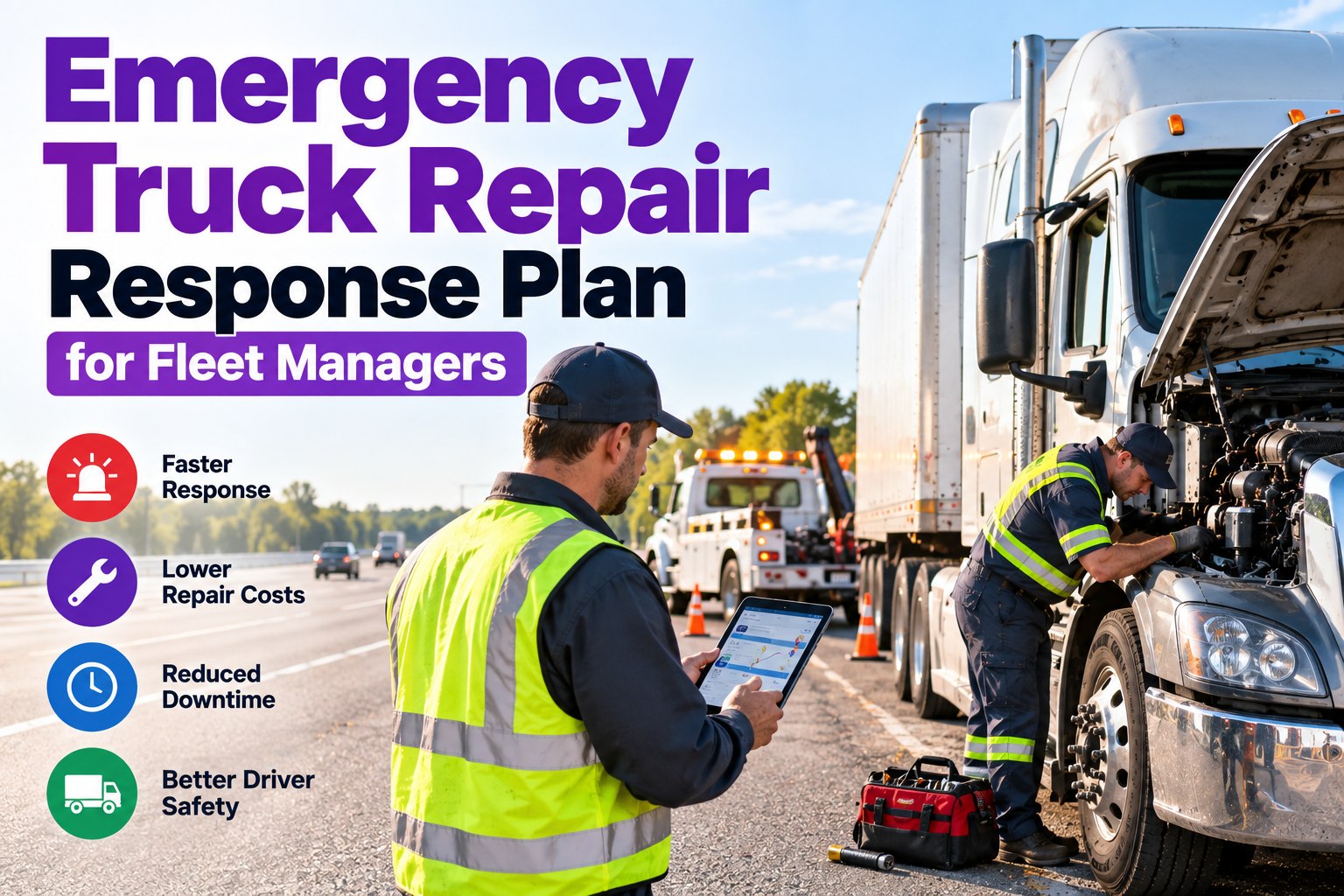
A driver calls in from the shoulder of an interstate three states away. The truck is down, a load is on a clock, and the fleet manager is now trying to find a service provider in an unfamiliar area at a premium rate — which, as one industry veteran put it, is exactly the wrong time to be building a plan. That scramble is what makes emergency repairs cost 3–5× a planned one: not just the higher labor and air-freighted parts, but the hours lost to a disorganized response. And here's the part most managers miss — mechanical failure is only part of the problem. The fix itself is often the smaller share of the delay; the rest is administrative and logistical scramble. A real emergency response plan attacks both, and it has to exist before the phone rings. Here's how to build one, and you can start free and turn breakdowns into a fast, coordinated response with TIM.
The Breakdown Isn't the Emergency — The Scramble Is
A truck goes down and the cost isn't decided by the failure — it's decided by how fast and how organized your response is. Truck Inspection & Maintenance Management Software captures the fault the moment it's reported, routes it to the right responder with the unit's full history, and keeps every emergency event documented — so a roadside call becomes a coordinated dispatch instead of a frantic search.
Why Emergency Repairs Cost So Much More
The invoice for a roadside repair is only the visible part. When you add up what an unplanned failure actually costs against the same job done on a schedule, the multiplier comes from four places at once — and every one of them is bigger when the response is disorganized. Understanding the anatomy is the first step to shrinking it, and you can see where every reactive dollar goes when you start free with TIM.
The Hidden Half — Most Downtime Isn't the Repair
Here's the insight that changes how a response plan is built: the wrench time is the minority of the delay. Industry analysis puts mechanical failure at only around 38–45% of total fleet downtime — the majority is administrative and logistical: finding a provider, authorizing the work, sourcing the part, coordinating the driver. Speed up the coordination and you cut the biggest slice, which is why a plan beats raw speed, and you can close the coordination gap when you contact our team about TIM.
The Emergency Response Decision Tree
When a breakdown call comes in, the first minutes decide the outcome. A response plan replaces improvisation with a fixed sequence — assess, decide, dispatch, resolve, document — so no time is lost figuring out what to do. Run every event through the same path and you can put this sequence in your dispatchers' hands with TIM, free to start.
Capture the fault, location, and load status. Is the truck safe? Is it drivable? Severity decides everything downstream.
Decide whether it's field-repairable — a driver kit or mobile tech can handle many faults — or whether it needs a tow. This single call drives the cost.
Send a pre-vetted provider from your network — not an ad-hoc search. Prior relationships avoid the emergency rate structure that hits when there's no vendor on file.
Approve the work, confirm parts, keep the driver informed. This is the administrative slice — where a plan saves the most time.
Get the truck moving, then log the event — cause, cost, response time — so it feeds prevention and the next response is faster.
The Five Components of a Response Plan
A plan isn't a phone number taped to a wall — it's five pieces built in advance so that when a breakdown hits, every question already has an answer. Assemble these before you need them, and you can build the whole plan into one system when you contact our team about TIM.
From Roadside Call to Coordinated Dispatch — TIM Runs the Response
Truck Inspection & Maintenance Management Software turns an emergency into a managed workflow. The fault is captured with location and load status, the unit's full history is one tap away for whoever responds, the event routes to a work order with cost attribution, and every breakdown is logged so patterns become prevention. The scramble that inflates the invoice gets replaced by a sequence your team already knows.
Turn Every Emergency Into One Fewer Next Time
The best emergency response plan is one you get to use less often. Every documented breakdown is data — and the goal is to move failures out of the roadside column and into the planned-maintenance column, where the same job costs a fraction. Close that loop and you can start converting breakdowns into scheduled work with TIM, free to begin.
Frequently Asked Questions
Have the Plan Before the Phone Rings
A breakdown three states away isn't the moment to start looking for a shop — that's when the emergency premium and the wasted hours pile on. A response plan built in advance, with a vetted network, a clear escalation path, driver kits, and instant unit history, turns a roadside crisis into a coordinated dispatch and every event into data that prevents the next one. TIM makes that plan run on every truck you operate.