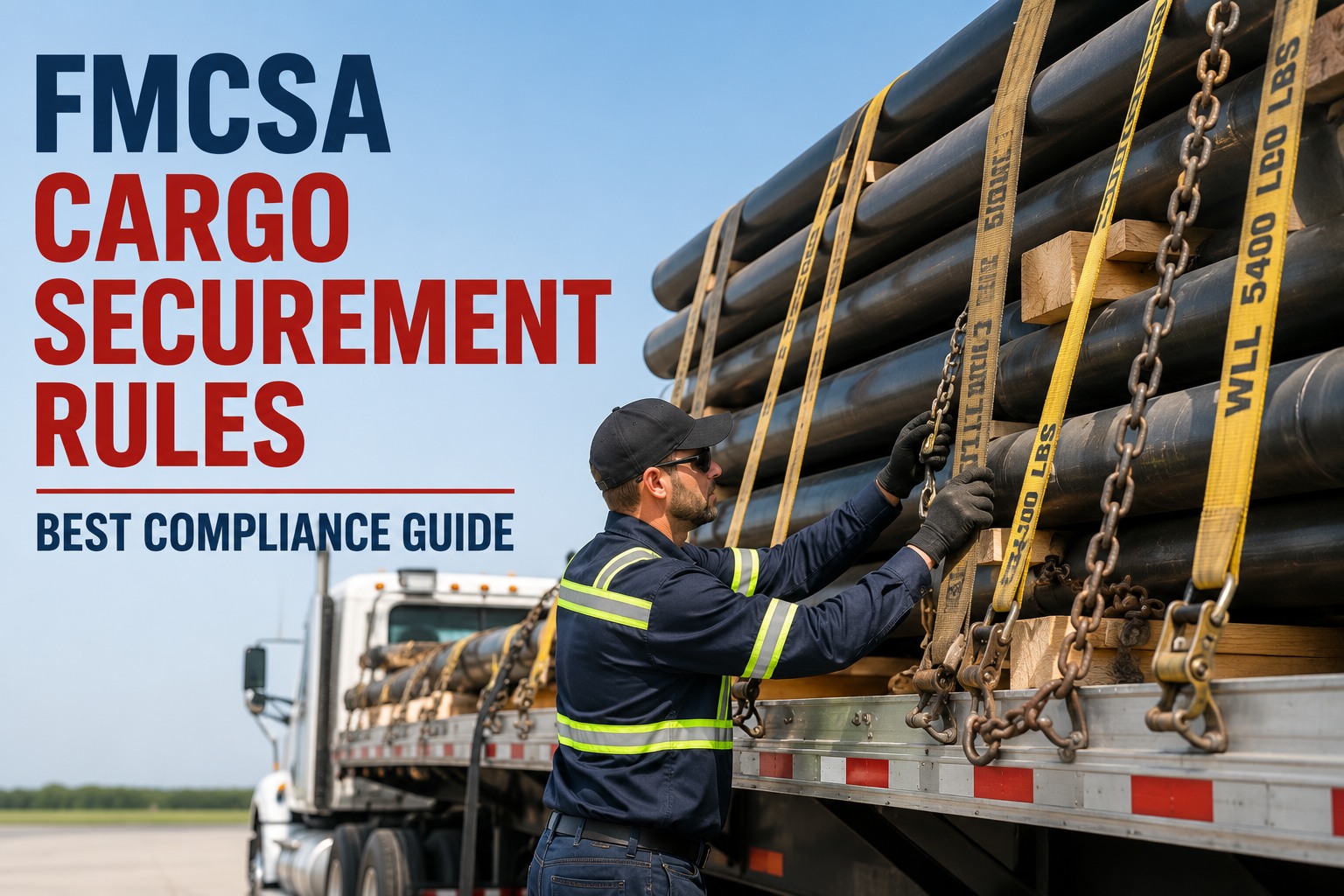
Four straps rated at 2,000 lbs each on a 20,000-lb machine isn't a secured load — it's a decorated one, providing 40% of the working load limit federal law requires and failing the moment the driver brakes hard. Cargo securement is the fourth most-cited inspection category, and in the 2024–2025 reporting period nearly 18,000 drivers were placed out of service for it. The rules aren't vague: 49 CFR Part 393 Subpart I defines the math with precision, and a single violation runs up to $16,000, grounds the truck, and marks your CSA score. The fix is a securement check that documents tie-downs and load limits against the standard on every load. This guide breaks down the rules, the WLL math, and the checklist that keeps freight legal. Document securement on every load free.
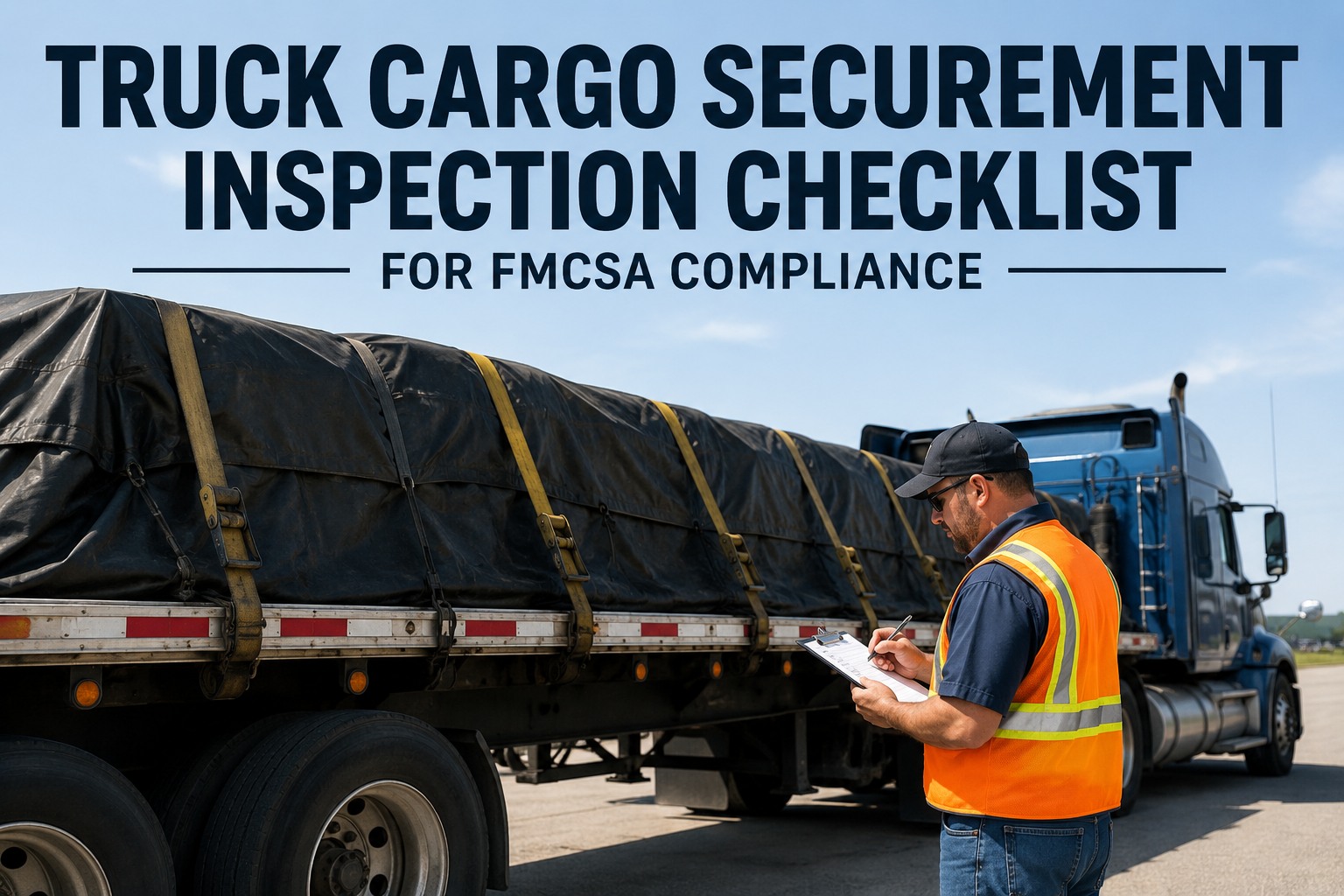
Truck Cargo Securement Inspection Checklist for FMCSA Compliance
Cargo securement violations ground trucks and risk crashes. Document tie-downs and load limits to FMCSA standards on every load — so freight stays put and your truck stays moving.
Why Securement Violations Hurt So Much
A securement failure isn't a paperwork slip — it's a load that can become a highway projectile, and the penalties reflect that. The cost stacks fast: a fine, an out-of-service order that strands the truck, and a CSA hit that raises your insurance for two years.
The Forces Your Securement Must Beat
FMCSA doesn't ask whether your load "looks tied down" — it sets performance criteria the system must withstand. Your securement has to hold against hard braking, sharp turns, and acceleration, simulated by these specific g-forces under 49 CFR 393.102.
Hard braking. The biggest force — cargo wants to slide toward the cab. Most tie-downs target this direction.
Acceleration and uphill starts. Load pushes toward the trailer's rear and must be held.
Sharp turns and lane changes. Side-to-side force that rolls or shifts unblocked cargo.
The Rule Everyone Gets Wrong: Aggregate WLL
The single most violated requirement is the aggregate working load limit. The rule is non-negotiable: the combined WLL of all tie-downs must equal at least 50% of the cargo's weight. It's simple math — but it fails loads daily because drivers count straps instead of rated capacity.
Note how a tie-down passing over the cargo and anchored on both sides counts only half its WLL per the regulation — another reason strap-counting fails. See WLL calculated automatically per load.
Stop Counting Straps — Calculate WLL
Truck Inspection & Maintenance computes aggregate WLL against cargo weight on every load, flags shortfalls before departure, and documents it to the FMCSA standard.
How Many Tie-Downs? The Count Rules
Beyond the WLL math, FMCSA sets a minimum tie-down count by the cargo's length and weight. You must satisfy both the count rule and the WLL rule — passing one doesn't excuse the other.
These apply to cargo not blocked or braced against forward movement. Blocking, dunnage, and headboards can change the requirement — but never below what holds the load against the g-forces.
The Pre-Departure Securement Checklist
Run this before every load rolls. Each item maps to a federal requirement — and a "no" anywhere means the load isn't legal until it's fixed.
Commodities With Their Own Rules
Some loads are dangerous enough to get dedicated regulations that override the general rules. Applying only the general standard to these is itself a violation — even if your WLL math passes.
Frequently Asked Questions
Under 49 CFR 393.106, the combined working load limit of all tie-downs securing an article must equal at least 50% of that article's weight. So a 20,000-lb machine needs at least 10,000 lbs of aggregate WLL. Crucially, a tie-down that passes over the cargo and anchors on both sides counts only half its rated WLL — which is why counting straps instead of rated capacity fails loads.
It depends on length and weight, and you must meet both the count rule and the WLL rule. An article 5 feet or shorter and 1,100 lbs or less needs one tie-down; heavier or longer than that needs at least two; and articles over 10 feet need two plus one more for each additional 10 feet. Cargo not blocked against forward movement has stricter requirements.
Insufficient aggregate WLL leads, followed by damaged tie-downs (cuts, knots, twisted webbing), missing edge protection over sharp corners, failed or corroded anchor points, and applying general rules to a commodity that has its own. Securement ranks fourth among all inspection categories, with nearly 18,000 out-of-service orders in the latest reporting period.
Yes, whenever a tie-down passes over an edge sharp enough to cut or abrade it — common with metal cargo and lumber. The edge protection must resist abrasion, cutting, and crushing. Missing edge protection is a citable violation and can trigger an out-of-service order if the condition is serious enough, so it belongs on every pre-departure check.
It removes the guesswork and creates a record. Truck Inspection & Maintenance calculates aggregate WLL against cargo weight for each load, applies the count and commodity rules, flags shortfalls before departure, and documents the completed securement check with a timestamp — giving you a defensible record for roadside inspections and insurance claims rather than a strap count from memory.
Make Every Load Provably Legal
Truck Inspection & Maintenance calculates working load limits against cargo weight, applies the tie-down count and commodity-specific rules, and documents every securement check to the 49 CFR 393 standard — so freight stays put, trucks stay moving, and your CSA score stays clean.