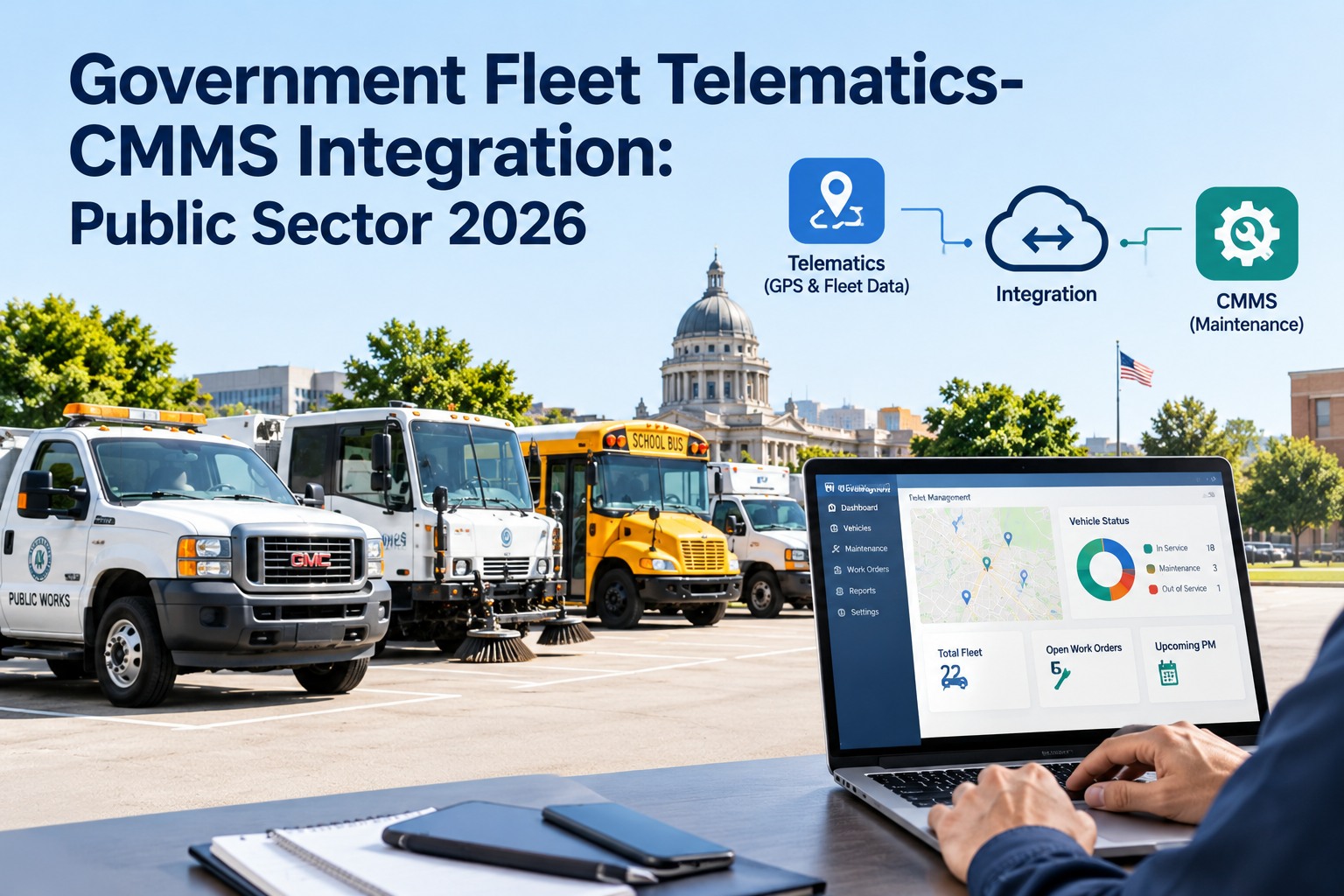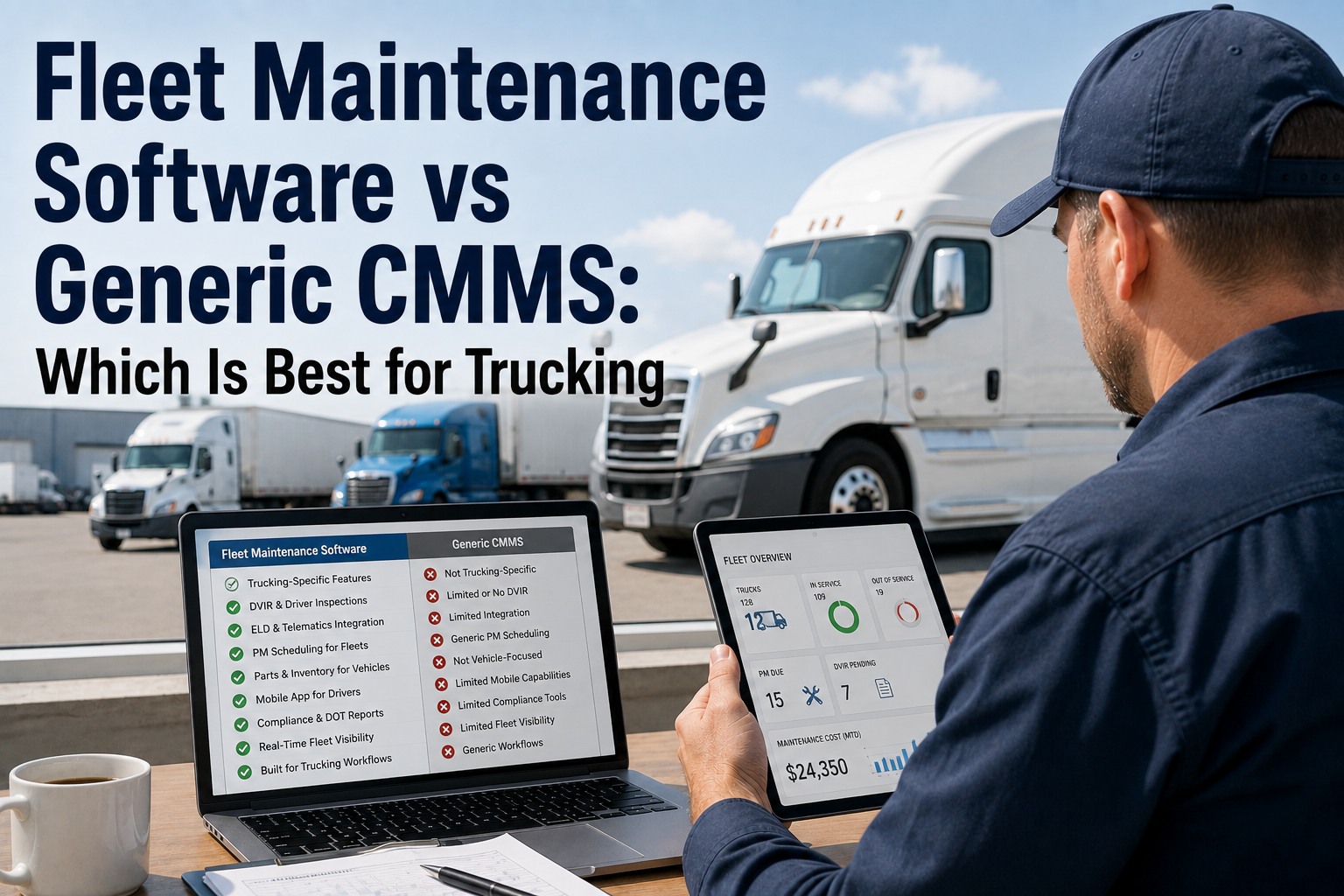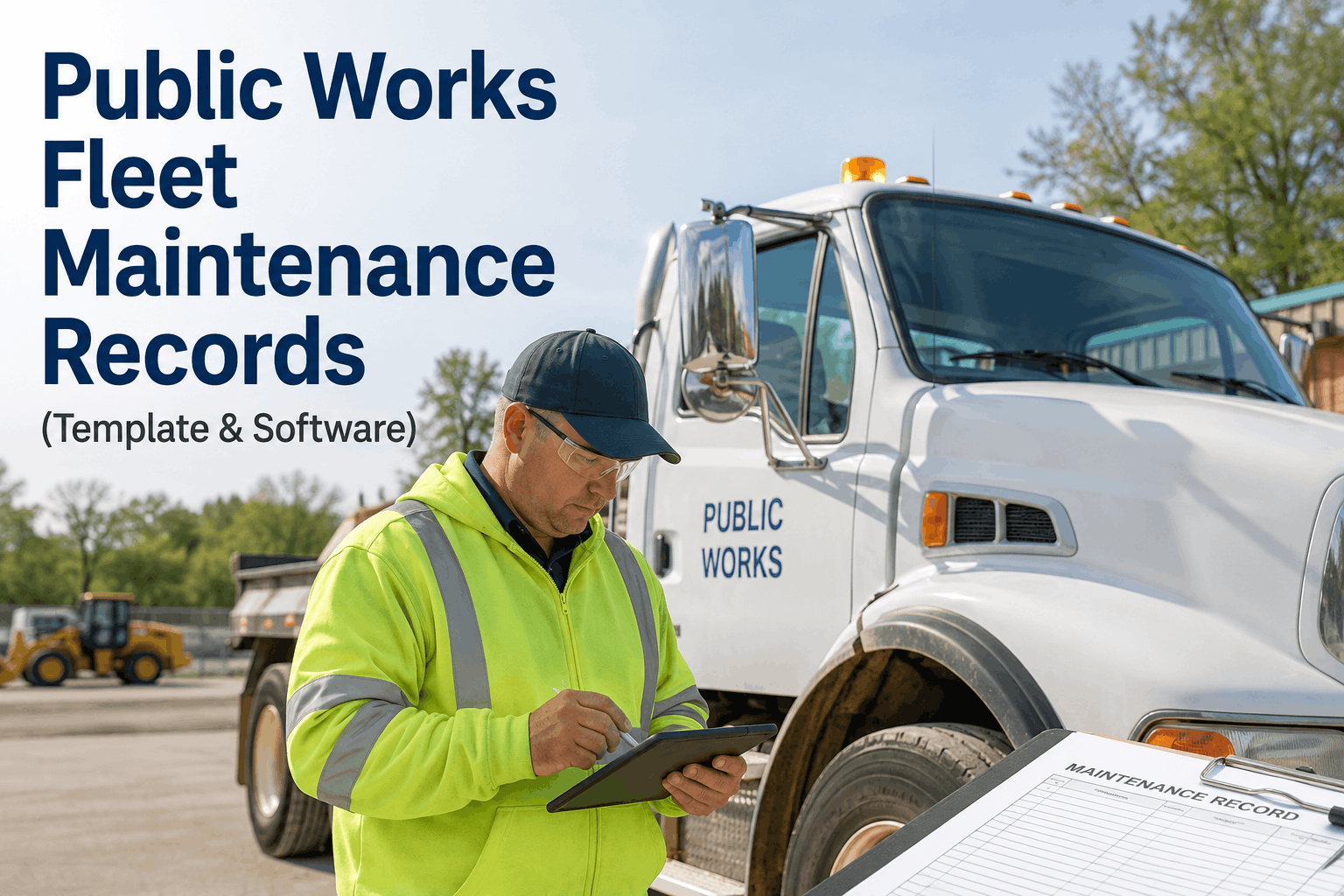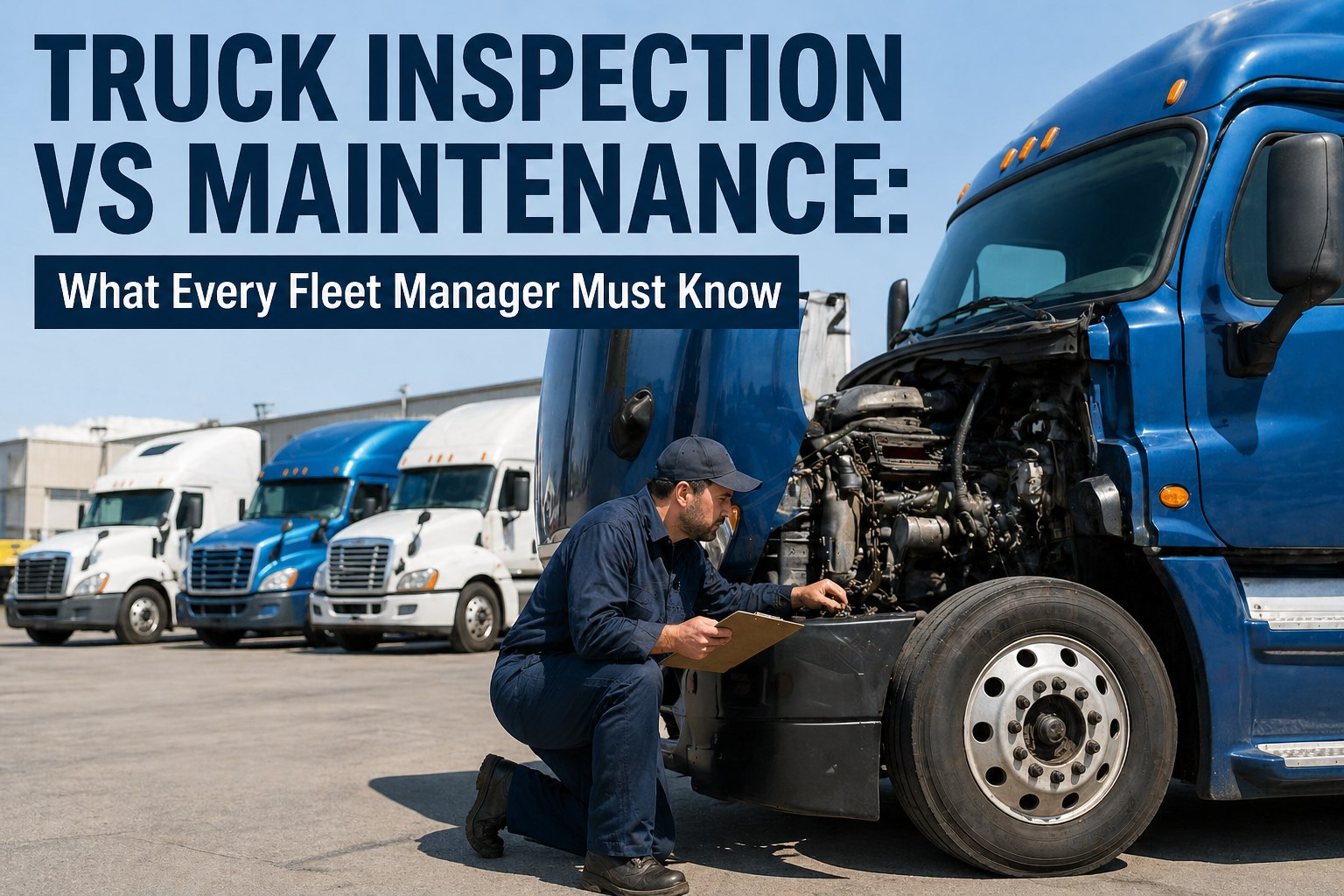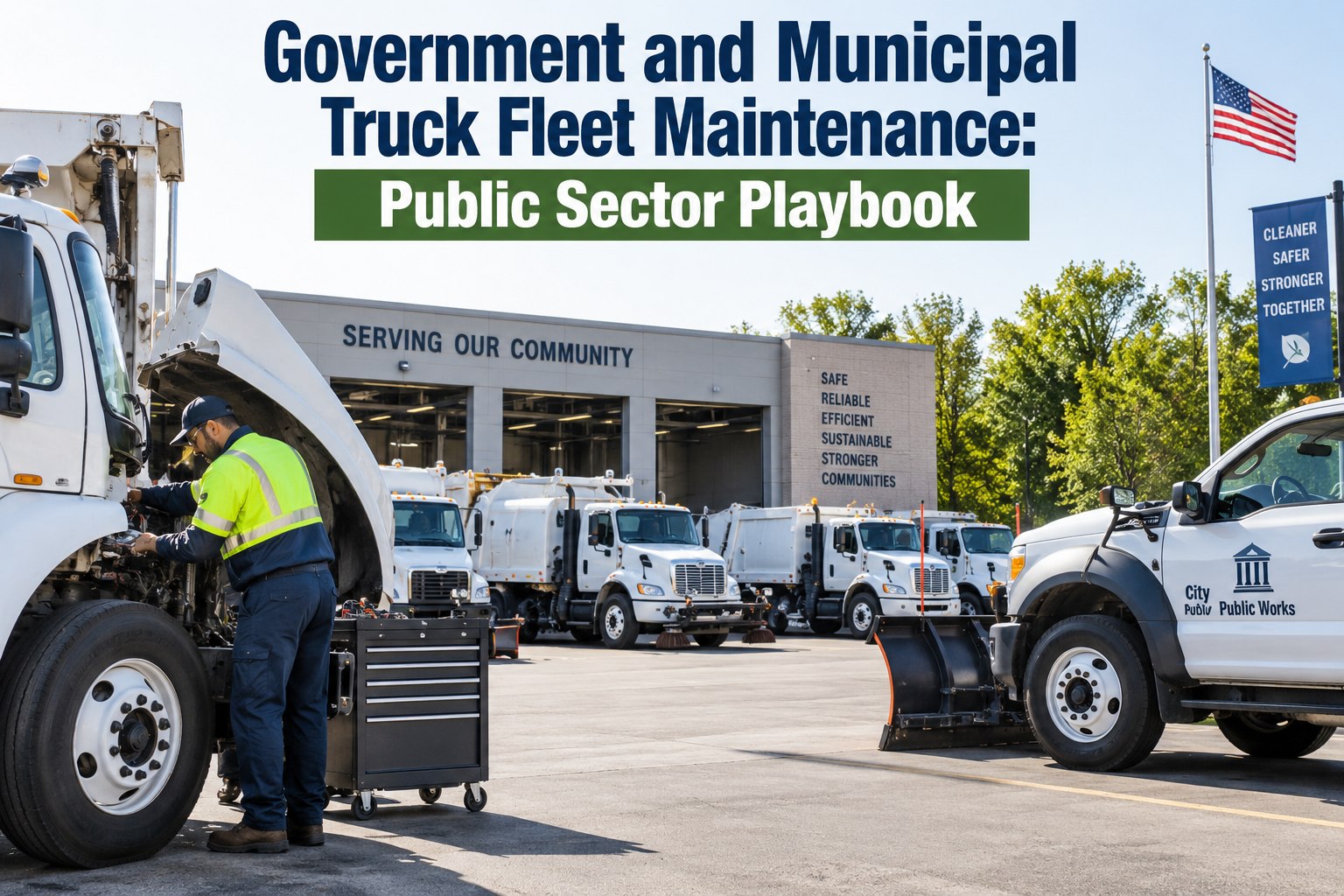
A private fleet answers to the DOT and the EPA. A municipal fleet answers to the DOT, the EPA, GASB, NFPA, FTA, the state inspector, the procurement office, the union contract, and — the morning after a snowplow sits dead during a storm — the city council and the local paper. Same trucks, radically different rulebook. Every repair dollar is taxpayer money subject to audit and public-records requests, every vehicle runs years past its ideal replacement cycle while procurement grinds through competitive bids, and "we'll get to it" isn't an option when the broken asset is the water truck during a main break. This playbook lays out exactly how public-sector fleets stay compliant, defensible, and mission-ready under constraints private fleets never see — and how Truck Inspection & Maintenance turns scattered paper into an audit-ready system. Start a free trial and get your fleet audit-ready in weeks, not budget cycles.
Government & Municipal Truck Fleet Maintenance: The Public-Sector Playbook
Procurement rules, union labor, parallel compliance regimes, and a council that wants every dollar justified. Public-sector fleet maintenance is a different discipline — here's how the best-run agencies keep aging fleets running and audit-ready.
Why Public-Sector Fleets Play by a Different Rulebook
The trucks are the same. The constraints are not. A commercial fleet optimizes for cost-per-mile and replaces a tired tractor when the math says so. A municipal fleet manager makes maintenance decisions shaped by policy, procurement law, and public accountability — often keeping a vehicle in service long past the point a private operator would have auctioned it, simply because the replacement is still 24 months from delivery.
- Answers to DOT + EPA
- Replaces vehicles at 3–5 years on ROI math
- Buys parts and services on the open market
- Hires and schedules labor freely
- Records are internal business documents
- Answers to DOT, EPA, GASB, NFPA, FTA + state & local rules
- Runs vehicles 7+ years while procurement catches up
- Buys through competitive bids or cooperative contracts
- Schedules around union work rules and hiring freezes
- Records are public — subject to audit and FOIA requests
The Six-Framework Compliance Matrix
This is the single biggest difference between commercial and public-sector fleet maintenance. A private carrier tracks DOT and EPA. A municipal fleet is simultaneously accountable to six overlapping regulatory regimes — and understanding which one governs which asset class is the foundation of a defensible program.
DVIRs (49 CFR 396.11), annual inspections (396.17), maintenance records (396.3), and driver qualification files. Dump trucks, transit buses, and anything over the CDL threshold.
Capital-asset reporting on government-wide financial statements. Your maintenance and depreciation data feeds the CAFR audit — where gaps get exposed publicly.
Inspection, maintenance, and testing standards for fire engines and aerial apparatus — a distinct PM template and testing cadence no commercial fleet touches.
Federal emissions baselines — often exceeded by stricter state diesel rules. A county fleet in California carries obligations a Midwest fleet doesn't.
Federal Transit Administration requirements for transit buses and grant-funded assets, including reporting tied to the funding that bought them.
Inspection cycles, environmental standards, and procurement ordinances that vary by state and municipality — frequently stricter than the federal floor.
The Procurement & Lifecycle Squeeze
Here's the math that defines public-sector maintenance: the average government vehicle is 7.4 years old versus 3–5 for commercial, and that gap is the direct arithmetic of 18–36 month procurement cycles, competitive-bid requirements, and constrained capital budgets. You can't just replace the failing truck — you have to keep it running while the replacement grinds through the process.
An aging asset starts throwing repeat defects and unplanned breakdowns. In a private fleet, this is the replace signal.
Replacement must be justified with data — age, utilization, downtime, cost history, safety record — through a capital budget cycle.
Competitive bids, approvals, and delivery stretch 18–36 months. The truck stays in service the entire time.
Predictive, documented PM is what keeps a 7-year-old truck safe and available until the new one finally arrives.
Union Labor, Staffing, and the Documentation Load
Public-sector maintenance runs on a workforce shaped by union work rules, hiring freezes, and training gaps — while the documentation burden only grows. A lean shop has to juggle inspections, emergency repairs, compliance records, and audit prep all at once, and the recordkeeping is exactly what falls behind when a plow goes down mid-storm.
Hiring freezes and union scheduling rules limit workforce flexibility. The same small team handles inspections, breakdowns, documentation, and compliance simultaneously.
Paper forms, spreadsheets, and separate departmental systems mean no one can see a complete vehicle history — the exact gap auditors probe.
When the shop waits for failure, repairs rarely stay simple — and reactive work is the most damaging, most expensive pattern in any municipal fleet.
One documented case: audit preparation consumed 60+ staff hours per quarter — time a lean public-sector shop simply doesn't have to spare.
One System for Every Asset Class and Every Framework
Truck Inspection & Maintenance replaces paper DVIRs and departmental spreadsheets with mobile inspections, automated PM scheduling, defect-to-work-order routing, and compliance records in one place — for dump trucks, transit buses, fire apparatus, and everything in between. Every record timestamped, driver-signed, and retrievable the moment a council member or auditor asks.
Audit & Public-Records Readiness: The Public-Sector Non-Negotiable
In the private world, your maintenance records are internal business documents. In the public sector, every one of them is a potential public record. When a council member asks why a vehicle logged 47 miles on a Sunday, the platform has to produce a timestamped trip record, driver assignment, and authorization — fast. Digital documentation is the transparency public agencies are legally required to deliver.
The Procurement Path: Buying the Software the Public-Sector Way
Even the tool you use to fix the problem has to clear procurement. The good news: public agencies have paths built for exactly this. The principle is to define your operational need first, then match it to a compliant purchasing route — never the reverse.
Vehicles like Sourcewell and NASPO let eligible agencies buy through pre-competed contracts, often reducing cost 10–20% versus direct purchase — but confirm the scope and approvals fit your own rules.
Start with the core use case — inspections and maintenance visibility — then add reporting, integrations, and analytics once the first phase is stable. Less change fatigue, clearer ROI per step.
Require narrative evidence for council-ready reporting, ERP export, multi-framework compliance, and FOIA readiness — that's what separates a municipality-ready platform from a commercial tool with a government landing page.
Frequently Asked Questions
Three things above all. First, mixed asset classes — a single municipal fleet spans police vehicles, fire apparatus, refuse trucks, snowplows, transit buses, and parks equipment, each with its own PM template and compliance framework. Second, parallel compliance regimes — public fleets are simultaneously accountable to DOT/FMCSA, GASB 34, NFPA, EPA, FTA, and state/local rules, where commercial fleets typically face only DOT and EPA. Third, public accountability — every dollar is taxpayer money subject to audit and FOIA, and vehicle downtime is a visible service failure, not just an internal cost. Add procurement law and union work rules and you have a genuinely different discipline.
The average government vehicle is 7.4 years old versus 3–5 for commercial fleets, and it comes down to procurement math. Replacing a public asset requires a data-backed budget justification, competitive bidding, and approvals that stretch the cycle to 18–36 months. So the vehicle stays in service the entire time the replacement is being sourced. This is exactly why predictive, well-documented maintenance is non-negotiable in the public sector — it keeps aging assets safe and available, and the downtime and cost data you log is what ultimately justifies and speeds the replacement request.
Any CDL-class vehicle — dump trucks, transit buses, larger public-works trucks — falls under full FMCSA requirements: driver vehicle inspection reports under 49 CFR 396.11, annual inspections under 396.17, maintenance records under 396.3, and driver qualification files. Non-CDL vehicles still need a documented inspection and maintenance program, and emergency vehicles carry additional state certification requirements. The practical challenge for municipalities is that these DOT obligations run alongside GASB, NFPA, EPA, and FTA requirements on other assets in the same fleet — which is why a single compliance calendar across all frameworks matters so much.
The foundation is digital, timestamped records that live in one system rather than scattered across departments. Practically, that means: mobile DVIRs that produce driver-signed, timestamped inspection records; maintenance and repair histories tied to each asset; a defect-to-work-order trail showing every issue from report to resolution; and reporting that can be exported for public-records requests without exposing PII. When records are centralized and searchable, a remote audit's 48-hour document demand becomes a five-minute export instead of a 60-hour quarterly scramble — and a council member's pointed question gets a documented answer on the spot.
Define your operational need first, then match it to a compliant purchasing path. Many agencies use cooperative purchasing vehicles like Sourcewell or NASPO, which offer pre-competed contracts and often reduce cost 10–20% versus a direct buy — but you must confirm the contract scope, approvals, and procedure fit your own municipality's rules. A modular platform usually beats a monolithic one: start with core inspections and maintenance, prove the ROI, then expand. And score any RFP against real public-sector requirements — council-ready reporting, ERP export, multi-framework compliance, FOIA readiness — with narrative evidence required, so you don't discover a gap at the first audit. Start a free trial to evaluate the fit on your own assets first.
Keep Every Public Asset Running, Compliant, and Audit-Ready
Truck Inspection & Maintenance gives government and municipal fleets one mobile-first platform for DVIRs, PM scheduling, work orders, and compliance records across every asset class — dump trucks to fire apparatus. Cut downtime on aging fleets, satisfy six frameworks at once, and produce audit-ready records the moment a council member or DOT auditor asks. A maintenance system your drivers and technicians will actually use.