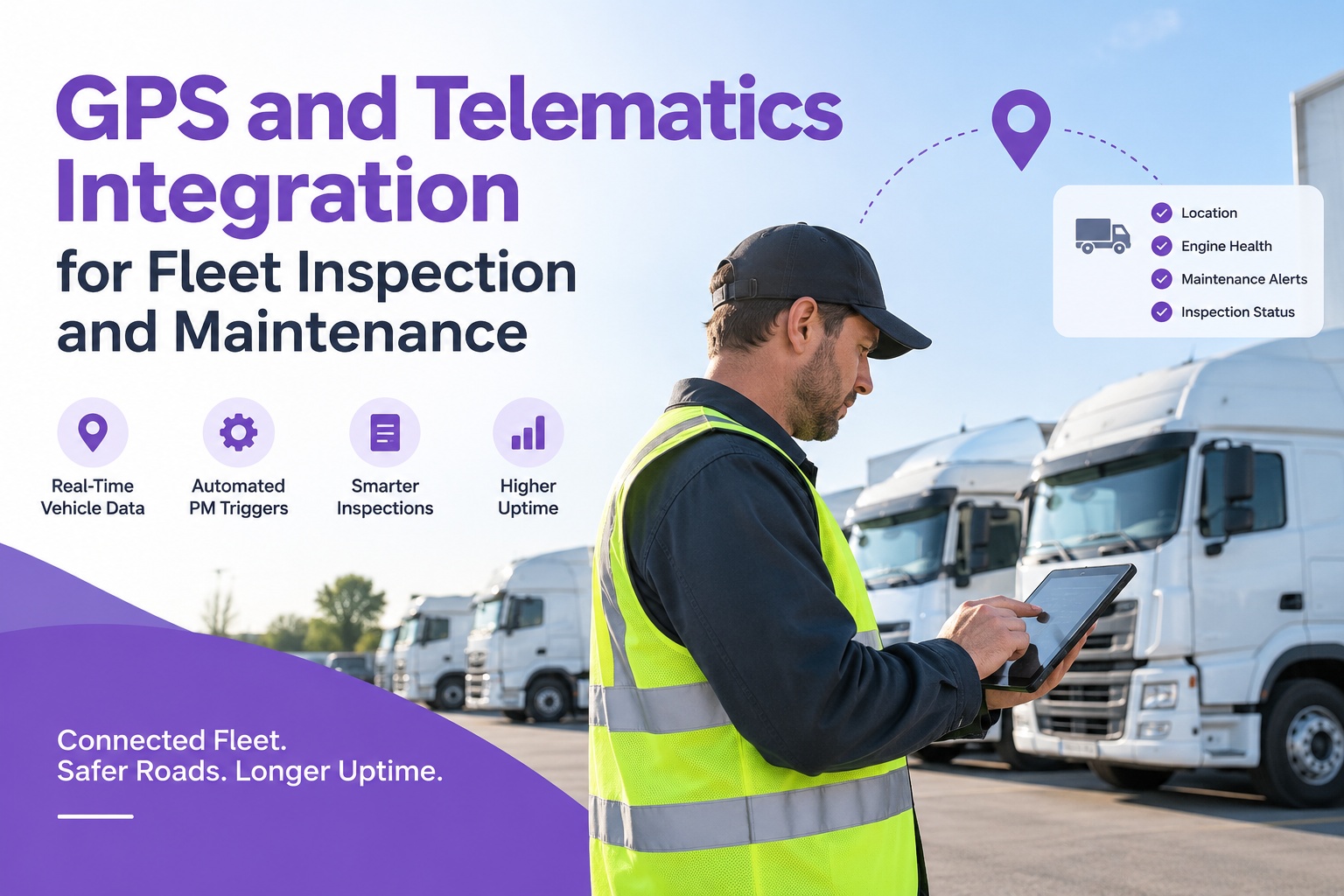
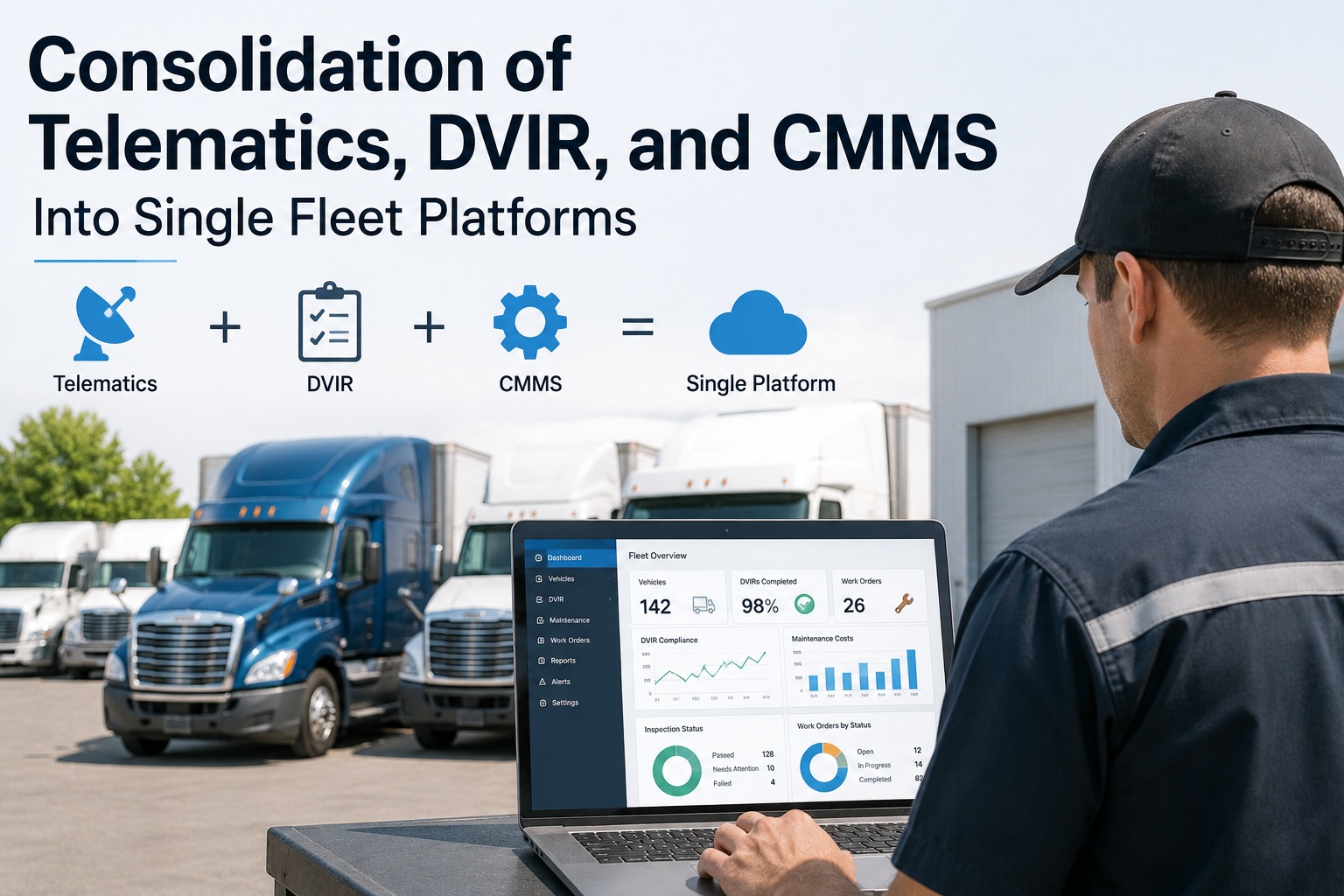
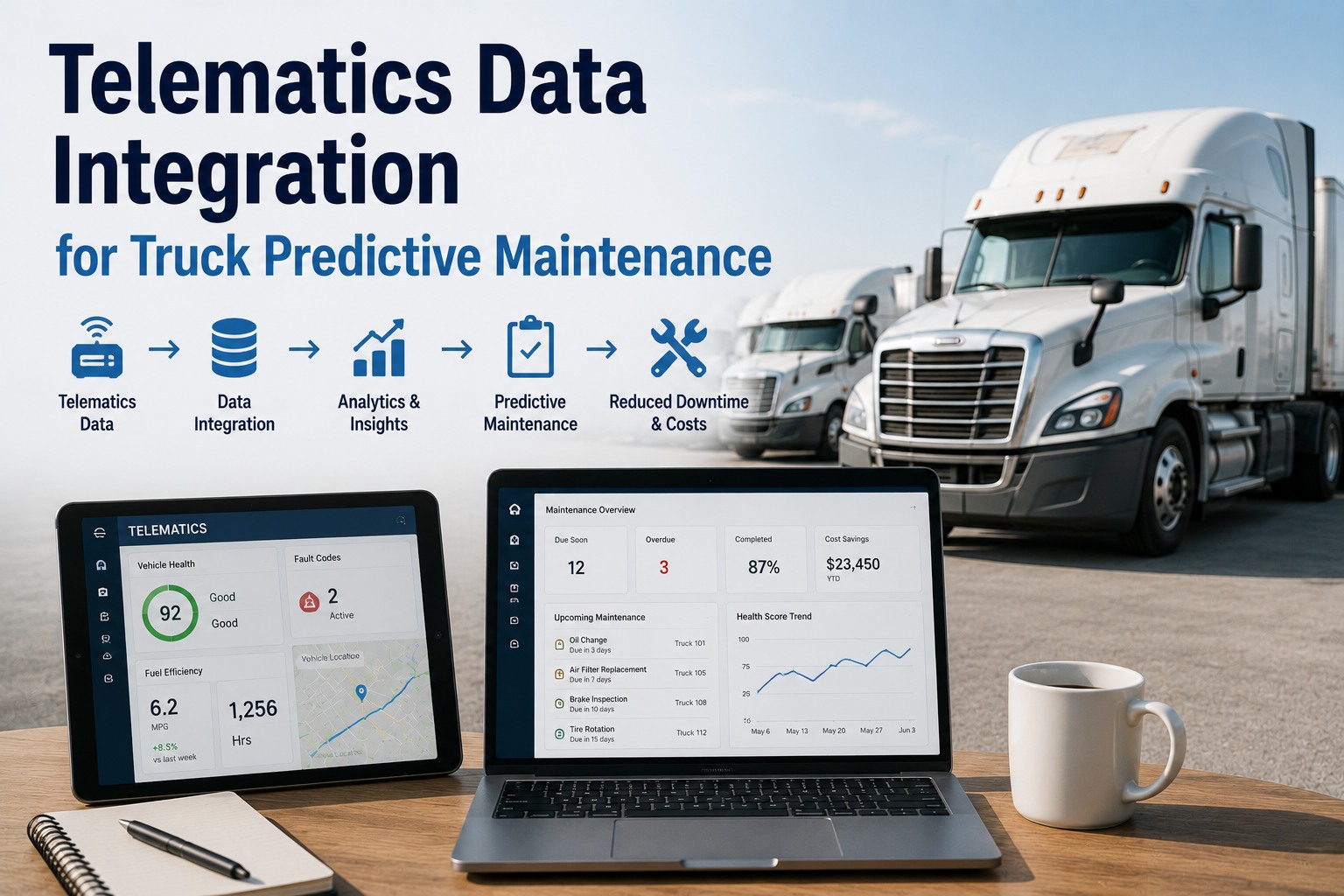
Most fleets already have telematics — GPS, ECM data, idle time, fuel burn, harsh events sitting in a dashboard someone opens on Monday and forgets by Wednesday. The maintenance system runs on a separate spreadsheet with mileage entered by hand. The two never talk. That's why a truck at 60% idle gets serviced on the same interval as one at 15%, why a fault code fires on Tuesday and hits the shop queue on Friday, and why every fleet with telematics still runs their PM off odometer photos. Integration isn't a technical exercise — it's plumbing the signals the telematics already has into the maintenance decisions they should be driving. Start free and turn telematics data into automatic PM triggers.
GPS + Telematics · Integration · Auto PM Triggers
Turn Every Telematics Signal Into a Maintenance Trigger
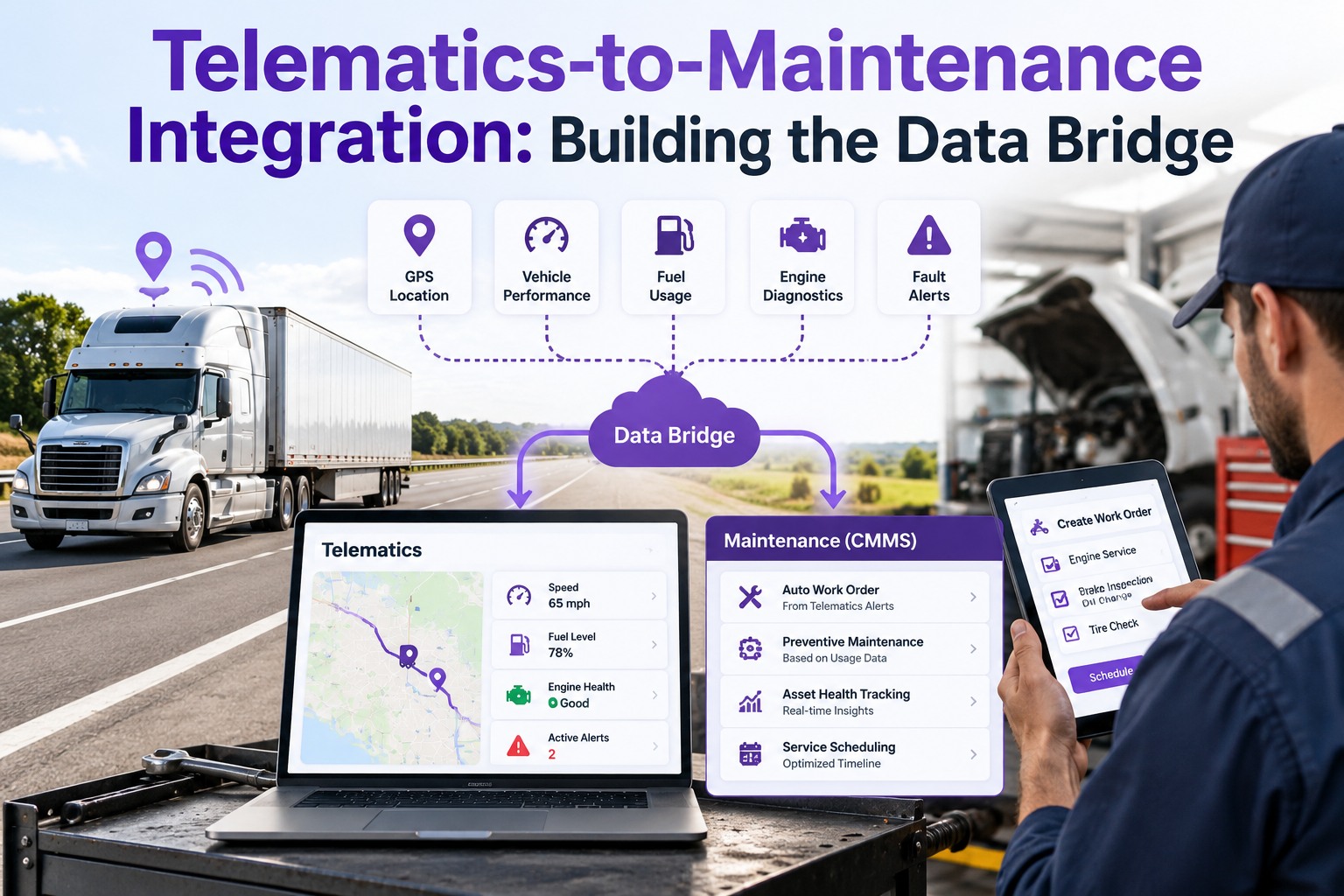
The telematics you already run knows mileage, engine hours, idle ratio, fuel burn, and fault codes — the maintenance system should be reading them, not asking a driver to write them down. Truck Inspection & Maintenance Management Software pulls ECM and GPS data directly into PM scheduling, DVIR pre-population, and fault-code-to-work-order routing, so every signal becomes a decision automatically.
ECM livemiles, hours, faults synced continuously
Auto PMtriggers fire the moment the signal crosses
1 recordmaintenance + telematics on one asset file
What "Integrated" Actually Means
Vendors use "integrated" loosely — sometimes it means one system exports a CSV another imports weekly, which isn't integration, it's a delay. Real integration is a live data flow that lets a signal from the truck's ECM become a decision in the maintenance system without a human retyping anything. Three levels of what that looks like in practice.
LEVEL 1
Flat file exchange
A weekly or nightly CSV moves from telematics to maintenance. Better than nothing, but the maintenance system is always a day behind reality. Missed windows, stale forecasts.
LEVEL 2
API-based sync
The two systems talk via API on a schedule — every hour or every trip. Mileage stays current; fault codes surface in a few hours. Good enough for most PM decisions.
LEVEL 3
Live data flow
Continuous streaming — an ECM fault code appears in the maintenance queue within minutes, an idle-ratio spike shifts the next PM trigger the same day. This is what unlocks the real ROI.
The Six Signals That Actually Drive Maintenance
Telematics platforms collect dozens of data streams; six of them are what a maintenance system actually needs to act on. Anything else is a nice-to-have; these six are the ones that change what the shop schedules and when.
📏
Odometer / mileage
Source: ECM (J1939 SPN 245)
The most-used signal — drives every mileage-based PM trigger. Live sync eliminates the "driver forgot to log miles" problem that skews PM by hundreds of miles per truck.
⏱️
Engine hours
Source: ECM (J1939 SPN 247)
The trigger that catches high-idle trucks a mileage schedule misses. A hostler at 2,000 hours and 45,000 miles has had 60,000+ equivalent miles of wear.
🔥
Idle ratio
Source: computed from ECM
Ratio of idle time to run time. Above 30% means the truck should be on an hours-primary PM cycle, not miles. Software should re-evaluate the trigger automatically.
⚠️
Fault codes (DTC)
Source: ECM (J1939 SPN/FMI)
Active and stored diagnostic trouble codes. Critical ones (P0300, coolant, aftertreatment) should auto-open a work order; informational ones should log to the asset for pattern review.
⛽
Fuel economy
Source: ECM (J1939 SPN 183 / calculated)
MPG trending down is the earliest sign of alignment, tire pressure, aftertreatment restriction, or injector issues — often visible weeks before a fault code confirms it.
📍
Location
Source: GPS
Which terminal the truck is currently at — decides which shop's queue a defect routes to. Without this, cross-terminal fleets end up with defects at the wrong yard.
What Live Integration Actually Changes
The change isn't cosmetic. Six things stop happening manually the moment telematics feeds maintenance, and every one of them was a source of preventable drift on paper.
Before
Driver photographs the odometer at PM due; office types it into the maintenance system.
→
After
Mileage streams from ECM continuously. PM trigger fires the moment it crosses. No entry, no delay.
Before
Fault code fires; driver notices dash light Thursday; work order created Friday.
→
After
DTC hits the maintenance queue in minutes. Critical codes auto-open a work order and flag dispatch.
Before
Idle-heavy truck stays on miles-based PM; gets under-serviced quarter after quarter.
→
After
Idle ratio recomputed weekly; PM trigger switches to hours-primary automatically when it crosses 30%.
Before
Driver's DVIR asks for mileage in a text field; wrong number entered half the time.
→
After
DVIR pre-populates ECM mileage on open. Driver confirms, doesn't type. Errors go to zero.
The Data Path — ECM to Work Order in Minutes
The full pipeline runs on rails no human touches. Signal originates on the truck; decision lands in the shop queue. Five hops, none of them a phone call.
🚛
1
Truck ECM
J1939 bus emits mileage, hours, fault codes continuously
→
📡
2
Telematics gateway
Cellular modem uploads to GPS provider (Geotab, Samsara, etc.)
→
🔗
3
API bridge
Maintenance system pulls signals via API — live or on schedule
→
⚙️
4
Rules engine
Trigger crossed? Fault critical? Idle-ratio shifted? Decision made
→
🔧
5
Shop queue
Work order opens automatically; mechanic sees it before the driver notices
Which Telematics Providers Actually Integrate
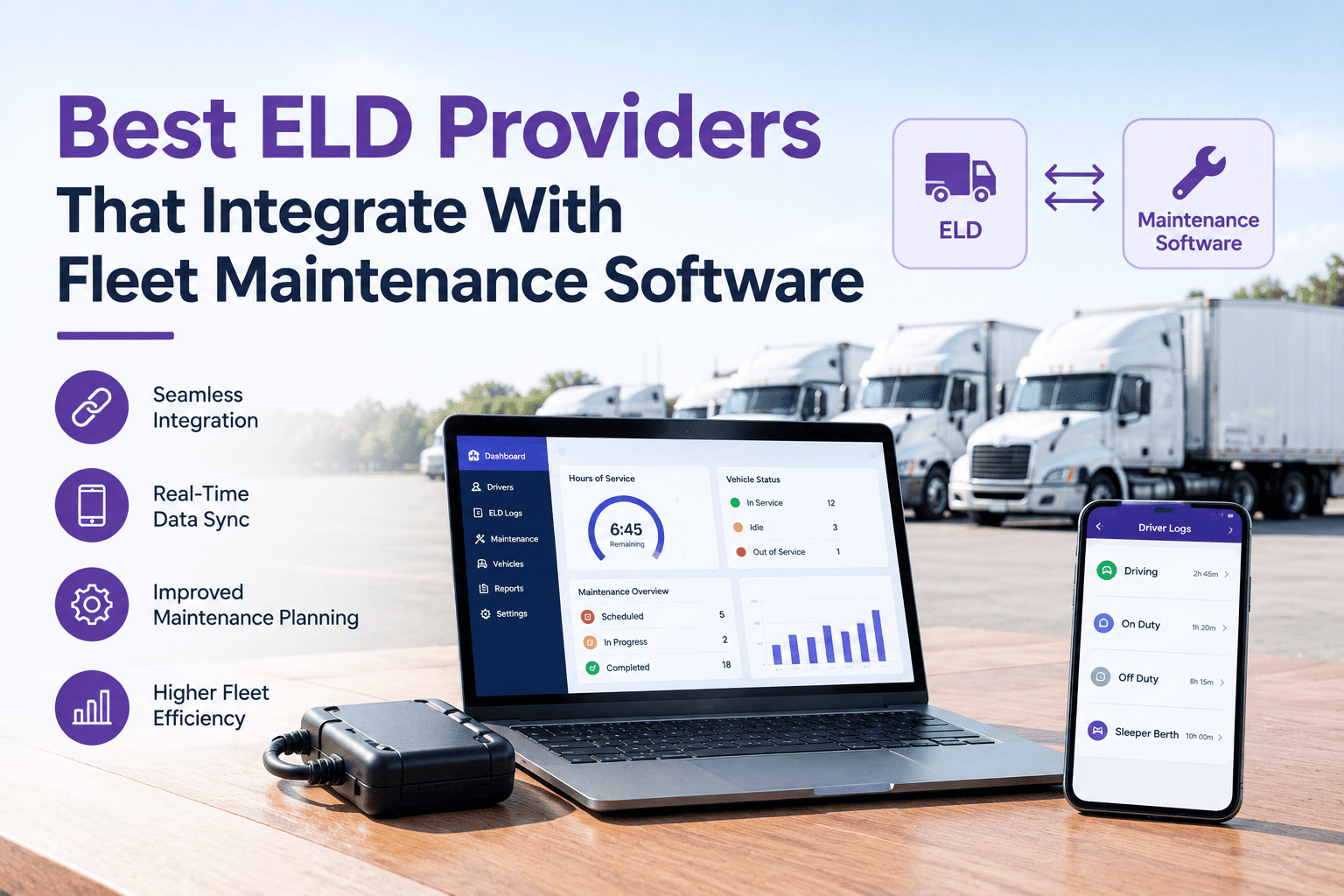
Most major providers have APIs — the difference is what they expose and how live it is. Before picking a maintenance platform, check that it reads what your telematics writes. These are the categories a maintenance system needs, regardless of which vendor is under the hood.
TIER 1
Full-fleet telematics
Samsara, Geotab, Motive, Verizon Connect. Complete J1939 access, live streaming APIs, deep fault-code coverage. Any modern maintenance platform should have prebuilt integrations here.
TIER 2
ELD-focused providers
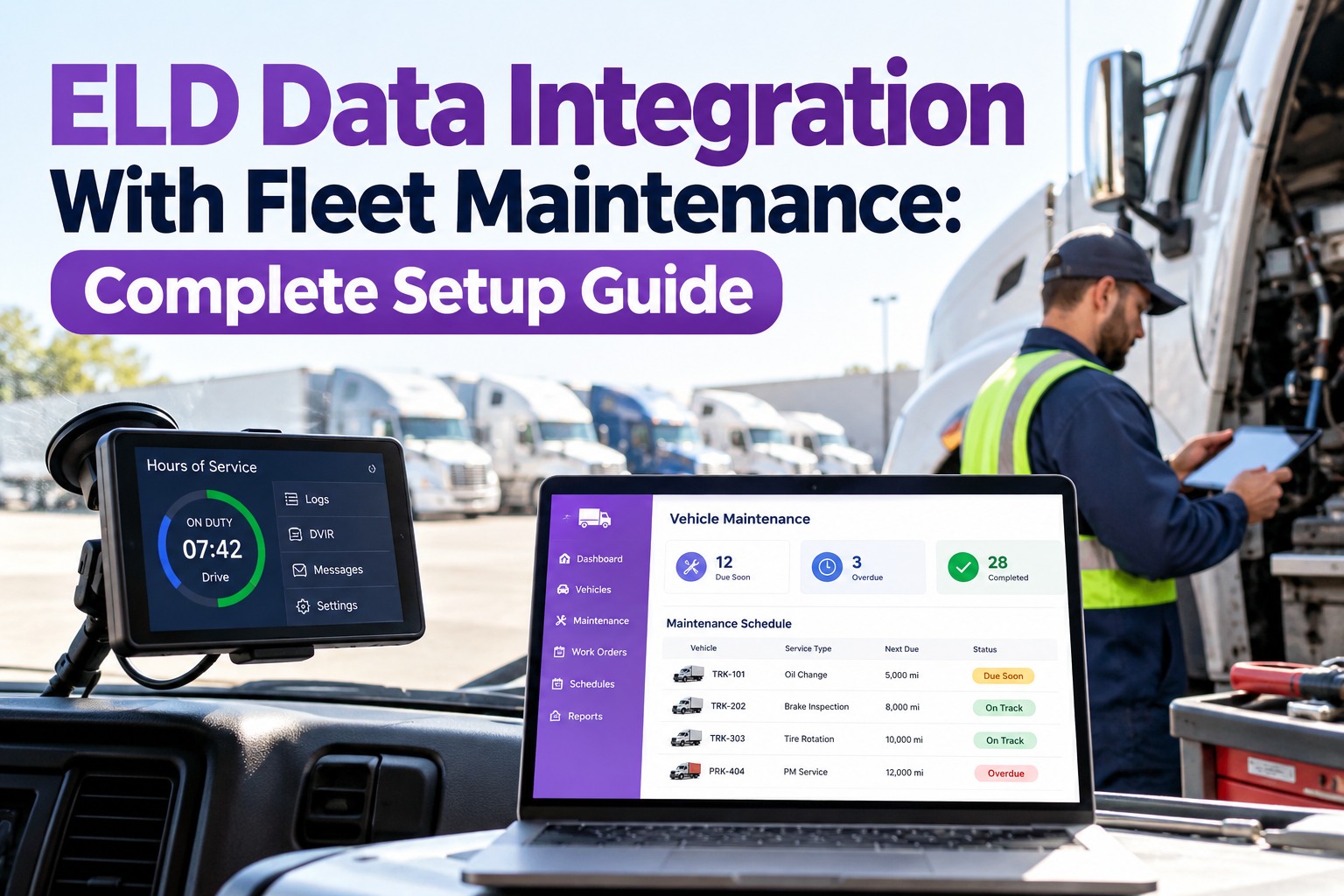
KeepTruckin (Motive), Omnitracs, PeopleNet, ELD Mandate. Strong on hours-of-service and location, sometimes weaker on ECM signals. Integration usually works but may miss idle ratio or fuel MPG.
TIER 3
OEM telematics
Detroit Connect, Volvo Dynafleet, Kenworth TruckTech, Peterbilt SmartLINQ. OEM-provided data on their own trucks. Usually excellent for that OEM's fleet; may need a third-party layer for a mixed-brand fleet.
Pick your maintenance platform to fit your telematics Not the other way around. Fleets that switch telematics providers rarely; fleets that switch maintenance platforms more often. The rule: your maintenance software should support the top telematics providers out of the box, so a future telematics change doesn't force a re-implementation.
Every Signal, Every Decision, One Platform
Truck Inspection & Maintenance Management Software connects directly to major telematics providers, streams mileage, hours, idle ratio, fault codes, MPG, and location into every truck's asset record, and drives PM triggers, DVIR pre-population, and work-order creation automatically. Fleets stop typing what the truck already knows and start acting on the signals in real time.
The Integration Checklist — What to Ask Any Vendor
Before signing, six questions that separate a real integration from a marketing claim. If a maintenance vendor can't answer these plainly, they don't have Level 3 integration — they have a CSV import.
Q1
Which telematics providers do you support out of the box?
List, not a "we can integrate with anything" answer. Prebuilt integrations with your provider save weeks.
Q2
Is mileage streamed continuously or synced on a schedule?
Continuous is right. "Nightly sync" is a red flag for missed PM windows on high-utilization trucks.
Q3
Do fault codes auto-open work orders?
Critical DTCs should hit the shop queue in minutes. Informational codes should log to the asset for trend review.
Q4
Does the DVIR pre-populate ECM data?
Mileage, engine hours, current location — read from telematics, driver confirms. No typing.
Q5
Can PM triggers switch between miles and hours automatically?
Idle ratio should reclassify a truck onto hours-primary when it crosses a threshold — no manual reconfiguration.
Q6
What happens if the telematics goes down?
Good platforms fall back to last-known signal + manual entry. Bad ones fail silently — PM triggers miss and no one notices.
Frequently Asked Questions
Do we have to replace our current GPS to use an integrated maintenance system?
Usually not — the whole point of integration is that a maintenance platform reads from whatever telematics you already run. Samsara, Geotab, Motive, Verizon Connect, and the major ELD providers all expose APIs that a modern maintenance system should consume out of the box. Ask any vendor which providers they have prebuilt integrations with; that list is the fastest way to tell whether they mean "integrated" or "will build a custom sync for an extra fee." Our software connects with all the major providers directly.
Start free and keep your current GPS
What's the biggest single gain from live integration?
For most fleets it's PM accuracy — the shift from PMs firing hundreds of miles late to firing within a hundred miles of due. That single change lifts PM compliance from around 85% to over 95% within a quarter, because the calendar and the odometer are finally the same story. Fault-code auto-routing is a close second — a critical DTC that used to sit in a driver's dash light until end of shift is now a work order the shop sees in minutes. Either alone is worth the integration; both together is the ROI.
Contact us to see the accuracy gain on your fleet
Do OEM-provided telematics (Detroit Connect, Dynafleet) integrate as well as third-party?
On a single-OEM fleet, yes — the OEM's own signals are usually deeper and more accurate than what a third-party gateway pulls off J1939. Detroit Connect for Freightliners, Dynafleet for Volvos, and equivalents each expose rich API data on their own trucks. Where they get harder is a mixed-brand fleet: running three OEM systems plus a third-party layer adds cost and coordination. Most mixed fleets end up standardizing on one third-party provider (Samsara, Geotab) as the maintenance-integration source of truth, and keep the OEM systems for OEM-specific diagnostics.
Start free with mixed-fleet integration
How long does telematics integration actually take to stand up?
If your provider is on the maintenance platform's supported list, usually days — not weeks. It's a credentials handoff, a sync test, and a validation that mileage, hours, and fault codes are flowing correctly. A custom integration with a niche provider takes longer, but that's the exception. The rule of thumb: if the vendor's implementation team says "two months to build the integration," they don't have one — walk. Prebuilt integrations turn on inside the first week.
Contact us to check your provider on our list
ECM Signal · Live Sync · Auto Trigger
Stop Retyping What the Truck Already Knows
Truck Inspection & Maintenance Management Software integrates directly with major telematics providers to pull mileage, engine hours, idle ratio, fault codes, fuel MPG, and location into every asset record — driving PM triggers, DVIR pre-population, and work-order routing without a single manual entry. Fleets use it to lift PM compliance above 95%, cut DVIR entry errors to zero, and get fault codes into the shop queue in minutes instead of days.
No credit card required. Free for up to 3 trucks. Built for FMCSA-compliant fleets.