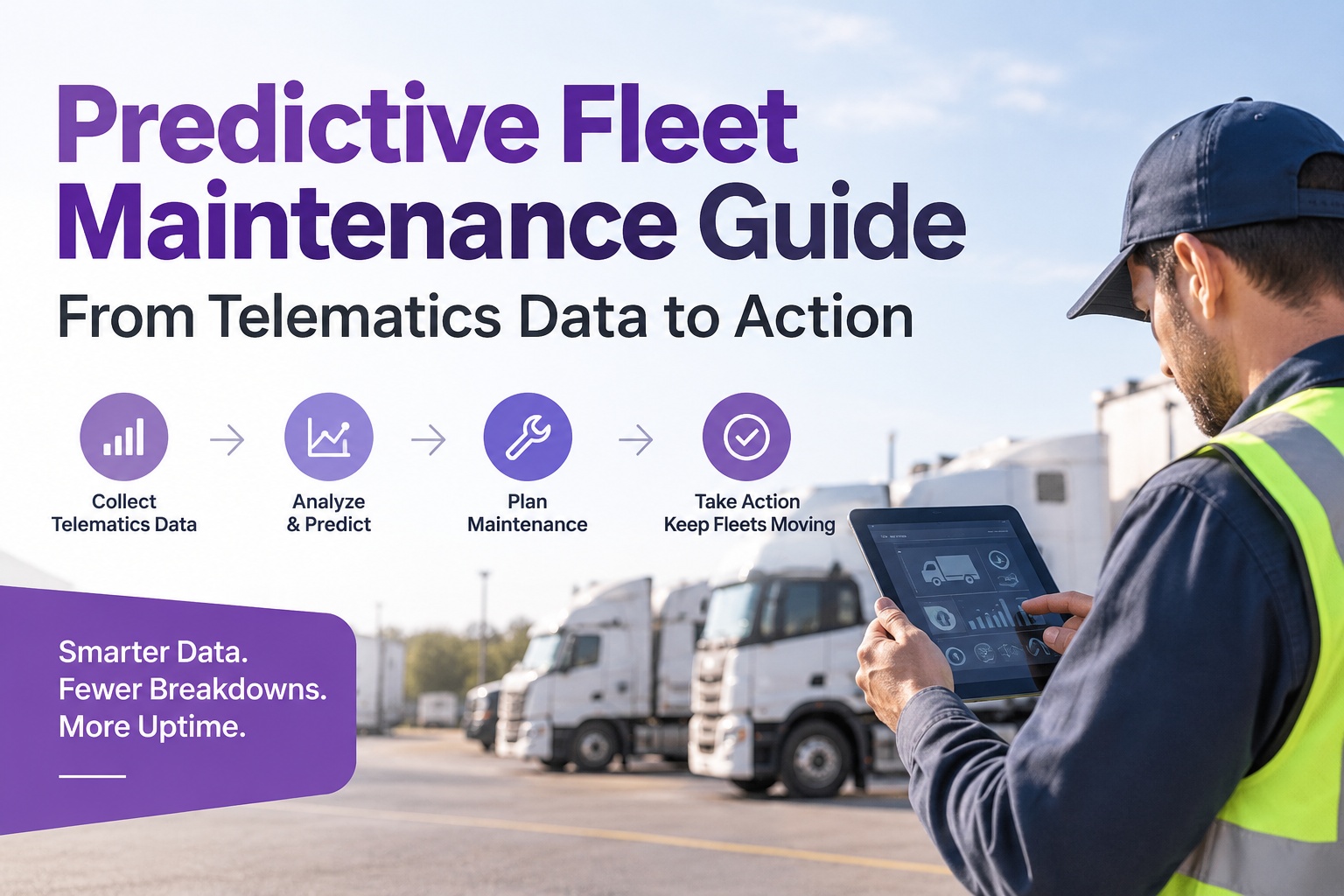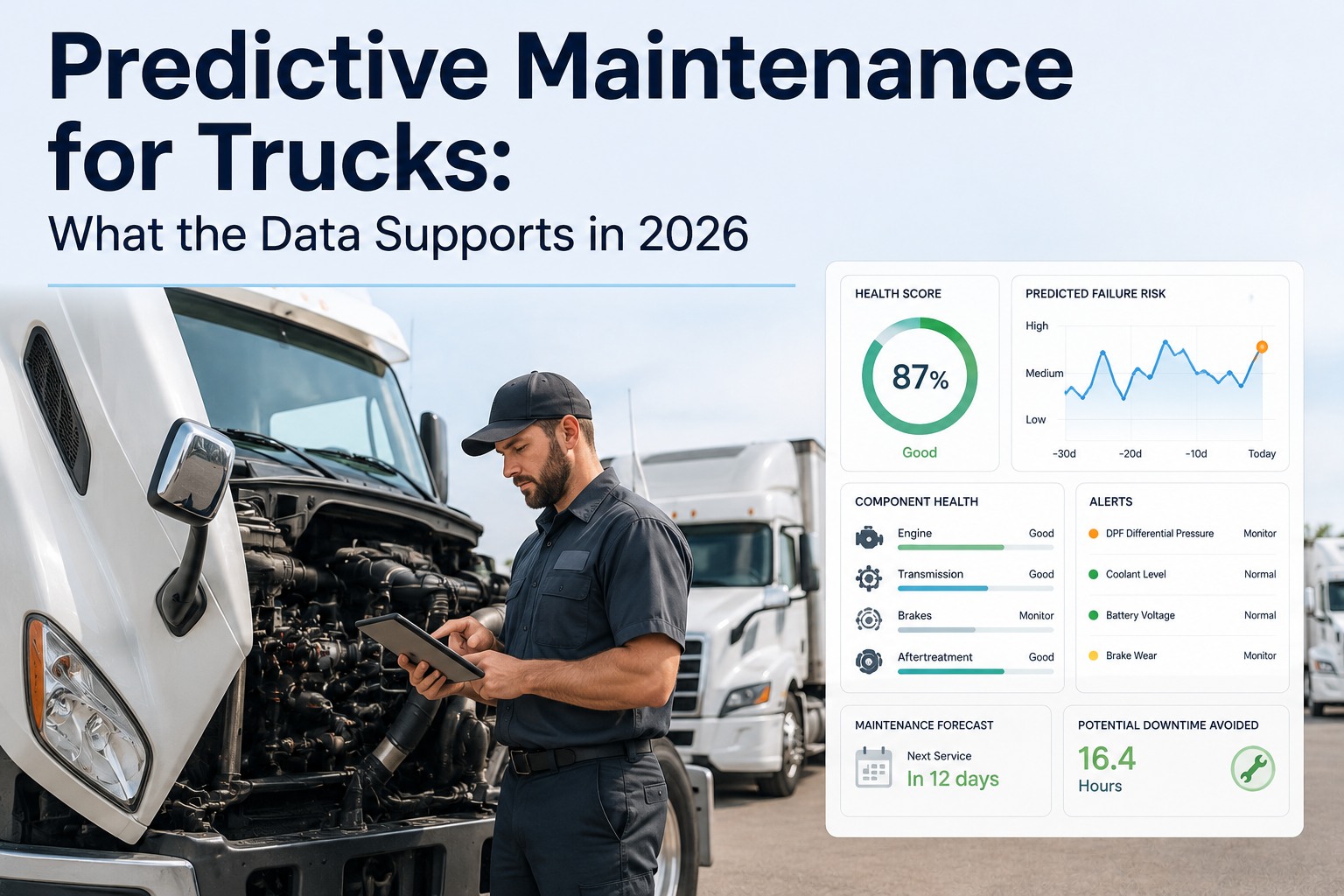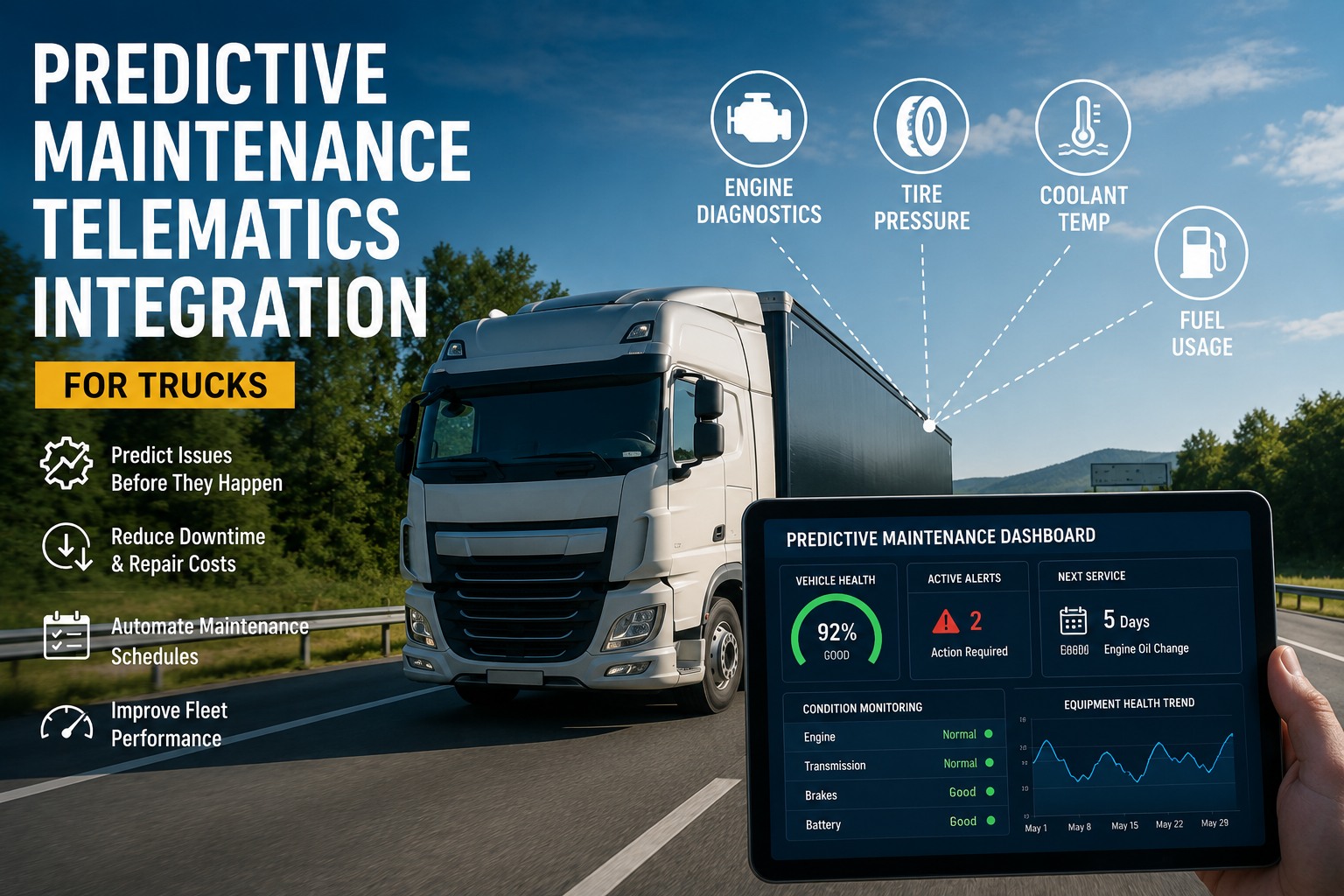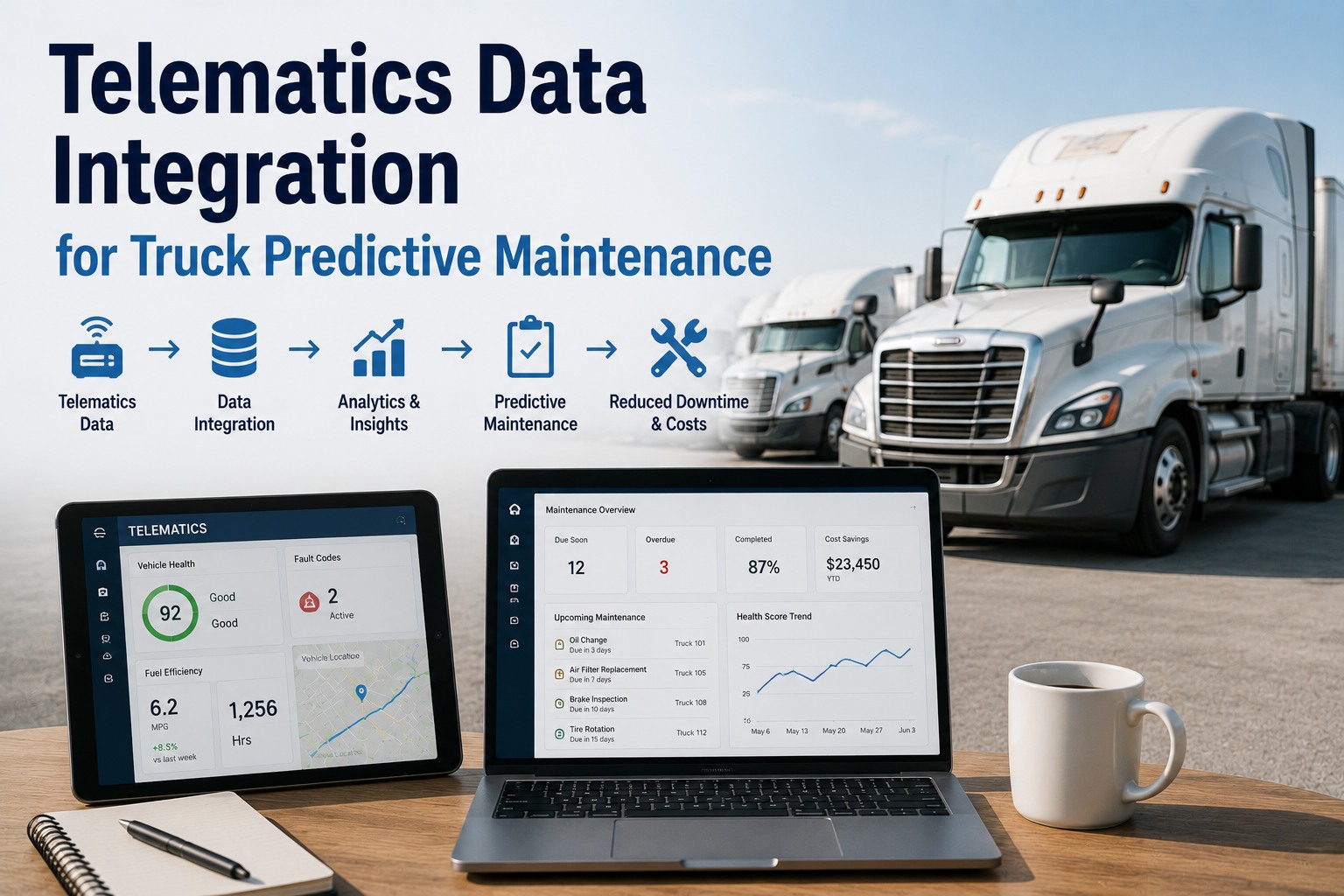
Ask a fleet manager how they decide when to service a truck and you'll learn almost everything about their operation. Some answer "when it breaks." Most say "every 5,000 miles, same as always." A few say "when the data tells us to." Those three answers are rungs on a ladder, and telematics data integration is what lets you climb it — because every rung above the last replaces an assumption with a measurement. The truck that ran 400 hard-idling hours this month and the one that sat in a yard don't need the same oil change date, and only your telematics feed knows the difference. This guide maps the four rungs of maintenance maturity, shows exactly which data moves you up each one, and — unlike most vendors — is honest that the top rung isn't right for every asset. Here's how Truck fleet management software turns a telematics stream into maintenance decisions that actually pay.
Maintenance Strategy Guide · Telematics Integration · 2026
Telematics Data Integration for Truck Predictive Maintenance
Every fleet sits somewhere on the maintenance ladder. Telematics is how you climb — trading calendar guesses for what the vehicle is actually telling you.
The Four Rungs
Each rung costs less and surprises you less than the one below it. The jump between rungs isn't philosophical — it's a specific data source you either have or don't:
Reactive
The truck fails, then you fix it. No data required — and it's the most expensive way to run a fleet. Predictive approaches save up to 40% against this baseline, and every $1 of deferred repair can generate around $4 in eventual capital renewal cost.
Calendar-based preventive
Fixed intervals — oil every 5,000 miles, brakes every 90 days — regardless of what the vehicle actually did. It prevents many failures, but it services healthy parts too early and misses the ones that fail between intervals. Typical PM compliance sits around 65-75%.
Usage-based
The first real telematics win. Service triggers off live odometer and engine-hour data, so a high-mileage truck on a demanding duty cycle gets serviced more often and a lightly used asset isn't pulled early. Nobody has to remember what's due — the system raises its hand.
Predictive / condition-based
Sensor data and fault-code trends forecast a specific component's failure before it happens — often with a long warning window. Work happens only when condition indicates, not a day too early or too late.
What the Telematics Feed Actually Carries
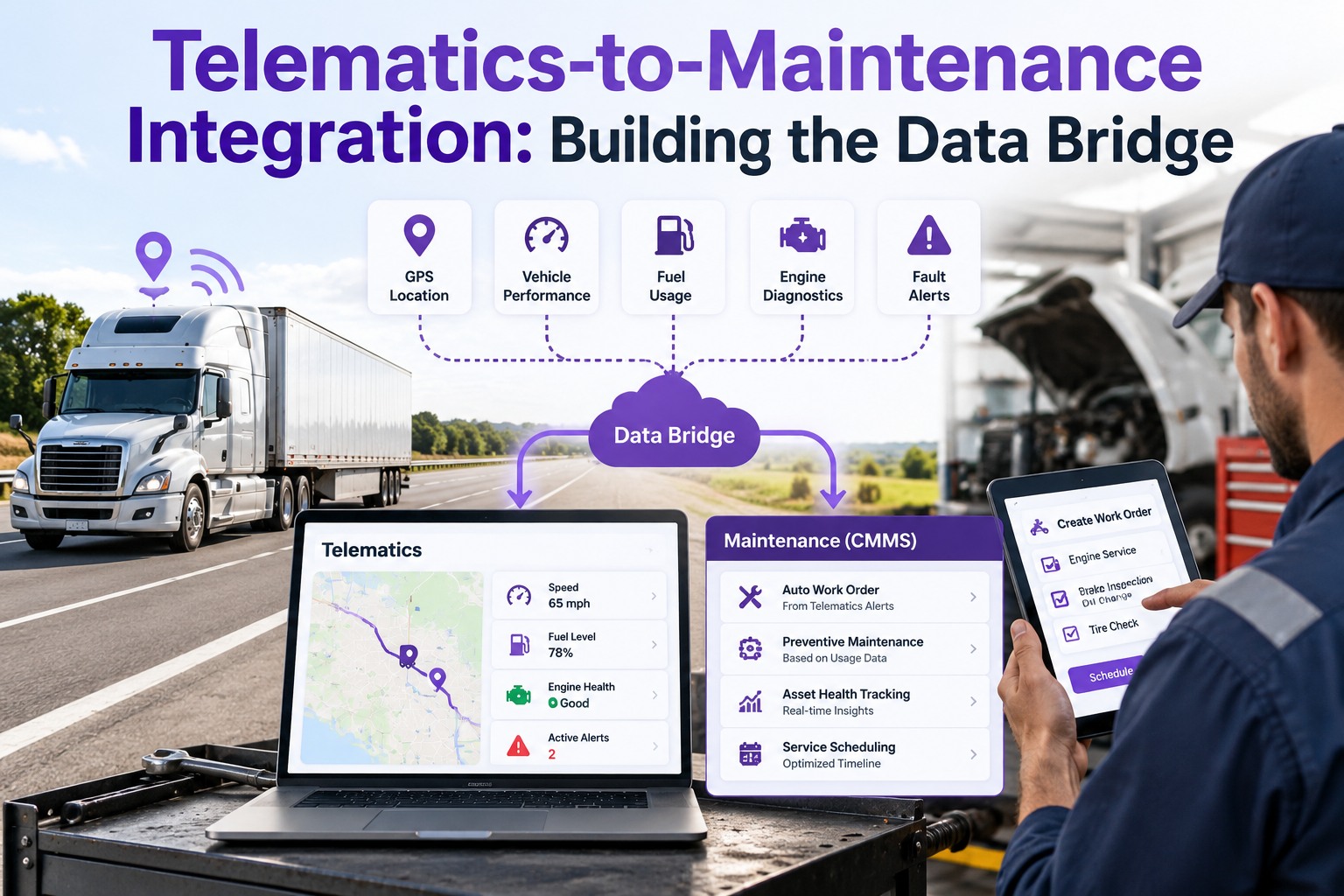
The climb up the ladder is powered by specific data streams flowing off the vehicle's CAN bus into your maintenance platform. Each one unlocks a different capability:
Odometer & engine hours
The true usage meters. These alone move you from rung 2 to rung 3 — real intervals instead of calendar guesses.
Diagnostic trouble codes
Fault codes straight from the ECU, arriving the moment they fire rather than at the next shop visit.
Engine temperature & pressures
Live condition signals. Trending them is the foundation of rung 4 — and the first place threshold alerts pay off.
Battery voltage
One of the highest-yield simple alerts in any fleet — cheap to monitor, expensive to ignore.
Fuel & idle data
Consumption drift is an early mechanical symptom, and idle hours age an engine the calendar never sees.
Driving-behavior events
Harsh braking and cornering flag the specific trucks whose brakes and tires are wearing faster than schedule.
You probably already have this: over 90% of vehicles built in 2026 ship with embedded telematics from the factory, and most vehicles made since 2015 already broadcast hundreds of diagnostic data points. For most fleets the work isn't installing hardware — it's connecting a stream that's already flowing to a system that can act on it.
Free · Up to 3 Vehicles
Climb a rung without a rebuild
Truck fleet management software connects your existing telematics feed and fires PM work orders off real odometer and engine-hour data, routes fault codes straight to the shop, and builds the maintenance history that predictive analytics later needs. Start with usage-based scheduling in days, not a six-month project. Sign up free for up to 3 vehicles and put your data to work.
The Honest Answer: Don't Go All-In
Here's what most vendors won't tell you while selling predictive analytics: the top rung isn't right for every asset. The 2026 industry standard — used by roughly 66% of leading operators — is a hybrid: preventive scheduling for standard assets, predictive monitoring for critical ones. Predictive doesn't replace your PM schedule; it layers on top of it, catching what develops between intervals while stopping you from replacing parts with life left in them.
Keep them preventive
Well-tuned usage-based intervals with strong digital records. Cheaper to run, and it quietly builds the clean history predictive models will need later.
Make them predictive
The units where a failure halts revenue. Condition monitoring and component-level forecasting earn their cost here first — and most clearly.
If annual maintenance spend exceeds roughly $80K per unit and downtime causes significant revenue loss, predictive pays back even in a smaller fleet. Below either threshold, optimized preventive maintenance with solid digital inspection records usually delivers better economics — and lays the data foundation you'll need when you do climb.
You Don't Need AI to Start
The most common mistake is treating rung 4 as an all-or-nothing AI project. It isn't. Simple threshold alerts deliver immediate returns with no machine learning at all, and the models come later — once you've accumulated the clean historical data that makes them work:
Connect the feed
Integrate the GPS and telematics devices you already run. This unlocks the vehicle-health data everything else builds on.
Retire the calendar
Move PM triggers to mileage, engine hours, and sensor thresholds so service fires when the vehicle needs it, not on an arbitrary date.
Set simple thresholds
Engine temperature and battery voltage alerts pay off immediately — no AI required, no training data needed.
Add intelligence later
Once clean history exists, models can forecast component-level failures. The data foundation has to come first — that's the sequence.
The Numbers That Justify the Climb
Each rung's value shows up in the same three places — cost, downtime, and asset life. These are the ranges fleets consistently report after moving up:
Lower total maintenance costs with predictive over reactive approaches
Reduction in unplanned downtime once condition drives scheduling
Extension in equipment lifespan from servicing on condition
PM compliance, up from 65-75% on a calendar program
Why downtime dominates the math: every hour a truck is off the road costs roughly $400-700 in lost revenue, and an unplanned day runs $500-$2,000 per vehicle. That's why the first prevented breakdown often pays for the whole system, with full ROI typically landing within 3-12 months. Smaller fleets frequently see proportionally bigger gains — losing one truck from ten means losing 10% of your capacity.
Frequently Asked Questions
What's the difference between preventive and predictive maintenance?
Preventive maintenance follows fixed schedules — oil every 5,000 miles, filters every 500 hours — regardless of actual condition. Predictive maintenance monitors real component health through sensor and fault-code data and triggers work only when the data indicates it's needed. That eliminates both unnecessary servicing of healthy parts and the failures that develop between scheduled intervals.
Do I need to replace my telematics hardware?
Usually not. Over 90% of 2026 vehicles ship with factory-embedded telematics, and most vehicles built since 2015 already broadcast hundreds of diagnostic data points. Integration connects to those existing streams, so many fleets can start immediately. For older vehicles, affordable aftermarket sensors fill the gap. Contact our team to check what your fleet already sends.
Do I need AI to get value from telematics data?
No — and starting with AI is usually the wrong order. Simple threshold-based alerts on parameters like engine temperature and battery voltage deliver immediate ROI with no machine learning involved. AI models add value later, once you've accumulated clean historical data to train them on. Connect the feed and fix your PM triggers first; intelligence is the layer above that, not the entry point.
Should every vehicle be on predictive maintenance?
No, and it's worth being skeptical of anyone who says otherwise. Roughly 66% of leading operators run a hybrid — preventive for standard assets, predictive for critical ones. A useful rule: if annual maintenance spend exceeds about $80K per unit and downtime causes real revenue loss, predictive pays. Below either threshold, well-optimized preventive maintenance with strong digital records delivers better economics.
Is this only worth it for large fleets?
Not at all — small and mid-sized fleets often see proportionally greater benefit, because losing one vehicle from a 10-truck fleet removes 10% of your capacity overnight. With downtime costing roughly $400-700 per hour and unplanned days running $500-$2,000 per vehicle, a single prevented breakdown frequently covers the whole investment.
Does telematics-driven maintenance help with compliance?
Yes. Because the platform generates structured maintenance records automatically — every trigger, work order, and completion timestamped — you build the documentation 49 CFR Part 396 requires as a byproduct of running the system. That reduces DOT out-of-service risk and turns audit prep into a search rather than a reconstruction. Sign up free to build the record automatically.
Maintain by the Machine, Not the Calendar
Your trucks are already telling you when they need service.
Truck fleet management software connects your telematics feed to automate PM scheduling on real usage, route fault codes to work orders, flag conditions before they fail, and generate compliant maintenance records automatically — with hybrid strategy support so each asset gets the approach that actually pays. Free for up to 3 vehicles. Works with your existing hardware, no contracts.