The 2026 CVSA International Roadcheck just wrapped on May 14 — 72 hours of concentrated enforcement across North America that produces some of the most sobering compliance numbers in trucking. The 2025 Roadcheck inspected 56,178 commercial vehicles and placed 22.6% out of service. That's roughly 1 in 5 trucks parked on the spot. Drivers fared somewhat better at 5.9% OOS rate — but for the carriers and shippers affected, "somewhat better" doesn't change the fact that 3,342 drivers were removed from service in a single 72-hour window. Year-round, the math is even more relentless: roughly 3-4 million roadside inspections happen annually across North America, with CVSA-certified inspectors operating under broad §396.9 authority to inspect any commercial vehicle in operation.
The 2026 stakes just climbed. February's CSA overhaul changed the math on every roadside inspection. OOS violations now carry a severity weight of 2 (vs. 1 for non-OOS) — meaning each OOS finding hits twice as hard against your carrier score. The lookback period shortened from 24 months to 12, concentrating the impact of recent violations. Vehicle Maintenance got split into two separate BASIC categories, doubling the columns where DVIR and equipment violations appear. And the math industry insiders quote: one OOS violation can take 20+ clean inspections to offset. For carriers operating near intervention thresholds in HOS or Vehicle Maintenance BASICs, a single bad inspection can be the difference between staying operational and triggering an FMCSA audit.
This guide is the 2026 driver playbook: all 6 CVSA inspection levels explained, the top 5 OOS violations by category, the documentation drivers must have on hand, the brake/tire/lighting standards inspectors actually check, what happens during the inspection itself, and the post-inspection 15-day certification requirement. Start your free trial to give every driver a digital pre-trip inspection that catches OOS-triggering defects before the next weigh station.
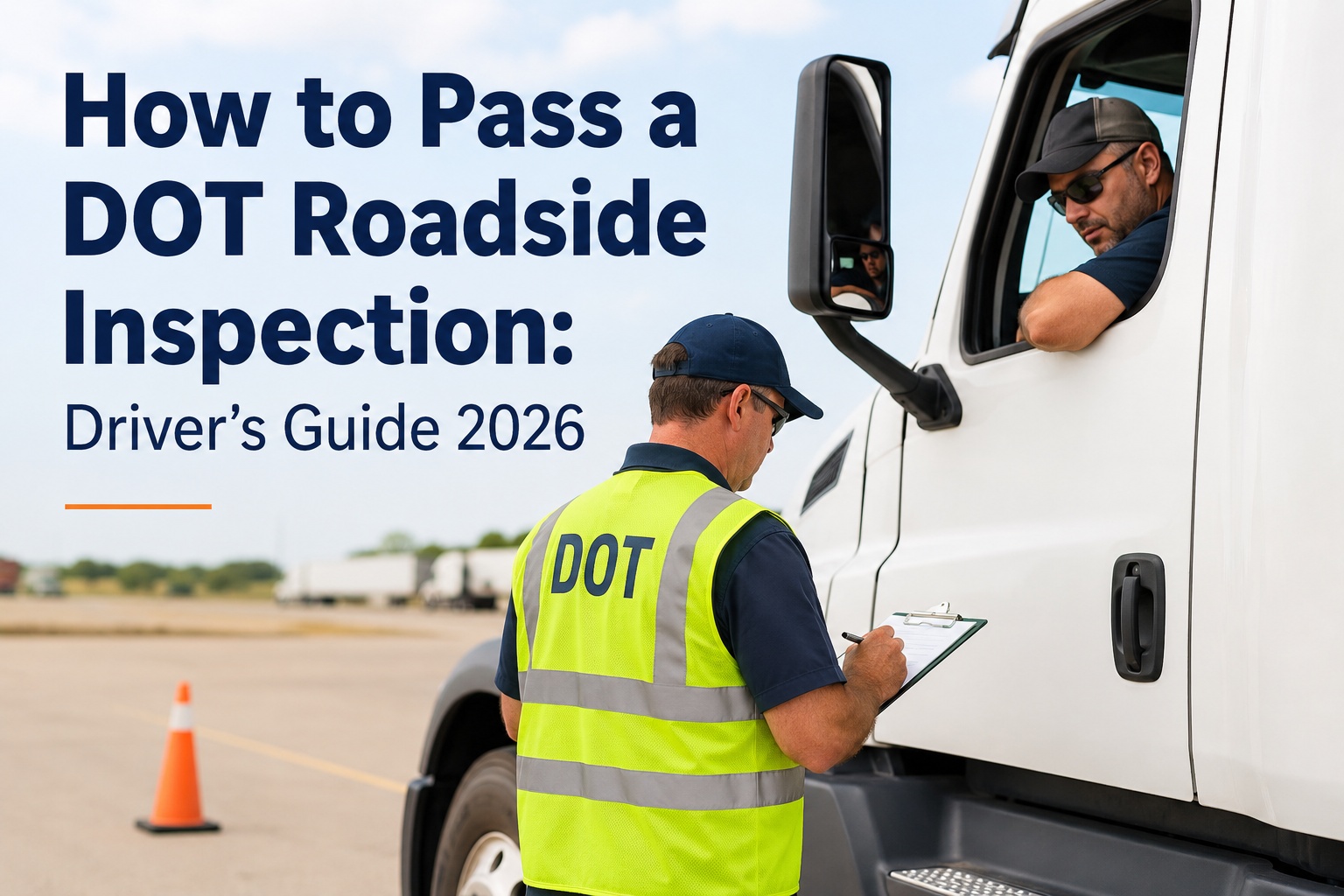
How to Pass a DOT Roadside Inspection: Driver's Guide 2026
The complete 2026 driver playbook for DOT roadside inspections — CVSA levels I-VI explained, top OOS violations to avoid, documentation checklist, brake/tire/lighting standards, and what to do if your vehicle gets placed out-of-service.
Quick Answer: How to Pass a DOT Roadside Inspection
Passing a DOT roadside inspection in 2026 comes down to three layers of preparation: (1) Vehicle readiness — every component covered in §392.7 pre-trip and §396.11 DVIR inspections functional, with brakes (24% of OOS violations), tires (21%), lighting (13%), and cargo securement (11%) given priority focus; (2) Documentation readiness — current CDL, medical certificate (linked electronically to CDL since 2026), CVSA decal if available, current registration, IFTA credentials, ELD records, bills of lading, and previous DVIR with repair certifications; (3) Driver readiness — knowing the 6 CVSA inspection levels (Level I 37-step comprehensive, Level II walk-around, Level III driver-only, Level IV special, Level V vehicle-only, Level VI radioactive), remaining professional and cooperative throughout the inspection, and knowing the 15-day correction certification requirement that follows any cited violation. The 2026 CSA overhaul doubled the impact of OOS violations and split Vehicle Maintenance into two BASIC categories — making roadside inspection performance more consequential than ever.
The 6 CVSA Inspection Levels Explained
CVSA (Commercial Vehicle Safety Alliance) standardized inspections into 6 levels across the United States, Canada, and Mexico. Knowing which level you're facing tells you exactly what the inspector will check. Levels I and II account for over 90% of all roadside encounters. Contact our sales team for inspection-level-specific compliance templates.
Top 5 OOS Violations — What Inspectors Cite Most
The 2025 Roadcheck data reveals consistent patterns in what triggers out-of-service orders. These 5 categories account for the overwhelming majority of OOS findings — and every single one is preventable with proper pre-trip inspection.
The 8 Documents Every Driver Must Have On Hand
32% of driver violations at 2025 Roadcheck were documentation-related. Most are 100% preventable — just have the paperwork. Sign up free to track all driver documentation with automatic expiration alerts.
What Happens During the Inspection — Step by Step
Knowing exactly what's coming reduces stress and improves performance. Here's the typical Level I/II flow from the moment you're signaled until you're back on the road.
If You Get an OOS Order — What to Do Next
Out-of-service orders happen. Knowing the post-inspection process protects your carrier and your record.
Frequently Asked Questions
Level I and Level II combined account for over 90% of all roadside inspections. Level II is typically the most common in routine enforcement because it's efficient for officers (walk-around only, no under-vehicle) while still catching most violations. Level I is the most comprehensive (37-step, under-vehicle) and is heavily used during CVSA International Roadcheck events. During 2025 Roadcheck, more than 50% of inspections were Level I and 23% were Level II. Being prepared for Level I means you're prepared for any inspection. Contact our sales team for inspection-level-specific compliance templates.
Several factors trigger inspections: weigh station automated screening (pulls CSA scores and OOS history in real-time, flags high-risk carriers to the inspection bay), visible defects observed by patrol officers (burnt lights, damaged tires, smoke, leaking fluids), random selection at checkpoints, complaints filed against a carrier, post-crash protocol, and CVSA enforcement campaigns like International Roadcheck (May), Brake Safety Week, and Operation Safe Driver. CVSA-certified officers operate under §396.9 authority to inspect any CMV in operation — no limit on frequency. A current CVSA decal (3 months valid from Level I/V/VI pass) generally exempts you from reinspection during the validity period.
An OOS (out-of-service) violation meets the North American Out-of-Service Criteria — meaning the defect is severe enough that the vehicle or driver cannot legally operate until corrected. The truck stops where it is (inspection site, shoulder, weigh station). A regular violation is cited but doesn't trigger an OOS order — the driver continues but must address the violation within timelines specified on the report. Under the 2026 CSA overhaul, OOS violations carry severity weight 2 vs 1 for non-OOS — meaning OOS findings hit your CSA score twice as hard. One OOS violation can take 20+ clean inspections to offset. Start your free trial to track inspection outcomes automatically.
No. CVSA-certified enforcement officers are authorized under 49 CFR §396.9 to enter upon and inspect any commercial motor vehicle in operation. Refusing an inspection results in an immediate out-of-service order plus additional penalties. The right approach: cooperate fully, present documents when asked, remain professional throughout the process. You have the right to receive a copy of the inspection report regardless of outcome, the right to professional and courteous treatment, and the right to challenge violations through the DataQs system if issued in error.
A CVSA decal is a sticker issued to vehicles that pass a Level I, Level V, or Level VI inspection with no critical violations. The decal is valid for 3 months. During that period, vehicles displaying a current decal are generally not subject to reinspection at weigh stations — which means significantly less time off the road and lower CSA inspection volume. Decals are placed on the windshield or visible location depending on inspection type (regular CVSA decal for Level I/V; nuclear decal for Level VI). Talk to our sales team for help maximizing CVSA decal eligibility.
February 2026's CSA SMS overhaul changed three things that affect every roadside inspection. First: OOS violations now carry severity weight 2 (vs 1 for non-OOS) — meaning each OOS finding hits your carrier score twice as hard as before. Second: the lookback period dropped from 24 months to 12 — concentrating the impact of recent violations. Third: Vehicle Maintenance was split into two separate BASIC categories (standard + Driver Observed), doubling the columns where DVIR and equipment violations can show up red. Net effect: one bad inspection now costs more than ever, and clean inspections matter more than ever. Sign up free to track CSA score impact in real time.
Deploy Pre-Trip Inspections That Catch What Inspectors Cite
500+ fleets digitize §392.7 pre-trip and §396.11 DVIR workflows on one platform. Mobile inspections from driver phones. Photo evidence of brake/tire/lighting condition. GPS timestamps. Auto-routing defects to work orders. Audit packets exported in seconds. The 2026 standard for roadside inspection readiness.